Categories
Showcase 2023

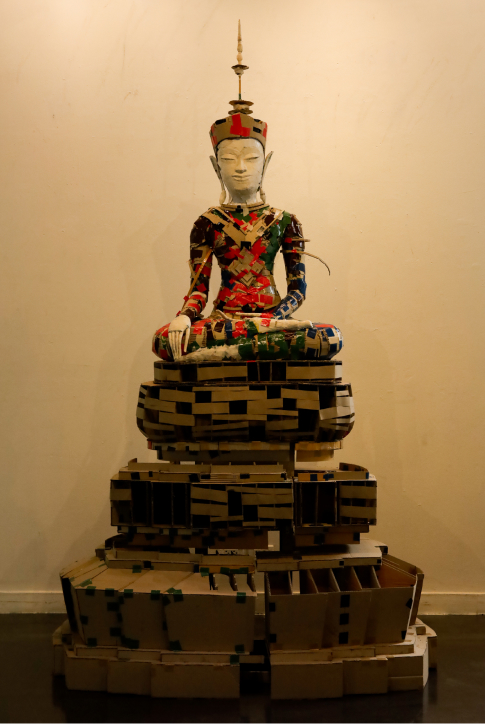
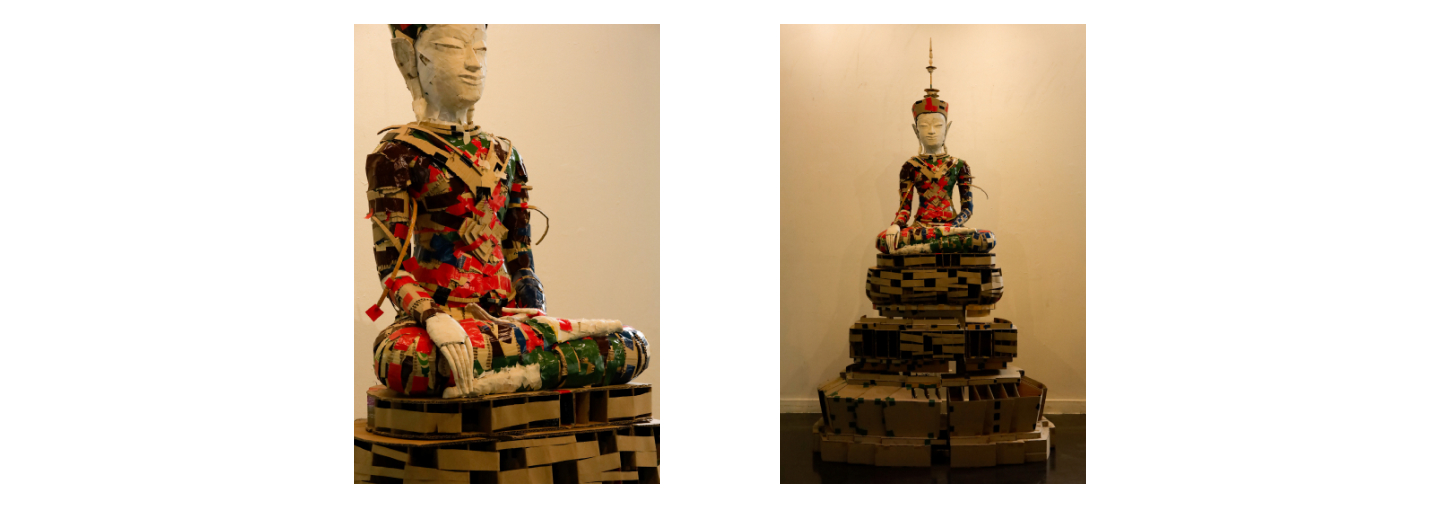
The Buddha Statue in an Art Context

The Buddha Statue in an Art Context

Mr. Nipon Smanmit

<span data-metadata=""><span data-buffer="">Introduction :

This Buddha statue sculpture is a fusion of Eastern and Western art theories. It incorporates the Japanese Wabi-Sabi aesthetic, which celebrates imperfection and simplicity, along with the Western theory of Distortion of form, which emphasizes expressive potential through manipulation of form. The resulting visual language creates a unique and profound work of art that speaks to the human experience of seeking beauty and meaning in an ever-changing world. 

The Wabi Sabi aesthetic theory embodies the essence of simplicity, tranquility, and the beauty of impermanence. It celebrates the intrinsic value of objects that are unpretentious, humble, and authentic, and which reflect the natural processes of decay and aging. It is a philosophy that emphasizes the importance of embracing imperfection and transience as essential elements of beauty and meaning in life. 

Furthermore the interpretation of this theory requires a deep understanding of its underlying principles and a keen sense of aesthetic sensitivity, which allows one to appreciated the subtle nuances of beauty that are inherent in incompleteness and imperfection. In essence, the Wabi Sabi aesthetic is profound expression of the human experience of seeking transcendence through the appreciation of the ephemeral and the fleeting. 

The Distortion theory is an innovative approach to art that involves manipulation visual elements to create a distorted form that challenges the viewer’s perception of reality. By distorting the original image, the artist can create a heightened sense of visual stimulation and evoke a deeper emotional response from the viewer. This approach involves various techniques such as expansion, enlargement, shrinking, die-cutting, and leaving pieces unfinished to create a sense of dynamic tension and energy. 

The resulting visual language is a captivating and though-provoking work of art that encourages the viewer to question their perception of reality and explore new perspectives. 

This two artistic theories Wabi Sabi and Distortion, share some similarities and differences that make them fascinating to combine in a single project. While Wabi Sabi celebrates the natural beauty of Imperfection and simplicity, Distortion theory emphasizes the importance of manipulating visual elements to create a heightened sense of intensity and pressure. By combining these two theories, the artist can create a unique and captivating visual language that stimulates the viewer’s Imagination and challenges their preconceived notions of beauty and meaning.

<span data-metadata=""><span data-buffer="">Objectives:

 This is an experiment to find ways to work of art 
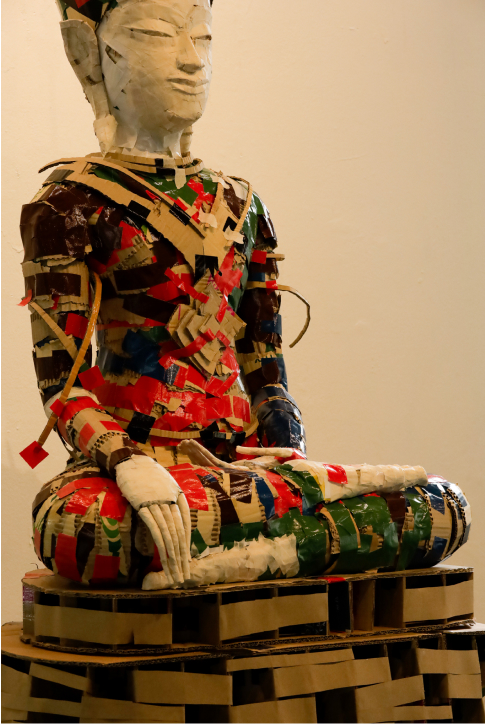
Size of work:<span data-metadata="">

150 cm. width, 100 cm. long, 300 cm. height 7.
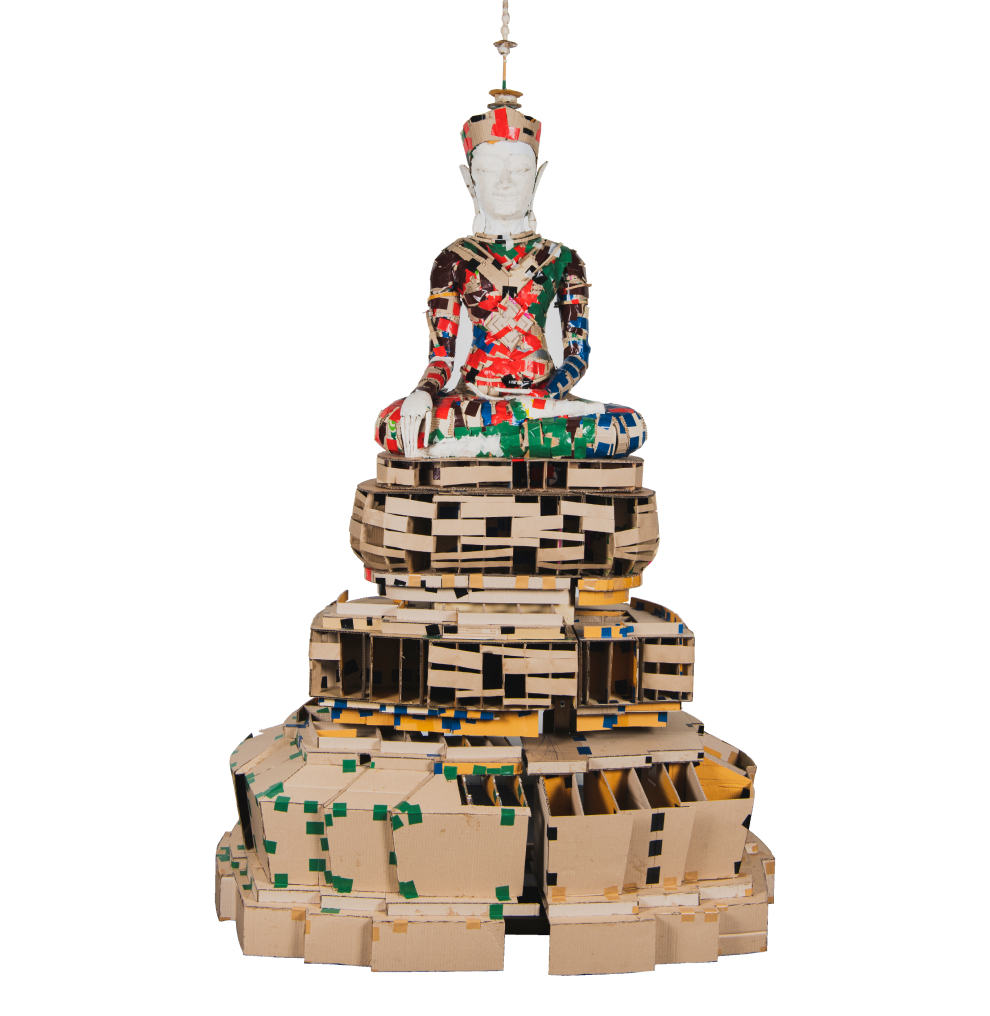
Conclusion:

My intention is not to convey a deep understanding of the Wabi Sabi or the Distortion theory to the audience. Instead, my focus is to incorporate these theories into my artistic creation to generate something novel and innovative. Whether the resulting work reflects both theories or not is not a primacy concern of mine. What natters most is the creative process and the experimentation that occurs through the combination of these two distinct artistic theories. The ultimate goal is to create a work of art that is unique, thought-provoking, and meaningful to both the artist and the viewer.

Categories
Showcase 2023

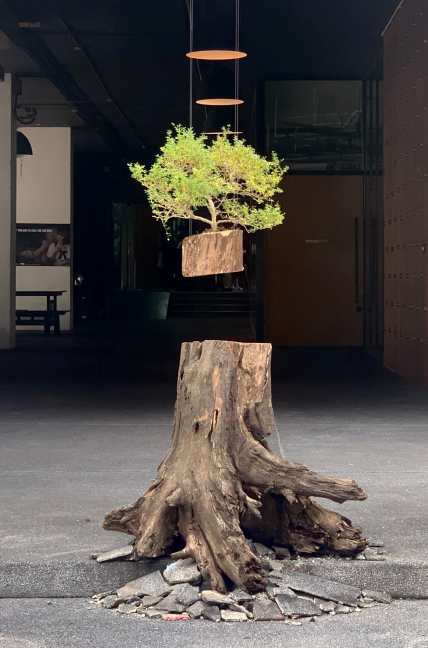
The mixed media art of Rebirth

The mixed media art of Rebirth

Mr.Ekachai Somboon

<span data-metadata=""><span data-buffer="">Introduction :

The forest is most valuable and useful asset to our mankind. We have been dependent upon it directly by the essential need for life. The forest indirectly helps to prevent a nature disaster. The forest effect is also related to the social economy as well. Therefore, we need to share the responsibility to save the forest from all sorts of calamities. I was thus inspired to create my work on, “The mixed media art of Rebirth” 

<span data-metadata=""><span data-buffer="">Objectives:

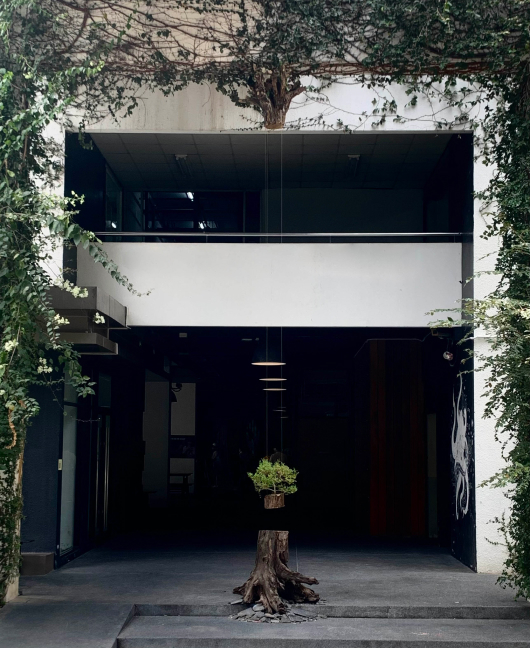
To reflect upon the truth on the destruction of the forest, to express the sorrowful, and at the same time the feeling of hopefulness towards the revival of life and the tree. My endeavor as an artist, Is the process of bringing back to life of nature. To urge on everyone contributing their responsibilities and awareness to conserve the environments by replacing the ones which have been destroyed. 

<span data-metadata=""><span data-buffer="">Methodology:

. Study the cause and consequence regarding destruction of the forest. 

2. Sketch idea. 

3. Create the work. 

4. Assemblage the work into installation. 

Techniques and Materials:

1. Use trunk of the tree uprooted for decorated. 

2. Dead wood logs dug up by machinery. 

3. Living Trees. 

4. Arrange the materials into an installation. 

Conclusion:

The viewer should understand how many humans have destroyed the trees in nature. By leaving such a tragic end to nature when there is a calamity. Representing the reflection of the result of how nature once appeared by re-creating the parts of the trees as a dream like existence of the trees that spring to life from the dead ones. 

References:

[Referencing / Bibliography to start on a new page – Please delete]

In-text citations Please ensure that every reference cited in the text is also present in the reference list (and vice versa). 

Reference style Within the text: 

citations in the text should follow the referencing style used by the American Psychological Association (APA). Publication Manual of the American Psychological Association, Sixth Edition, ISBN 978-1-4338-0561-5. 

List at end of paper: References should be arranged first alphabetically and then further sorted chronologically if necessary. Please single space, and indent after the first line of each. 

Reference to a journal publication: Van der Geer, J., Hanraads, J. A. J., & Lupton, R. A. (2010). The art of writing a scientific article. Journal of Scientific Communications, 163, 51–59. 

Reference to a book: Strunk, W., Jr., & White, E. B. (2000). The elements of style. (4th ed.). New York: Longman. 

Reference to a chapter in an edited book: Mettam, G. R., & Adams, L. B. (2009). How to prepare an electronic version of your article. In B. S. Jones, & R. Z. Smith (Eds.), Introduction to the electronic age (pp. 281–304). New York: E-Publishing Inc. 

Categories
Showcase 2023

Mirror of Grief

Mirror of Grief

Mr. Anupong Suttalak

<span data-metadata=""><span data-buffer="">Introduction :

The conflict between Russia and Ukraine, which began in 2014, has been a major geopolitical event that has had far-reaching consequences for the region and the world. The conflict has resulted in thousands of deaths, as well as the displacement of millions of people. In addition, the region has also been hit by several devastating natural disasters, including earthquakes in Syria and Turkey, which have further compounded the challenges faced by the people of the region. The impact of these events on the people of the region cannot be overstated, and they have inspired many artists to create works that reflect the struggles and challenges faced by those affected. Mixed media art is one form of art that has been used to explore the complex emotions and experiences of those who have been affected by these events. The use of mixed media in art allows for a wide range of materials and techniques to be used, which can help to create a more complex and nuanced representation of the events being explored. This is particularly important when exploring topics such as conflict and natural disasters, which can be difficult to capture using traditional forms of art. As an artist, I have been deeply moved by the events unfolding in Russia and Ukraine, as well as the earthquakes in Syria and Turkey. These events have had a profound impact on the people of the region, and have inspired me to explore these themes through my art. Through my mixed media pieces, I seek to capture the complex emotions and experiences of those affected by these events. 

From these occasions have inspired myself as an artist to reflect consequences through the piece of art, using mixed media to create powerful and nuanced representations of the complex emotions and experiences of those affected. Through my own mixed media art, I hope to contribute to a greater understanding, empathy and actions caused by human hands to people and in the face of adversity. 

<span data-metadata=""><span data-buffer="">Objectives:

The objective of this piece of art is to contribute to understand the impact of disasters on mental health and emotions of humanity, and to raise awareness of the dangers that may arise from human hands.  

<span data-metadata=""><span data-buffer="">Methodology:

– Research the source for information 

– Design the piece of art briefly. 

– Finding suitable materials to be applied in the project 

– Start working on actual projects in accordance with the established plan. 

Techniques and Materials:

Materials 

– Printed photographs 

– Framed wood canvas (size 120cm x 120cm) 

– Miscellaneous items for decorations 


Techniques  

– Photoshop  

– Photo Transfer on Wood 

– Texturize by blowtorch and roller 

– Sticking wood material metal and plastic 

– Burning on wood 

– Oil pastel 

– Drawing  

Conclusion:

By exploring these issues, the artist has found greater empathy and understanding of the experiences of those affected by disasters.Through the use of various media, the writer attempted to create awareness to humanity between trauma, resilience, and hope that arises in the aftermath of such disasters and war. 

References:

วิโชค มุกดามณี. สู่…สภาวการณ์ใหม่ MODERN EXSTENCE 1992.กรุงเทพฯ:หอศิลป์เจ้าฟ้า, 2535

สุกรี เกสรเกศรา. คุณค่าและความหมายของวัสดุจากธรรมชาติและวัสดุสังเคราะในงานศิลปะสื่อผสม.เชียงใหม่:คณะวิจิตรศิลป์ มหาวิทยาลัยเชียงใหม่, 2546

Doe, J. (2022, March 5). Mixed media art reflects the devastation of war. Art News. https://www.artnews.com/art-news/news/mixed-media-art-reflects-devastation-of-war-1234589631/

Karolane Paradis. (2017, April 25). BANKSY : LEGEND OR REALITY?. https://www.artalistic.com/en/blog/Bansky-street-art-en/

Categories
Showcase 2023

Joseph House: A boxed-in living decoded.

Joseph House: A boxed-in living decoded.

Mr. Waris Sinsuebpol

<span data-metadata=""><span data-buffer="">Introduction :

The project is to design a shophouse conversion, turning a 6-unit shophouse into a warmhearted familydwelling. The main requirement is to make the one who live in this house feels like they are in a proper homey-feeling house although all the shophouse conditions still need to be maintained, because they have been living in these boxes since they were born, so no more boxed in feeling. This is an actual and a practical architectural and interior design project to be constructed in 2023. 

To crack the code, both physical and psychological conditions of being in a shophouse (ie. Structure, opening void, ventilation, interior space and feeling, etc.) have been studied, along with the users’ behaviors, design elements, space analysis, and the sense of place theory. Those areas of study have later been used to facilitate the design to achieve the requirements. 

Design Process has been summarized and divided into chapters as follows. 

-Chapter1: Living out of the box. 

-Chapter2: Enter the outside. 

-Chapter3: Vertical transfer. 

-Chapter4: To lose to gain. 

-Chapter5: Light is vital. 

-Chapter6: Belief, faith, and way of life. 

-Chapter7: Style comes last, but first to be seen. 

-Final Chapter: Façade, the first communication to the context. 

At the outcome of this project (as submitted), it is in the process of architectural and interior design working drawings and preparing all information for the contractor. The project is scheduled to start constructing by May 2023. 

<span data-metadata=""><span data-buffer="">Objectives:

To design a shophouse conversion, turning a 6-unit shophouse into a warmhearted family house 

<span data-metadata=""><span data-buffer="">Methodology:

Design Process has been summarized and divided into chapters as follows. 


Chapter1: Living out of the box. 

To define the feeling of living in the shophouse from the users, what is, or what cause the meaning of it by studying the users’ perceptions and behaviors. what we’ve found is 

HOUSE 

-space defined by people who 

-freedom of space

-can allow natural light in  


SHOPHOUSE or ROWHOUSE 

-limitation of space (by shape, lives in there grid structure, and size)

-NO journey, NO transition, or and utilization NO sequences of access

-lack of natural lighting and space as per required ventilation 


Chapter2: Enter the outside. 

To enter the house, you open out to the courtyard -The main entrance (acting as a gate) starts with the outdoor living area, where the owner will be using as a house reception and a leisure space as well as some activities relating to the religion (ie. Christmas). Above this space is the extension used for mother and daughter’s unit. And through this transition, the house entrance door will be found. 


Chapter3: Vertical transfer. 

The main circulation of the house is a lift and a staircase. They transfer people to a next main spot. Because this is an integration of 6 units of a rowhouse, the key is to locate the suitable place for them to gain the access to all functions. 


Chapter4: To lose to gain.

Being in the shophouse space, the grid system of 6 units makes the space like a big box. To crack them, wall panels and columns grid need to be stripped and considered separately but parallelly. one pain point of being rowhouse is because there are 3 spans in depth with 6 units (spans) in width with 4m long in each span, therefore the middle part of it will lose the connection to the outside space. One solution was to sacrifice the front row of all units shifting the wall panel in the middle space, leaving the front space as a big open-air balcony to gain the sense of an outdoor terrace and plant some greens there.

One basic function of the house that the shophouse might have never been found is the laundry and where to dry the clothes. This is another task requested by the owner and, considering the buildingorientation, the best location is in the far-left corner. To create this, the mass of the big box was again cut a small cube to create an opening to allow the light to get through that balcony to be able for them to dry the clothes. 

Other voids have also been created to vertically connect the 2nd and 3rd floor space. This doble height space is to make a visual relation and eliminate the feeling of being isolated from one another when staying in each floor. 


Chapter5: Light is vital. 

From the last chapter, another problem of being a big box is a natural light, especially in the middle space. At the double space and the stairwell, there is an opportunity to bring in the natural light from rooftop to the living room floor. Therefore, the skylight has been created above those area to allow the sunlight in the space. However, the direct sunlight will come with heat, so to avoid that the angle of skylight is designed regarding the sun direction making it an indirect natural light. 


Chapter6: Belief, faith, and way of life. 

Another factor of this house is their belief in religion. St. Joseph and Mary are the sacred icons. The exact location needs to be carefully indicated to appropriate to their everyday life. This creates a “sense of place” feeling which carries on from the place where they had been living since, they were born. 

St. Joseph statue is in the outdoor living area for some ceremony activities and Mary is in the sacred chamber, which is designed to submerge in the living are. 


Chapter7: Style comes last, but first to be seen. 

Mood and tone and styles issue was then being discussed after the main space had been created and most of the problem is solved, to satisfy all users as each of them have different interests and preferences. This seems like a normal step of design, but behind this, it relates to the “sense of place” as well. 


Final Chapter: Façade, the first communication to the context. 

The last part of the project is to design its cover. There are 2 issues, 

1. To make it not to look like a separated 6-unit shophouses anymore, but rather be a one-unit building. Therefore, the design pattern is considered the big area and using random vertical line to intervene and hind the rhythm of the shophouse span making its own new rhythm. 

2. Security to an open balcony in living area that has been created. While keeping all open is the best option for view and ventilation, however, it affects the privacy. Therefore, this aluminum perforated façade is designed to cover but still allow some natural light and ventilation to the building. 


Techniques and Materials:

A shophouse conversion and house extension in total of 800 sq.m. 

Conclusion:

This preliminary design is done and approved by owner. The design development and working drawings are in the process. The construction is expected to kick off in May 2023. 

References:

Vamvakidis, Simos (2018). Composing Architecture and Interior Design. Amsterdam: BIS Publishers. 

McMorrough, Julia (2018). The Architecture, Reference+specification book (3rd edition). Massachusetts: Rockport Publishers. 

Lengen, van, Jhan (2008). The Barefoot Architect, A handbook for green Building. California: Shelter Publications. 

Categories
Showcase 2023

Detective of the Past: A Board Game Designed to Promote and Encourage the Learning of History and Ethnic Culture in Mae Hong Son Province

Detective of the Past: A Board Game Designed to Promote and Encourage the Learning of History and Ethnic Culture in Mae Hong Son Province

Mr.Suporn Shoosongdej

<span data-metadata=""><span data-buffer="">Introduction :

Highland area, Pang Ma Pha District Mae Hong Son Province There is a karst landscape composed of valleys, cave and complex. It is a former human shelter since prehistoric times. especially the Log Coffin Culture that is unique in the area, age between 2,100-1,100 years ago, continued to the present. There are ethnic diversity, such as Thai Yai, Karen, Black Lahu, Red Lahu, Lisu, Hmong, Lua, Pa-O, Chinese and urban people. However, perceptions of ethnic communities on the importance of the Log Coffin Culture are still limited. because of the barriers of youth in poverty and communication causing a lack of equal educational opportunities. Therefore, strengthening ethnic communities It is necessary to begin education in an informal way. Board games are a tool to promote learning through experience. lifelong learning which can develop skills for people of all levels. It makes ethnic youths to know their roots, be aware of changes affecting local society and culture as well as to realize the importance of the Log Coffin Culture heritage in Pang Ma Pha area and create pride in their own cultural identity 

This article presents the board game research series. “Detectives of the Past” is experimental research that to apply knowledge of archeology and local history. The game combines the concept of learning through games and the design thinking process. Focusing on responding to the needs of users to systematic design work.  The results showed that the efficient and standardized process for designing and developing board games was the knowledge of the historical background and cultural archeology of the Log Coffin Culture. The system of play that corresponds to the communication of knowledge, Illustrations suitable for the content, powerful game props tested and accepted. The game therefore has the potential to empower the community and the product can be developed for commercial use. 

<span data-metadata=""><span data-buffer="">Objectives:

1. Design creative tools to reduce inequality in the education system of Mae Hong Son Province 

2. To enhance student learning and enhance interpersonal skills in line with the learning objectives of the 21st century skill. 

3. An alternative educational tool to promote informal, lifelong learning and increase knowledge at all educational levels. 

4. It is the first board game project in Thailand to translate scientific archeology research into classroom content that is easily accessible and understandable to students. and may give those who love to play games 

<span data-metadata=""><span data-buffer="">Methodology:

The project goal is the creation of an educational board game designed to promote and facilitate student learning of the history and ethnic culture of Mae Hong Son Province.  The project applies basic concepts of game-based learning to a Design Thinking Process focusing on meeting the needs of teachers and secondary students. The game rests on the scientific findings of extensive archaeological research by Associate Professor Rasmi Shoocongdei of Silpakorn University. The game translates scientific research into classroom content that is readily accessible and comprehensible to students, and potentially to gaming enthusiasts. 

The design process assessed the knowledge required and enjoyment experienced by game users, as well as the technical performance of the game itself. The game develops three major themes: “Ethnic Detectives” promotes learning and understanding of ethnic cultures; “The Mystery of the Log Coffin” conveys the scientific understanding of the wooden coffin culture of Mae Hong Son; and “The Detective of the Past” links history to modern efforts to preserve culture through excavation and cultural resource management, two key elements of the archeological approach to history. 

The game design achieves four main objectives: to apply the results of archaeological research to innovative curricula linking the Mae Hong Son past to contemporary changes affecting local society and culture; to augment students’ acquisition of essential cognitive skills;  to design games that promote cross-cultural learning; and to create games with commercial potential, thereby lowering costs to academic institutions. 

The project demonstrated four key findings: archaeological research can be integrated into games that increase knowledge and cultural skills; proper design and development processes can produce games that assist users in developing cognitive skills such as critical thinking, problem-solving, creativity, and more effective communications skills; the Design Thinking Process is effective in developing innovative board games that contribute to education and cross-cultural learning; and an effective game rests on five key factors: engaging content, content-appropriate illustrations, effective game props, testing and acceptance, and a compelling game-playing experience.  

In conclusion, through rigorous design and testing the project successfully produced a game (“Detective of the Past”) that serves as a model for incorporating scientific research into an education curriculum so as to strengthen student learning and enhance interpersonal skills, in line with twenty-first century learning objectives. 

Techniques and Materials:

Digital Print Objects, Boxset 

Conclusion:

“Knowledge from research can be made into a fun game.” 

1. Board game are effective as research tools that promotes learning in a new way for students.  

2. Through rigorous design and testing the project successfully produced a game (“Detective of the Past”) that serves as a model for incorporating scientific research into an education curriculum  

3. To strengthen student learning and enhance interpersonal skills, in line with twenty – first century learning objectives 

Categories
Showcase 2023

CLOTHING AS BODY PACKAGING.

CLOTHING AS BODY PACKAGING.

Mr. Seksarit Thanaprasittikul

<span data-metadata=""><span data-buffer="">Introduction :

The project “Clothing as body packaging”, highlights the relationship between clothing and packaging. According to the definition, both terms share common traits and functions. Clothing not only serves the primary purpose of covering the body, achieving both functional protection from the elements and moral propriety but also portrays the wearer’s self and personality. Similarly, the packaging is the way to protect products by using an outer layer of a carton or cardboard. Packaging can also refer to the presentation of something or someone to the public in a way that is designed to be attractive or appealing. Considering the similarity of clothing and packaging, the project aims to explore and integrate packaging methods into clothing design. A study of packaging such as folding, construction, and details, informs design ideas. Folding and the flattenable construction used in packaging become the core idea for creating new construction through the experiment of flattenable folding. The design is developed through the experiment that emphasizes the clothing construction that can be foldable and flattened. In terms of materials, the foldable and flattenable structure can be achieved by using stiff fabric and fusible interfacing. In addition, details of packaging are developed into new fastenings in clothing. Unlike buttons and zippers, the clothing is joined by inserting the extra tab into the matching slit. As a result, the final design portrays clothing as body packaging that features a temporary foldable and flattenable structure enveloping the body.

<span data-metadata=""><span data-buffer="">Objectives:

To explore new possibilities in design methodology and to create new design in shapes, forms and constructions.

To explore new possibilities in fashion design through experimental approaches to creating a new design in shapes, forms, and constructions.

To investigate the role of clothing from a different perspective.

To advance professional expertise in design and to expand design skills.

<span data-metadata=""><span data-buffer="">Methodology:

Based on a study of packaging, such as folding, construction and details, the design process starts from the experiment with folding. In response to the idea of “clothing as body packaging”, the experiment focuses on the foldable and flattenable construction. After various experiments, the folded pieces are enlarged into the body size and developed into separate foldable clothing panels that can be temporary constructed and flattenable. In addition, the foldable panels are integrated into a part of clothing details, such as front and back panels, to make it wearable. Details of packaging are developed into new fastenings, featuring the use of the extra tab that can be inserted into the matching slit.

Experiment with folding.

The folded pieces are enlarged into the body size and developed into separate foldable clothing panels that can be temporary constructed and flattenable

Details of packaging are developed into new fastenings, featuring the use of the extra tab that can be inserted into the matching slit.

Techniques and Materials:

Materials include stiff cotton fused with fusible interfacing, wool felt.

Conclusion:

In conclusion, the project highlights clothing as body packaging by integrating the packaging methods into clothing through an experimental design approach. The research involves a study of packagings such as folding, flattenable construction, and details. Unlike working on visual interpretation, the design process focuses on the reinterpretation of the conceptual idea of packaging into 3-dimensional experimentation, featuring the experiment of foldable and flattenable structure, the integration of the foldable structure into clothing, and the development of new fastening details that support the temporary flattenable structure. As a result, the final design portrays clothing as body packaging that features a temporary foldable and flattenable structure enveloping the body.

References:

Antoine, D. (2020). Fashion Design: A Guide to the Industry and the Creative Process.London: Laurence King.

Cabreara, R., & Antoine, D. (2015). Classic Tailoring Techniques for Menswear. (2nd ed.). London: Bloomsbury.

Callan, G., (2008). Dictionary of Fashion and Fashion Designers. 

London: Thames&Hudson. 

Jackson, P. (2012). Structural Packaging. London: Laurence King.

Pathak, H. (2003). Structural Package Designs. Amsterdam: Papin Press.

Roth, L., & Wybenga, G. (2000). The Packaging Designer’s Book of Patterns. New York: John Wiley.

Categories
Showcase 2023

The sustainable Contemporary Items Design from The Theory of Post Minimalism.

The sustainable Contemporary Items Design from The Theory of Post Minimalism.

Mr. Patipat Chaiwitesh

<span data-metadata=""><span data-buffer="">Introduction :

The garbage problem situation in Thailand is facing the crisis in garbage management when compare to the increasing quantity of garbage continuously all garbage from houses, communities and industrial factors  by the data from Department of Factory in February 2565 has informed about receiving the hazardous waste in the waste disposal factory found that there are the quantity of waste and garbage more than 2 million Tons that be the unused waste and garbage from whole manufacturing process since input raw material, produce, Quality control, pollution treatment, machine maintenance until demolition or building offices and others staffs residence in factory  including sludge or residue such as  raw material scrap,  deteriorated products, used chemicals, sludge, ashes, dust, soot, filter bag, battery, machine equipment parts, concrete equipment parts, scrap metal electronic equipment scrap, electronical appliances, packaging, contaminated containers, etc. Such information indicates that increasing industrial garbage and waste increase in only one month which still not be included with garbage from others places by disposing of waste and garbage properly of 2 million tons in each time can reuse the garbage only 25% resulting in contamination of toxins in garbage and waste to environment all of water source, earth, weather and also effect to human health. Environmental problems be problems that tend to be more serious unto the economics and socials changing of country so in this present time environmental problems of the world also be in the crisis due to the growth of global industrial factors causing Carbon Dioxide Emissions and any various greenhouse gases more than the natural can keep the balancing and still effect to get a lot of natural disasters, ecosystem and the environment was also destroyed which leading economic losses and effect to the livelihood of living beings and humanity as unpredictably and also be the importance and harmful to the future of all human being on this world. By this research will study environmental problems from garbage and waste scraps from Industrial Factories and make the understanding leftover materials all of the type of form and physical quality of materials to properly use by recycle to prolong the service life of those materials by taking the technique of handicrafts to apply with Postminimalism theory for designing the contemporary object to suit with new consumers who love to use in simply dwelling, beauty, to be the environmentally friendly and present a new perception to environmentally friendly products. 

<span data-metadata=""><span data-buffer="">Objectives:

1. To study product designing under the concept of Sustainable 

2. To study product designing and apply through the Post Minimalism theory in designing 

3. To study the physical quality of leftover materials from Industrial factories for bringing in properly designing. 

4. To study and trial design the Sustainable Contemporary objects through Post Minimalism theory. 

<span data-metadata=""><span data-buffer="">Methodology:

Studying product designing through the concept of Sustainable which to apply on Post Minimalism theory in designing Contemporary objects to reduce the production process that waste energy and to respond the need of new consumers who want the environmentally friendly products as more and more by taking the leftover scrap materials from Industrial factories to produce Contemporary objects such as accessory, decoration sculpture, jewelry i.e. by using the technique of handicrafts that blending through the Post Minimalism theory until being the new contemporary products that suit to new consumers. 

Techniques and Materials:

1. This studying aims to study the garbage and waste scrap problems from Industrial factories that effect to environment and taking the leftover from waste scrap to reuse processed as Contemporary objects to new generation. 

2. Researcher study the quantity of leftover waste scrap from Industrial factories that can take to reuse processed in Thailand and take to design through the Postminimalism theory in designing to produce in the reality work by using the technique of Thai handicrafts. 

3. Sampling group in this study be the new generation group who having sustainability interesting with the age between 25 – 35 years and live in an urban area. 

Conclusion:

To optimize resources for the circular economy, the goal is to reduce the amount of waste to less than or equal to zero as the concept of sustainable. But in some cases, the wastes are of broken raw materials or poor-quality components which definitely cannot be used or recycled. To strengthen this idea, researcher foresees the potential of broken glasses or damaged materials from the glass blowing manufacturing to create new valuable jewelry. The researcher wants to present a new perspective of Fine Jewelry that does not focus on the value of raw materials, but intentionally turn the waste from any industry’s production into a new product by use the theory of post minimalism. The researcher turns silver scraps into wire, then, creating new geometric shape adorned with broken glasses with design theory and craftsmanship. By optimizing resources of the circular economy, it serves both wearers and viewers’’ view of beauty as well as creating a contemporary design approach for new generation people.  

References:

Dr. Seree Vorapongse. Environmental and Sustainable Development. Integrated Social Science Jonal, (Page 162). 

NGThai. (2020). Sustainable – the way for humanity development 

in the future. Retrieved from https://ngthai.com/news-activity/30946/intrototsx 

Office of The National Economic and Social Development Council. 

The report of progressive of Thailand Sustainable Development Goals of the year B.E. 2559-2563. Retrieved from 

https://sdgs.nesdc.go.th/wp-content/uploads/2021/11/Thailands.SDGs-report-2016-2020-book_for-web-1.pdf. 

Categories
Showcase 2023

The Relationship of Seed Growing.

The Relationship of Seed Growing.

Mr.Poraphon Chinwannachot

<span data-metadata=""><span data-buffer="">Introduction :

Every “Seed” has its own value. It will grow, bloom or bear fruit. It may be a shelter or depend on animal and environments. Seed growth depend on preparation of cultivation and good environment. It needs good factors such as soil, water and air to stimulate seed germinate and turn seed into perfect tree. All of these factors make a seed grow, bloom or bear fruits. If it misses one of factors, seed will not grow and flourish. 

“Humans” are one of seeds. If seed must have good factors to grow, human must have it too such as good relationship in family, good friendship and good social environment. They will grow up and become to quality human. But all of human are different like a seed. There are good seeds that are perfect and there are bad seeds that are not perfect. But every seed it is necessary to grow to survive and live in a way that suits them. Giving Opportunities and getting opportunities is important to grow It is one of the factors that allows us to continue to be useful and good. From inspiration aforementioned I have designed and created work through the process of thinking, analyzing, finding creative information came out in the form of a sculpture with materials that are permanence used by using stainless steel welding technique which is the main in the creation according to my idea Every “Seed” has its own value. It will grow, bloom or bear fruit. It may be a shelter or depend on animal and environments. Seed growth depend on preparation of cultivation and good environment. It needs good factors such as soil, water and air to stimulate seed germinate and turn seed into perfect tree. All of these factors make a seed grow, bloom or bear fruits. If it misses one of factors, seed will not grow and flourish. 

“Humans” are one of seeds. If seed must have good factors to grow, human must have it too such as good relationship in family, good friendship and good social environment. They will grow up and become to quality human. But all of human are different like a seed. There are good seeds that are perfect and there are bad seeds that are not perfect. But every seed it is necessary to grow to survive and live in a way that suits them. 

Giving Opportunities and getting opportunities is important to grow It is one of the factors that allows us to continue to be useful and good. From inspiration aforementioned I have designed and created work through the process of thinking, analyzing, finding creative information came out in the form of a sculpture with materials that are permanence used by using stainless steel welding technique which is the main in the creation according to my idea  

<span data-metadata=""><span data-buffer="">Objectives:

creative the Product by using the concept’s seeds growing in form of Sculpture 

<span data-metadata=""><span data-buffer="">Methodology:

1. Study the seed imagination 

2. Idea sketch  

3. Develop skate 

4. Making the Model  

5. Develop Model 

6. Welding stainless steel. 

7. Inspection the final Sculpture. 

Techniques and Materials:

Welding stainless steel 

Conclusion:

I have created a sculpture in the concept of the relationship of the seed that grows. 

Categories
Showcase 2023

Factory Waste Polyester : Study and analysis into Home Decorative Item Design

Factory Waste Polyester : Study and analysis into Home Decorative Item Design

Mr. Patipat Chaiwitesh

<span data-metadata=""><span data-buffer="">Introduction :

Plastic be the cause of environmental problems. 

As often we heard and seen the most of this plastic waste impact to the nature in many ways even to on ground and in water animals or to human as the producers, users and also people who make the good plastic to be the useless waste in the shorter time as it shouldn’t be due to their lacking off the reality knowledge of using the extravagant resources be the significant cause that bringing the waste problems in plastic environment leading to the cause of environmental problems to Thai people who use plastic as the most of 7,000 millions pieces per year and taking plastic producing per year about 1.03 millions ton by the half of its become the end of its cycling life by being the waste in sea hence causing Thailand be the producing plastic waste as the most in top of the 6th country rank in the world.

Above problem leading Industrial factories start realization in these points also nowadays trendy to start focusing the important of environmentally friendly products as the most hence getting the new technologies to support in upcycling these plastic wastes for return back using especially polyester plastic bottles or used drinking bottles that can take into recycle process through the classification setting and pass cleaning for the upcycling process. Polyester can be melted by heat until become the liquid polymer after that injected with a spinner rate machine for getting various types of fiber to woven the cloth of strong, soft and durable qualities as getting the new polyester production. These qualities making PET plastic bottles become the role play in trend of sustainability business handling of all organizations and be the new starting of creating products from plastic bottles of various brands.

However, taking recycle polyester cloth to the processing we can’t avoid it’s bringing a lot of wastes after processing by the case study in using every roll of cloth producing, getting the rages of size 70 x 200 centimeters by in Industrial manufacturing will get the huge of these rages which the producers don’t want to litter these rages by the other way they want to seek the solution by taking the design to handle for getting value adding on these waste rages as the most. In this studying be finding the way and possibility to taking technology in recycle polyester rages processing that be left over from the normal producing in order to be the home products through designing process for reducing the quantity of wastes from production and to value adding rages by upcycling after that taking the marketing test by placing as the new products position relating to the recently trend that giving the important of sustainability under the creative economy concept. These be the leading model in household development products and the future of home decorative item design that be the most valuable material usage. 

<span data-metadata=""><span data-buffer="">Objectives:

1. To study Factory Waste Polyester. 

2. To created Home Decorative Item from Factory Waste Polyester. 

3. To present New Decorative Item and market test. 

<span data-metadata=""><span data-buffer="">Methodology:

In this present, environmental problems be the importance problem occurring to our nowadays world including the climatic and 

topographic changes. Researcher must more search for the solution that takes more into account sustainability in designing residence, consumables and Home Decorative Item under the trend of using recycle materials and or taking reuse again that become the more popularity in nowadays. By in this studying aim to extend the life cycle of the sector in fiber Recycle Polyester the rest from production can be recycled using in order to design the creativity products that be suitable for a rapidly changing world. 

From the studying the quantity of fiber rages of Recycle Polyester that be rest from production in Industrial factories found that would get the huge of left rages from each production that almost of its be not the big pieces causing limitations in design which breaks this limitation, designer will take technology in helping the processing. 

By this design, researcher want to take material to design in the type of Home Decorative Item due to designer has worked about object designing and found the marketing gap that never have anyone take this type of material to design like designer will design in this time coupled with factory that use these materials almost be the factories that produce utensils and home decorations which will make this design can be tested the directly market through factory storefront shop. 

By designing thought aims to design as the modular design that will create the designing in unit of the same pieces which will be the easier in production and can break the limitation of the material sizes, which designing this product, designer want the consumers can take in part of designing also. Then designer plans to place the position in market as the small pieces in order that they can assemble the parts to be their Home Decorative Item which be properly suitable for their individual houses by themselves without any limitations and designer will go on studying about the shapes of each unit in the next process. 

Material and tool 

The first point, designing Home Decorative Item with fabric constituents or also known as textile housing Which is related to the physical properties of the suitable fabric in production in accordance with human needs, for the fabric that can be reality using in most designs would be Synthetic fabric that is resistant to touch  by this studying  we would take the experiment of Synthetic fabric from PET bottle recycle  that  was using in textile housing Industry as increasing and causing the problem of getting the most of Residual waste from mass production. 

The second point, designer want to design Home Decorative Item that be different from others products available in the market by analyze suitable shape and function in processing and combining materials with technology for presenting the new innovation products to the market of these types of products. 

The Last point, the quality of Synthetic fabric from PET bottle recycle have the different quality from the others general fabric that could use heat to cut for creating the new innovation products by without any sewing. 

1. Material 

1.1. Fabric left over from curtain production as the type of roller blind . By most of the fabric left over from the production of the curtain as the type of roller blind would be wide of 70 cm and have length 1 m.-1.50 m. which is too small to be used in the Industrial Factory production. 

2. Tools 

2.1. Cloth cutting knife. 

2.2. Laser cut machine. 

2.3. Computer 

3. Experiment 

3.1. The experiment and practice: The experiment and practice show cloth cutting trial comparing the cuts between using cloth cutting knife and using laser cut machine due to fabrics to be used in curtain production as the type of roller blind rather, it has a hardness similar to paper, hence make designer must 

It can be seen that the use of the blade if the area to be cut is too small will cause the fabric to fade and torn apart due to the contact area of the twine is less causing the fabric fibers not to adhere. 

It can be seen that cutting with a laser cut machine with heat will make the fiber getting from PET bottle recycle  melts and connects with other twine  into the body this makes it possible to cut smaller shapes without breaking apart. 

Design 

Researcher want to test the limitation of fabric by designing the cutting shapes from natural by designing into the Partition that use to decorate the house, which is usually according to most of the market will be Partition that look simple, there is a structure to help you set up or hang but due to the limitation of the fabric that is small , researcher solve problems by designing natural shapes as the type of unit by taking the interconnection system through the principle of Auto lock in designing. 

By researcher choose the using of Auto Lock in shape of n and u with opposite characteristics in designing. 

That researcher has been experimented with placing them into natural shapes designing as in the pictures. 

After the ready line layout placing, researcher will take the cutting experiment by laser cut machine, that from the above cutting experiment expected to be able to cut the fabric as the type of roller blind which is small shape without making the workpiece fall apart. 

Cutting by Laser cut machine make the edge of fabric that was produced from PET bottle recycle can melt and connect to be the small workpiece then researcher start the designing partition with the idea of modular design in designing for the easier in the reality production to sell in the future and can work with the small rages without the need for a 

After getting the desire pattern, then taking the reality trial production by using laser cut machine in the later to take installing as per the already designing. 

Techniques and Materials:

 This research aimed to create a model of making Home Decorative Item from rag of Recycle Polyester left in manufacturing. The related literature and studies divided into 3 parts, the 1st part concerning to the innovation of recycle fiber from PET bottles for getting the quality and how to take processing waste materials in other material industry. The 2nd part focusing to case study in processing waste materials as Industrial fabrics from factories which would be helpful to others researchers who study the types and develop the concepts and process creating Home Decorative Item from waste materials. The last part concerning to designing thoughts data of Home Decorative Item for studying the suitability and beauty of Home Decorative Item and taking data to apply in the supporting the basic creation of Home Decorative Item with the most of suitability and effectiveness. In this studying be searching the ways and possibility in using technology to the processing fabrics rages from recycle polyester that be left from productions to be the Home Decorative products Item through the designing management in order to reduce the amount of waste from manufacturing and to add value of the waste materials. 1. Innovation of Recycle Fiber from PET Bottles. 2. Home Decorative Products Item from Recycle Material in the designing fields 3. Designing Thoughts of Home Decorative Item 

Conclusion:

From the installing experiment, designer think that this piece can be developed to be the others products due to the using the principle of modular design making workpieces can change shape and can modify the shape as the desired target audiences that can make these workpieces be able to build on being the Home Decorative Product Items from fabric rages in variety functions 

References:

GC เผยแพร่แนวคิดจัดการขยะพลาสติกด้วยการจัดงานภายใต้แนวความคิด ‘Upcycling Our Planet’ [Advertorial] [online] 2019 [cited 2019 October 03]. Available from: https://thestandard.co/gc-upcycling-our-planet/

ชีวิตใหม่ของขวดพลาสติกไอเดียรีไซเคิลขยะขวดพลาสติก สู่ผลิตภัณฑ์สุดชิค เพิF F

มคุณค่าจับเทรนด์ธุรกิจยังยืน

[online] 2019 [cited 2019 July 24]. Available from:https:// bottomlineis.co/Business_Recycle_Plastics

Technology Promotion Department, Thailand Textile Institute. . PET Bottle Love the World.. Fiber Recycle Innovation Production .[online] [ cited on 21 June 2556. from : http://www.thaitextile.org/iu_backup/link_content/PET_.recycle.pdf

Nike Revolutionizes Sustainability in Performance Product. [online] 2012 [cited 2013 June 21]. Available from: http://nikeinc.com/news/nike-better-world 8 

Bottles, 1 Jean – The Levi’s ® Brand Introduces Waste. [online] 2014 [cited 2014 Jan 30]. https://www.packagingdigest.com/smart.packaging/8-bottles-1jean-levis-introduces-waste-denim-collection 

Wacoal Sports Eco. [online][ cited 2013 June 21]. Available from http://wacoal.co.th/?q=node/183/render_preview 

Frame Magazine, 11 DESIGN PRODUCTS AND COLLECTIONS MADE USING WASTE AND RECYCLED MATERIALS [online] 2020 [cited  2020 August 05]. Available from: https://www.frameweb.com/article/11-design-products-and.collections-made-using-waste-and-recycled-materials 

 
Categories
Showcase 2023

Tatsuno EV charger

Tatsuno EV charger

Mr. Kate Siribhakdi

<span data-metadata=""><span data-buffer="">Introduction :

The collaboration project started with Tatsuno(Thailand) co. Ltd, leading company produces gasoline dispenser, asked Design department to make conceptual design for company new product line, electric vehicle charger. Tatsuno(Thailand) co. Ltd, want to develop electric vehicle charger to be in 

charge area such as department store, gas station etc. 

Project started with future trend analysis on electric vehicle, existed electric vehicle styling research and conceptual electric vehicle styling, to find Design language that related to electrical vehicle. Then, research on all of Tatsuno’s fuel dispenser to analyze for their design language. Style comparison of Tatsuno design and other fuel dispenser producer. The analyze show that Tatsuno fuel dispenser design has it own design language event though the company seems don’t know about it. It’s the proportion of the fuel dispenser itself that has ratio of 0.5 : 2 : 2 : 3 . The proposal is to use those proportion in designs and introduce some of element that corresponds to electric vehicle design. Keywords in the proposal was Future, Clean, Nature, Friendly and Trust, according to Tatsuno’s brand image that’s has heritage name in fuel dispenser industry need to expand company’s future product. Three mood board in design range from contemporary to conservative design were proposed. Sketches according to three mood board were proposed ,revised and choose the final design for each mood board. Digital 3 dimension modles were made in Autodesk Fusion 360 and rendering in Autodesk Vred then post-rendering in Photoshop. 

Tatsuno select one of three proposed design for further development. The instrument inside the charger was giving to adjust some detailing design for company further propose to Tatsuno head office in Japan. The design that Tatsuno company select is a conservative design with element of blue LED light ,to create the sense future, and metallic stripe panel, sleek and slim look. The design was design with universal design core idea, for disable and normal can be use. 

<span data-metadata=""><span data-buffer="">Objectives:

1. Develop Product design brand Identity. 

2. Develop electric vehicle changer for Tatsuno co.ltd. 

<span data-metadata=""><span data-buffer="">Methodology:

1. Project started with future trend analysis on electric vehicle, existed electric vehicle styling research and conceptual electric vehicle styling, to find Design language that related to electrical vehicle. 

2. Tatsuno’s product design identity. Research on all of Tatsuno’s fuel dispenser to analyze for their design language. Style comparison of Tatsuno design and other fuel dispenser producer. The analyze show that Tatsuno fuel dispenser design has it own design language event though the company seems don’t know about it. It’s the proportion of the fuel dispenser itself that has ratio of 0.5 : 2 : 2 : 3 . 

3. 1st proposal, The proposal is to use those proportion in designs and introduce some of element that corresponds to electric vehicle design. 

4. Keywords in the proposal was Future, Clean, Nature, Friendly and Trust, according to Tatsuno’s brand image that’s has heritage name in fuel dispenser industry need to expand company’s future product. 

5. Three mood board in design range from contemporary to conservative design were proposed. 

6. Sketches according to three mood board ,revised several times and choose the final design for each mood board. 

7. Digital 3 dimension modles were made in Autodesk Fusion 360 and rendering in Autodesk Vred then post-rendering in Photoshop. 

8. Model: print out from 3d printer and painted. 

Techniques and Materials:

– 3D rendering image.

– 1:10 Model 

Conclusion:

A design conceptual for Tatsuno company that will help company to know themselves and use provide product design language in future use. The company will propose project to Tatsuno’s headquarter in Japan. 

References:

[Referencing / Bibliography to start on a new page – Please delete] In-text citations Please ensure that every reference cited in the text is also present in the reference list (and vice versa). 

Reference style Within the text: citations in the text should follow the referencing style used by the American Psychological Association (APA). Publication Manual of the American Psychological Association, Sixth Edition, ISBN 978-1-4338-0561-5. 

List at end of paper: References should be arranged first alphabetically and then further sorted chronologically if necessary. Please single space, and indent after the first line of each. 

Reference to a journal publication: Van der Geer, J., Hanraads, J. A. J., & Lupton, R. A. (2010). The art of writing a scientific article. Journal of Scientific Communications, 163, 51–59. 

Reference to a book: Strunk, W., Jr., & White, E. B. (2000). The elements of style. (4th ed.). New York: Longman. 

Reference to a chapter in an edited book: Mettam, G. R., & Adams, L. B. (2009). How to prepare an electronic version of your article. In B. S. Jones, & R. Z. Smith (Eds.), Introduction to the electronic age (pp. 281–304). New York: E-Publishing Inc.