Prosthetic Attachments: Anticipatory Postmemory in Coastal Maine
Mahidol University International College
Carol Siatras
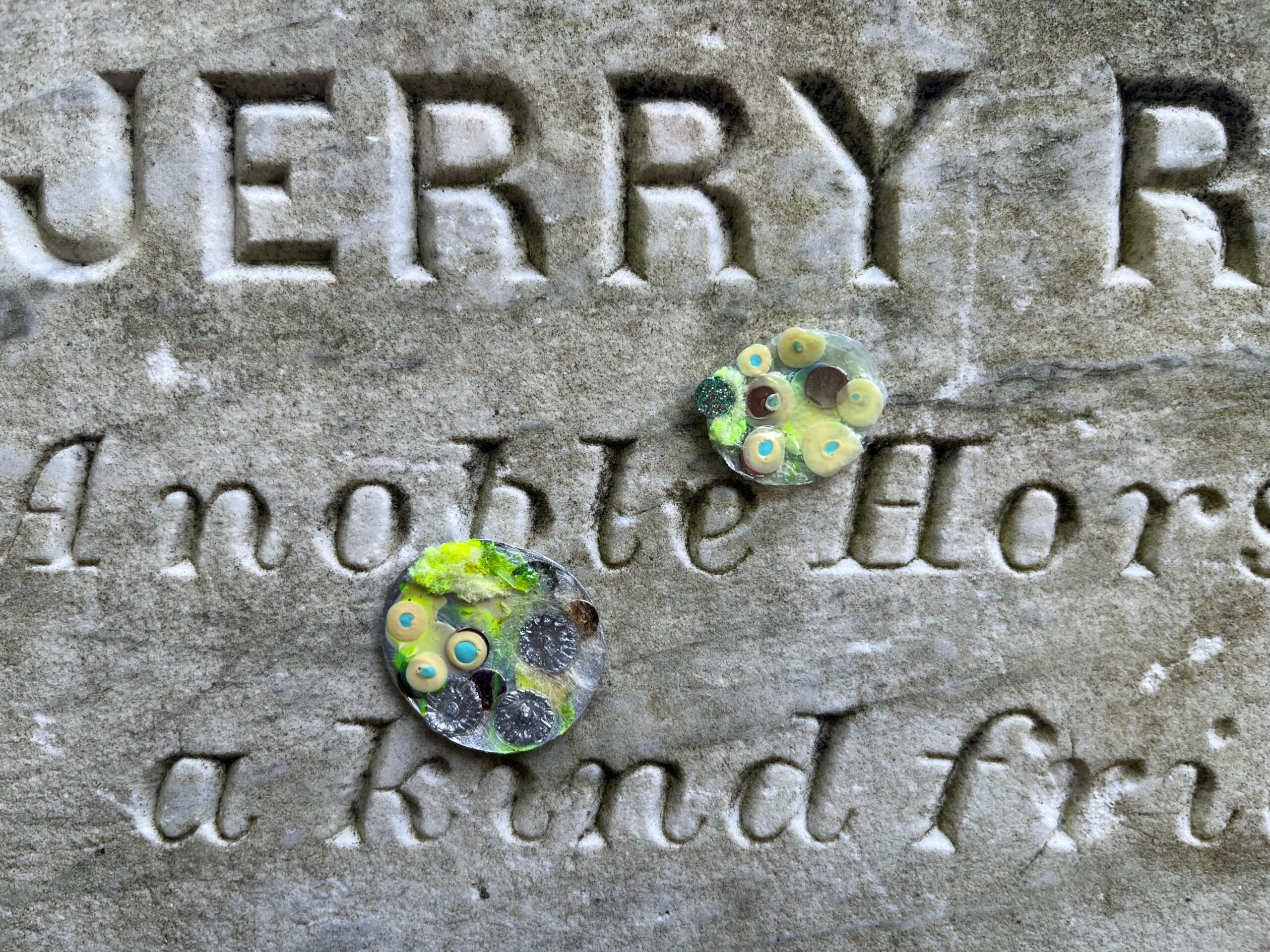
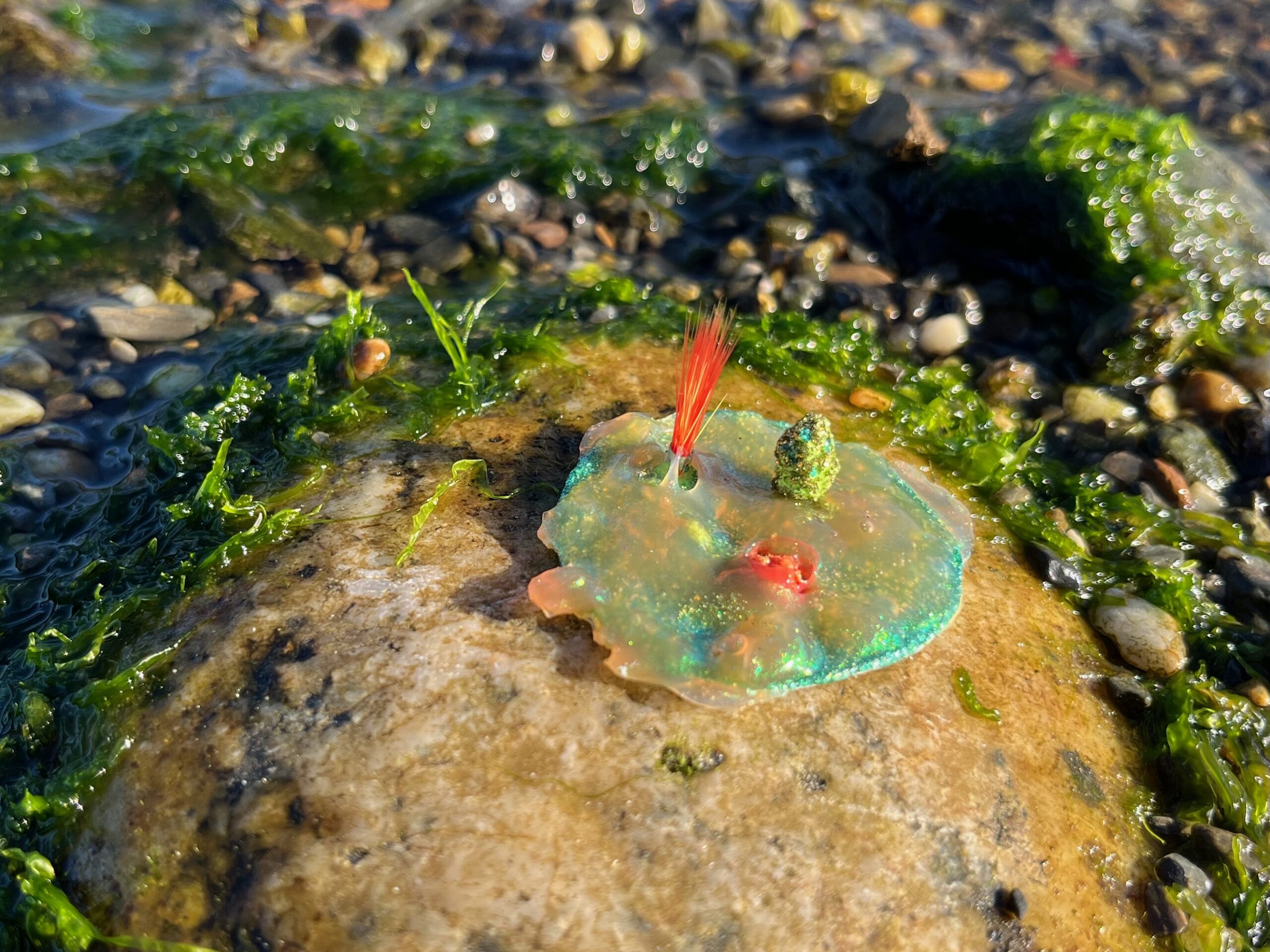
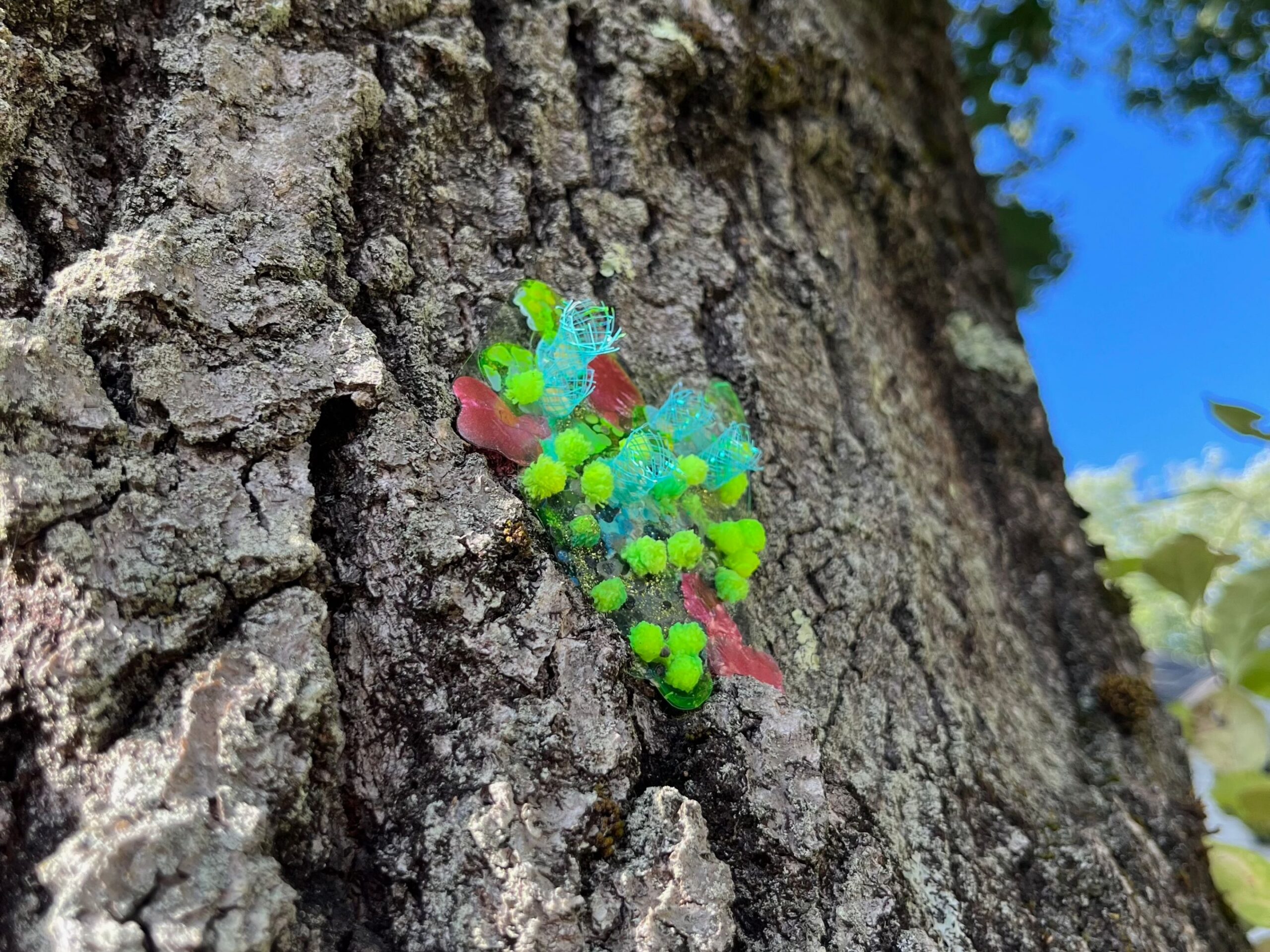
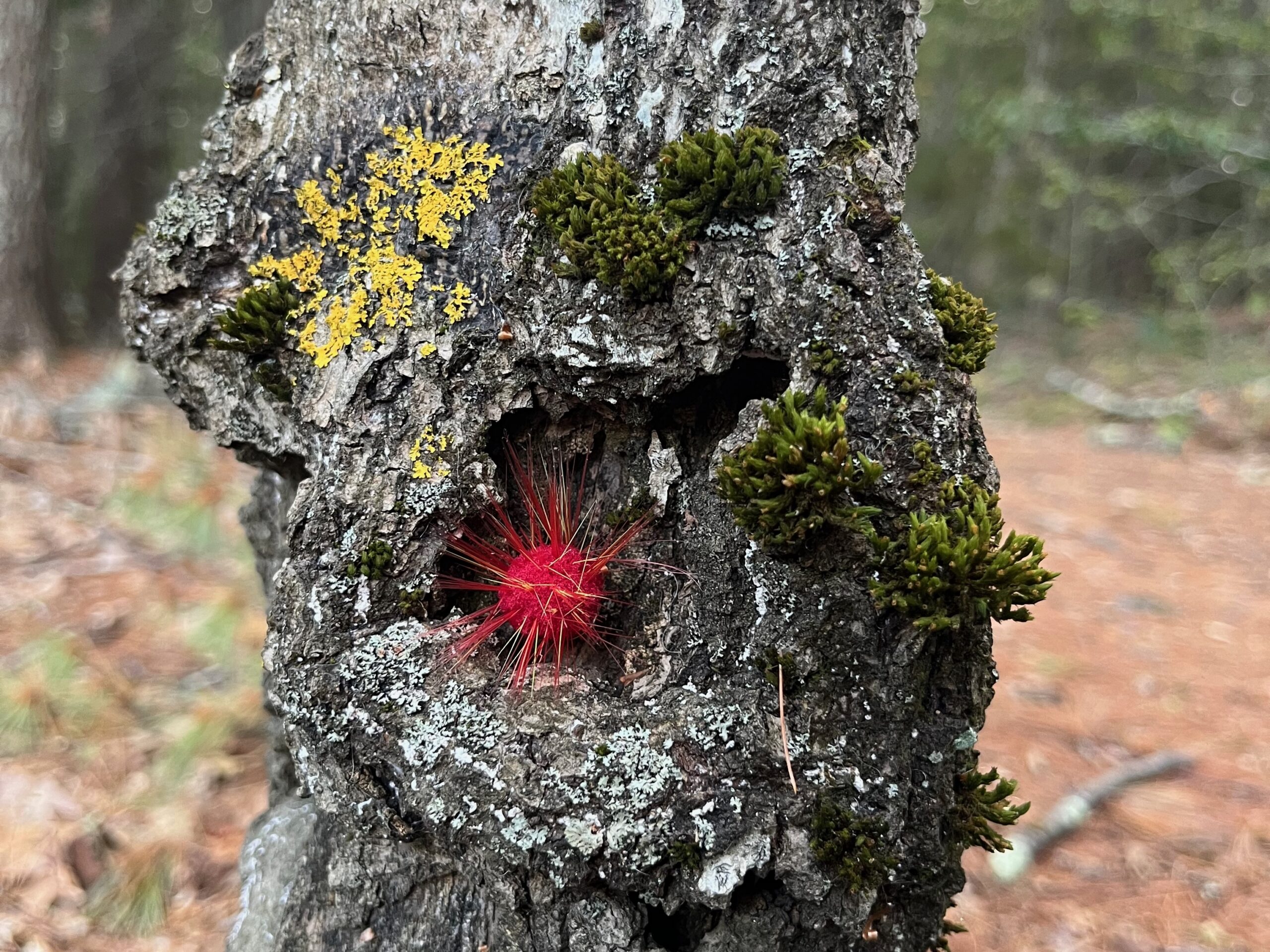
Abstract :
This project introduces the concept of “anticipatory postmemory” by placing hyper-synthetic, prosthetic growths into vulnerable (and personally significant) ecosystems of coastal Maine. While the framework of postmemory traditionally addresses an inherited relationship to a traumatic past (Hirsch, 2008), this studio-led research shifts the temporal axis forward. It participates in a contemporary phenomenon: a profound sense of mourning for ecological loss and species extinction that has not yet fully occurred, but is acutely anticipated (Albrecht et al., 2007).
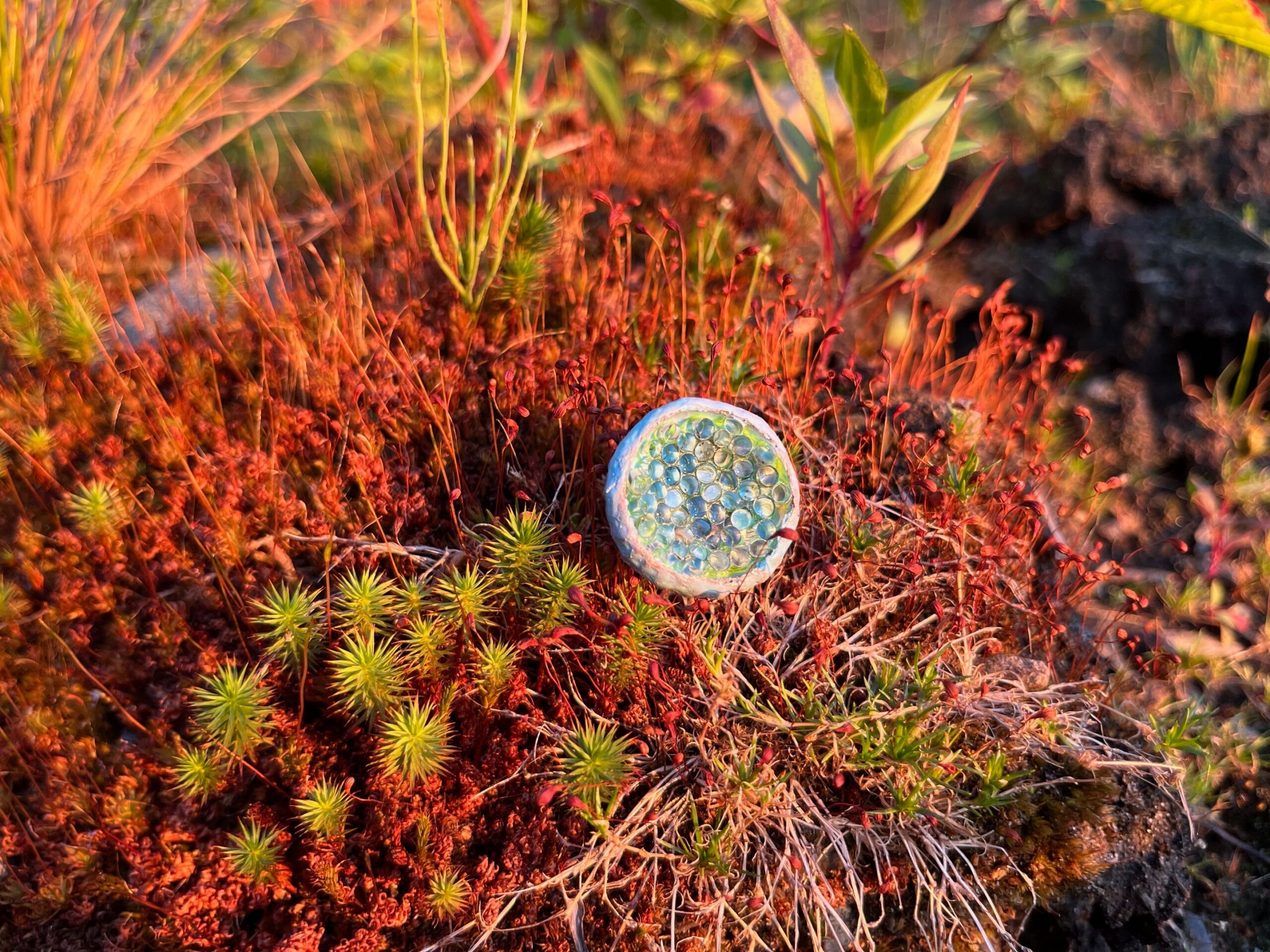
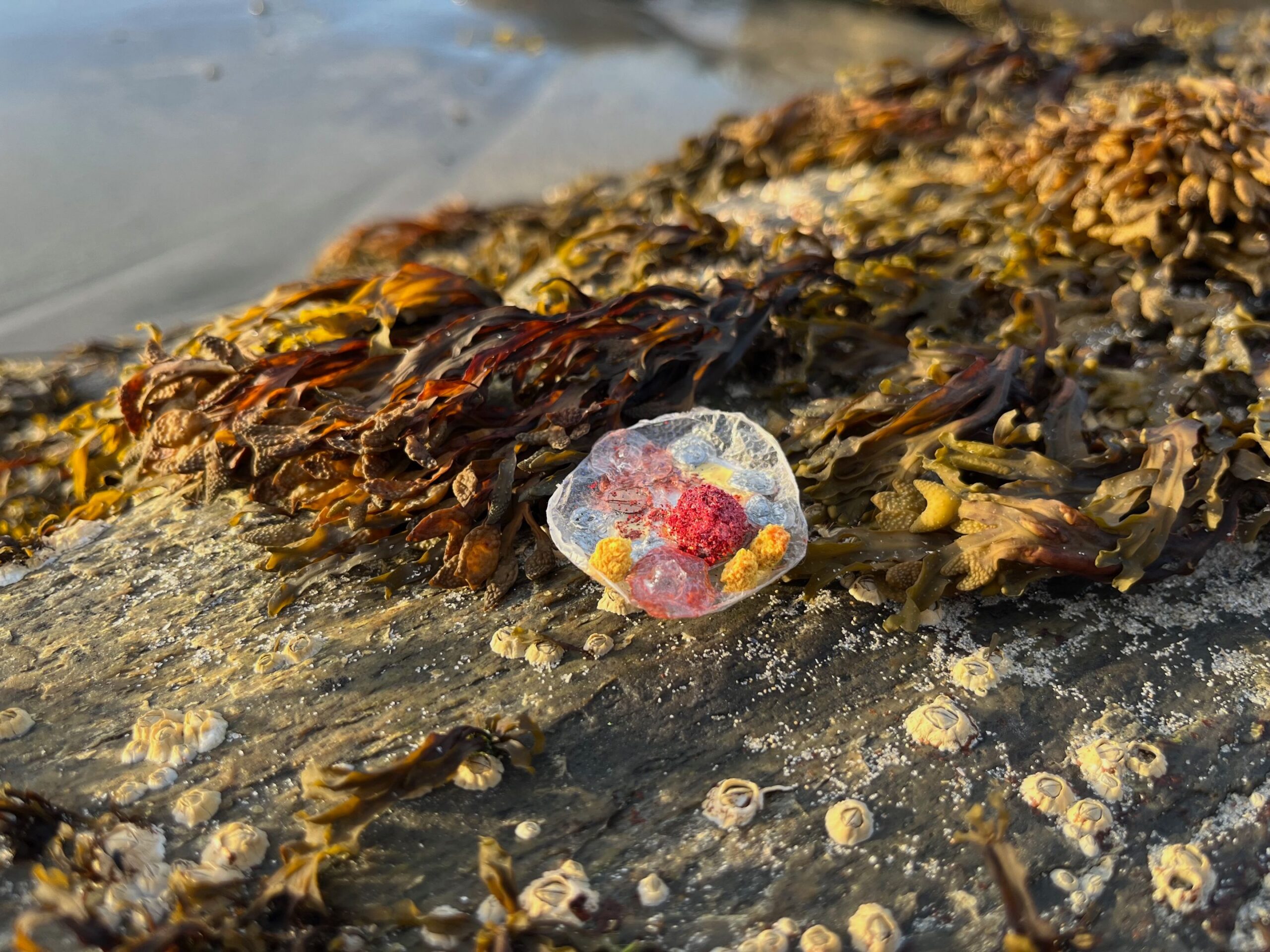
Using vibrant, miniature sculptural forms made out of cheap, single-use, synthetic materials, the experimental project creates an intentional material friction against the ancient, slow-growing cryptogamic communities—encompassing lichens, mosses, and marine algae—that colonize local forests and shorelines. Cryptogams are highly sensitive environmental indicators (Lima, 2026); tentatively replacing them with artificial proxies suggests a bleak, eco-futurist narrative where humanity must attempt to patch or mimic the biomes we have systematically compromised.
The visual execution of the work relies heavily on an “archival fieldwork” aesthetic, echoing historical documentation styles (Edwards, 1758; Haeckel, 1904) and capturing these objects in situ amid natural forms and organic textures. However, rather than functioning as strictly faithful studies, these micro-sculptures operate as fantasy stand-ins for a future stripped of its foundational organisms. They are alluring yet inert fakes that underscore the unsatisfactory nature of a prosthetic environment. Cataloged with precise GPS coordinates, each photograph invites viewers to consider the emotional distress of environmental change (Albrecht et al., 2007) and the “distance between” a living ecosystem and the artificial legacy we risk passing down.
Objectives :
The primary objective of this studio-based inquiry is to shift the original, retrospective nature of postmemory forward, using contrived artistic understatement to explore proleptic ecological grief (Amsen, 2023). Rather than focusing on macro-level climate spectacles, this project aims to foster an intimate encounter with environmental vulnerability by focusing on the impending precarity of delicate cryptogamic life forms (lichens, mosses, and marine algae).
Specifically, the work seeks to:
- Investigate Interspecies Postmemory: Explore whether humanity could experience a collective, inherited trauma for the extinction of non-human life forms and biomes, particularly ones we have never personally witnessed or directly experienced.
- Disrupt Material Expectations: Use mass-produced, environmentally toxic synthetics to construct “prosthetics” (replacements), creating an intentional material friction that highlights the stiff, inadequate nature of a human-made ecological substitute.
- Anchor Speculative Futures in Real Space: Use a conceptual “archival fieldwork” format—pairing in situ photography with precise GPS metadata—to transform local, personally cherished landscapes into sites of anticipated loss.
Ultimately, the project objectives are rooted not in abstract theory, but in an embodied, “hands-on, feet-in” observation of the earth. By installing these quiet, synthetic stand-ins in intimate natural locations along the coast of Maine, the work aims to prompt viewers to inhabit the uncomfortable “distance between” (Hirsch, 2008) a living, breathing ecosystem and the inert, plastic archive of waste we threaten to leave behind.
Conceptual Framework :
- The Genesis of Anticipatory Grief: A Childhood Landscape
The foundation of this studio practice rests on a lifelong intimacy with the landscapes of a small strip of coastal Maine, and an acute awareness of their vulnerability. In the 1970s and 1980s, these rural fields, forests, and shorelines functioned as an expansive playground—a space where childhood was directly woven into a collection of largely undisturbed habitats. The psychological shift from childhood wonder to ecological dread was marked by a specific encounter: discovering a massive construction scar in a beloved field, cleared for a housing subdivision.
This initial shock, among others, introduced a sense of anxiety and powerlessness—the sudden realization that an entire natural world could be systematically dismantled. Decades later, as suburban development and climate pressures continue to alter the region, that childhood experience resurfaces. The act of placing botanical prosthetics into the environment echoes that original desire to preserve: it is an artistic reclamation of a threatened space.
- Shifting the Temporal Axis of Postmemory
To understand this emotional landscape, the project engages with, but alters, the traditional framework of postmemory. Coined by theorist Marianne Hirsch (2008), postmemory describes the relationship that later generations bear to the personal, collective, and cultural trauma of those who came before them—experiences they “remember” only through stories, images, and behaviors. It is a relationship defined by a generational “distance between.”
This research started with a conceptual pivot on postmemory: proleptic or anticipatory postmemory. Rather than inheriting a trauma from the historical past, the contemporary observer could engage in a pre-postmemory: of ecological collapse. We mourn the inevitable extinction of species—such as the rapid decline of foundational biomes—before they have fully vanished. This artwork functions as an artifact sent backward from a speculative future, inviting the audience to inhabit the uncanny “distance between” a living ecosystem and its synthetic proxy.
- Cryptogamic Sites and Synthetic Proxies
This conceptual friction is imagined through a sculptural “colonization” of cryptogamic communities—ancient, non-flowering organisms such as lichens, mosses, and marine algae that form the foundational skin of both terrestrial forests and intertidal shorelines. Cryptogams are vital bio-indicators, deeply sensitive to atmospheric pollution and climate shifts (Lima, 2026).
The artist-fabricated “organisms” are purposely designed as alluring but rigid approximations; like early-generation prosthetic limbs, they are stiff, possibly clumsy, and “off” in terms of color. By placing the artist’s small imaginary proxies in local sites such as Mackworth Island, Kettle Cove and Robinson Woods (among others) and photographing the visual result, the project archives locations of habitat precarity and wonders how it would feel to live without them.
Process / Methodology :
This studio-led research uses an iterative, site-responsive process to consider a personal, proleptic ecological grief or dread in familiar landscapes. With back-and-forth dialogue between studio fabrication and field documentation, the project maps five distinct coastal Maine micro-environments.
The process began by tapping into a lifelong mental archive of local botanical growths, which spurred the creation of small, at-scale compositions using mass-produced, single-use household items (read: synthetic junk). Guided by real natural color palettes, amplified through high-key neons and iridescence from the junk, the initial compositions grew almost as miniature abstractions rather than strict botanical realism.
A critical phase in the process involved carrying these first-draft forms directly into the field for a series of test photographic shoots. Observing how the synthetic compositions performed against real stone, bark, and tidal elements then affected the follow-up studio practice. In response to these field trials, the compositions were each revised—altering their scale, color values, dimensionality, and contours to ensure they would strikingly “pop”, capturing the stiff interruption of a prosthetic.
Furthermore, the final photographic images relied on some immediate, on site interventions. Without disturbing the micro-sites, the artist adapted the sculptures on-site with a select tool kit– melting plastic edges to match organic contours, adding ltiny accents, or introducing secondary contrasting forms.
To reinforce the archival framework, each photographic file is cataloged using a systematic naming convention that treats the administrative act of labeling as an extension of the artwork itself.
An example of this site-specific indexing structure is formatted as follows:
Prosthetic Cryptogram: Specimen I (2026)
Digital photograph of a temporary, site-specific sculpture (mixed synthetic materials).
Location: Ship Cove, Fort Williams Park, Cape Elizabeth, Maine.
Geographic Coordinate System: 43°37’22″N 70°12’33″W
What3words: ///pack.trying.nest
By embedding these precise space-capsules (like time-capsules) directly into the text, the project leaves behind a permanent, granular record for a specific, threatened speck of the planet.
Techniques and Materials :
The materiality of the work intentionally mirrors the speculative, eco-futurist narrative of environmental degradation. Eschewing traditional fine art mediums, the sculptures are fabricated entirely from mass-produced, single-use, household items. Repurposed plastics, cellular mesh netting, vibrant microfiber filaments, and iridescent party decorations are fused together using glues and nail polishes, which provide an unnatural, hyper-vivid coloration and a resilient, glassy sheen.
These materials are painstakingly layered, cut, and heat-manipulated to mimic the organic structures of imaginary cryptogams. The resulting objects function as striking, jewelry-like brooches when nestled into the landscape. This stark reliance on toxic, non-biodegradable plastics creates an intentional conceptual friction: the very materials driving habitat destruction and future microplastic pollution are deployed here as the stiff, inert, and deeply inadequate prosthetics tasked with replacing living nature.
Result / Conclusion :
The result of this studio-led research is a series of distinct site-specific creative gestures across a small, intimately studied area of coastal Maine, documented in situ through the lens of archival fieldwork. Yet, the true conclusion of this project lies in the heartfelt, performative paradox of its execution. Throughout this experiment, significant studio time was dedicated to fabricating these tiny, intricate imaginings, only to install them temporarily for a single photographic moment before removing them entirely. Because leaving these non-biodegradable synthetic objects behind would contradict the very ecological care that drives the work, the prosthetics are packed away, leaving the physical landscape completely undisturbed.
Consequently, the project exists primarily in a tentative, experimental space. No other person will never witness these objects where they were placed. This method serves as a direct conceptual metaphor for both extinction and postmemory. The photograph becomes a placeholder for an idea—an archive of a game of imagining the future without the natural, and how that would feel.
Ultimately, this work concludes that the artist’s role in the face of eco-anxiety is not (only) to provide literal, macro-level solutions, but could also be to practice an intimate, understated form of witness. By staging these temporary, imaginary prosthetic attachments-to-nature and documenting them with precise spatial coordinates, the project leaves behind a conceptual map for the viewer. It offers an encounter with the discomforting reality that our future memories of foundational, ancient, and long-lived species may exist only as distant, synthetic approximations.
References :
Albrecht, G., Sartore, G. M., Connor, L., Higginbotham, N., Freeman, S., Kelly, B., Stain, H., Tonna, A., & Pollard, G. (2007). Solastalgia: The distress caused by environmental change. Australasian Psychiatry, 15(1_suppl), S95–S98.
Amsen, E. (2023, July 7). The art and science of coping with climate change around the world. Forbes. https://www.forbes.com/sites/evaamsen/2023/07/07/the-art-and-science-of-coping-with-climate-change-around-the-world/
Edwards, G. (1758). Gleanings of natural history, exhibiting figures of quadrupeds, birds, insects, plants, &c. (Part I). Printed for the author.
Haeckel, E. (1904). Kunstformen der Natur [Art forms in nature]. Verlag des Bibliographischen Instituts.
Hirsch, M. (2008). The generation of postmemory. Poetics Today, 29(1), 103–128. doi.org
Lima, J. (2026). Introduction to the study of cryptogams. http://www.amazon.com
Schuster, J. (2023). What is extinction? A natural and cultural history of last animals. (pp. 43-67). Fordham University Press.
Share :
Facebook
Twitter
LinkedIn
WhatsApp
Email
Print