Categories
Showcase 2023

Photogrammetry Preservation

Photogrammetry Preservation

Mr. Piyanon Somboon

<span data-metadata=""><span data-buffer="">Introduction :

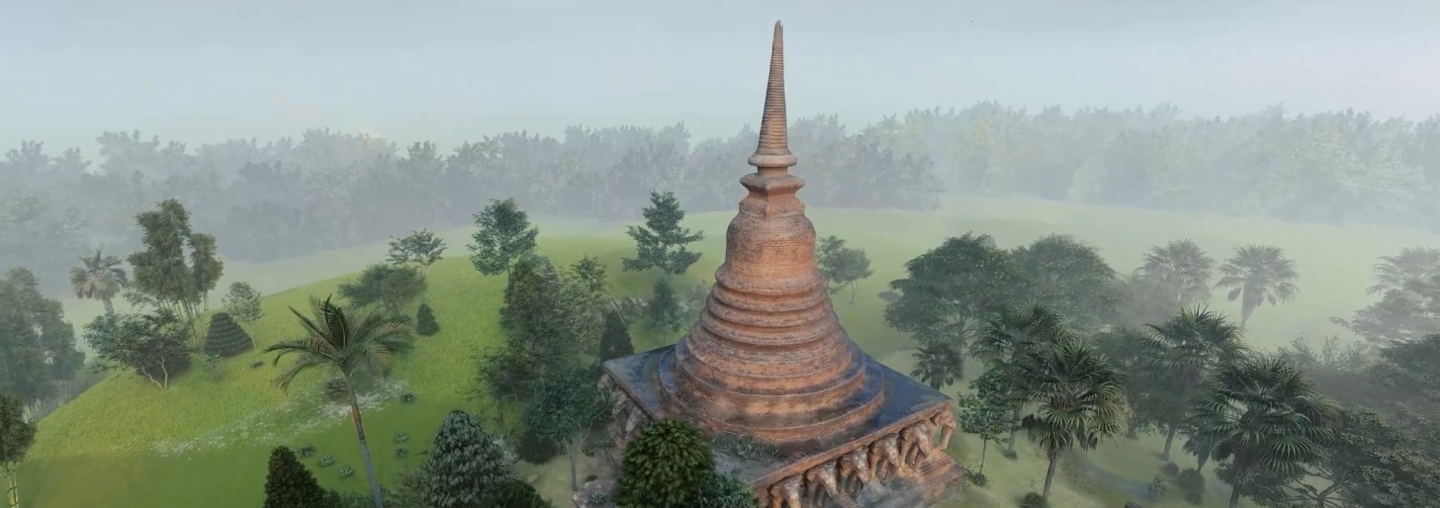
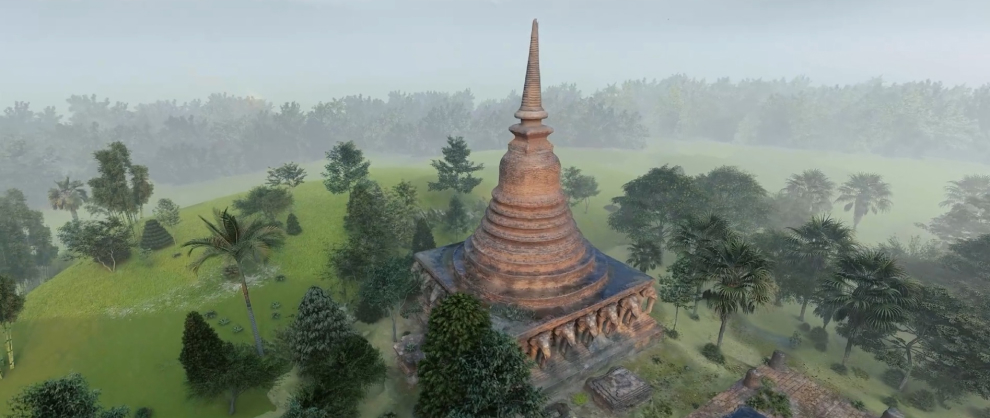
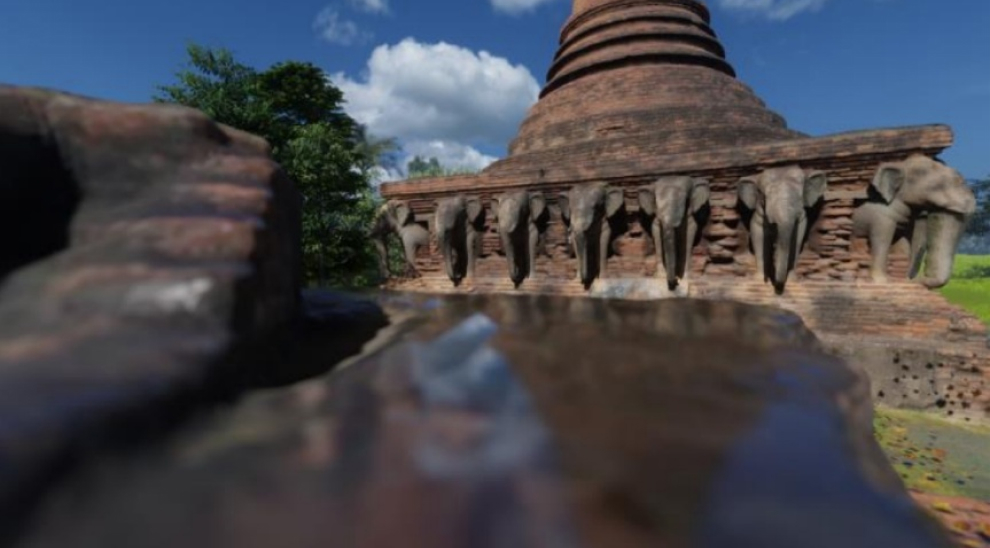
The preservation of cultural heritage sites is crucial for maintaining a connection to our past and our cultural identity. Sites like Wat Sorasak in Sukhothai Province, Thailand, serve as valuable historical and cultural resources that require meticulous documentation, preservation, and protection. Photogrammetry techniques have gained popularity in recent years due to their ability to create highly accurate and detailed 3D models of archaeological structures, providing researchers with a new means of analyzing and understanding cultural heritage sites.

The photogrammetric survey conducted at Wat Sorasak highlights the effectiveness of photogrammetry techniques in documenting and preserving cultural heritage sites. The 3D models produced through the use of photogrammetry software enable detailed analyses of the site’s architecture and features, facilitating the identification of areas that require conservation or restoration work. This, in turn, ensures the long- term preservation of the site.

The use of photogrammetry technology also offers an innovative way for visitors to experience and appreciate cultural heritage sites. Virtual and augmented reality technologies can create a new and immersive means of exploring these sites. This can be particularly beneficial for individuals who face geographical or other restrictions that may make physically visiting these sites difficult.

In conclusion, the utilization of photogrammetry techniques in documenting and preserving cultural heritage sites holds significant promise. By creating 3D models, researchers can expand their understanding of these sites. Additionally, virtual and augmented reality technologies can provide visitors with a unique and engaging way of experiencing cultural heritage sites. As such, it is imperative that we continue to develop and employ these technologies to ensure the protection and conservation of our cultural heritage for generations to come.

<span data-metadata=""><span data-buffer="">Objectives:

To emphasize the importance of preserving cultural heritage sites for maintaining a connection to our past and cultural identity.

To explain the popularity of photogrammetry techniques and their ability to create accurate and detailed 3D models of archaeological structures.
<span data-metadata=""><span data-buffer="">Methodology:

– Define Research Framework

– Capture photographs of the site from various angles using high- resolution cameras.

– Process the photographs using reality capture software to generate a 3D model of the site.

– Develop the design with real-time rendering using Lumion.

Edit the video and audio using AfterEffects.

Techniques and Materials:

3D Animation Size : 1920*1080 pixel
Conclusion:

Photogrammetry techniques have shown effectiveness in documenting and preserving cultural heritage sites like Wat Sorasak in Sukhothai Province, Thailand. The 3D models created enable detailed analyses of the site’s architecture and features, identifying areas requiring conservation or restoration work and ensuring long- term preservation. These technologies offer innovative and engaging ways for visitors to experience and appreciate cultural heritage sites, particularly for those facing geographical or other restrictions. The use of photogrammetry techniques in documenting and preserving cultural heritage sites holds significant promise, expanding researchers’ understanding of these sites and ensuring the conservation of our cultural heritage for future generations.

References:

Mesapam Shashi and Kamal Jain. “Use of photogrammetry in 3D modeling and visualization of buildings” ARPN Journal of Engineering and Applied Sciences. VOL. 2, NO. 2 : 37-40 : January 2007.

Dallas, R., W., J. Kerr, S. Lunnon, and P. Bryan, 1995. Windsor Castle: Photogrammetric and archaeological recording after the fire, Photogrammetric Record 15(86):

Wamg, and A. Ahmad, 2002. Digital architectural photogrammetric recording of historical building and monuments, New Zeland Surveyor, 293: pp. 25-30.
Categories
Showcase 2023

K-pop x Y2K Anime Character

K-pop x Y2K Anime Character

Mr.Pasin Thanasin

<span data-metadata=""><span data-buffer="">Introduction :

K-pop has become a truly global phenomenon thanks to its distinctive blend of addictive melodies, slick choreography and production values, and an endless parade of attractive South Korean performers who spend years in grueling studio systems learning to sing and dance in synchronized perfection.

Awash in Y2K nostalgia and youthful vibrancy, NewJeans is rapidly becoming K-pop’s newest darling.

Arriving under the auspices of Hybe Corp. subsidiary ADOR, NewJeans — comprised of members Minji, Hanni, Danielle, Haerin, and Hyein — dropped their first, self-titled EP in August with no warning. As the group has taken off, so has its stream counts. On Feb. 8, NewJeans celebrated its latest milestone: that “OMG” had surpassed 100 million streams on Spotify.

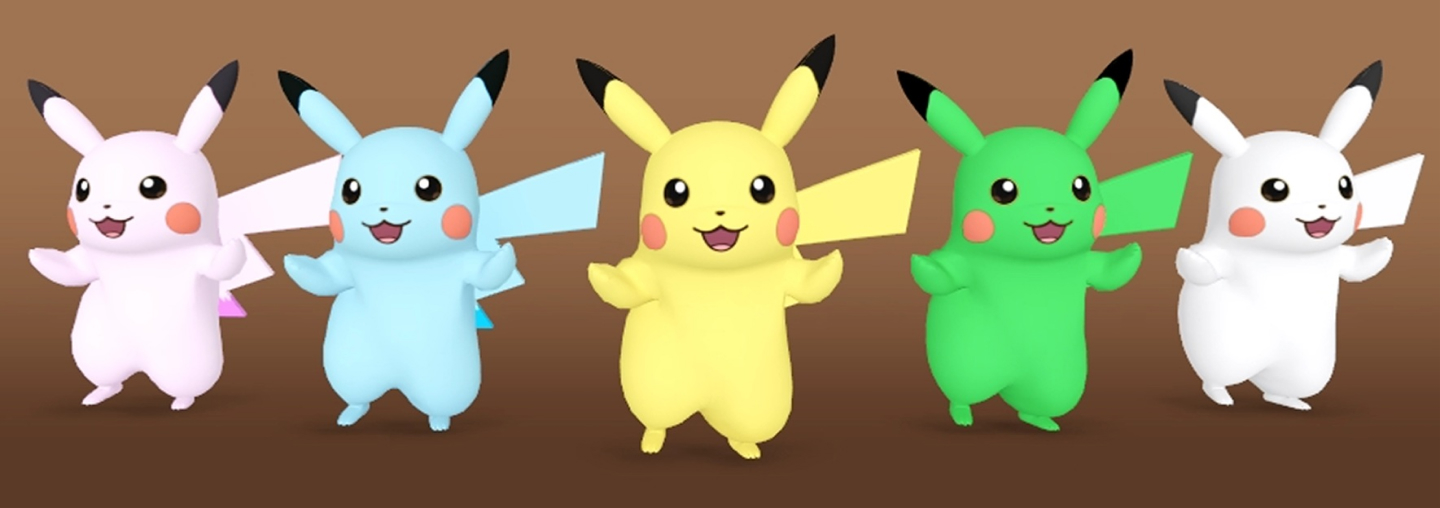
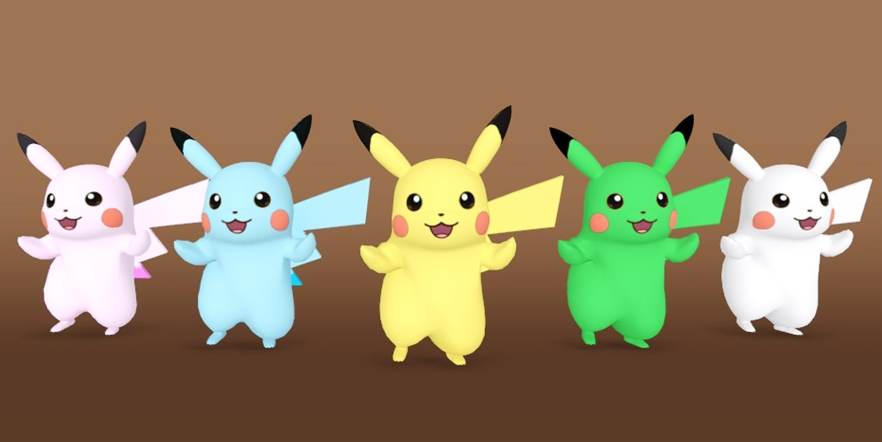
To created an Art work with success of NewJeans “OMG”. I chose an Iconic Character from Y2K Anime “Pikachu”.

Pikachu was not necessarily destined for great popularity. He was not a standout “pocket monster” in Nintendo’s first Game Boy Pokemon title, Red and Green, but was one among 151 creatures that children could choose to play with.

Early audiences were entirely domestic as the game was not available outside Japan. However, when Kubo Masakazu, a comic book publisher and manga enthusiast, was hired by Nintendo to take Pokemon beyond the national market, he immediately saw the

potential to build a global franchise and audience around one character “Pikachu”.

In 1998, Masakazu developed the animated television series and movies, focusing the stories on a trio of young travellers Ash, Misty and Brock. Each traveller had a partner pokemon that would never be tucked away in a pokeball (devices in which pokemon are captured and stored), with personalities of their own. The bond between Ash and Pikachu is at the heart of Pokémon’s global success.

Finally, I hope K-pop group with concept of Y2K cross with most success Y2K Japanese character would make a combination of mix pop culture between Japan and Korea.


<span data-metadata=""><span data-buffer="">Objectives:

To created Animation that presented both culture, Japan and Korea.

<span data-metadata=""><span data-buffer="">Methodology:

1. Download reference video from youtube and create a reference file at syncsketch.com.

2. Created scene in Maya. Setup tool for Animation.

3. Analyse Human pose and transfer to Anime pose. Start blocking pose.

4. Polishing Animation.

Techniques and Materials:

Animator / Loop Animation

Conclusion:

As an Animator, it’s a little bit hard to analise human pose and put them to Anime character that have a short arms, short legs and no finger. But it quite fun to play around with this short.

References:

NewJeans.(2023,Jan 9). OMG step challenge[Video]. https://www.youtube.com/shorts/WQPbUrczuQw

Categories
Showcase 2023

50JOEs : The Value Shift of Illustration Art

50JOEs : The Value Shift of Illustration Art

Mr. Suttichart Sarapaiwanich

<span data-metadata=""><span data-buffer="">Introduction :

Today the medium of art is very varied, from traditional like painting, drawing, and sculpture, to digital art like NFT. The value of art in these different areas already changed from the past. Now the physical of art isn’t part of the value that shifts into many ways depending on the exhibit platforms that give many opportunities for every artist to explore but it is also a problem for some artists who can’t adapt to the new areas or technologies that will decrease the original value of their work or possibly disrupt their careers. But art

value factors are more complex than just choosing the right medium or platform. The artwork is the product that depends on emotion between the artist and the collector. The value of digital art in a .jpg file can have more value than a wall-sized painting.

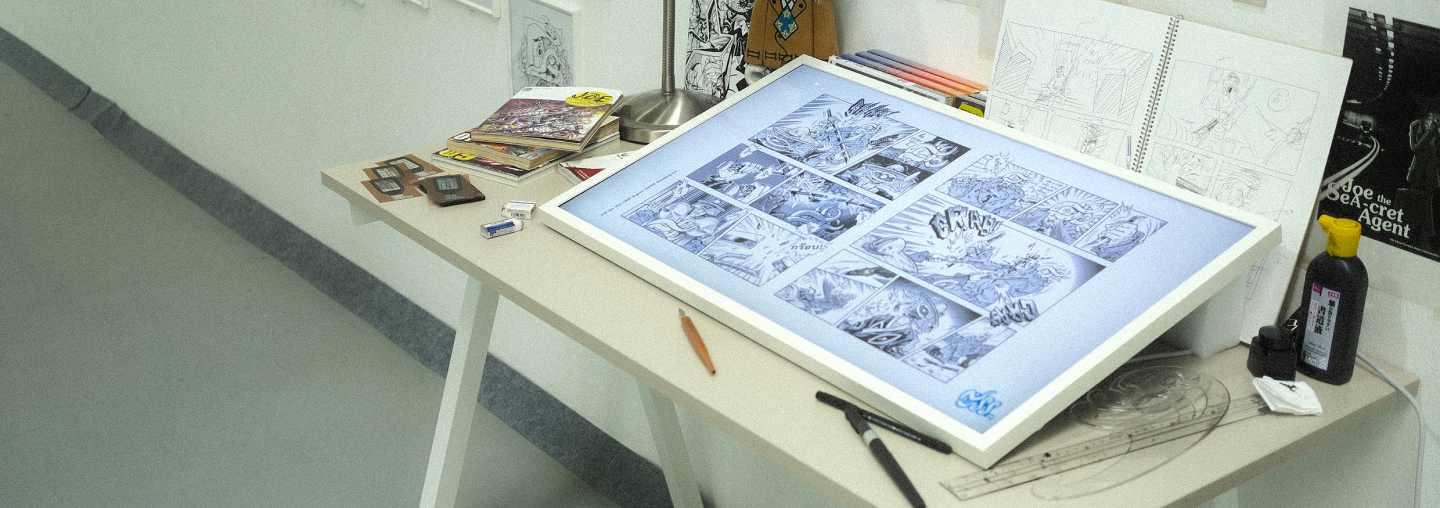
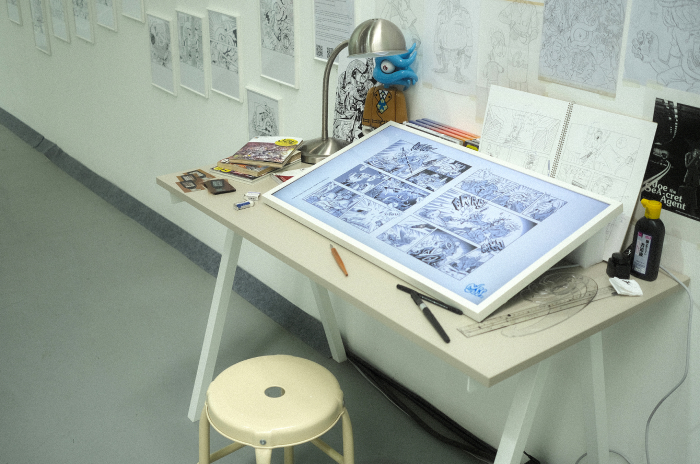
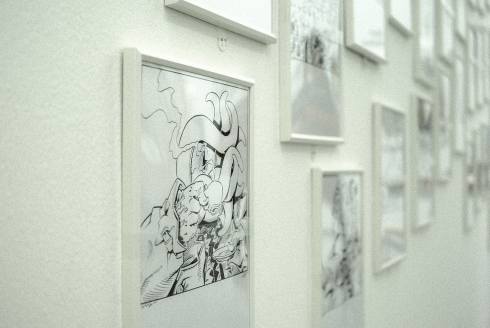
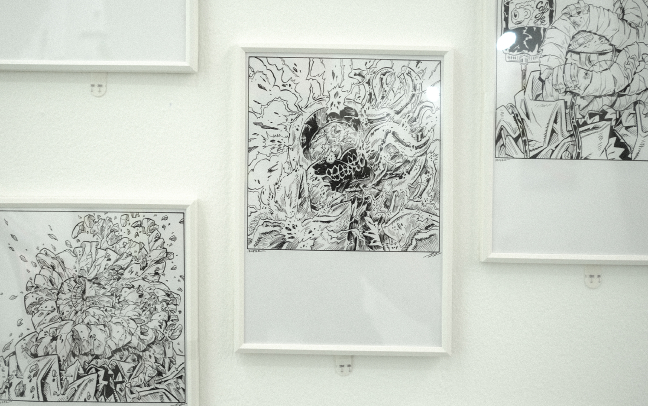
The 50JOEs project is the experiment to find the right area of the art from the comic JOE the SEA-CRET Agent that starts from the fifty of original art on the papers by hand like the original work in traditional comic creation processes. The fifty original artworks are exhibited in plastic frames as packaging and also adapted to limited print to fifty artbooks that print the originals in the same size and quality and the last adaptation is fifty NFT art on the Opensea platform. The original artworks exhibited at Bangkok Illustration Art Fair 2022 at BACC sold out a week before when the online sale also stated the fifty art books, but the NFT only sold 9 pieces simultaneously.

The result of this experiment has shown that the value of art today is different from many factors around the project such as the behavior of the collector or target group, the supported story behind the project, gimmick idea, promotion plan, social network viral, proper technology in that time and place, etc. So, the value of the artwork from the comic JOE the SEA-CRET Agent has been connected to the original comic book but it’s hard to sell by the NFT platform because the collector or target group of this comic don’t interest in this technology now and the law about selling a digital asset like NFT is still unclear in Thailand at the time of this experimental project.

<span data-metadata=""><span data-buffer="">Objectives:

The objectives of this project:

1. To find the best platform to exhibit the illustration art from the original comic

2. To balance the value of artwork and the budget in the different medium

3. To connect the reader of the comic and the collectors in the same exhibition

<span data-metadata=""><span data-buffer="">Methodology:

Art isn’t like any goods or product because the value of art depends on the satisfaction between supply and demand that is the artist and collector. The cost of art production isn’t the only factor of value when the art is finished. The hidden factors included the artist’s reputation, the popular style, the new revolution, the concept, the semeiotic, or anything in that time. So we can’t specify any art at the exact price or predict which art is expensive or cheap ourselves. But how do we set the value of art?

“In trying to identify the form of value specific to art we need to distinguish it from other forms of value in the vicinity:

– From economic values such as utility and price.

– From epistemic values such as truth and ethical values such as goodness.

– From subjective values such as personal preference.

Nevertheless, we need to understand what all of these have in common. We need to describe the genus of value as such if we are to describe the species of value that distinguishes art. The key idea is this: value is what provides reasons for action.” (Wolfendale, 2017)

The original value of a comic book is on the printing book by the publisher in the traditional business before adding the online version to read on digital equipment later by the development of technology and the reader behavior. But in Thailand, only the sale percentage from the comic book published isn’t enough, so many comic artists try to find another way to support their expenses and promote their work together. The art exhibition is the answer to the comic JOE the SEA-CRET Agent.

Fine art and illustration share the same root but different goals between pure and commercial art in the past, but the border is blurred when pop art is happening. “The difference between commercial art and fine art was pretty clear up until the mid- 20th century. Commercial art included television and print advertisement campaigns, as well as mass-produced images. Fine art consisted of one-of-a-kind unique objects such as paintings, sculptures, and works on paper that was exhibited in galleries and museums.

Then the art movement known as pop art subverted and merged those diverse aims in the 1960s. Pop artists such as Andy Warhol mass-produced images using the tools of commercial artists. Warhol’s silkscreened Brillo Boxes is a memorable example of how commercial art merged with fine art.” (Kendzulak, 2019)

In the past, the artist must find a gallery to exhibit their works or the curator to be a connection between them. But in the 2020s, the occurrence of NFT art on the digital platform with blockchain technology to prove the original quantity of digital art turned out to be another space for exhibiting the art from any artist. “Digital art was born in the 1960s, but the 2020s will surely go down as the era when the medium came into its own and turned the art industry upside down in the process.

Technology, in the form of non-fungible tokens (NFTs) such as CryptoPunks, has played a key role in disrupting traditional art-market dynamics. Online marketplaces and platforms have enabled artists to dispense with gatekeepers, birthing a billion-dollar business that favors creators.” (Hamacher, 2022)

For the comic JOE the SEA-CRET Agent, the artist exhibited the illustration in the gallery many times as a solo and group. When the NFT was popular in Thailand, the artist creates the original comic art into NFT art and sell in many platforms to study the best space and the behavior of the collectors in the NFT area. The NFT sale is succeeded on some platforms, but the problem is collectors outside Thailand can’t connect to the original comic.

The other problem is the reader or collector of this comic isn’t interested to buy NFT for many reasons such as the understanding of blockchain technology, the lack of a digital skillset, or the misunderstanding of NFT and gambling or scamming. “Another issue with NFTs, owing to the fact that the same decentralized nature that drives cryptocurrency also drives NFTs, stems from how it’s a highly unregulated market. And just like any unregulated market, it’s a prime space for fraudulent actors to pull scams and do whatever they want.

In the NFT space, we’ve seen everything from rug pulls to pump and dump schemes to straight-up thefts and everything in between. There’s no governing agency of any kind to stop scams from taking place, and there’s no one who can step in to help you if you lose your hard-earned money—short of getting law enforcement and courts involved if it comes to that. Coming in as an NFT investor means that there are heaps of things to consider before investing in an NFT or risk losing thousands of dollars to a scammer.” (Wright, 2022)

The stakeholder of the comic JOE the SEA-CRET Agent included readers, collectors, and people who have known the comic in different media, so the question is what is the best platform for exhibiting the art from this comic? The 50JOEs project has been started by this question. The project selected the main protagonist and the most famous character in this comic named JOE for use in 50 art pieces by 3 mediums 1. Original comic-style artworks 2. Limited prints art book of original artworks 3. NFT art from original artworks for observing the best area for exhibiting this comic art style.

After finishing fifty artworks on paper, then transform them into printing and NFT. The framed fifty originals are exhibited at Bangkok Illustration Fair 2022 as the work of official guest artists. The all-mediums sale plan started with a surprise post on the social network a week before the exhibition. After a couple of hours, the fifty original artworks sold out then the fifty printing but the NFT sold only 9 pieces.

For the exhibition, this project designs the mock artist table to connect the background story of when this comic was created and is well-known by many readers with the fifty original framed artworks on the wall. The mock table has a TV screen that plays the loop video of every

comic page to simulate the process of comic creation and decorate around with the comic tools.

Techniques and Materials:

The 50JOEs project separated into 3 platforms

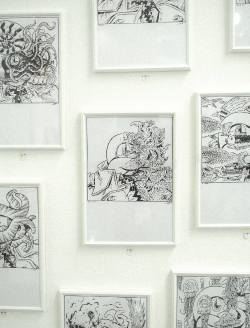
1. Original art by ink drawing on paper like the traditional comic creation processes. Each one is exhibited in a ready-made plastic frame as packaging for collectors.

2. Limited art book printing in the same size and quality as the original art by digital print.

3. NFT art at Opensea platform that each one added the screen tone to the original art to complete like the traditional comic pages.

Conclusion:

The result of this experiment has shown that the value of art today is different from many factors around the project such as the behavior of the collector or target group, the supported story behind the project, gimmick idea, promotion plan, social network viral, proper technology in that time and place, etc. So, the value of the artwork from the comic JOE the SEA-CRET Agent has been connected to the original comic book but it’s hard to sell by the NFT platform because the collector or target group of this comic don’t interest in this technology now and the law about selling a digital asset like NFT is still unclear in Thailand at the time of this experimental project.

References:

Kendzulak, S. (2019, June 25). The distinction between commercial and fine art.

LiveAbout. Retrieved February 20, 2023, from https://www.liveabout.com/commercial- vs-fine-art-1295902

Hamacher, A. (2022, May 12). NFTs started ‘A digital art renaissance.’ it’s far from over. Decrypt. Retrieved February 20, 2023, from https://decrypt.co/99301/nfts-started-a- digital-art-renaissance-its-far-from-over

Wright, A. (2022, June 28). Why do people hate nfts so much? 5 reasons explained. MUO. Retrieved February 20, 2023, from https://www.makeuseof.com/why-people-hate- nfts/#:~:text=It’s%20an%20Unregulated%20Market,and%20do%20whatever%20they% 20want.

Wolfendale, P. (2017, December 18). Art and value. Academia.edu. Retrieved February 20, 2023, from https://www.academia.edu/35461191/Art_and_Value

Categories
Showcase 2023

Faces

Faces

Assist. Prof.Samuel Raymond Forkner

<span data-metadata=""><span data-buffer="">Introduction :

It is impossible to look into another human face and not be taken in by the expression on it. Looking at another persons face automatically effects your own feelings. This phenomenon is recognizable even when the other face is simply an image such as in media. Scientists have been mapping the part of the brain responsible for empathy so this has been a popular topic in the grand narrative for quite some time now, popping up in news stories and mainstream media over the past decade. All the three educational domains: philosophy, science and art have been describing various formulae which try to breakdown the range of complex human emotions into their basic component subsets such as joy/sadness/fear or surprise/disgust/anger. Plutchik’s Wheel of Emotion is used in psychology to map complexity in feelings, and in film to describe the types of feelings generated from particular color schemes.

Intentionally disregarding something because it feels wrong is a reaction to a stimulus. It proves that the viewer has been effected. Many times, one looks away from an image because they wish to ignore the feelings that come with it. Other times, viewers may be completely captivated by the images unaware of its effect, while still others require concentration to control their own feelings with various levels of awareness of such an effort even being applied at all. All of these conditions are evidence to the fact that a visual representation of another’s expression has an effect upon our own. This was nicely defined in a scientific paper and labeled the “Third Person Effect,” by W. Phillips Davison in 1983.

The belief that “media may effect others but I, myself am immune to it” has been further explored in psychological journals and advertising executives up into the present. This project sets out to make the third person effect obvious to the viewer so that they may explore their own attachments to media.

<span data-metadata=""><span data-buffer="">Objectives:

 This project contains a two-fold objective. First, to demonstrate the relationship between an expression and its immediate, explicit, and visceral effect upon the viewer. Second, to see if an abstract narrative could be sustained across a discontinuous, associative montage by juxtaposing these different feelings together.

<span data-metadata=""><span data-buffer="">Methodology:

A consistent methodology was developed for creating tableaux. Each individual tableau contains a particular emotional state such as joy, discomfort, confusion, longing, exasperation, etc. The process of generating the media for this project involved a four-step process:

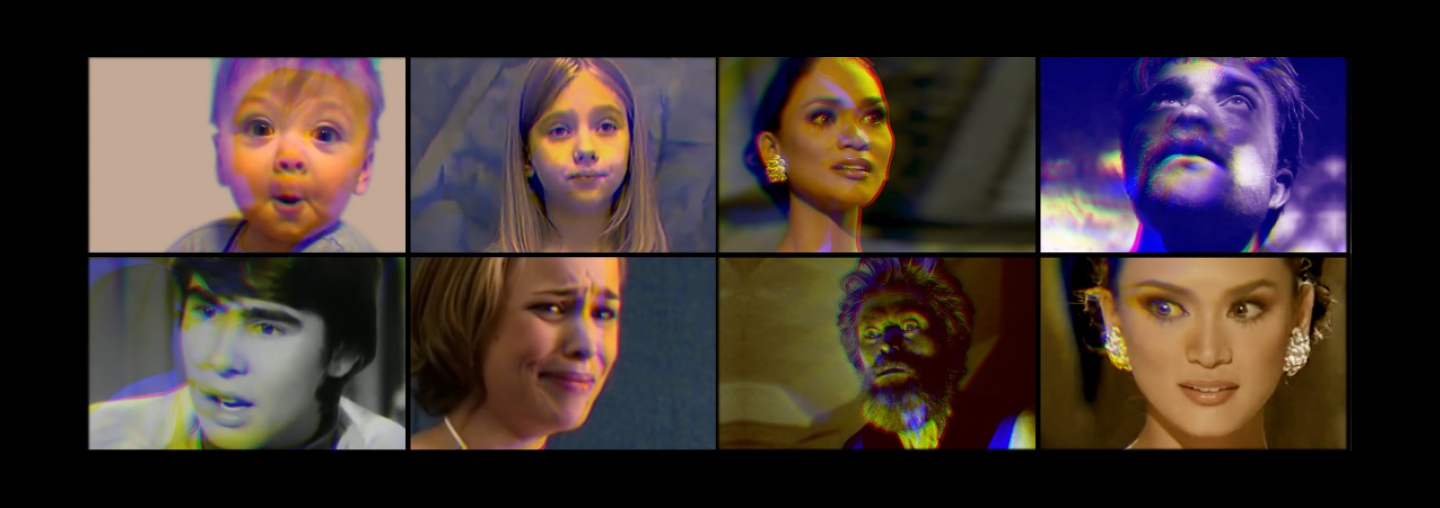
1. Choosing video clips from easily accessible mainstream media that contains close-ups of recognizable people with well expressed facial emotional states

2. Highlighting the expression of the subjects or actors, using typical matte work techniques (such as a mask in AfterEffects), simple 2D animation techniques such as copying, looping and cropping

3. Adding special effects and color effects to generate digital media as high resolution

4. Creating a soundscape which highlights the emotion in a cinematic fashion.

These tableaux were then cut together, intentionally breaking filmic continuity, to keep any one particular feeling from developing into its own complete story. The abrupt cutting adds emphasis and strangeness to the succeeding clip presently being viewed.

Techniques and Materials:

After many tableaux were made, two of them were juxtaposed in an experiment to see if the result would be stronger or weaker emotionally. If the two clips went together well another tableau would be added to the line in the same spirit of experimentation. The criteria was that the cut between any two tableaux must break continuity, but they still must be strung together in such a way as to create an overtonal montage which would, in turn, juxtapose these emotional states causing the viewer to associate two or more of these emotions together. The result is an automatically created soft story: an abstract narrative or a non-narrative.

Conclusion:

It is the duty of a film-maker to captivate the viewer. In much the same way Aristotle taught about reaching one’s audience, a film-maker uses visual language (and sound) to persuade theirs. Although the vast majority of motion pictures and contemporary media adhere to a certain format, the effectiveness of their persuasion seems to have no formula. By using just the part of close-up shots where the actors are in between words, I was able to isolate expression in the midst of a change, or I was able to isolate certain feelings and bring them out sometimes regardless of the actors intentions, script or words being spoken. Afterwards, using typical and industrial techniques from Foley work (sound design for film) the expression being displayed would be solidified into a more definite feeling, albeit a cinematic one. Animators use these technique so that their hand-drawn characters come to life. Directors of Photography use it in their soft-sell advertisements to convey feelings of warmth. Actors use it to dynamically manipulate their audience into suspending their disbelief.

Viewers who watch casually may have some memory of the images they viewed later, or they may not. The feeling that they receive, however, through empathic relationship to the image of a human face will last longer than the memory of that visual image. The strength of the change that takes place in the viewer depends upon the amount of conscious awareness the viewer has of this process taking place. If perhaps one viewer is completely enthralled, then the emotional state of the image is subjectively transferred to her completely. If another viewer is aware that he is empathizing with the expression of that image, the amount of change is the viewer’s mind will be less. When a viewer exerts energy to dispel or ignore that expression, the effect is lesser still. Emotional states are communicated through the eyes, eyebrows and shape of the mouth. The reaction to another’s facial expression through empathy is automatic. Considering the case where an audience is enjoying the show, and the strength of emotional conveyance is at a maximum, an abstract emotional quality can be intentionally placed upon them for effect.

References:

Babies Making Funny Faces – If You Laugh You Lose. Funny Babies’s Life: YouTube channel. retrieved 9 December 2022: https://youtube.com/watch?v=Mr9BGjofmtw&si=EnSIkaIECMiOmarE&t=56

Dafoe, Willem and Robert Pattinson. (2019). The Lighthouse [Film]. A24: New York.

Davison, W. Phillips. 1983. The third-person effect in communication. Public Opinion Quarterly 47:1–15. DOI: 10.1086/268763

Johansson, Scarlett. (1995). Famous Celebrities First Auditions !! Steamy: YouTube channel. Retrieved 26 December 2022: https://youtube.com/watch?v=aRh170rIfIc&si=EnSIkaIECMiOmarE&t=72

Jones, Davy. (1965). Davy Jones – Monkees Audition. Drefooty Studios: YouTube channel. Retrieved 26 December 2022: https://youtube.com/watch?v=3UdcNZqpZO4&si=EnSIkaIECMiOmarE&t=122

McAdams, Rachel. (2004). Rachel McAdams Audition Tape. Lookforalaugh: YouTube channel. Retrieved 26 December 2022: https://youtube.com/watch?v=_XfUUYK7Gkg&si=EnSIkaIECMiOmarE&t=155

Plutchik, R. (1994). The psychology and biology of emotion. New York: HarperCollins.

Renee, V. Red Hot & Feeling Blue: An Exploration into the Psychology of Color in Film. April 14, 2016.

Retrived March 6, 2023. https://nofilmschool.com/2016/04/red-hot-feeling-blue-exploration-psychology- color-film

Tsfati, Yariv. Third-Person Effect, 23 February 2011. DOI: 10.1093/obo/9780199756841-0082

Wurtzbach, Pia. (2015). MISS UNIVERSE 2015 – Crowning Moment – Pageant Biggest Mistake Ever. HD. yeyo panama: YouTube channel. Retrieved 9 December 2022: https://youtube.com/watch? v=Su3FVsxlNWc&si=EnSIkaIECMiOmarE&t=231

Categories
Showcase 2023

Thai literature the journey from the past to the future.

Thai literature the journey from the past to the future.

Assist. Prof. Sutat Palama

<span data-metadata=""><span data-buffer="">Introduction :

Cultural identity is the identity of a group or culture Although there are regional differences, Concerning art education, we can view studying art as cultural communication. We can express and perceive the meaning of the context of Thai literature through art. When doing so a person gains a sense of cultural identity and self-respect. Which is important in creating works.

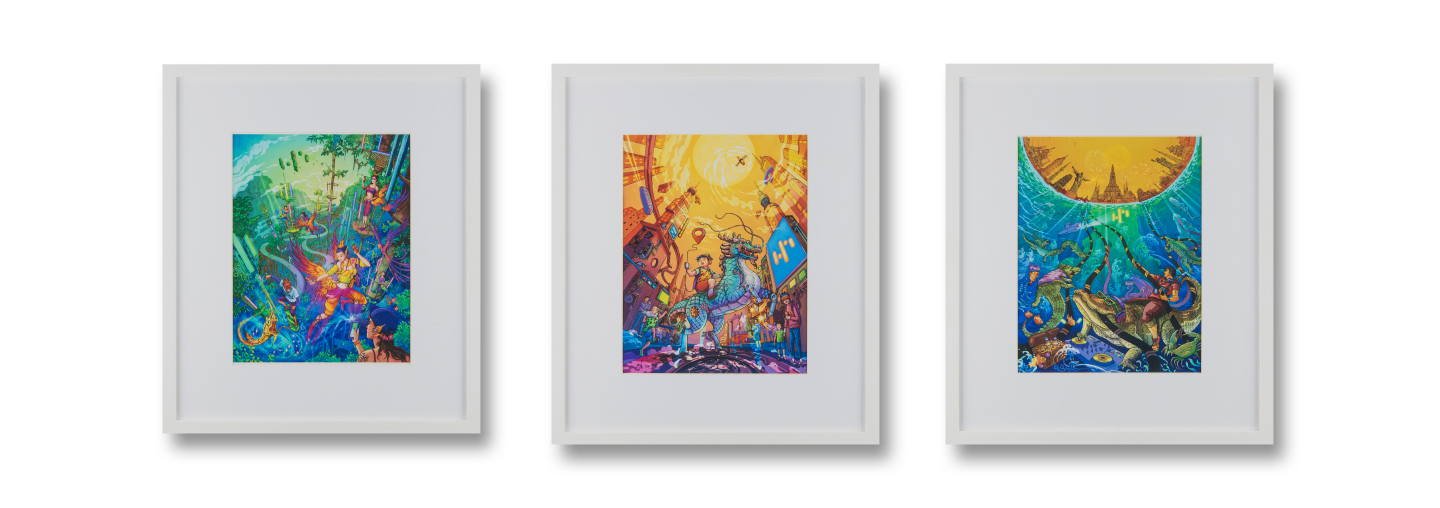
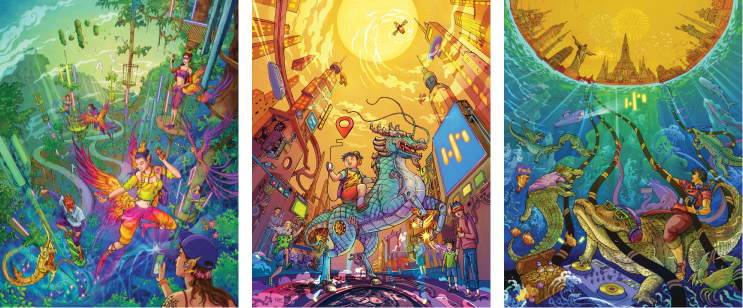
This work is an illustration of the 2023 calendar of the National Telecommunication Public Company Limited. The country’s leading communications elevating Thailand to the international level by using communication to drive the world in every dimension Connection without limits, without time, in line with the design concept, is the main character in Thai literature. that travels through time From the past to the new era where everything is driven by innovation.

Thai literature, no matter how many generations have passed, has remained unique and valuable.

and proud.

<span data-metadata=""><span data-buffer="">Objectives:

1. To research and develop the process of Illustration.

2. To apply the knowledge gained from research to develop concepts to convey the

meaning of Illustration .

3. To create machine assisted artwork in the theme of “Journey from the past to the future”

<span data-metadata=""><span data-buffer="">Methodology:

1. To research and develop the process.

2. To apply the knowledge gained from research to develop concepts.

Manohara is the kinnari (half woman, half bird) heroine of one of the Jataka tales.

Typically referred to as Manohara and Prince Sudhana

This story features in the folklore of Myanmar, Cambodia, Thailand, Laos, Sri Lanka, northern Malaysia and Indonesia. The Pannasjataka, Pali text written by a Buddhist monk/sage in Chiangmai around AD 1450–1470, also told the story of Sudhana and Manohara. There are also many similar versions told in China.

Phra Aphai Mani Although, Phra Aphai Mani contains many mythical creatures and supra-natural protagonists, its major difference from other Thai epics is that they are originally created by Sunthorn Phu himself, unlike those poetic tales based on well-known folk stories like Khun Chang Khun Phaen. Moreover, Phra Aphai Mani was composed during the period of western colonization of Southeast Asia, and as a result, many parts of the story include characters of European ancestry, from mercenaries to pirates. Some Thai literary critics believe that Sunthorn Phu composed Phra Aphai Mani as an anti-colonialist tale, disguised as a versified tale of fantasy adventures.

Krai Thong is a Thai folktale, originating from Phichit Province. It tells the story of Chalawan, a crocodile lord who abducts a daughter of a wealthy Phichit man, and Kraithong, a merchant from Nonthaburi who seeks to kill Chalawan. The story was adapted into a play.

Sketches of experimental design of characters and scenes in various concepts according to the characteristics, personalities, and habits of the characters that are suitable for the events in the story.

Develop characters to suit the storyline to design scenes in each episode of the story. Color sketches.

3. Use Adobe Photoshop to complete the final step.

Techniques and Materials:

Digital Illustration / Photoshop Size : 31×42 cm

Number of pieces: 3 piece

Conclusion:

Thai literature the journey from the past to the future. From Assist.Prof.SutatPalama

References:

ศรีปราชญ์ (2494). ประชุมวรรณคดีไทยภาค 1 กำสรวลศรีปราชญ์. โรงพิมพ์ไทยวัฒนาพานิช.

Categories
Showcase 2023

Window to the soul

Window to the soul

Assist. Prof. Hathaichanok Chiengthong

<span data-metadata=""><span data-buffer="">Introduction :

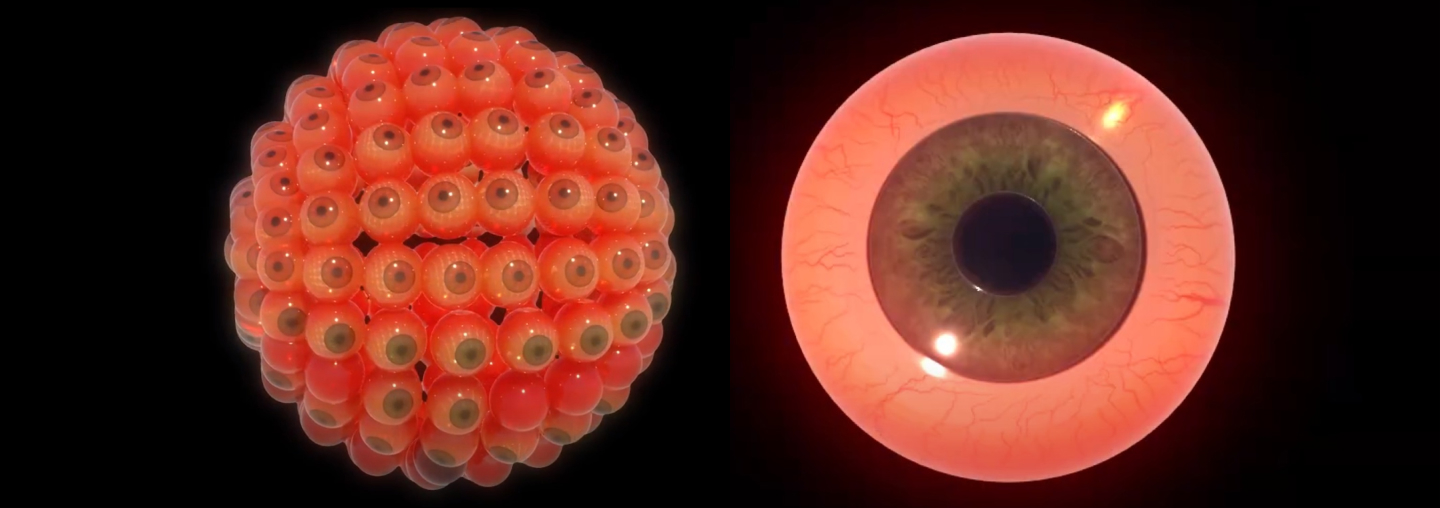
People say that the eyes are a “window to the soul” that they can tell us much about a person just by gazing into them. Why is it you can sense when someone’s staring at you? Suddenly that creepy, prickly feeling grabs hold of you. Someone’s staring. You turn to find out who it is. Be they friend or foe, the feeling itself seems like an eerie sort of 6th sense. It’s also a necessary part of being human. The biological phenomenon is known as “gaze detection” or “gaze perception.” Neurological studies have found that the brain cells that initiate this response are very precise. If someone turns their gaze off of you by turning just a few degrees to their left or right, that eerie feeling quickly fades. Why people hate being watched? Everybody afraid of being judged by others. Are you self-conscious in everyday social situations?

<span data-metadata=""><span data-buffer="">Objectives:

What are the windows to the soul?

<span data-metadata=""><span data-buffer="">Methodology:

1. To research and develop the process.

2. To apply the knowledge gained from research to develop concepts.

3. Make Animation by Autodesk Maya

4. Compost by Adobe After Effects and render.

5. Editing by Adobe Premiere pro.

Techniques and Materials:

3D Animation

Size : HD (High Definition) 1280 x 720 Number of pieces: 3 piece

Conclusion:

People say that the eyes are a “window to the soul” “The eyes are windows to the soul. A person will always give away their true feelings if you watch their facial expressions. that they can tell us much about a person just by gazing into them. If you’re going through something hard. When in large groups of people, you may worry that others will judge the things you say or the way you dress or behave. Don’t Care What Other People Think. Everyone can Learn to:

– Deal with real world pressures on your own terms in a way that frees you, not cages you

– Stop being afraid of other people’s opinions & live in a way that you

can be proud of

– Get over your fear of what other people may say, think or do and take action towards goals

that change your life

– Identify and correct self-limiting behaviors

– Design your life.

– Get your energy back, get your enthusiasm back and look forward to each day

– Transform sensitive, scared and nervous feelings into strong, calm, confident & effective actions that achieve the results you want

– Take control of your life, self esteem, relationships, finances, health and focus.

References:

Eye, Littleton, Harvey K. (American, 1922-2013), Artist, 1969 – 1969, Corning Museum of Glass

Vincent van Gogh in Blue, Kang, Hyung Koo, 2007, Korean Art Museum Association

References : 

“Eye” by Harvey K Littleton created this piece out of glass. Littleton only created the bottom half of the iris and pupil and 3/4 of the whole eye. Littleton used a deep blue for the pupil of the eye and a light green and light pink for the rest of the eye. The top of the glass has a black tint to it. These eyes depict something dark a mischievous look.

Hyung Koo Kang’s “Vincent Van Gogh in Blue” used different hues of blue in this painting giving it a darker feel. In the portrait of Van Gogh is smoking with his head tilted down cutting off the top half of his eyes. Van Gogh’s eyes are a vibrant blue with whites of his eyes painted a light shade of blue. The eyes in this piece show a dismal emotion.

Categories
Showcase 2023

The Dust of Commemoration

The Dust of Commemoration

Assist. Prof. Anupong Charoenmitr

<span data-metadata=""><span data-buffer="">Introduction :

“Reflection” is an art project that was funded by 20th SILPA BHIRASRI CREATIVITY GRANTS. Presents a visual perspective in memory through the process of exploring and reviving the story in the past. Mrs. Kham and Mr. Gaii are the important persons in the implementation of this project as Laotians who came into Thailand after the revolution in Laos in 1975. The period of Time, words, and stories from Mrs. Kham and Mr. Gaii had been the source of ideas that led to the creation of new imaginations to render a chance to watch the events that happened in the past. Places, people, events, and the witness object were simulated as representatives. Projection through direct experiences of Mrs. Kham and Mr. Gaii had not shown as only a specific role of personal story. But, the context area and the story were also a reflection of another perspective of a 17-years-old Laotian teenage girl, who participated in the event with Mrs. Kham and Mr. Gaii before crossing the Lao border into Thailand around the same time, the teenage girl in the story was “my mother”.

In 2007, before my mother passed away, in the same year. Conversation between mother and son had arisen and was still circulating in my mind. The told story of hers, when she was selling things at Vientiane Market, even if the told story was just like an indistinct picture but it was a meaningful story that had never faded from my reflection. This reflection aroused the search for her root. The stories that she spoke were only superficially led the way in the quest to get to know her during the missing time.

The narrative through the memories of Mrs. Kham and Mr. Gaii was an important part in projecting the cross border events which was not just the physical borderland, but it had been a borderland that built on the ideal of narrative through a new imagination, the “borderland of memory”.

The borderland of memory is an area of thoughts that has no definite boundaries, it is an unpredictable area. Sometimes the told story led to interest in events, depicted the apparent pictures in the mind, and sometimes also had created some dilemma upon hearing. But the elements of the narrative that happened in 1975 had filled up the dented memory. It is comparable to dust particles that cannot be

seen with the naked eyes thereby forming a picture that moves around the story that is composed like, a Jigsaw. The new creation of representation within the reminiscence is regarded as one of the agendas of the journey in order to stare the memory space with consideration through places, time, and events.

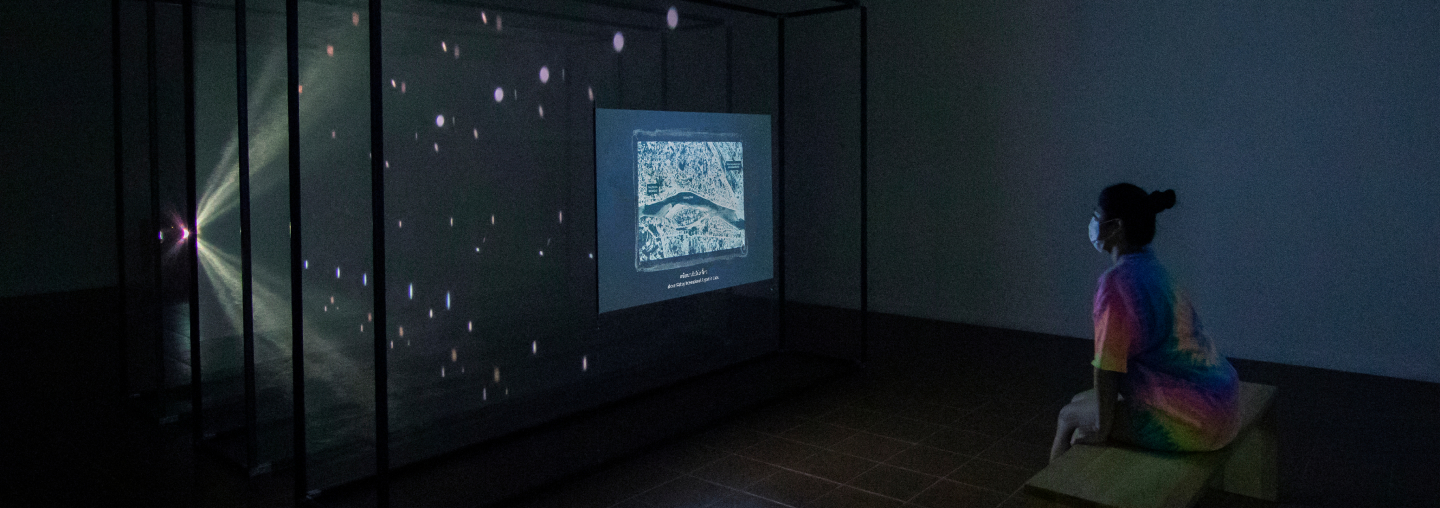
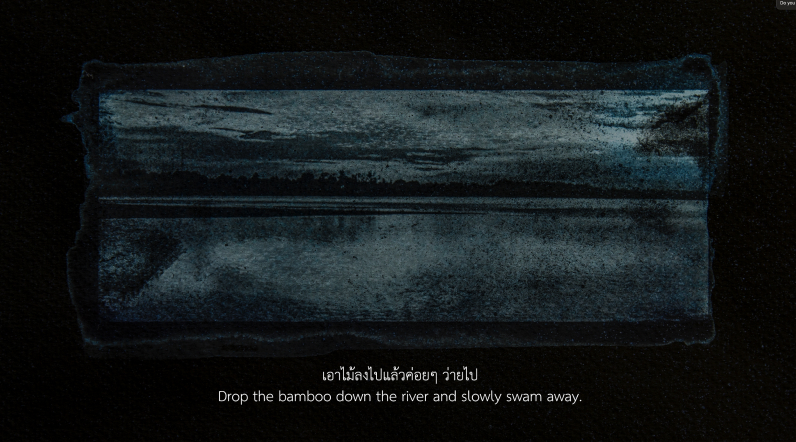
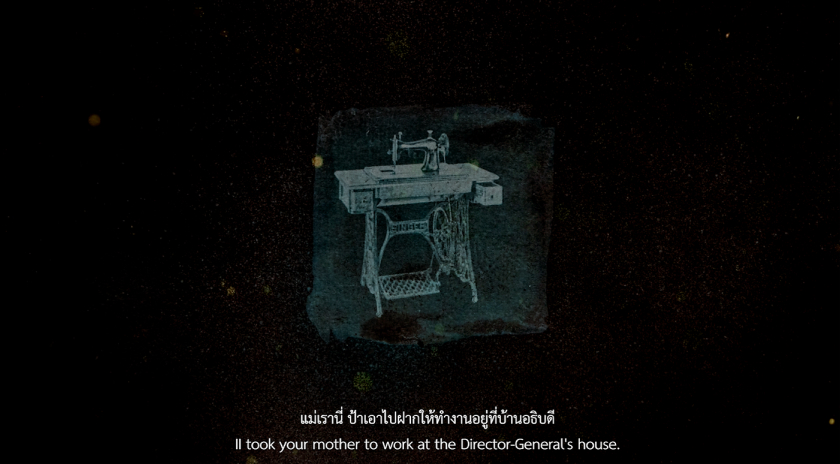
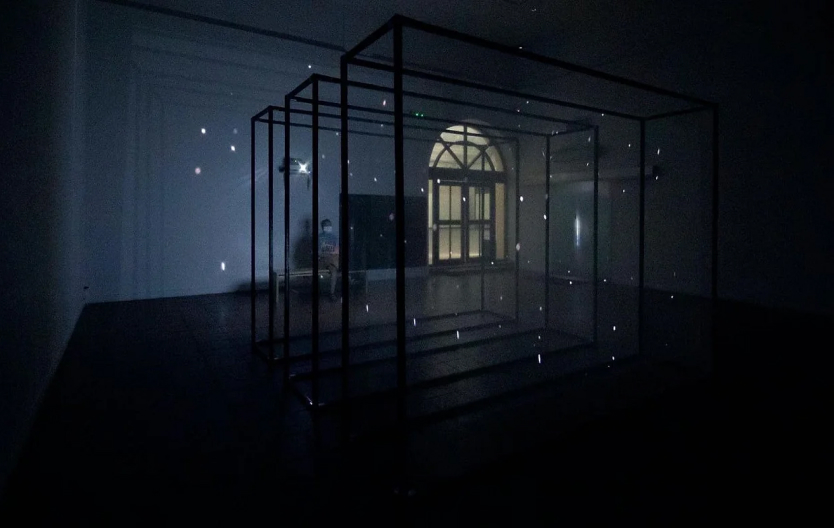
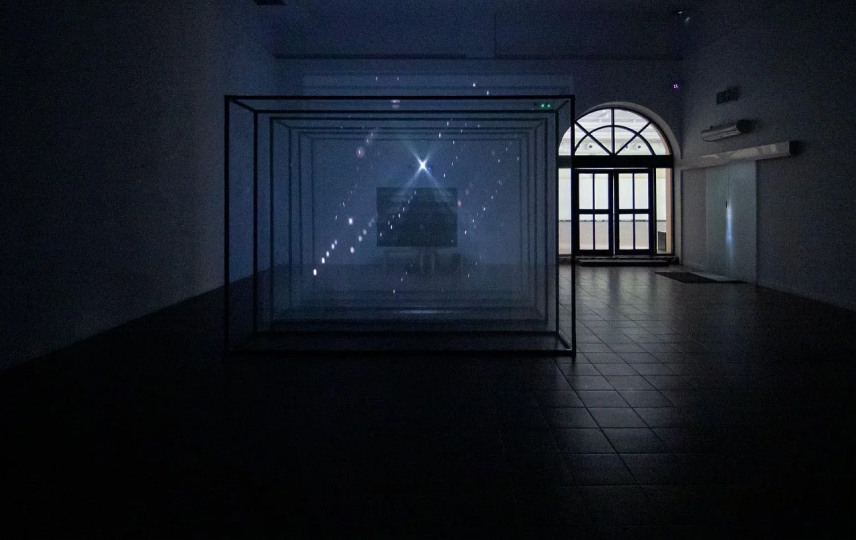
The artwork “The Dust of Commemoration” in the project of “Reflection” is like a journey in the borderland of memories. The destination may not be the end of the journey. But it was likely an important chance to view the story during the journey which presented through the representation in this artwork. It is regarded as an artistic witness object that confirmed the existence of thought to fulfill the hollows of memories. It is presented in a video installation that consists of 2 parts: 1) Moving image with no beginning, no middle part, and there is no end. 2) The dust particles created by the filming process; invisible dust particles can be seen when the incident light is in the proper angle. The particles were brought to enlarge and spread the floating in space to simulate space in memory and create a new environment.

At the end of the implementation of this project may cause the perception of something and although still cannot understand many things, but at least the unclear pictures had appeared in imagination. Therefore, it is considered evidence that reflects the memory that “still remains… in reflection”.

<span data-metadata=""><span data-buffer="">Objectives:

1. To create artwork in the form of video installations.

2. To look for new possibilities in the physical development of artwork.

3. To use artwork to reflect the memory content through the process Practice-Based Research

<span data-metadata=""><span data-buffer="">Methodology:

The origin of the project idea and the development of the artwork including all processes from the beginning. The beginning of the creation of this artwork arose before the time of my mother’s pass- away in 2007. It is the told story of when my mother was a teenage girl in Laos having to travel across the border to Thailand due to the revolution in Laos in 1975. A piece part of the story as an origin opened up a new perspective of getting to know my mother as a Laotian which was a story that she never told. Her photo raised questions about her past that she had never told. Small dust particles floating around in one area of the house covered her photograph. Small dust particles are invisible to the naked eyes, at a certain point in time, the invisible floating dust becomes visible to the eye when the incident light is at the proper angle. “Whenever the incident light appeared then dust particles could be seen. But even without light, the dust particles still exist.”

If living together is an experience and the experience is one of the components of memory formation. The assembling this memory space, it must be an area that expanded the scope or was compacted as much as the imagination launched at that moment. Therefore, memory is a space that cannot be bounded. There is not any borderland that has an area in the measurement unit. The direct experience of confrontation contributed to the formation of memories in many aspects. Sometimes, trying to remember something does not confirm that the subject matter is permanent. Conversely, the experience of a shared memory between mother and son at the beginning of this story, was only a small area in a very short time. Little story that try not to remember but is still ingrained in the memory just like a shadow that doesn’t leave a distance.

Over 10 years, an imperfect story of the mother had been still lingering in my memory that pushed the force in creating the artworks. The search of information from stories, the interviews with Mrs. Kham and Mr. Gaii, who had experience with mother. The details of the narrative do not confirm or influence the historical beliefs of anyone. If that the context area, events, and narratives of the mother reflects on mother’s life as a new memory and moves around in art space which have been created as representation. It’s a part of knowing and understanding. Crossing borders as territory and space may not be the goal of trying to reach. Crossing the present borderland to go into the borderland of memory is regarded as an important part of how moving images opens up a space of possibilities and confirms the existence of the space of memory. A space of memory that was rummaged and

found was an unpredictable border that mixed between the curiosities as well as the dilemma feelings as caused by understanding.

In the process of creating an ideal image to reflect the perspective on the stories in Vientiane Laos in 1975, the appropriation of photographs by journalist and photographer Norman Peagam and photographs from a traveler, Bob Carlsen, in order to create this artwork. Wide-angle landscapes and telephoto views had been brought in synchronize with the narrative to create the ideal images through the experimental process of creating images in Alternative Process Photography. The visualization of the process of the Alternative Process Photography is formed by a chemical reaction that works when the incidence light is on the plane surface coated with a photosensitive substance and, that creates the new appearance, shapes, form, light and shadows to reappear as to represent the pictures in memories. Finally, the reversed process of developing photographic (Negative – Positive – Negative).

The visual field of memory from the experimental process of creating works had reduced the details of the original images. The creation of the new atmosphere of the landscape in order to reflect the perspective on the story in memory is comparable to an opportunity to travel to explore the borderlands of memory. The small dust particles floating in the space move around to create the memory space. The enlargement and projection of dust particles to be bigger that can be seen in several planes of the art space aimed to persuade the interpretation of the existence of things that may not be as visible as compared to dust. “The dust of commemoration” is therefore like a “shrine of remembrance” to affirm the thoughts of the departed person.

Techniques and Materials:

Video Installation, Color, 4K video, sound, Darkroom, Dimension variable

Duration: 9 min 9 sec, Loop

Conclusion:

1. Present artwork to reflect personal memories.

2. The development of the creative process and the physicality of the video installation.

References:

Martin Stuart-Fox. (2556). ประวัติศษสตร์ลาว [A HISTORY OF LAOS] (จิราภร วิญญูรัตน์,แปล).กรุงเทพมหานคร: มูลนิธิโครงการำราสังคมศาสตร์และมนุษย์ศาสตร์(ต้นฉบับปีค.ศ.1992).

ซิลเวีย มาร์ติน. (2552). วิดีโออาร์ต [Video Art] (สมพร วาร์นาโด, แปล). กรุงเทพมหานคร: เดอะเกรทไฟน์อารท์ (ต้นฉบับปีค.ศ.2006)


Norman Peagam. (na). Laos These pictures were taken between 1973 and 1977,

mainly in and around Vientiane. [online]. Retrieved 3 January 2021, from:

https://www.flickr.com /photos/np485/albums/72157675793994014


Bob Carlsen. (2011). Market in Vientiane. [online]. Retrieved 14 March 2021, from

https://www.travelblog.org/Photos/6179483

Categories
Showcase 2023

Imagination of The Buddha in the dimension of enlightenment.

Imagination of The Buddha in the dimension of enlightenment.

Assist.Prof Chuchai Assawaarekun

<span data-metadata=""><span data-buffer="">Introduction :

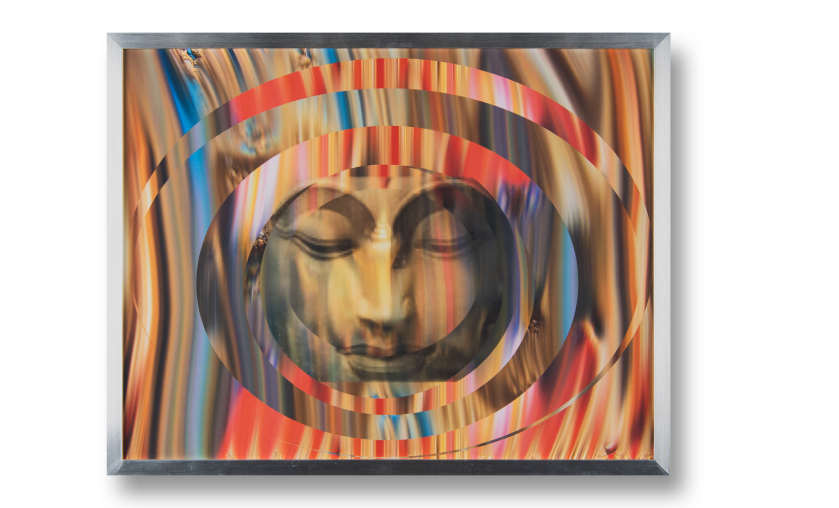
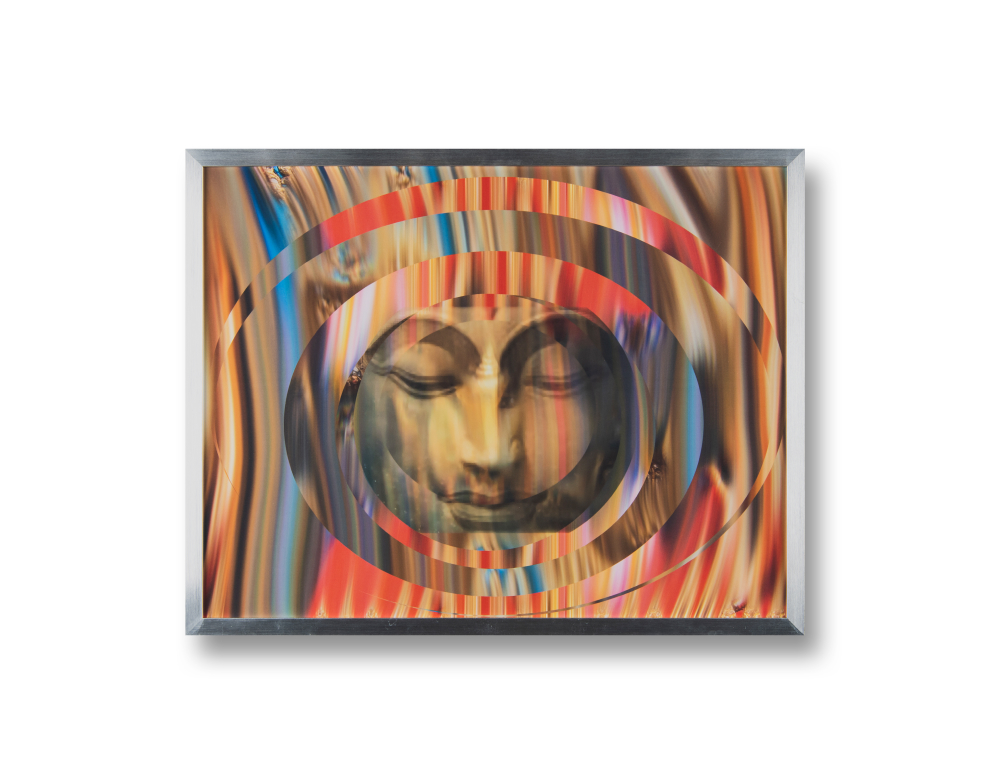
It is an experimental, creative, imaginative work. To the spiritual dimension of the Buddha which is believed to have attained higher dharma Sees the world as fluid, uncertain, and ultimately non-self. Is the true absence. To the emptiness of everything.

<span data-metadata=""><span data-buffer="">Objectives:

Experimental creative imaginative work. to the spiritual dimension of the Buddha.

<span data-metadata=""><span data-buffer="">Methodology:

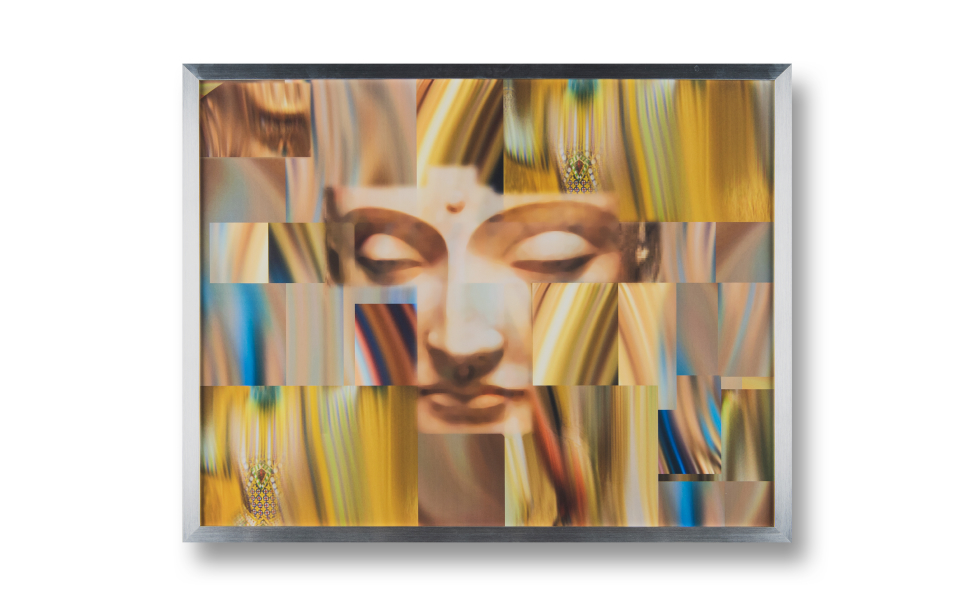
It is an experimental work based on improvised thinking (Automatic thinking – Automatic Painting) based on the ideas of the Surrealist and Dada groups in Europe during World War I. that at some point in creativity Ideas will follow from free experimentation. By bringing images of various things to create with collage techniques in a computer program Until you get a picture that has meaning or doesn’t have meaning. But it must be especially impressive. As the artist Thawan Duchanee has said, “My work, you don’t have to know what it is, but feel it,” which is an important way for surrealists and Dada groups who want artists to escape from the real world. the world of rationalism into a world without reason Amazing, strange worlds from the world we are familiar with. in everyday life.

From the experiments in this way I created an image that It looks like there are divided image channels with different proportions. In each square there are colors and shapes of things that flow, erratic, seemingly absurd abstract works. but focus on feeling of Abstract artists in the modern era and the image of the face of the Buddha image Come build with those complex dimensions from my feelings when seeing the picture feel the complex spiritual dimensions of the Buddha . which is believed to have attained higher dharma Sees the world as fluid, uncertain, and ultimately non-self (Anatta). is the true absence. to the emptiness of everything . in one way in another concept I used to try to remember the day of Buddha enlightenment. Understanding the cycle of birth and death of the animal and Himself is an infinite number of Life. which saw many births and deaths It seems to be an image that has a very complex dimension. which is consistent with the image that has been created come more or less.

Conclusion:

Works can reflect the intricacies of the soul of the Buddha at enlightenment.

Categories
Showcase 2023

Dirty/Erotic Wallpaper

Dirty/Erotic Wallpaper

Assoc.Prof. Pakorn Prohmvitak

<span data-metadata=""><span data-buffer="">Introduction :

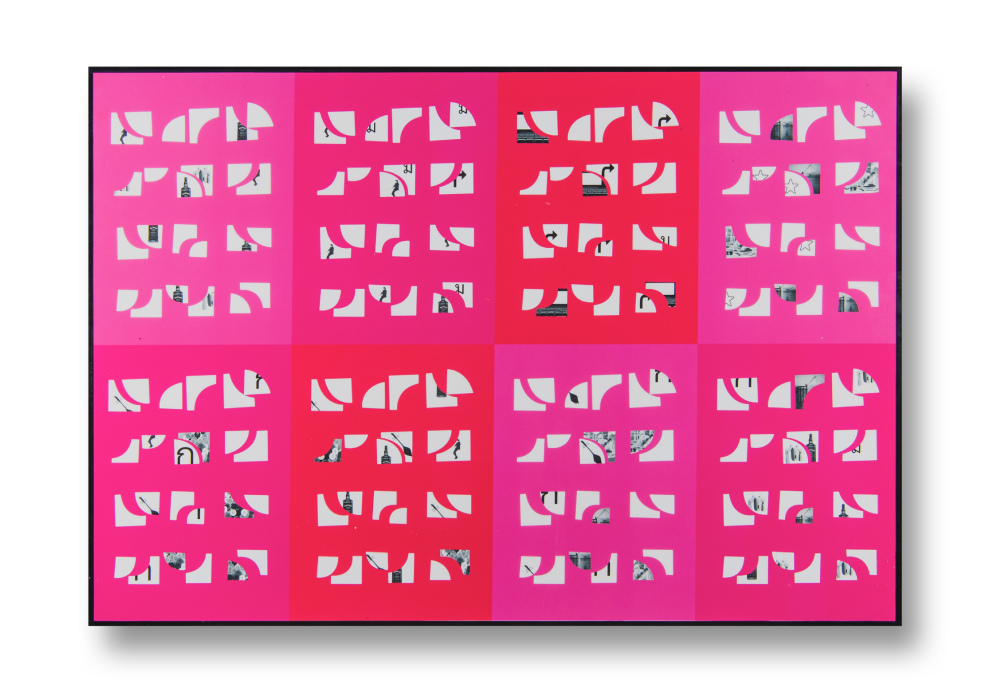
Filp-flopping words are usually used to have fun with close friends, especially when you have a party with alcoholic drinks. This word play usually comes from “dirty” jokes. Some people can capture this while some cannot. Those who can capture the meaning will laugh when the new words come out.

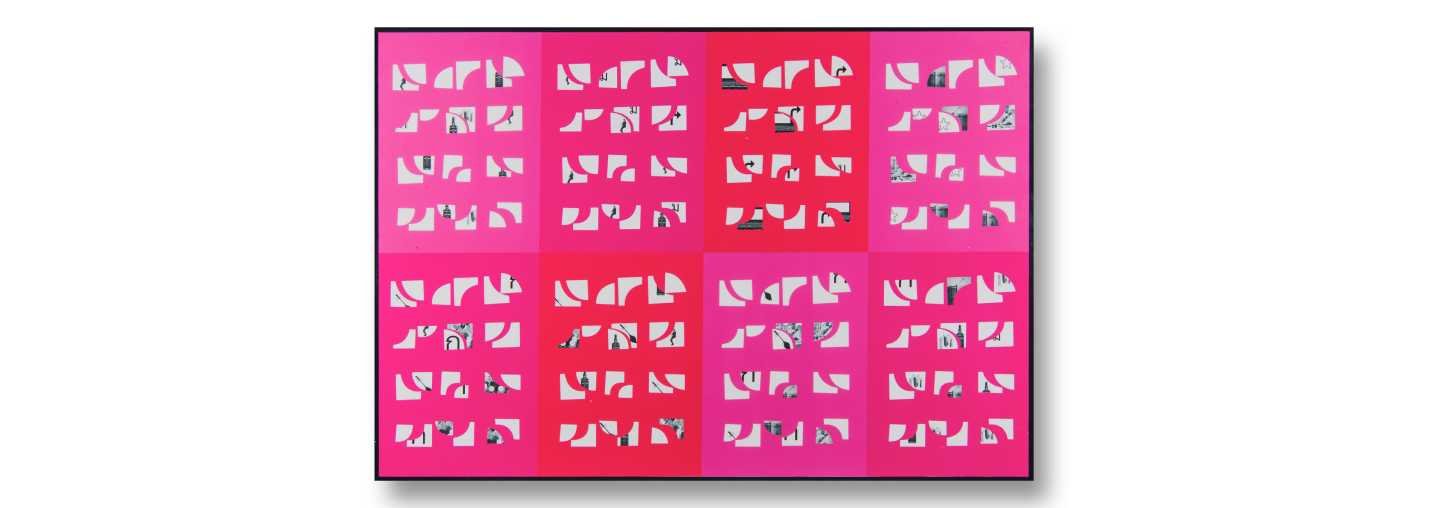
An example is daw-yor. As individual words, daw means star and yor means a fishing net. But when you put these two words together and you flip the order, it will read as door-yaow, which now refers to a long-male-sex-organ.

This dirty or erotic wallpaper separates individual words and turns them into pictures. Like the star-fishing-net example, all the pictures have been separated into a jigsaw puzzle with other pictures that match. When you see the compound picture, change the compound picture to words and reverse the order a dirty joke will emerge out of it.

This wallpaper could be used in a love-hotel, a bachelor’s bedroom, a pub or bar. It could be used in a hipster coffee house, a teenager restaurant, a karaoke room or the lobby at a massage parlour. The patron of such a place can play the well known Thai colloquial game “ทายปัญหา” (guess the problem) and enjoy their time.

The use of red, redish-pink, and redish-orange are the colors of eroticism. When this wallpaper decorates the room or other places, it will give the sence of love, or sexual playboy and playgirl games. This speaking wallpaper highlights the plane of the wall.

<span data-metadata=""><span data-buffer="">Objectives:

to create interior decoration wallpaper Furthermore, the wall can be utilized to play guessing games. It’s intended to be sexually amusing.

Techniques and Materials:

Graphic Design

Conclusion:

Obtain a wallpaper prototype. It was also tested with the target audience to play guessing games based on the jigsaw puzzles in the wallpaper. that causes amusement and laughter

Categories
Showcase 2023

Souvenirs from Chao Phraya River

Souvenirs from Chao Phraya River

Ms. Ploy Nikadanont

<span data-metadata=""><span data-buffer="">Introduction :

Traditional printmaking has been applied into many areas of arts and design. It has become one of the classes that art and design students around the world have to experience. Nowadays many printmaking artists, instructors and students have to work under toxic environment since studios and classes requires the use of chemicals, many materials used in the studio are toxic and unable to be recycled. For many decades, environmental concerns have been one of the most significant issues in printmaking area. Is there a way to make it more environmentally friendly and sustainable so that the lecturers, students, and artists who work in this field can have better lives quality? 

The previous experimental projects “Monsters of the Sea” (2022) found that using recycled materials such as using Tetra Pak (beverage containers that consist of aluminum foils) instead of a copper plate for the intaglio process could be a good solution since it helps cut down chemical processes and also can help reusing beverage containers. The experiments’ outcomes, however, were unsatisfactory because only Tetra Pak can be used as a matrix, while other recycled materials like plastic bottles or foam boxes cannot. It is because the characteristics of materials are not suitable for use as a matrix, resulting low quality of work. 

However, to make traditional printmaking class more sustainable, it is important to use recycle material especially food packaging and beverage containers. According to research published in “Environmental International” by scientists from the Vrije Universiteit Amsterdam (2021), the majority of micro-plastic particles found in human blood are PET and polystyrene, which are commonly used in beverage containers and food packaging. And for the last 3 years with the pandemic of Covid19, the numbers of plastic waste, particularly single-use plastics, from the food delivery industry has rapidly increased. Many of these items end up in rivers and then make their way to the sea where they contribute to marine pollution, resulting marine life tainted with plastic, and we intake them. Therefore, the aim of this project is to continue searching for the approach of how to utilize recycled material, especially plastics from food and beverage containers as a material in traditional printmaking studio in order to make printmaking more sustainable by reduce chemical process and be able to create efficiently recycle system for food packaging and beverage containers before it is too late. 

<span data-metadata=""><span data-buffer="">Objectives:

1. To find the approach to utilize recycle materials: plastic from food and beverage containers. 

2. Raise the quality of work to meet the professional standards. 

<span data-metadata=""><span data-buffer="">Methodology:

           The Souvenir project’s process was developed using the framework: Double Diamond by the design councils which consists of four sections including discover, define, develop and deliver.

         Discover: To understand and gain insight information on the selected topic, this section involves conducting research which is mostly a study of best practice on sustainable, non-toxic printmaking and study of artists who employ recycled materials to create works like Tony Cragg (1949) and Kurt Schwitters (1887-1948). This section also includes observation, data collection, and material collection. Due to the fact that food and beverage container particles are presented in human blood, this section also includes exploring and collecting food and beverage packaging in the river before they make their way to the sea.

         Define: All data and materials collected in the previous section have been analyzed and experimented in order to define suitable materials and techniques for the project. Visual research is also included in this section since it is a method for defining a design brief that involves the development of clear design concepts and the exploration of various design directions for the subject matter. According to the experiment, when different food packaging types are used as a matrix, in this case the collagraph method, which includes an intaglio process and a relief process could create images that reflect to the design concept better than others.

         Develop: The process of developing the design brief into final products began with a study of characteristic of materials collected from the river; food packaging, beverage containers and other found objects from the river since they will be printed as-is without any embellishment or manipulation. Test print including: study effect and textures of different objects on different types of printing paper such as normal watercolor paper and Fabriano paper. Also, using different weight pressures of the printing press, different types of ink and temperature.

         Deliver: Following the creation of test prints to evaluate the effects and textures of each object, the composition is created by grouping the objects together. Collagraph printing was employed, while inking techniques were different depend on the particular features of each objects. The best editions were selected for the review. 

Techniques and Materials:

Printmaking

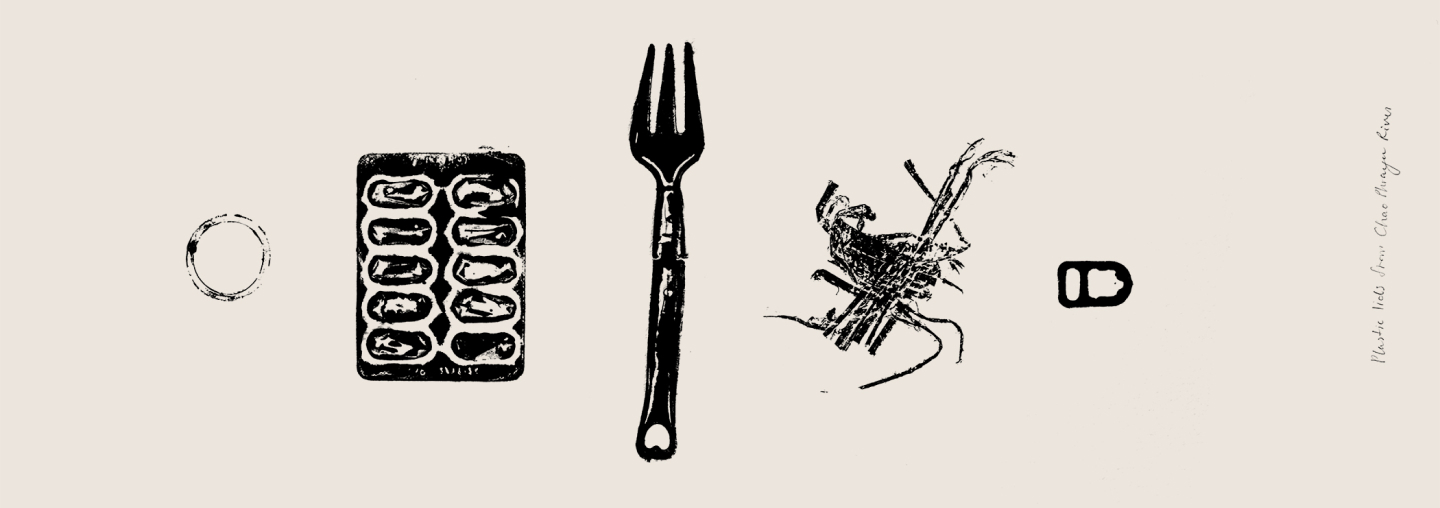
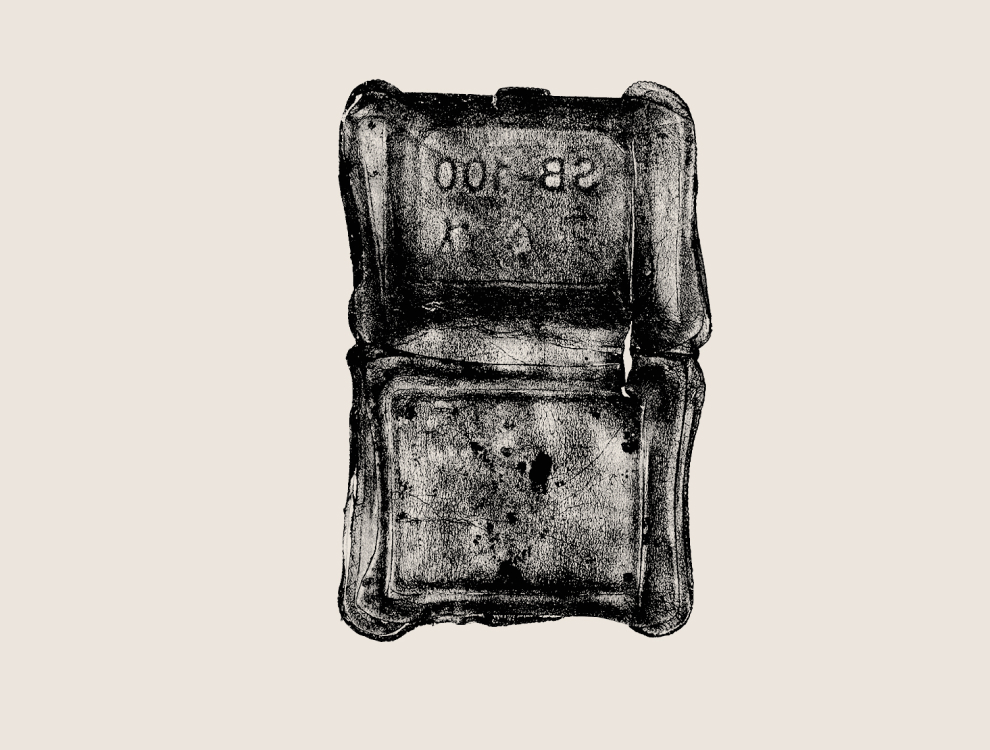
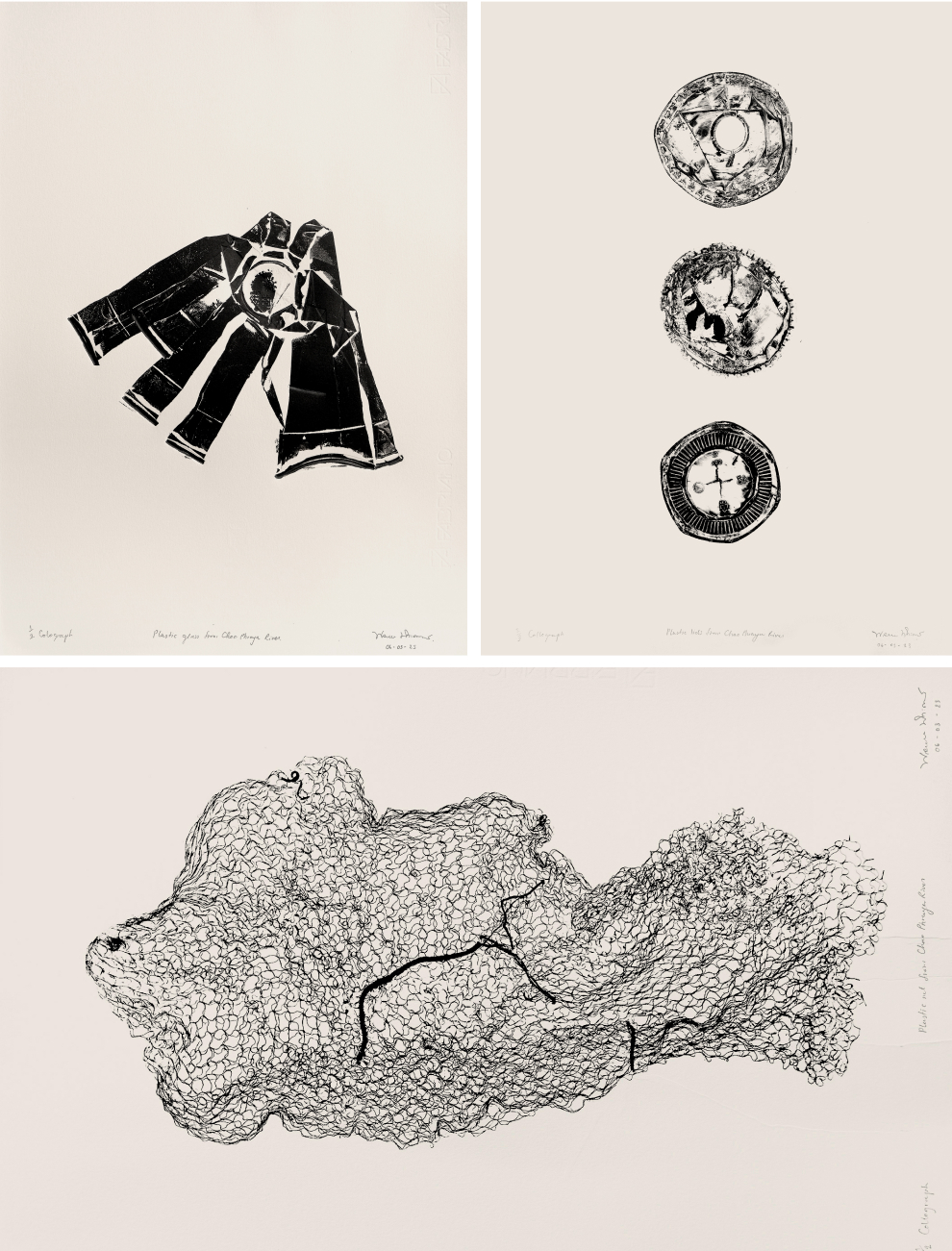
“Souvenirs from Chao Phraya River” is a collection of collagraph prints created from rubbishes collected from Chao Phraya river. Not only food packaging and drink containers, but also others plastic items used in daily life such as sandals, bags, and nets. All objects used in this project have been collected in Chao Phraya river near Pom Petch in Phra Nakorn Si Ayuthaya province, where Pasak river, Lopburi river and Chao Phraya river merging, it is the point that rubbishes from many provinces are flowing together. These objects were collected and print as-is without any embellishment or manipulation to reflect what has been dumped in the river, how awful they are and how badly the ecosystem will be affected by them.

Collagraph techniques were chosen to depict the concept because they provide a negative and toxic vibe which fit well with the pollution-related subject that bringing attention to environmental issues before it is too late. 

showed in pictures. Every objects were pulled from the river by using tongs. Then they were cleaned in the dishwasher and dried outside. Wetting Fabriano papers and putting a registration mark in the printing press are the first steps in the printing process. Each object was then inked, some using a roller since they have flat texture and others with a hand to push ink into a groove to display details of textures when printed. Finished works will be place under wood board and leave to dry. 

Conclusion:

According to the project’s objectives, which included recycling food and beverage packaging, make the class become more sustainable by reduce waste from the printmaking process and improve quality of 

work to meet the professional standards, the results were analyzed using SWOT analysis below:

Objective – 1.To find the approach to utilize recycle materials: plastic from food and beverage containers.

Strength – Non-acid process, Can applied SDG policy to printmaking class (ICCD222 Traditional Techniques Studio)

Weakness – Cannot develop 100% recycling system

Opportunity – Develop inking and printing methods to be appropriate for each type of materials. Explore new materials and tools. And increase opportunity to Invent new printing method. Can be a study case for develop ICCD222 Traditional Techniques Studio to be more sustainable by using recycle materials.

Threats – Leftover food and beverage packaging are non-recyclable. Using N15 Technology to terminate leftover materials resulting carbon footprint. Found objects from the river are very dirty, need to be very careful when collecting and cleaning. Some items are very difficult to use; relief was too high to push in the the printing press/ not absorb ink.

Objective – 2. Raise the quality of work to meet the professional standards.

Strength – Unique look and feel

Weakness – Lack of variety in aesthetic expression: Can provide only negative vibes/ Can fit in only one type of aesthetic which is “ugliness”

Opportunity – Increase opportunity to create new ways for aesthetic expression.

Threats – Mix method are not an ideal for traditional printmaking area. Textures and effects occur unexpectedly.

In conclusion, for the objective number one, which aim to find the approach to utilize recycle materials especially plastic from food and beverage containers. The advantage of utilizing the Collagraph method for print recycle materials is that no acids or chemicals were utilized. However, the items that collected from the river were extremely unclean which could affect health in different way. And some of them were very challenging for inking and printing. Also, leftover materials cannot be recycled; the only way to dispose of them is with N15 technology, which will result in an increase in carbon footprint. Using recycled materials can be a case study on how to make traditional printing classes more sustainable and increase a chance to implement SDG policy in the classroom. 

For the objective number two that aiming to raise the quality of work to meet the professional standards. Using recycled materials as a matrix in a collagraph technique may express negative feeling better than positive which making the work lack variety in terms of aesthetic expression. However, negative and unpleasant appearance are considered as another form of aesthetic according to Max Dessoir’s theory. Therefore, the unpleasant appearance may pleasing to the eyes. In terms of craftsmanship, the artist can only improvise or go with the flow because all effects and marks occur unexpectedly, resulting challenge to control quality of work. However, it provides a unique look and feel which could increase an opportunity to meet the standards of contemporary printmaking but with mixed techniques of printing this would not be an ideal for traditional printmaking area. 

References:

1. Northcote, J. (2022) Print Plates make of packaging. Jane Sketching: https://janesketching.com/packaging-prints/ 

2. Derdy Print Open (2022), Karen Wick. Artist Statement: https://www.derbyprintopen.org/printmakers/karen-wicks 

3. Printing Center of New Jersey. Non-toxic and sustainable printing practices: https://www.printnj.org/non-toxic-printmaking.html 

4. Connellan L. (2021). Print from a recycle carton. Instructables craft: https://www.instructables.com/Print-From-a-Recycled-Carton/ 

5. Dessoir M. (1926) Aesthetic and Philosophy of art in contemporary Germany. Oxford University Press. 36-2, P.229-310: URL: https://www.jstor.org/stable/27901066 

6. Sonal, P. Newsprint primer: Newsprint Manufacturing, Grades, Properties, Storage, Transportation, and Recycling. Paper Index Academy. https://www.paperindex.com/academy/paper.grades/newsprint-primer 

7. Fabriano Company (2021). Born with paper, from Asia Europe and Across the world. https://fabriano.com/en/history/ 

8. Nicole,W. (2021). Microplastics in Seafood: How Much Are People Eating? Environmental Health Perspective,129(3). https://doi.org/10.1289/EHP8936 

9. Frias, J.P.G.L. & Nash, R. (2018). Microplastics: Finding a consensus on the definition.Marine Pollution Bulletin, 138, 145-147. https://doi.org/10.1016/j.marpolbul.2018.11.022 

10. Gibbens, S. (2019). You eat thousands of bits of plastic every year, NationalGeographic, https://www.nationalgeographic.com/environment/article/you-eat.thousands-of-bits-of-plastic-every-year 

11.Carrington, D. (2022) Microplastics found in human blood for first time, The Guardian, 

https://www.theguardian.com/environment/2022/mar/24/microplastics.found-in-human-blood-for-first-time 

12. Design Council, What is the framework for innovation? Design Council’s evolved Double Diamond,https://www.designcouncil.org.uk/news-opinion/what.framework-innovationdesigncouncils-evolved-double-diamond 

13. The Royal Society of Painter-Printmakers. (2023). Printmaking Explain, https://www.re-printmakers.com/printmaking-explained/intaglio/ 

14. Cragg T. (2016). Tony Cragg Restrospective: Part of the world at Von Der Heydt-Museum, Wuppertal 9.04.2016-14.08.2016. https://www.tony-cragg.com/works/current/tony-cragg-restrospective.parts-of-the-world-at-von-der-heydt-museum-wuppertal-19-04-2016-14.08-2016.html 

15. Guggenheim Museum, Kurt Schwitters, https://www.guggenheim.org/artwork/artist/kurt-schwitters 

16. Museum of Modern Arts, Kurt Schwitters, https://www.moma.org/artists/5293