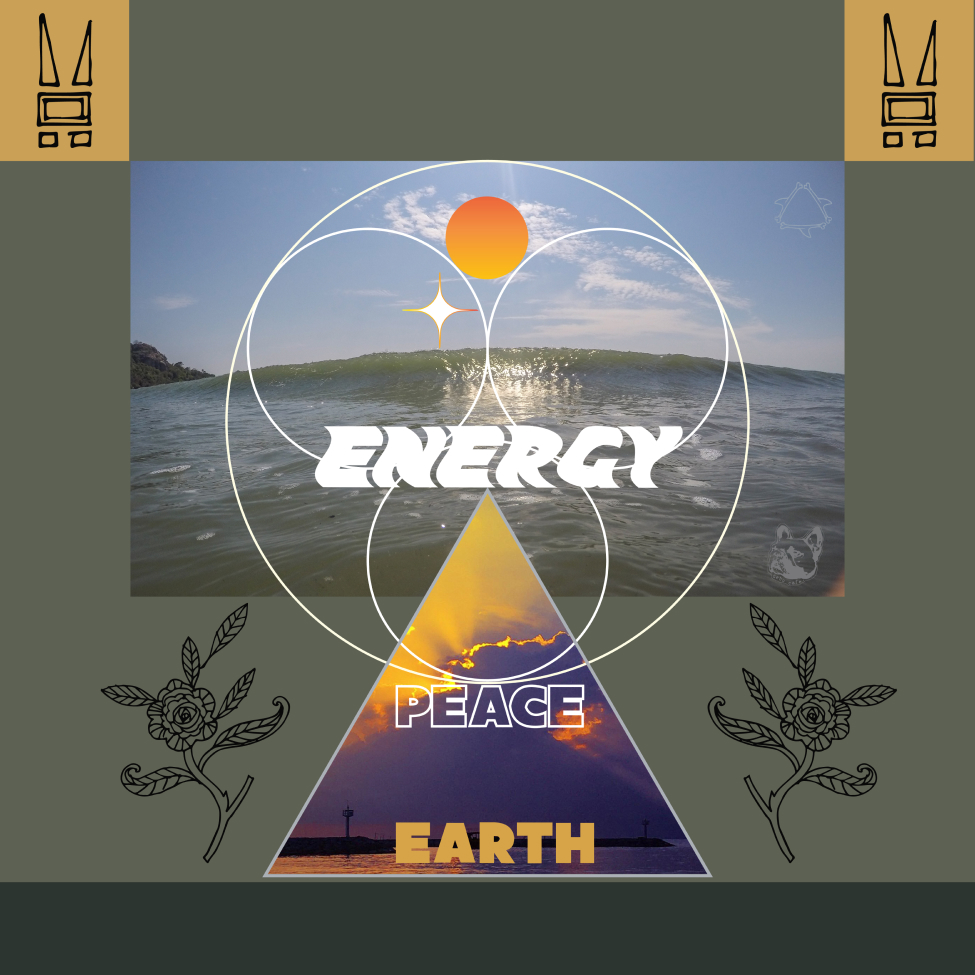
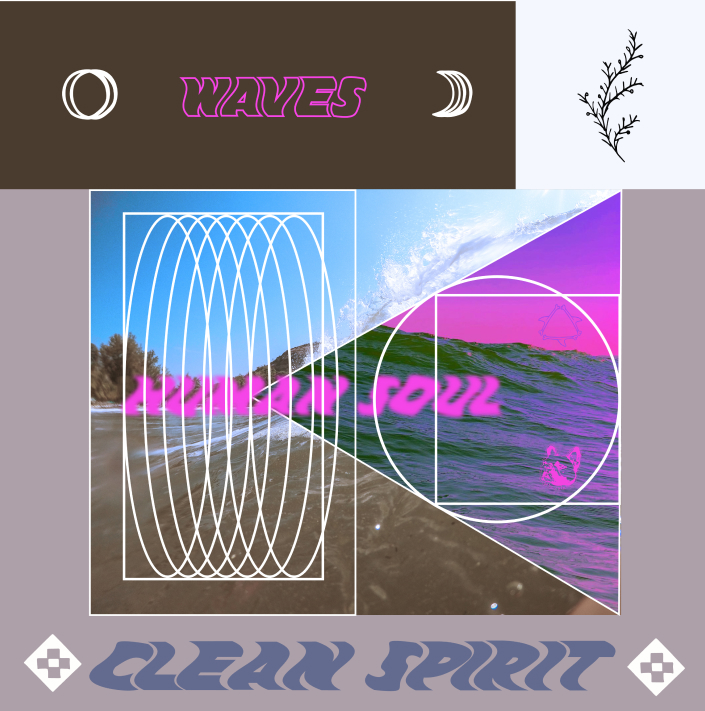
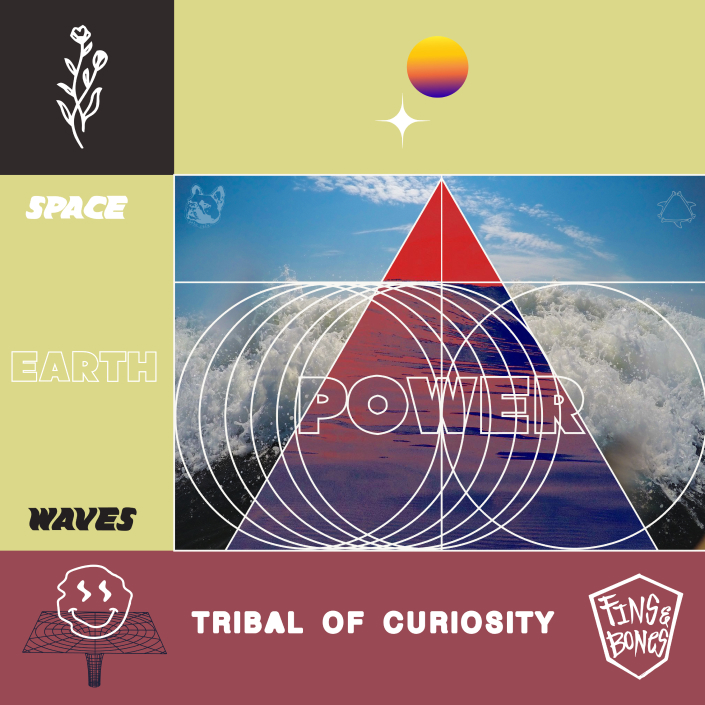
The search for human energy sources for sustaining life from one generation to the next continues to be a constant search within the world. And still use renewable energy from everywhere. Of course that energy is used up. And we never stop searching to help ourselves and the lives of those around us that we love.
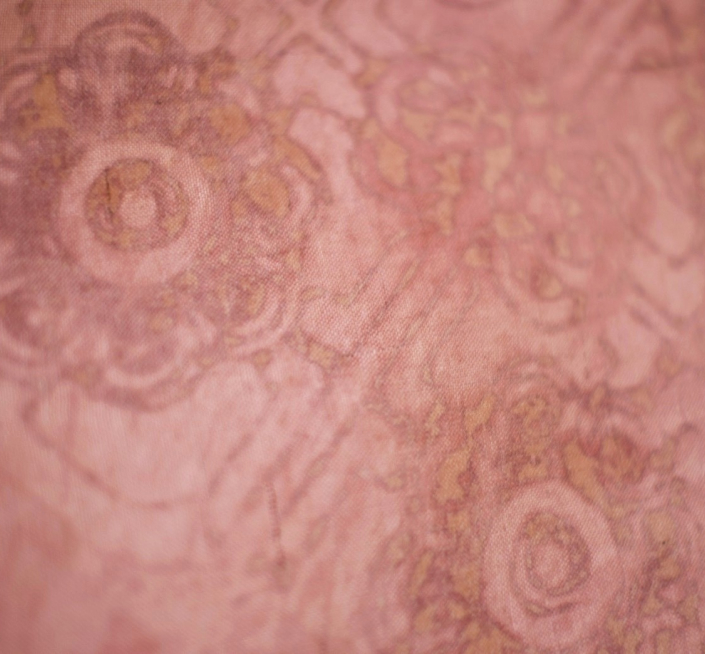
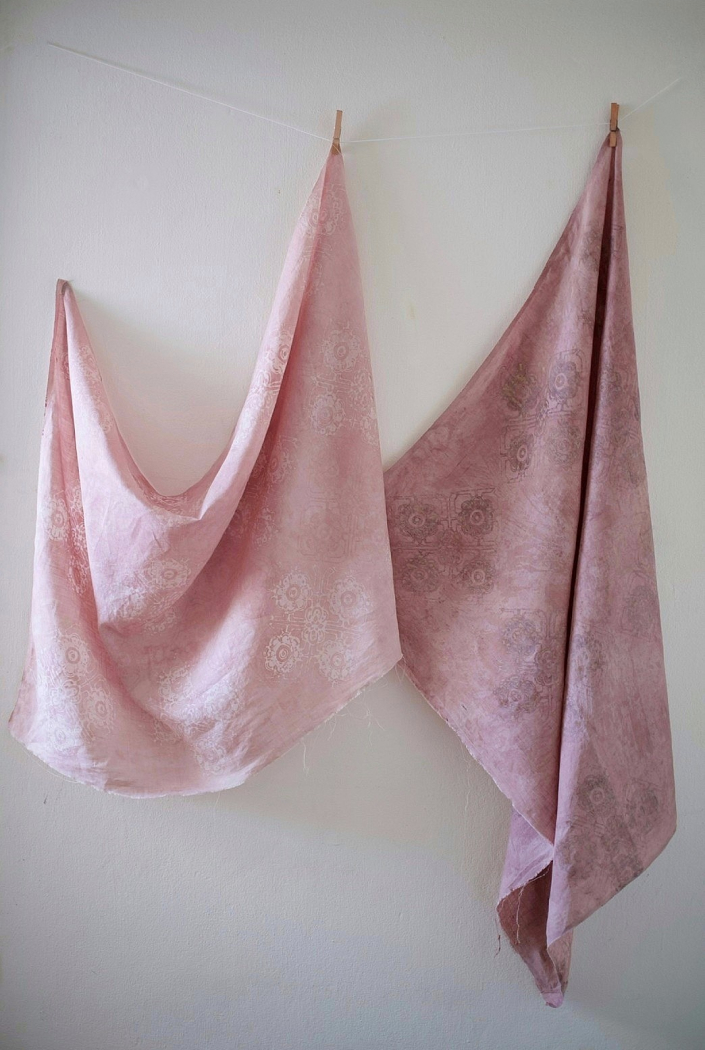
Batik creation printed with the pattern of the identity of Songkhla Old Town represented Thai people in the south living together with love and unity under the multiculturalism of art; and Thai, Chinese, and Malay cultures. Batik printing technique with natural dyes followed the concept of sustainability to reduce the use of chemicals and environmental destruction and build awareness of living with nature with creativity for the bright future of young generations in the lively environment and eco-friendly pleasant town.
Thus, the researcher used the pattern from the wooden cooking block of Sampannee with perforated lines imitating the wooden ventilators of the ancient house in the old town Chinoprotugese pattern from “Ban Nakhon Nai,” an ancient house aged 300 years, located on Culture Street, Songkhla Province for new pattern design, along with the concepts of batik creation and candle mold pumping technique to impede colors, which is a local fabric of Thai Malays in the south of Thailand for wearing when they perform religious rituals. The operation method was divided into 3 phases: Phase 1 was the work used to study the literature on the process of making Batek and cold dyeing in natural colors, Phase 2 was a metal block and technique experiment, and Phase 3 was creating works and draw conclusions The findings reveal that the first fabric: Cold dyeing from noni leaves and roots,
banana sap, and sappan heartwood created a light purple fabric with the clear printed pattern and candle lines, and The second fabric: Cold dyeing from noni leaves and roots, banana sap, and the rusty water created dark purple fabric, but the printed pattern was not as clear as the first fabric. The edge of the pattern that impeded the candle turned black due to the reaction of the rusty water to the fabric.
The first fabric: Cold dyeing from noni leaves and roots, banana sap, and sappan heartwood created a light purple fabric with a clear printed pattern and candle lines, of which sizes were small and could collect the details of the pattern nicely. The pattern that impeded the candle looked like marbles, obtained by squeezing the fabric while soaking.
The second fabric: Cold dyeing from noni leaves and roots, banana sap, and the rusty water created dark purple fabric, but the printed pattern was not as clear as the first fabric. The edge of the pattern that impeded the candle turned black due to the reaction of the rusty water to the fabric. Thus, The edge of the pattern at this part turned black. And the overall pattern was not as clear as the fabric that was not soaked in the rusty water.
Natural dyes created beautiful and dark colors, particularly dark red from sappan heartwood.
Fabric Print, LightBox, Installation
60×120 cm.
The most well-known Design Thinking process was developed by Stanford d. School, an improved version of the Harvard Design Thinking model, which will be referred to hereafter. The first step of Design Thinking process is “Empathy” or the process truly relating to audiences’ minds to comprehend and identify their pain points.
The Linear 5 steps process of Design Thinking has been used for the past 14 years without being challenged. This year symposium’s topic is “Clean Design”, contrarywise, has the process that we have been using to create those designs been “Cleaned”. In other words,
every product, design or process needs to be improved, any good model needs continuous improvement.
As a Designer, Professor and Academic specialist of Design Thinking, I had the opportunities to vastly put the practice of this model in real use, with success, among Education, Government and Private sectors. Therefore, I would like to be the first to challenge to “Clean” the Design Thinking process or advance it to make it more practical and applicable to Thai people.
The research project entitled “The process of creating conceptual art through the
photography.” had been studied and ascertained by the researcher from sorts of information to
analyze and find ways to create photography and including creating new forms from the scope
of content and social issues that have arisen from the past to the present. This visualization process has invited new interpretations of the concept of photography to be a communication tool that expresses thoughts upon problems occurring in society through language and the artistic symbols hidden in photography. The artistic tactics in this work have encouraged viewers
to watch, question, and find out the meaning in their perspectives.
Metal sheet 2.5 mm. and powder coat white color
–

Fabric Print, LightBox, Installation
60×120 cm.
Golden Peak Home Food is a food manufacturing company focusing on healthy food product lines. The company wished to develop a marketing tool for their upcoming trade events. The artist proposed to develop a fun and exciting platform game by incorporating the company’s corporate identity for promoting products.
The artist utilized Media Molecule’s Dreams as the platform to create a fully functional game, “The Golden Peak Home Food: The Interactive Game”. In this game, the player will be playing a 3D-platform-style game assuming the role of a cute bunny. The goal of this game is to earn points by collecting as many Golden Peak logos as possible. The stylized environment of the game contains the company’s information and product lines. This makes the player aware more of the company-especially about what kind of products the company offers. The company can use this as a fun and exciting marketing tool to attract young audiences in a trade exhibition setting. Making the company desirable in a fun and innovative way.
The aim of this interactive game is to create awareness about the company’s products. The
game can then be used as a mini-contest during trade events to attract audiences.
The artist began by designing the platform game and utilizing Media Molecule’s Dreams to
develop a fully interactive game suitable for trade exhibition setting.
Game Development on PlayStation 4
Multimedia 3840(W) x 2160(H)


Copyright © 2020 RSU-Workinprogress. All Rights Reserved
Every designer has their uniqueness and specific style to present through their artwork to a customer but in between that connection’s client that concerned about profit and marketing parts. The balance of these desirabilities of stakeholder in each project’s the skills that a designer try to find the best position that still shows their identity and solve every problem for a client.
This project is “LOGA X JOE the SEA-CRET Agent”, it’s the collaboration between Thai computer product brand and famous Thai comic art into the boxset of design products for developing intelligent property and client product design at the desirability balance point.
The finding of perfect area of design desirability from client, artist, and customer is the difficult process of the collaborative product. The only way to find’s discussion and flexibility between client, artist, and manufacture. If this process does not balance, the collaborative product can’t show the function of the client product and the uniqueness of the artist that might affect the success of the product in the end.
This project succession happens by the experiences of the artist and the understanding of the client that finally find the best position of this collaborative project.
The objectives of this project:
1. Combine the product design and comic art to the art piece that balances between
function and art.
2. Design collaborative product from the limitation of the manufacturing process
3. Adding more value to the product by client budget cost
The research about client products is the first process of this project. This product’s keyboard and mouse pad of LOGA Thailand for hand comfortable when using the computer for a long time especially for gaming activity. (Promotional Products Blog) This brand also creates a collaborative design with the artist to adding value with limitation marketing.
After understanding the product and client desirability (Wikihow), we’re starting to find the best part of JOE the SEA-CRET Agent comic to present on the keyboard and mouse pad and found the perfect scene of the gunfight that’s the uniqueness of this comic but change the real gun into gaming gears for tone down the aggressive scene.
The next process’s design the other product in this boxset like keycap, fragrant bag, sticker, and box. This project also added another product like drip bag coffee and artbook that’s the identity of the comic to balance the desirability of stakeholders.
Before the product launching day, the promotion planner chooses social media to viral this product to the customer of the brand and comic by sending the product to influencers and behind the design processes video from the comic artist. (Fraile) Url of promotional video :https://youtu.be/VqxAnBhB7x4
This plan’s success as well, the LOGA X JOE the SEA-CRET Agent boxset sold out on the launching day.
The design techniques of this product are base on hand-made and digital art by drawing comic line art on paper and scan to a digital file to finish the artwork in high resolution for print on the keyboard and mouse pad.
The materials of keyboard and mouse pad’s combination of high-quality fabric and rubber that print the comic artwork on the upper side with water resistant coating. The other product materials ’re chosen by the client and artist in the experiment process like the coffee bean in drip bag that chose from many different beans from specialist coffee manufacturing or the fragrant bag that chose the ocean scent from the story of the comic.
The design process artbook printed by digital publishing for limited pieces.
Digital art Illustration Graphic Design
Boxset: 41 x 11 x 10 cm.
Keyboard and mouse pad: 90 x 40 cm. Artbook: 21 x 10 cm.


Copyright © 2020 RSU-Workinprogress. All Rights Reserved
According to the Royal Institute Dictionary, the word ‘Phi-rom’ means jubilation, gladness, and merriment. From my own interpretation, the definition of the word is broader and 2 can cover up to the feeling of joyfulness, content, blissfulness, delight, and overall relevant feelings.
The usage of ‘Phirom Sculpture’ communicates the work directly to audiences with the term regarding happiness, the work will not be interpreted into other senses, and also relates to recreation activities.
The core idea is not the perfection of the sculpture nor the delicacy. The work is only an evidence of the artist’s stage of mind, and the output is correct in the sense of provable science, which can be determined like other art therapy.
The sculpture prototype can be developed to be a creational activity which appropriate for relaxation, and it can attracts interests and gains popularity in a larger international scale.
The work line is not particularly designed for the artist’s expression like other artists work, but this work is precisely designed to be the prototype of recreation activities which will bring blissfulness to our lives. The prototype is a practice of mindfulness, the essential of living which everybody should have. Moreover, if ones couldn’t get pleasure from any other sources, this practice should be one of the choices.
The sculpture series were designed from a combination of two different concepts of working process which were largely contrasting from one another. Merging together, the consequence is a new sculpture called “Phirom Sculpture”. The two type of art were the assemblage of western postmodernism. Crafting from waste materials, the sculpture has an unusual look, combining with ikebana, the art from eastern world which is a Japanese Buddhism flower arrangement. The Zen philosophy is permeated in every stage of creation. This type of art has begun in 15th century and continued throughout history to the present time.
When combined with the two nature of contrast elements, the outcome is a sculpture series. The initial nature is a connection between controversial elements from waste materials or eclectic garbage, however the output form is very interesting and also catching attention. Though the look is relatively rough and raw like absurd behaviors from mad ones, in terms of psychology, it is an explosion of temper. Similar to the expression of an abstract art with the trace of a mad temper, however the sculpture used materials instead of traces. By connecting irrelevant elements without any reasons, the work is truly organic and this is another charm from the art, the beauty of contrasted context rather than the harmony of them all. I called this a ‘raw aesthetic’.
The second nature brought branches, flowers, and plant lineages combined with decoration, the sculpture was made to look more alive and blooming like natural plant growth. Furthermore, decorating with all the inventory pieces brings a sense of unity from the work. In details, the meticulousness part of the work was from consciousness stage, the core message of Zen Buddhism. This compartment is a part of an intellectual mind which doesn’t necessary need any interpretation. The feeling is about blissfulness and pleasure, they were happening while the artist was doing the work. The sculpture was created from two contrast and exceedingly different elements, therefore the balance was there in itself. As Chinese philosophers who believe in Taoism give their priorities to the duo power of Yin-Yang, I also believe in the balance stage of feeling while creating this sculpture, the practice of the work also gives oneself to the stage of True Dhamma. Therefore, the practice is called “Phirom Sculpture”.
Though Phirom Sculpture has the image of an internationalism art, it still remains the contents of Zen Buddhism from the east. Therefore, the sculpture consists of two parts which are the freedom by instinct part and the articulated conscious mind part, using new design practices.
1. Stability to consider the stability, starting from choosing materials for plants and flowers container, it is not necessary to choose the containers directly since unpredicted materials are more interesting.
These types of material refer to stability, the essential basic for all thing happening further, compared to soil which is the basement of everything. In Dhamma, it refers to the conscious stability of the mind, ones have no anxiety. In a practical way, one must monitor their conscious mind while choosing the materials.
2. Emptiness
The emptiness refers to space or the air, begins with choosing the elements that display the stage of emptiness such as various forms of branches, distorted branches can refer to unusual imagination. These distorted branches will give a sense of movement more than the straight ones.
However, imagination can be created from other types of line elements too, depends on the artistic visions that suite the situation. In practical way, to be benefited from the practice, ones should be imaginative and think about the stage of emptiness while considering all the branches.
3. Nature
This stage refers to the period of considering the elements from nature, branches, plant roots, stumps, flowers, and other vegetation. The smell of nature, cleanliness, and uncontaminated sense can make us feeling pleasant and lively. Nature bless all living things, even if using only forms and little compartments, it still gives the sense of blissfulness and life. Phirom Sculpture has prioritized the nature as much as mind fulness, therefore it is crucial that the practice must include nature awareness, even in different forms. Nature has mixed in every detail of life, even it appears very little in the work, the artist still have to be aware of the nature all the time. By that sense, the artist will approach nature more than ever.
4. Connection
Combining different compartments altogether to create the work, ones should consider the harmony of them all, visually and practically. In term of visual, the elements might not related obviously but the meanings might be harmonized. The work will be considered by the artist, if they are related in a sense of understanding, then the work is proceeded, since the practice weight on feelings more than object.
5. Fulfillment
The stage of considering errors of the work, depends on the feelings and visions of an artist. This is the last stage for reviewing, the artist can fill in more designs if appropriated. The artist can use materials and objects to touch up and fill in some errors of the work.
Conceptual Sculpture & Mix media
Length 180 cm. Width 80 cm. High 80 cm.


Copyright © 2020 RSU-Workinprogress. All Rights Reserved
Thai – Myanmar border area, the location of all ethnic communities be ambiguous about their identity where the nation-state point of view as state people when it was needed in exchange. But at times, they are always seen as the culprits that create problems for the nation-state, as in the case of the Dara Ang ethnic community of Ban Nor Lae, Fang District, Chiang Mai Province, where problems with no rights of Citizen always main situation, the right to own the land, is only allocating quotas to produce agricultural products to support the capital activities.
Once the goods over supply, they have to struggle to allocated its by themselves moreover, some people need to handle with structural problems a situated lack capital to drive.
For this photographic artwork, this is part of the research on the production of communicating “In the case of the Dara Ang village of Ban Nor Lae ethnic group under the process of the Thai-Myanmar border area” which the researcher wants to present Ban Nor Lae community through the aesthetic process of represent photographic art in order to make society aware of their existence.
This creative process is an experiment in which the creators try to bring together the concepts of sociology and photographic art to explain social phenomena of the Dara Ang ethnic group under the context of the border area from the analysis. Preliminary data shows that most of the people in the border areas are remarked by the state as part of stability problem, so the state is trying to foster capital through quota allocations whereas governor is the who gain benefit but villager still lack the right to have their own land. They own life to live but no right to claim or negotiate in terms of price and agricultural products. The creators of the work see that although they have a desire to live a better life in terms of the welfare the state should create or give them rights. But what they hoped will not be able to elevate their live, because in the eyes of the nation state they are only cause trouble to the state all the time.
Photographic works depicting the life of the Dara Ang ethnic group living in the Thai-Myanmar border area. How they exist in a state of otherness that the nation-state creates so that traditions, beliefs, and identities are still the hallmarks that can be used to explain their identity to the outside society or not?
In this work, the creators have applied sociology concepts as a guideline in the production of photographic art as follows: the concept of identity, borders and the nation state then, participatory observation and interviews with people in the community both formally and informally in the Dara Ang ethnic village border area located in Fang District, Chiang Mai Province.
To collect information over all the history of the community, way of life and beliefs, including photographic recordings to see the reality at time that people lived in the area.
From the information obtained during the fieldwork to collect information, the creators found that the beliefs of the community connecting with ancestral spirits is very important to people in this Dara Ang community call as there will be “Jai Baan” as the spiritual center that allows Dara Ang people to be able to connect their relationships to them. It exists and will have a recognized elder of the community to lead the worship service every four years. The community will stand up prominently on the road that cuts through the village where left bank rule by Myanmar and another side belong to Thailand. Only advantage of this is villagers can do transection throughout natural border path to Dara Ang Village where far from Thai Fortier 1 kilometer.
Every Friday, although this road can be operated under the supervision of soldiers from 8:00 AM, but it is unfortunate that during the COVID-19 pandemic, villagers were unable to cross due to Thai state that has ordered the closure of this natural channel is also that the community area around “Jai Baan” will be gathered every morning of the people in the community before people disperse to work in their farms. As for some people who do not have their own land, will prepare to wait for the employer to go to work daily in the lower part of the village or in the employer’s garden, which are all in the same village. Where is an exchange area for agricultural products such as snow lotus and winter vegetables that villagers will exchange to trade according to the quota that other communities or middlemen order.
The information mention above lead creator realized the importance of the area around “ Jai Baan”, and photographing the community atmosphere in the morning, which is the end of the rainy and early winter, thus causing the area to have a murky atmosphere caused by the condition. The weather captured this moment and then processed it from color to black and white photographs in order to imply the absence of people in the border areas, regardless of their political status. Society, citizenship and the lack of equal access to resources as citizens of the Thai nation state.
Photography Digital black and white
12×16 inch


Copyright © 2020 RSU-Workinprogress. All Rights Reserved
The lotus flower, the queen of aquatic plants, is the symbol of Buddhism and representative of Buddhist’s spirituality. In Buddhism, lotus represents morality in humans, which can be compared to four types of lotus, ranging from the lotus above water, the lotus at the water surface, the underwater lotus to the lowest lotus under the mud. As the lotus remains its purity without any dirt despite its origin in the mud, the lotus can represent the beauty originated amongst filth. Compared to humans born with purity, those who live their life with greed, sinful mind and desire are like the lowest lotus that is blind to its purity.
In Buddhism, greed can be divided into 3 types, including greediness, hatred, and delusion. Greediness is the desire attached to human’s senses such as physicality, taste, scent and sound. Hatred involves the feeling of intense detestation that can cause disturbance, emotional break-out and violence. Delusion is the allure caused by human’s ignorance.
Inspired by human’s greed, a design concept highlights greediness and hatred. There are irregular lines, like a human mind that has not yet been refined from the Dharma. Comparing a human’s mind to the lotus, the pure shapes and details of the lotus are deformed, exaggerated and layered with various techniques in order to represent human’s greediness and hatred.
During the process of creating this piece made me look back at myself and hope to have an intangible power as the wind to be part of driving, mentoring, and guiding students’ work so that they can bring out their potential in some way.
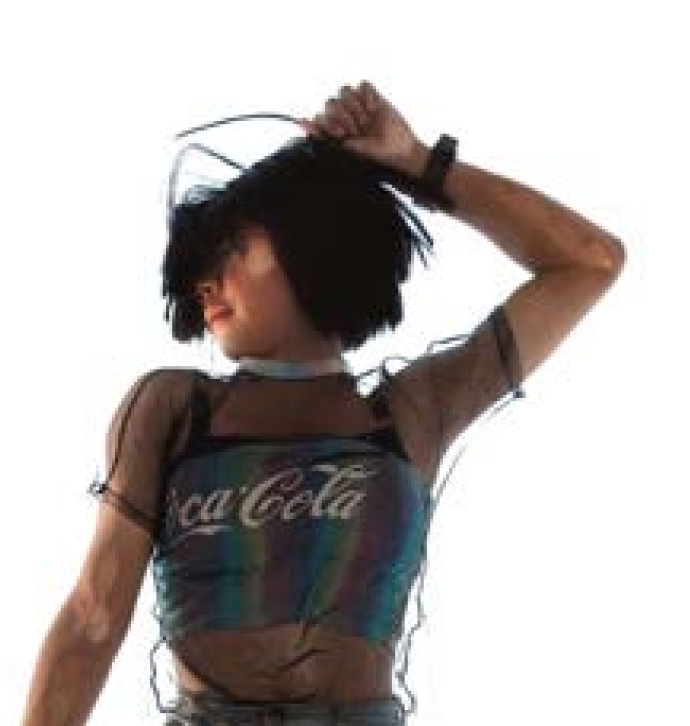
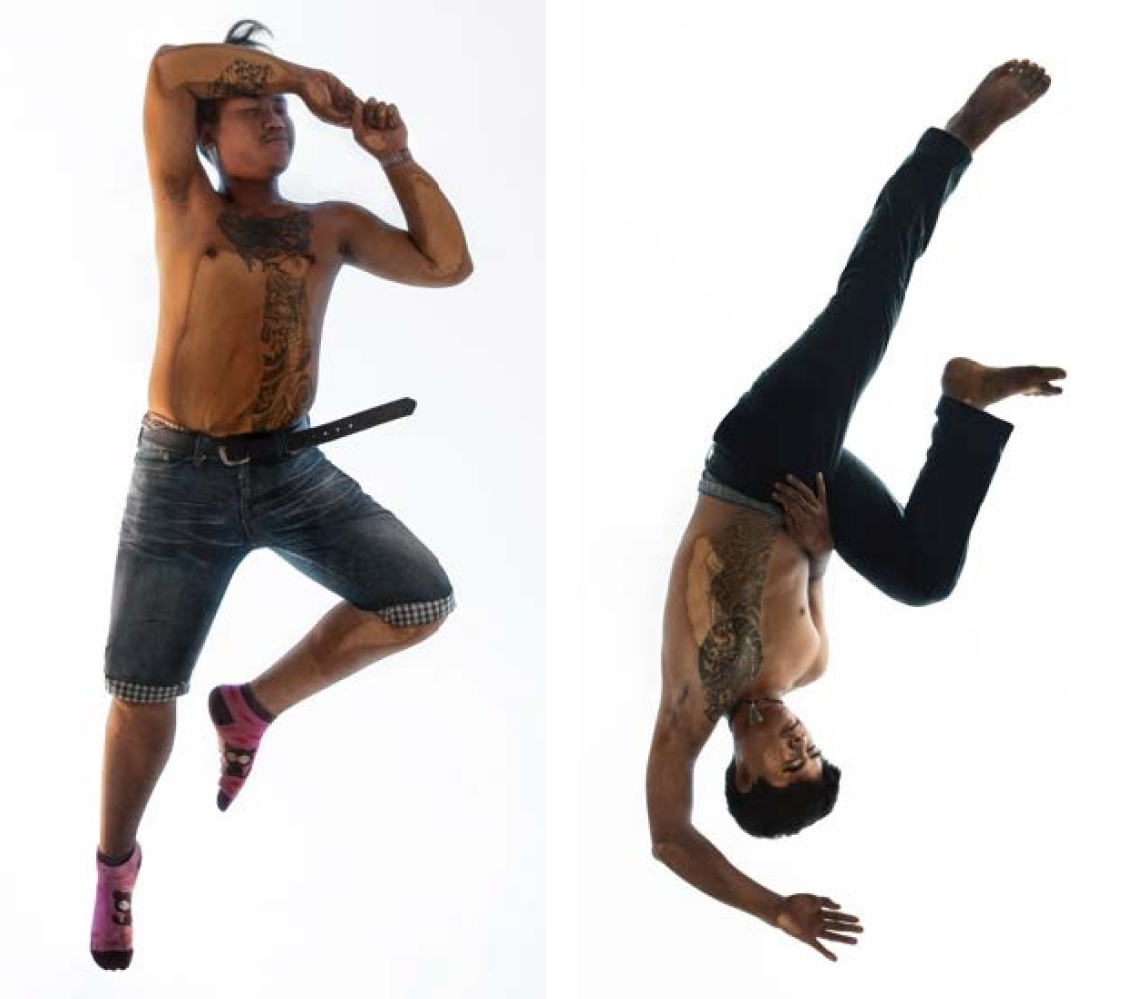
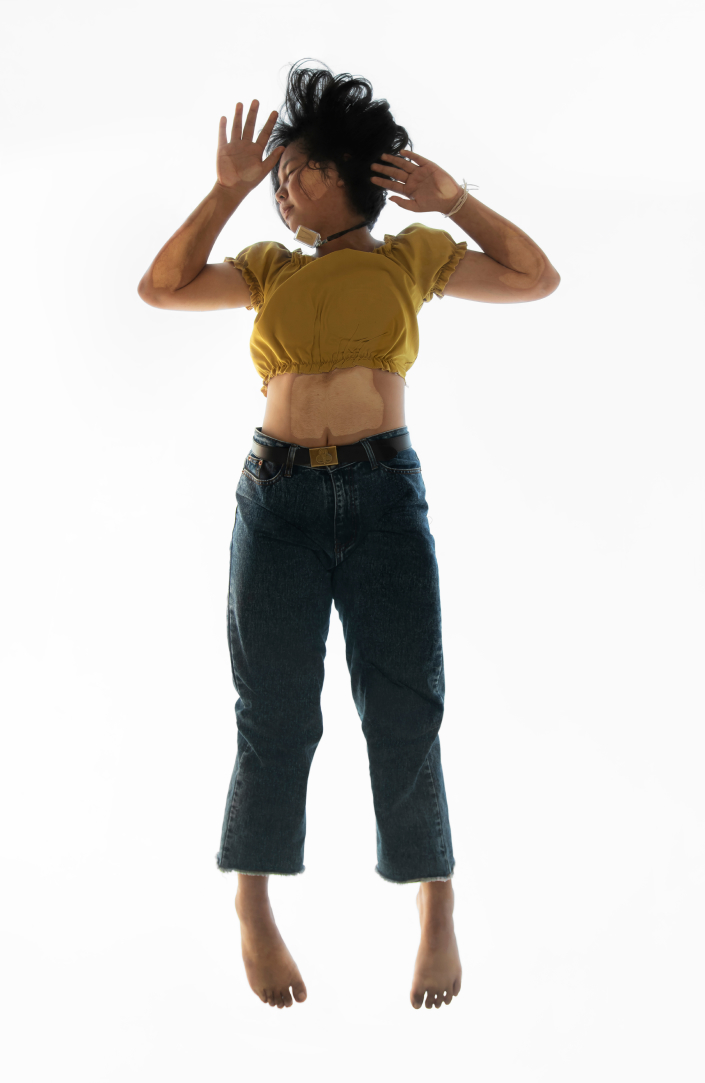
To develop a quasi-experimental of how to create patterns to give an outfit an interesting shape when exposed to the wind drive.
This project is based on a personal feeling about the way we creating various works. We do it with desire or we do it to be accepted and has works to be recognized by the general public.
When the world today focuses on self-advertising or creating an image that is conveyed through what we offer. rather than realizing our own actions. Is it necessary that whenever we do something? We have to let others know what we do. In some society appreciate people with good self-presentation skills than those who do not like to present themselves. Of course, no one is wrong or right to have a certain attitude or to like a particular person. But what I want to convey through this event is that we do not proclaim our actions doesn’t mean we didn’t do. What you never seen doesn’t mean it never happened.
That lead me to present this thought by comparing this to the “wind” which we cannot see but we can feel. Presenting through an apparel design which shape changes when the wind drives through it. by emphasizing the experimental pattern design that takes into account the structure that has both air trap and ventilation parts, as well as creating volume and use materials that are wind resistant in order to achieve the result is that when worn normally, the costume is in one shaped. But when the wind hits the wind will be trapped in the designated section. to form an inflatable shape and perceived that the wind is helping to change the shape. In this point, in my personal view, is to convey that we cannot see the wind, but the wind has a force that can change something. some things we don’t see doesn’t mean it doesn’t exist.
Created and developed a pattern to, make 2 sets of muslin prototypes at the university, Make1 actual outfit at the university. and the second outfit at home during work from home.
Black and navy blue water prove nylon
Pattern making techniques to adds volume and an elastic drawstring stitching to build up form.
Fashion Design


Copyright © 2020 RSU-Workinprogress. All Rights Reserved
The lotus flower, the queen of aquatic plants, is the symbol of Buddhism and representative of Buddhist’s spirituality. In Buddhism, lotus represents morality in humans, which can be compared to four types of lotus, ranging from the lotus above water, the lotus at the water surface, the underwater lotus to the lowest lotus under the mud. As the lotus remains its purity without any dirt despite its origin in the mud, the lotus can represent the beauty originated amongst filth. Compared to humans born with purity, those who live their life with greed, sinful mind and desire are like the lowest lotus that is blind to its purity.
In Buddhism, greed can be divided into 3 types, including greediness, hatred, and delusion. Greediness is the desire attached to human’s senses such as physicality, taste, scent and sound. Hatred involves the feeling of intense detestation that can cause disturbance, emotional break-out and violence. Delusion is the allure caused by human’s ignorance.
Inspired by human’s greed, a design concept highlights greediness and hatred. There are irregular lines, like a human mind that has not yet been refined from the Dharma. Comparing a human’s mind to the lotus, the pure shapes and details of the lotus are deformed, exaggerated and layered with various techniques in order to represent human’s greediness and hatred.
The creation entitled “KILESSA” is a fashion creation that reflects human’s greed, one of the principles in Buddhism that reminds us to be conscious and mindful. In this project, human’s greed is translated into fashion through various design features. Based on shapes and lines developed from the analysis of lotus, volumes and layers represent greediness, while exaggerating lines illustrate hatred. Different design techniques on the outfit are aimed not only to symbolize infinite human’s greeds, but also to remind ourselves to refrain from delusion and greed.
1. To create an artistic and wearable outfit that reflects human’s greediness and hatred through the use of symbols in Buddhism.
2. To study design techniques and the lotus as a means to reflect human’s greed.
3. To raise the awareness of human’s greed in our mind and remain mindful of our consciousness that prevents us from greed and delusion.
4. To improve design skills and techniques for fashion design which will be advantageous to teaching.
1. Studying Buddhism and investigating on human’s greed and lotus.
2. Studying the action of hatred in humans such as moodiness, bursting out, rudeness, violence and uncontrollable behaviors (both physically and verbally).
3. Analyzing and conceptualizing.
4. Develop design sketches based on the analysis. Make a toile fitting.
5. Experimenting design techniques. Various techniques employed on lines and shapes analyzed from the lotus represent human’s greed. Voluminous gathering, layering, cascading ruffles symbolize infinite desire, while exaggerating shapes, stiffness and exploding outline illustrate hatred.
6. Analyzing practical and technical problems in order to create final outfits.
1. Techniques
Pin tucks tucking fabric and inserting silk threads into lineal patterns developed from lotus flowers and leaves. Disheveled lines represent human’s confusion and uncontrollable desire and anger.
Magic pattern creating a hole pattern that symbolizes infinite greed hidden deep down in human’s mind.
2. Materials
Organza’s slight shininess is similar to the surface of lotus, while crushed chiffon’s roughness represents anxiety and disturbed mind.
Silk/ Chiffon
Fine silk threads, which resemble lotus filament, are embroidered. Its long and disheveled lines can be compared to human’s confusion over greed.
Embroidery thread
Fashion Design Textile Design


Copyright © 2020 RSU-Workinprogress. All Rights Reserved