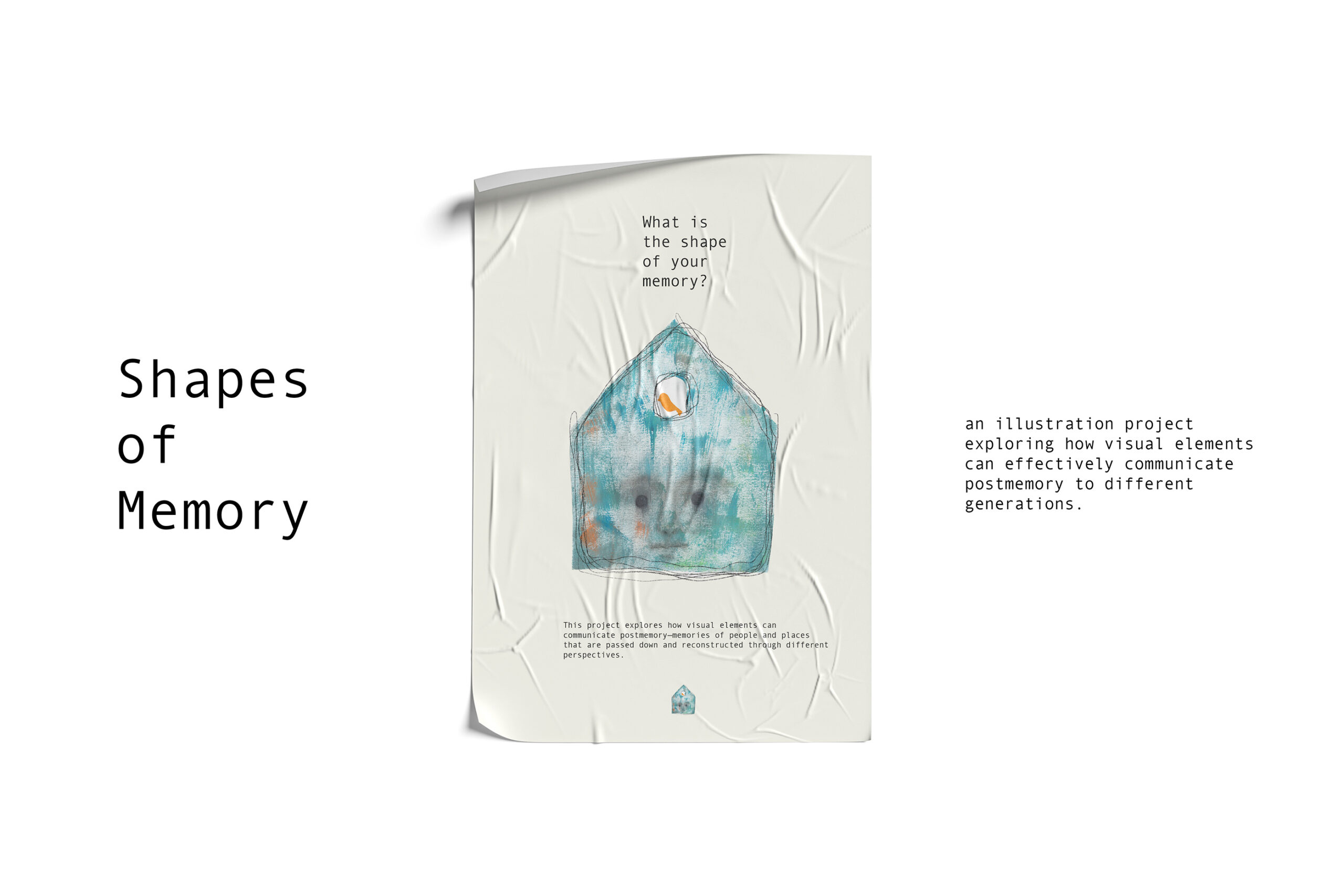
Shapes of Memory
Mahidol University International College, Thailand
Ploy Nikadanont
Abstract :
This project explores how visual elements can communicate stories related to memories of people and places, particularly memories that have been passed down, reconstructed, and interpreted through different storytellers’ perspectives: a phenomenon associated with postmemory. The study investigates how visual communication can represent not only what is remembered, but also how inherited memories are interpreted and reconstructed.
Seven case studies in art, illustration, and animation were selected based on their relevance to postmemory and professional recognition. The selection includes award-winning works or works by internationally recognized and awarded artists whose practices engage with inherited memory and personal or collective histories. The case studies include Maus (Spiegelman, 1980–1991), Felix in Exile (Kentridge, 1994), Funan (Do, 2018), Vietnamese Memories (Baloup, 2011), Your Golden Hair, Margarete (Kiefer, 1980), Monument (1985) and Réserve (1990) by Christian Boltanski, and Postmemory Archive (Boué, 2013–2019).
The works are analyzed through seven visual elements: line, shape and form, colour, texture, level of abstraction, placement, and visual hierarchy. These elements are further examined through Neuro Design principles (Bridger, 2017), focusing on their potential influence on attention, perception, emotional response, association, and memory. As visual responses may vary according to age, experience, familiarity, and cultural context, the study considers how the same visual approaches may be perceived and interpreted differently across audience groups.
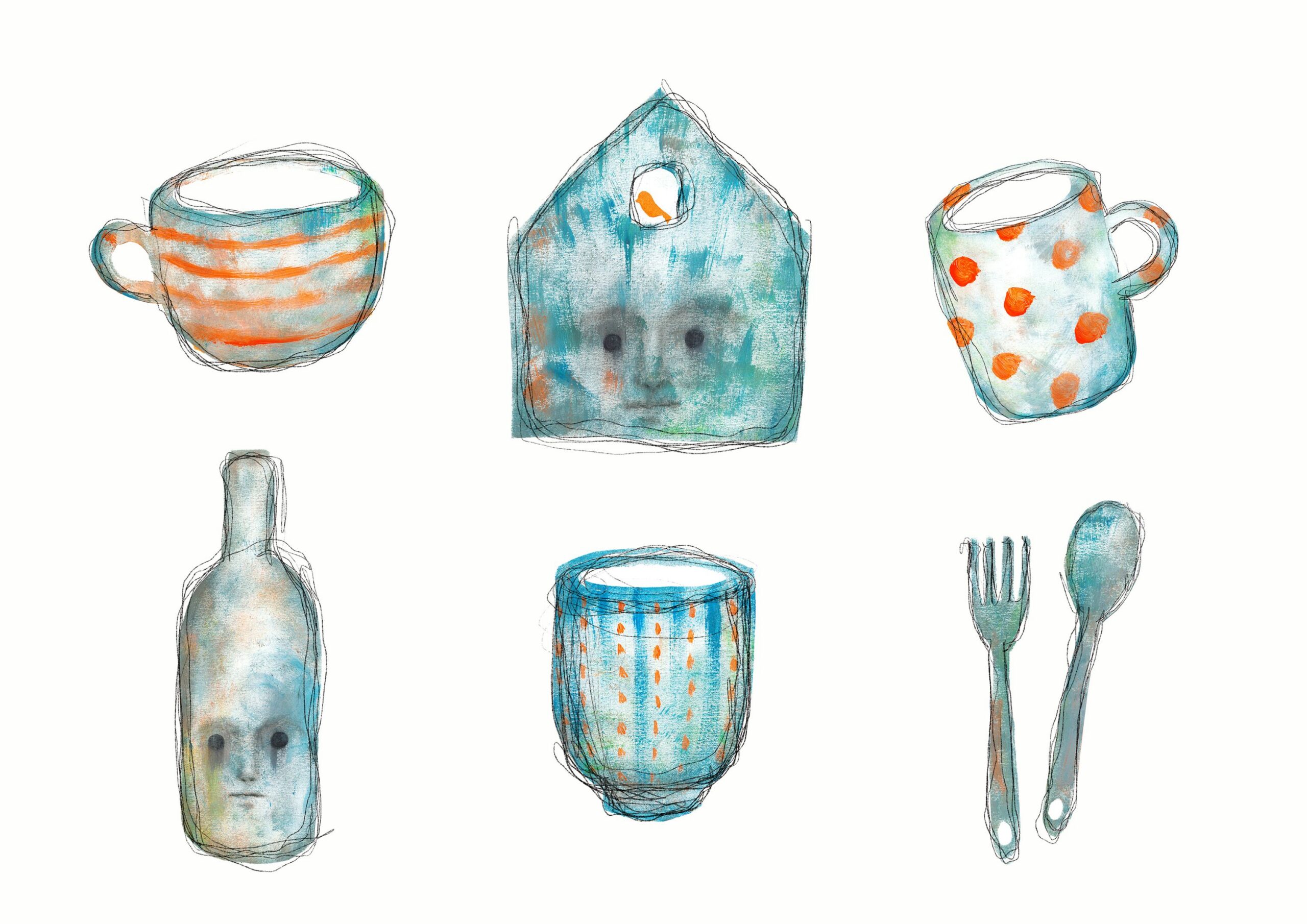
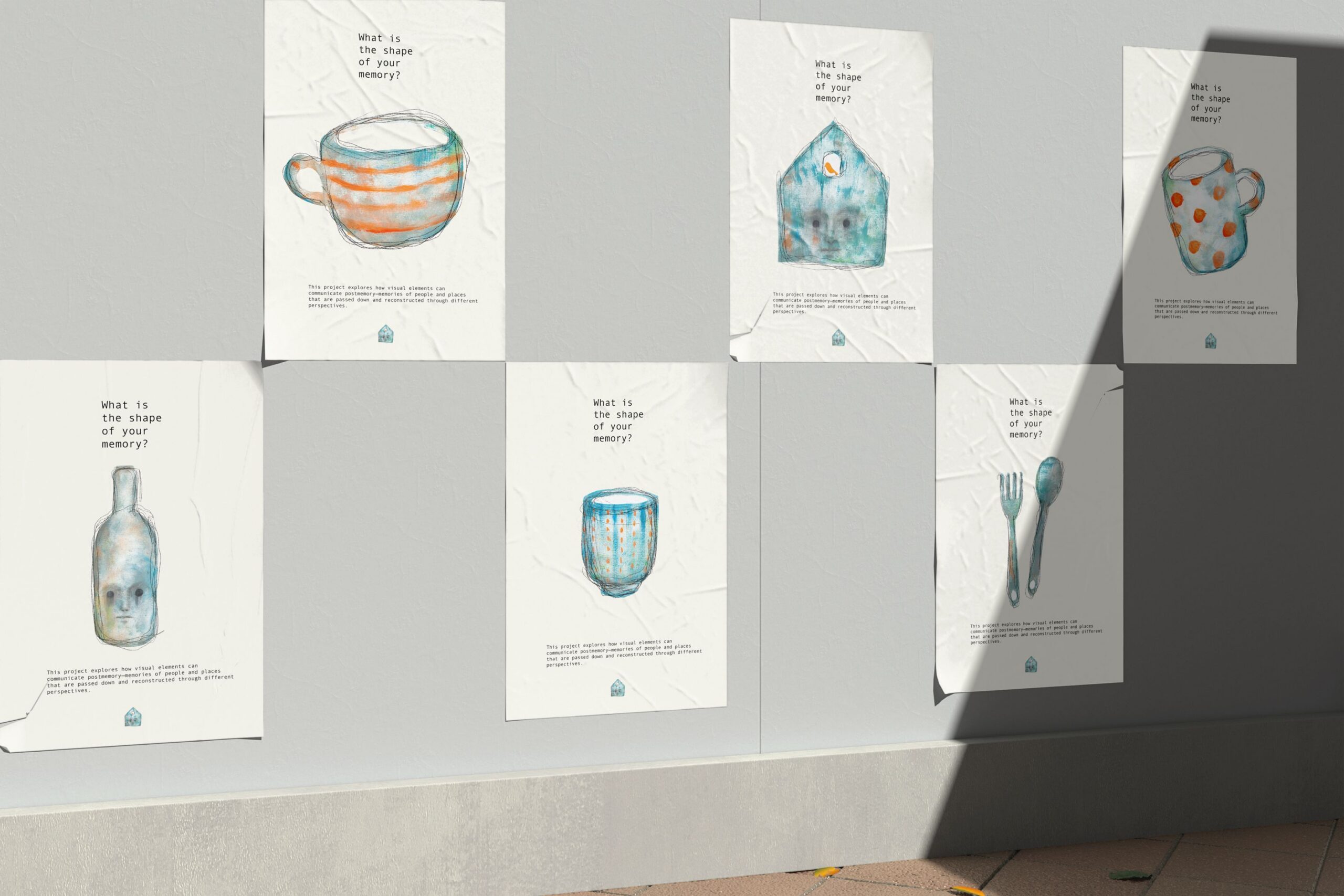
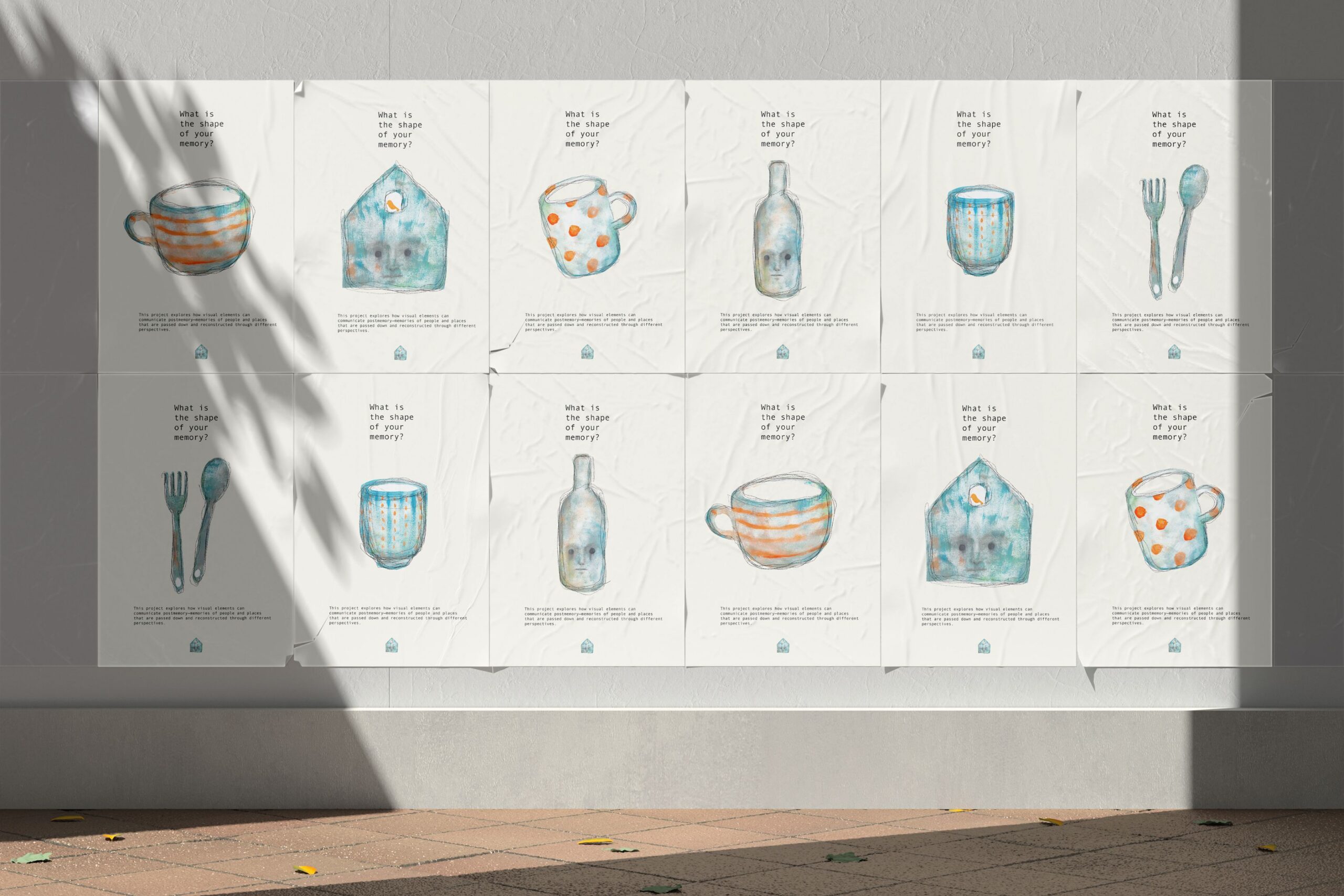
Based on the analysis, the identified visual approaches are applied to create Shapes of Memory, a series of illustrations using everyday objects to represent moments and memories associated with people and places. The illustrations will be evaluated through group interviews with participants from different generations: Gen Alpha, Gen Z, Gen Y, and Gen X. By comparing their perceptions and interpretations, the study aims to identify which visual elements and approaches are most effective in communicating postmemory to different generational audiences.
Objectives :
- To identify visual elements and approaches used to communicate postmemory through the analysis of selected case studies in art, illustration, and animation.
- To apply the identified visual elements and Neuro Design principles in developing the Shapes of Memory illustration series, using everyday objects to represent memories associated with people and places.
- To evaluate how different generational groups; Gen Alpha, Gen Z, Gen Y, and Gen X perceive and interpret the illustrations, and to identify which visual elements and approaches are most effective in communicating postmemory to each group.
Conceptual Framework :
The conceptual framework integrates Post-memory, Visual Elements, and Neuro Design principles to explore how inherited and reconstructed memories can be communicated through illustration.
Post-memory provides the conceptual foundation, focusing on memories of people, places, and experiences that are passed down and reconstructed through stories, images, objects, and personal interpretation.
These memories are examined through seven Visual Elements: line, shape and form, colour, texture, level of abstraction, placement, and visual hierarchy. Selected case studies are analyzed to identify how these elements are used to represent memory and communicate emotional and narrative meaning.
The identified visual approaches are then considered through Neuro Design principles, focusing on visual attention, perception, emotional response, association, and memory. This process provides a framework for translating the findings into illustration.
The resulting visual approaches are applied to Shapes of Memory, a series of illustrations using everyday objects to represent moments and memories associated with people and places. The illustrations will then be evaluated through group interviews with participants from different generational groups: Gen Alpha, Gen Z, Gen Y, and Gen X. Their responses will be compared to examine how different generations perceive and interpret the same visual elements and to identify which visual approaches are most effective in communicating postmemory to each group.
Conceptual Framework:
Postmemory → Case Study Analysis → Visual Elements → Shapes of Memory (illustration prototype) → Neuro Design Principles → Group Interview & Refine = Illustration that effectively communicate postmemory to different generations.
Process / Methodology :
The project adopts the Double Diamond framework, consisting of four stages: Discover, Define, Develop, and Deliver.
- Discover — Explore
Review theories of postmemory and Neuro Design and explore award-winning and internationally recognized artworks related to inherited, reconstructed, and collective memories. - Define — Analyze
Analyze seven selected case studies through seven visual elements: line, shape and form, colour, texture, level of abstraction, placement, and visual hierarchy. The findings are examined through Neuro Design principles to identify visual approaches for communicating postmemory. - Develop — Experiment & Prototype
The case study findings were applied to create Shapes of Memory, a mixed-media illustration series using everyday objects to represent memories of people, places, and moments. Paper stencils and dry-brush acrylic were used to create rough textures and distorted forms, with muted complementary blue and orange as the main colour scheme.Following the analysis, Level 3 semi-abstraction was used to balance recognition and ambiguity. Lines were later added digitally using Procreate to define and emphasize selected forms, translating the identified visual approaches into the final prototype.
- Deliver — Evaluate & Refine
Conduct group interviews to evaluate how viewers perceive and interpret the illustrations and how effectively the visual elements communicate postmemory. The findings will then be used to refine the illustrations and develop the final visual framework.
Current Stage: Prototype completed → Group Interview & Evaluation (Next Step)
Techniques and Materials :
The prototype combines paper stencil, acrylic painting, and digital drawing. Everyday objects are used to represent memories associated with people, places, and meaningful moments.
Paper stencils and dry-brush acrylic are used to create rough textures and partially distorted forms, reflecting the fragmented and reconstructed nature of memory. Muted complementary blue and orange are used as the main colour scheme, while Level 3 semi-abstraction creates a balance between recognition and ambiguity, based on the case study findings. Finally, lines are added digitally using Procreate to define and emphasize selected forms.
Result / Conclusion :
The analysis of seven selected case studies—Maus, Felix in Exile, Funan, Vietnamese Memories, Your Golden Hair, Margarete, Monument and Réserve, and Postmemory Archive—reveals recurring visual approaches used to communicate inherited, reconstructed, and collective memories.
Across the case studies, line is often expressive, irregular, simplified, or erased, creating a sense of traces and imperfect memories. Shape and form are frequently simplified, fragmented, distorted, or partially obscured, reflecting how postmemory is reconstructed from incomplete information. Colour tends to be limited, muted, monochromatic, or selectively emphasized to establish emotional atmosphere and highlight significant moments. Texture, including charcoal, grain, scratches, photographic qualities, and layered materials, creates a sense of age, deterioration, and traces of the past.
Placement and composition commonly use layering, repetition, isolation, cropping, juxtaposition, and empty space to represent fragmented experiences and relationships between past and present. Visual hierarchy is created through contrast, scale, position, repetition, and selective detail to direct attention toward emotionally significant elements. The level of abstraction varies across the works, but recognizable people, places, and objects are often combined with simplified, distorted, fragmented, or symbolic forms. This balance between recognition and abstraction allows viewers to identify familiar visual cues while also communicating the uncertainty and incomplete nature of reconstructed memory.
Through Neuro Design principles, these findings show strong connections with familiarity, contrast, visual hierarchy, priming and context, and selective emphasis. Overall, the analysis identifies key approaches including trace, fragmentation and reconstruction, emotional coding, material evidence, layering, selective attention, and the balance between recognition and abstraction. These findings provide the visual foundation for developing Shapes of Memory, which will be evaluated through group interviews with Gen Alpha, Gen Z, Gen Y, and Gen X to compare how different generations perceive and interpret the same visual elements and to identify which approaches are most effective in communicating postmemory to each group.
References :
Baloup, C. (2011). Vietnamese memories [Graphic novel series].
Boltanski, C. (1990). Réserve [Installation]. Centre Pompidou, Paris, France. Centre Pompidou
Boué, S. (2013–2019). Postmemory archive [Art project]. Sonia Boué Art. Postmemory Archive
Bridger, Darren. Neuro Design. London: Kogan Page Limited, 2017. ISBN 978 7494 7888 9.
Do, D. (Director). (2017). Funan [Film]. Les Films d’Ici, Lunanime, BAC Films, WebSpider Productions, & iThinkAsia. Annecy Festival record for Funan
Hirsch, M. (2012). The generation of postmemory: Writing and visual culture after the Holocaust. Columbia University Press. Columbia University Press
Hockney, D., & Gayford, M. (2016). A history of pictures: From the cave to the computer screen. Thames & Hudson. ISBN 9780500239490
Kentridge, W. (1994). Felix in exile [Film]. The Museum of Modern Art. The Museum of Modern Art
Kiefer, A. (1980). Your golden hair, Margarete [Watercolor, gouache, and acrylic on paper]. The Metropolitan Museum of Art, New York, NY, United States. The Metropolitan Museum of Art
Ocvirk, O. G., Stinson, R. E., Wigg, P. R., Bone, R. O., & Cayton, D. L. (2012). Art fundamentals: Theory and practice (12th ed.). McGraw-Hill. ISBN 978-0-07-337927-2.
Spiegelman, A. (1986). Maus I: A survivor’s tale: My father bleeds history. Pantheon Books. Penguin Random House
Spiegelman, A. (1991). Maus II: A survivor’s tale: And here my troubles began. Pantheon Books.