WHAT REMAINS, MOVES.
College of Design, Rangsit University, Thailand
Patchara Rattanakup
Abstract :
This design research explores how personal memories can be transformed into textile and fashion design. The project started from the experience of losing a beloved older sister. She was an important person in the designer’s life and was also connected to the beginning of the designer’s journey in sewing, as she gave the first sewing machine that the designer used. Instead of presenting the experience of loss through a sad or literal narrative, this project focuses on remembering the positive moments and everyday things connected to her.
The research looks at how memories can appear as separate images, details, and feelings. Some memories are clear, while others may change, become exaggerated, or appear like fragments of a dream. These characteristics became an important part of the visual direction of the project. Real photographs and personal visual references are used as the starting point for developing the textile motifs. The original images are not reproduced directly in the final work, but are redrawn, simplified, rearranged, and developed into textile patterns.
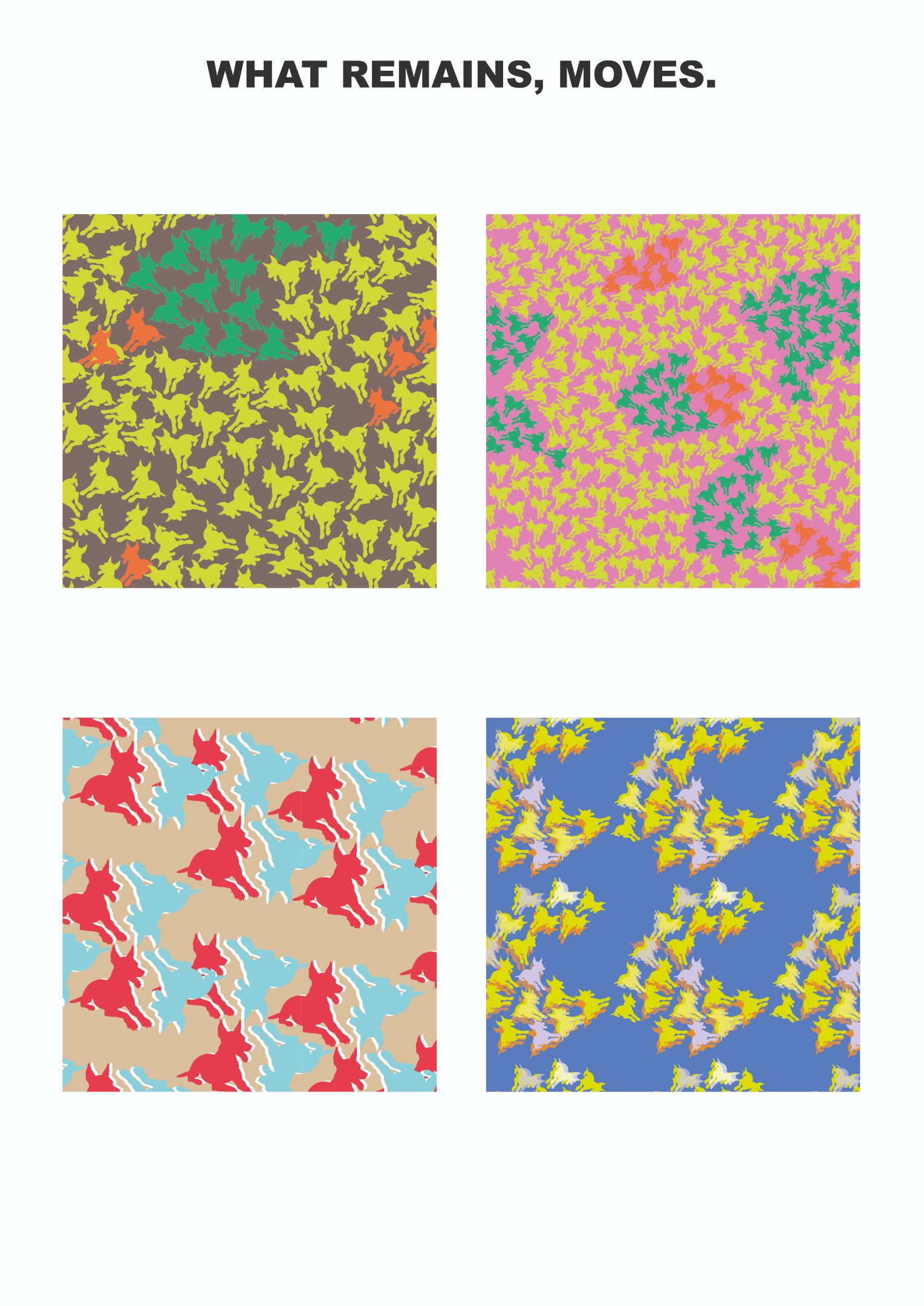
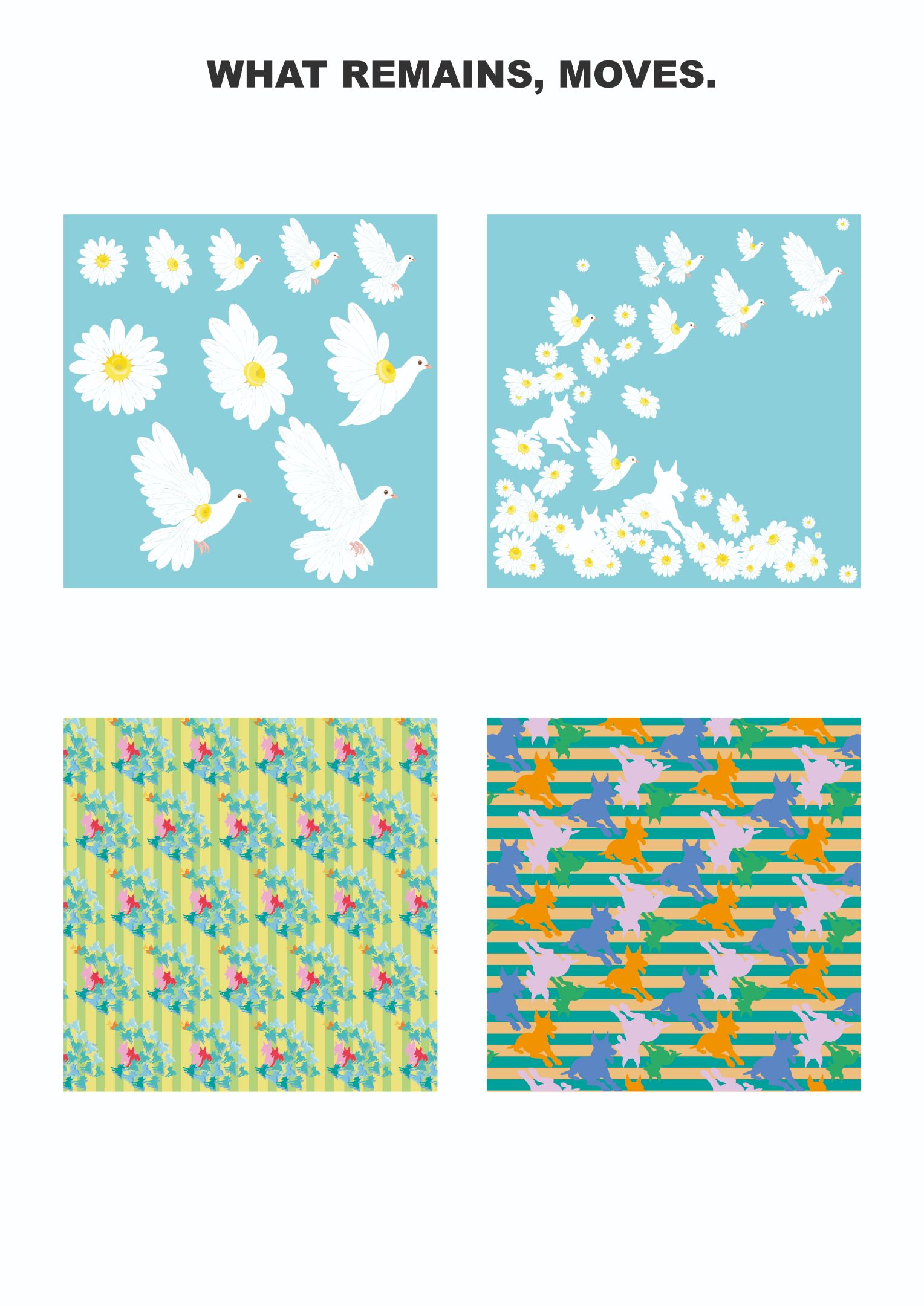
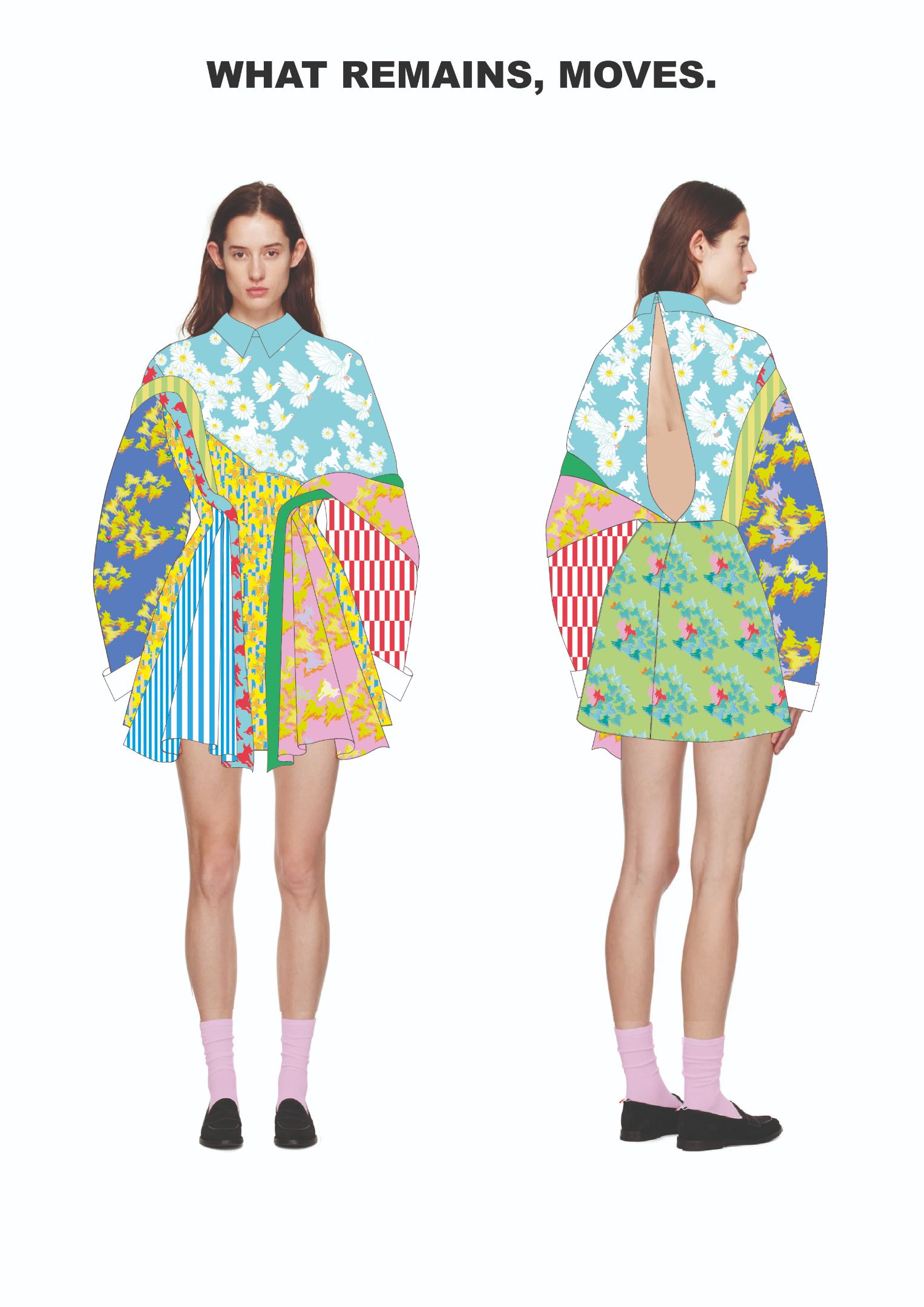
The main visual elements include daisies, a beloved dog, the beach, ocean waves, sailing boats, beach umbrellas, stripes, and floral motifs. The daisy motif gradually transforms from a complete flower into a bird through a series of visual changes, in which the petals are reduced and reshaped into elements resembling wings, feathers, and eventually the form of a flying bird. The dog motif is based on photographs of the actual dog and is reduced into silhouettes before being arranged into repeat patterns. This process creates a contrast between personal and emotional images and the order of textile design.
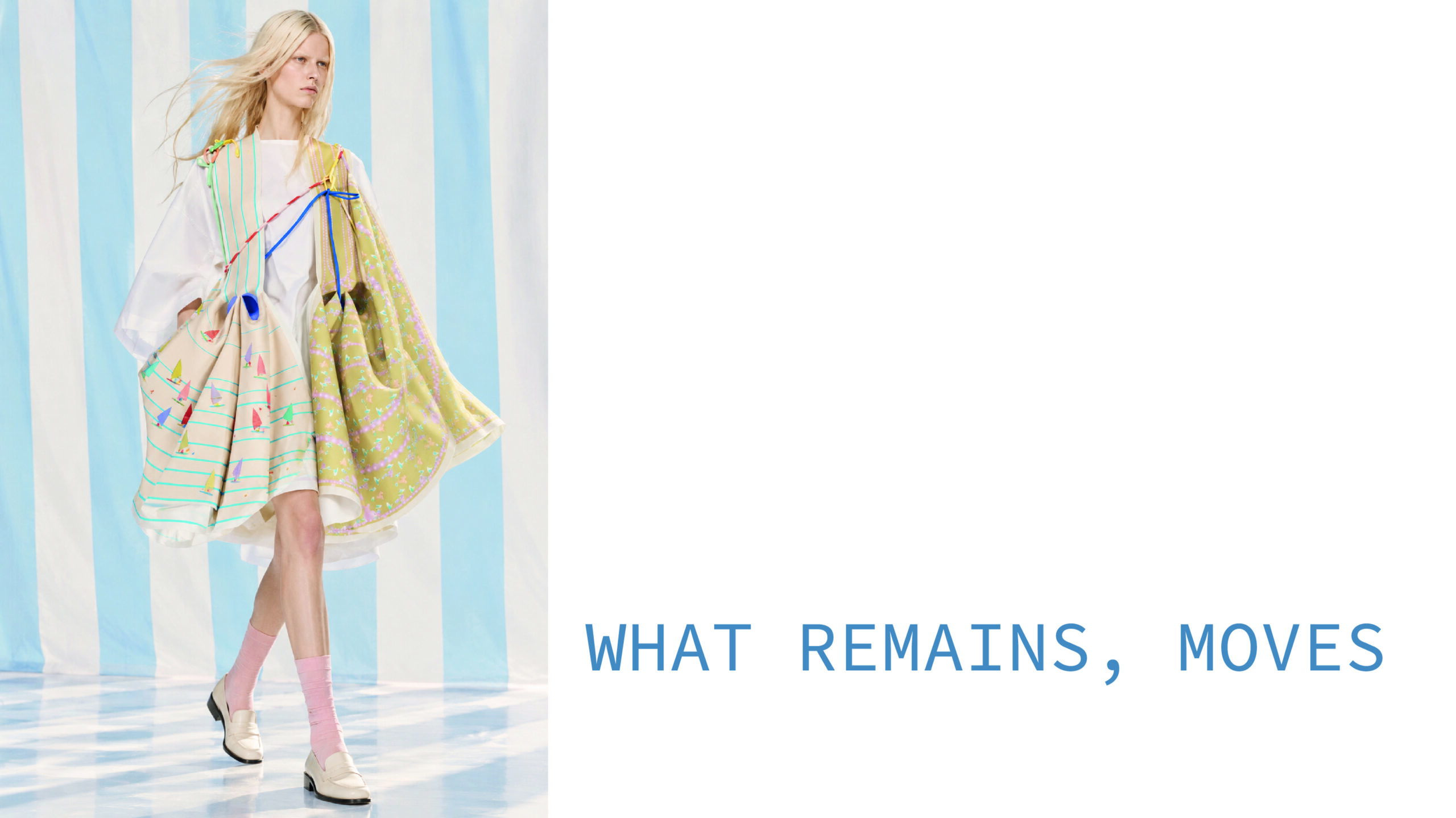
The garments combine beachwear influences with pattern structures inspired by sailing sails. A sail needs wind, which cannot be seen but can create movement. This becomes a metaphor for memory. Although a person may no longer be physically present, memories can continue to influence us and help us move forward.
The project therefore explores memory not only as something from the past, but also as a source of creativity, movement, and continuation through textile and fashion design.
Objectives :
The main objective of this project is to explore how personal memories can be developed into a visual language for textile and fashion design. The project uses personal experience as the starting point, but does not aim to directly tell the story of loss. Instead, it focuses on positive memories and the small details that remain meaningful after someone is no longer physically present.
The second objective is to develop textile patterns from real visual references connected to these memories. The selected references include daisies, a beloved dog, the beach, ocean waves, sailing boats, beach umbrellas, stripes, and floral elements. These images are collected from photographs and other personal visual references. They are then redrawn, simplified, and rearranged to create new textile patterns while keeping enough visual detail for the original objects to remain recognizable.
Another objective is to explore how different types of memories can be organized through the principles of textile design. For example, the dog is represented through its actual silhouette and then repeated in different directions and positions. The original image is therefore still connected to a real memory, but the arrangement becomes more playful and systematic. The project also explores the transformation of the daisy into a bird motif, representing a change from one familiar form to another and suggesting the idea of change and movement.
The project also aims to develop garments that connect the textile patterns with the idea of movement. Beachwear is used as a reference for the overall mood and some elements of the garment design. The structure of sailing sails is also studied and translated into pattern cutting through panels, crossing lines, tension, and directional shapes.
Finally, the project aims to demonstrate how personal experience can be transformed into a fashion design process. Through drawing, textile pattern development, pattern cutting, and garment construction, the project uses memory as a starting point for creating something new. The final work aims to show that remembering someone can be expressed through positive, energetic, and creative forms rather than only through sadness.
Conceptual Framework :
The conceptual framework of this project is based on three main ideas: Memory, Transformation, and Movement.
Memory is the starting point of the project. Memories are not always complete or organized. They can appear as individual images, objects, places, or small details. The project therefore selects specific visual memories and develops them into design elements.
Transformation refers to the process of changing these real visual references into textile motifs. Photographs of a dog, flowers, and other objects are used as references, but they are redrawn, simplified, and rearranged. The images remain recognizable while becoming part of a new visual system.
Movement is represented through the beach, birds, waves, dogs, and sailing. The main metaphor comes from the relationship between a sail and the wind. Wind cannot be seen, but it can make a sail move and allow a boat to travel. In the same way, memory cannot be physically seen, but it can continue to affect our lives and encourage us to move forward.
These three ideas connect the emotional starting point of the project with practical design processes such as textile pattern development, pattern cutting, and garment construction.
Process / Methodology :
The project uses a practice-based design process, beginning with the collection of real photographs and personal visual references. The references are selected from objects, places, and subjects connected to positive memories, including daisies, a beloved dog, the beach, waves, sailing boats, beach umbrellas, stripes, and flowers.
The first stage is visual research and selection. Photographs are studied to identify recognizable shapes, details, movement, and visual characteristics that can be developed into textile motifs. The images are then redrawn and simplified according to the needs of the design. The intention is not to create abstract images, but to keep enough details so that the original subjects can still be recognized.
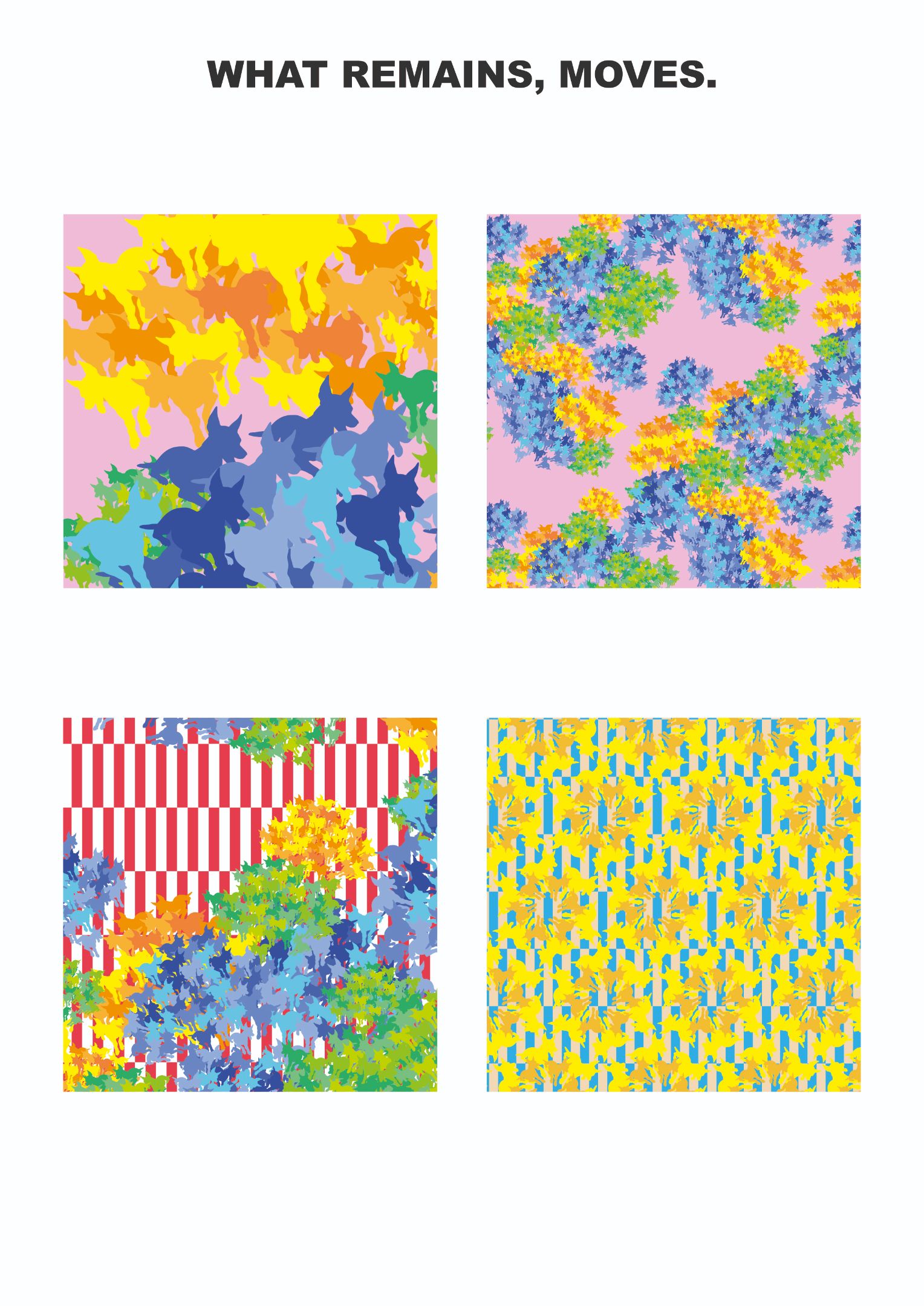
The daisy and bird motif is developed by studying the details of real flowers and birds and drawing a visual transition between the two forms. The dog motif is developed directly from photographs of the actual dog. The photographs are converted into silhouettes and then arranged in different positions to create a repeat pattern. The repeated silhouettes create a playful visual effect while still keeping a connection to the original memory.
Other motifs are developed from beach-related elements such as waves, sailing boats, beach umbrellas, stripes, and floral patterns. These elements are combined to create a group of textile patterns with an energetic and relaxed beach atmosphere.
The next stage focuses on garment development. Beachwear is used as a reference for the overall direction, while sailing sails are studied for their construction, tension, and directional lines. These ideas are translated into garment patterns using panels, crossing lines, and fabric movement.
The final stage combines the developed textile patterns with the garment structures through pattern cutting, fabric manipulation, sewing, and garment construction.
Techniques and Materials :
The collection explores fabric manipulation, textile printing, and pattern-cutting techniques to express the fragmented and changing nature of memory through volume, movement, and material.
The inner dress combines fabrics with different structural qualities, including fabrics that hold their shape and fabrics that drape softly. These fabrics are printed and cut into pattern pieces with interwoven and crossing lines, creating sections that flare outward and form volume. Print-to-print placement and contrasting colors are used to create a playful and energetic surface, reflecting the way different fragments of memory can appear together and overlap.
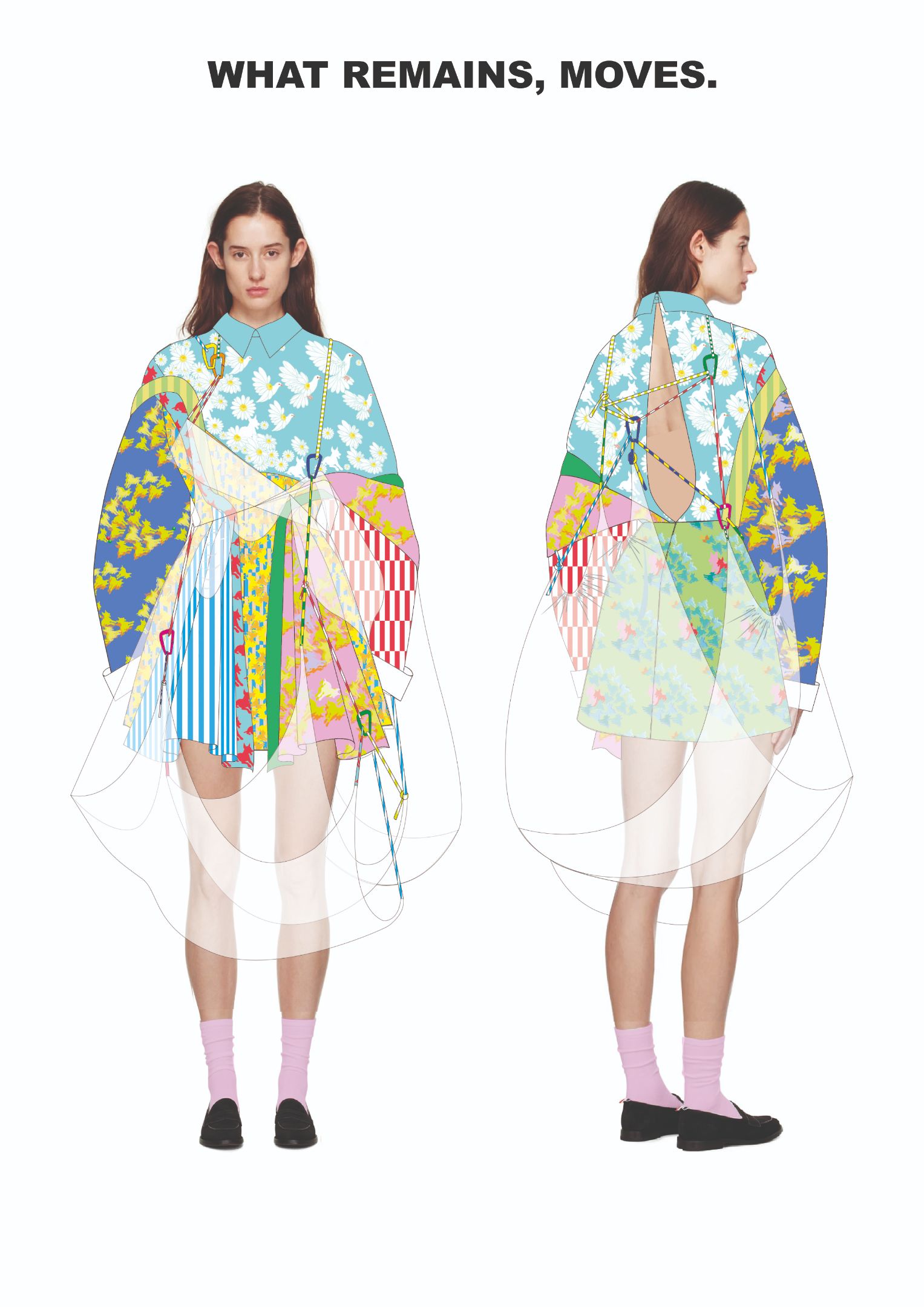
The outer dress is developed from sail-inspired pattern cutting, using tension, pulling, gathering, and joining techniques to create volume that expands with movement. A lightweight, translucent fabric with a slightly plastic, wet, and crisp quality creates a changing appearance as the garment moves. Printed fabric from the inner dress is reused as narrow strips and threaded through openings with cords, visually connecting the two layers and representing how different memories remain connected. Recycled cord locks made from marine waste are incorporated as functional and decorative details, extending the connection to the beach environment. Through these techniques, the garments translate memory into physical movement—something invisible that continues to shape and carry the body forward.
Result / Conclusion :
The final outcome consists of textile patterns and garments developed from personal memories and visual references. The work presents memory through a positive and energetic direction rather than focusing on sadness. The textile patterns combine personal images with familiar elements of beach life, creating designs that can be seen as decorative patterns from a distance but reveal more personal references when viewed closely.
The daisy and bird motif shows the idea of transformation. The recognizable details of the flower and bird are maintained while their forms gradually change, suggesting the transition from one state to another. The dog motif is developed from photographs of the actual dog and transformed into silhouettes. The silhouettes are then repeated and arranged in different directions to create a playful pattern. The use of repetition also creates a connection between the personal nature of memory and the systematic process of textile design.
The garments combine beachwear references with structures inspired by sailing sails. Panels, crossing lines, and directional elements are used to create movement around the body. The sail becomes an important metaphor for the project because it responds to wind, an invisible force that can move a boat forward.
The sewing and garment construction process also has a personal meaning within the project. Sewing is connected to the first sewing machine given to the designer by the sister and therefore becomes part of the relationship between memory and the designer’s present practice.
Overall, the project shows how real personal memories can be used as starting points for textile and fashion design. Through drawing, simplification, repetition, pattern development, and garment construction, personal images are transformed into a new visual language. The project presents memory not only as something connected to the past, but also as something that can continue to create movement and inspire new work.
References :
Personal photographs and memories (n.d.). Unpublished personal archive.
Share :
Facebook
Twitter
LinkedIn
WhatsApp
Email
Print