Burning Sword: Reconstructing Wuxia Visual Memory through Concept Design and Visual Development
Faculty of Digital Art, Rangsit University, Thailand
Patara Nimmol and Kanitharin Thailamtong
Abstract :
In this submission, we examine the creative direction and collaborative visual development of Burning Sword, a wuxia-inspired game supported by a Thai investor. Development began in 2020, with a planned release window of 2025–2026. We—Patara Nimmol as a Creative Director and Kanitharin Thailamthong as a Co-Art Director—oversee the project’s creative and visual direction, connecting character, environment, and graphic design with the story and gameplay.
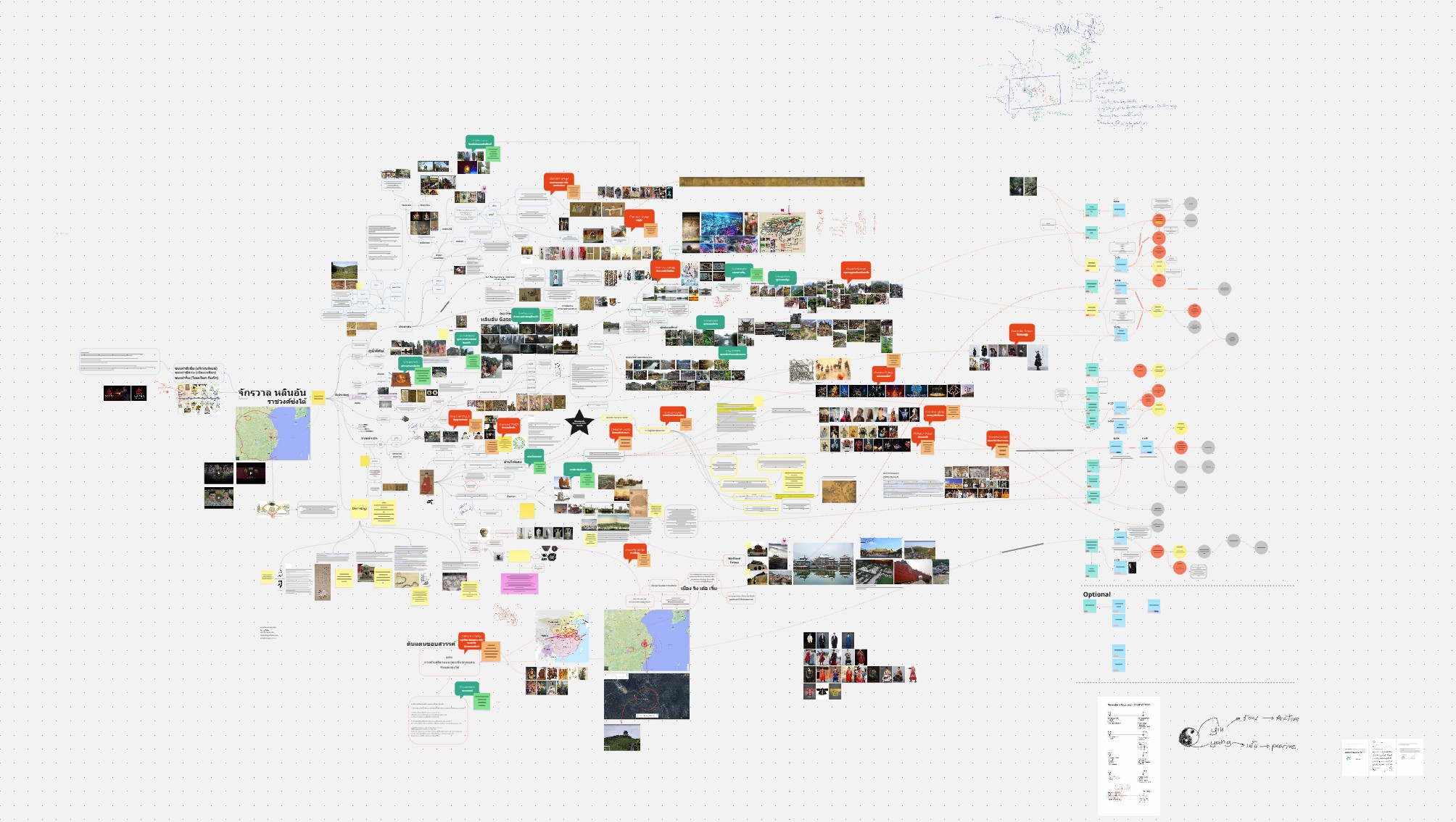
The project engages with “postmemory” through the reconstruction of historical and cultural references that are received through texts, images, artworks, stories, and popular wuxia traditions rather than through direct personal experience. During pre-production, we researched the Song period, including clothing, hairstyles, social life, values, ideas, and systems of governance. We translated these materials into a fictional game world in which visual details communicate social position, history, belief, and power.
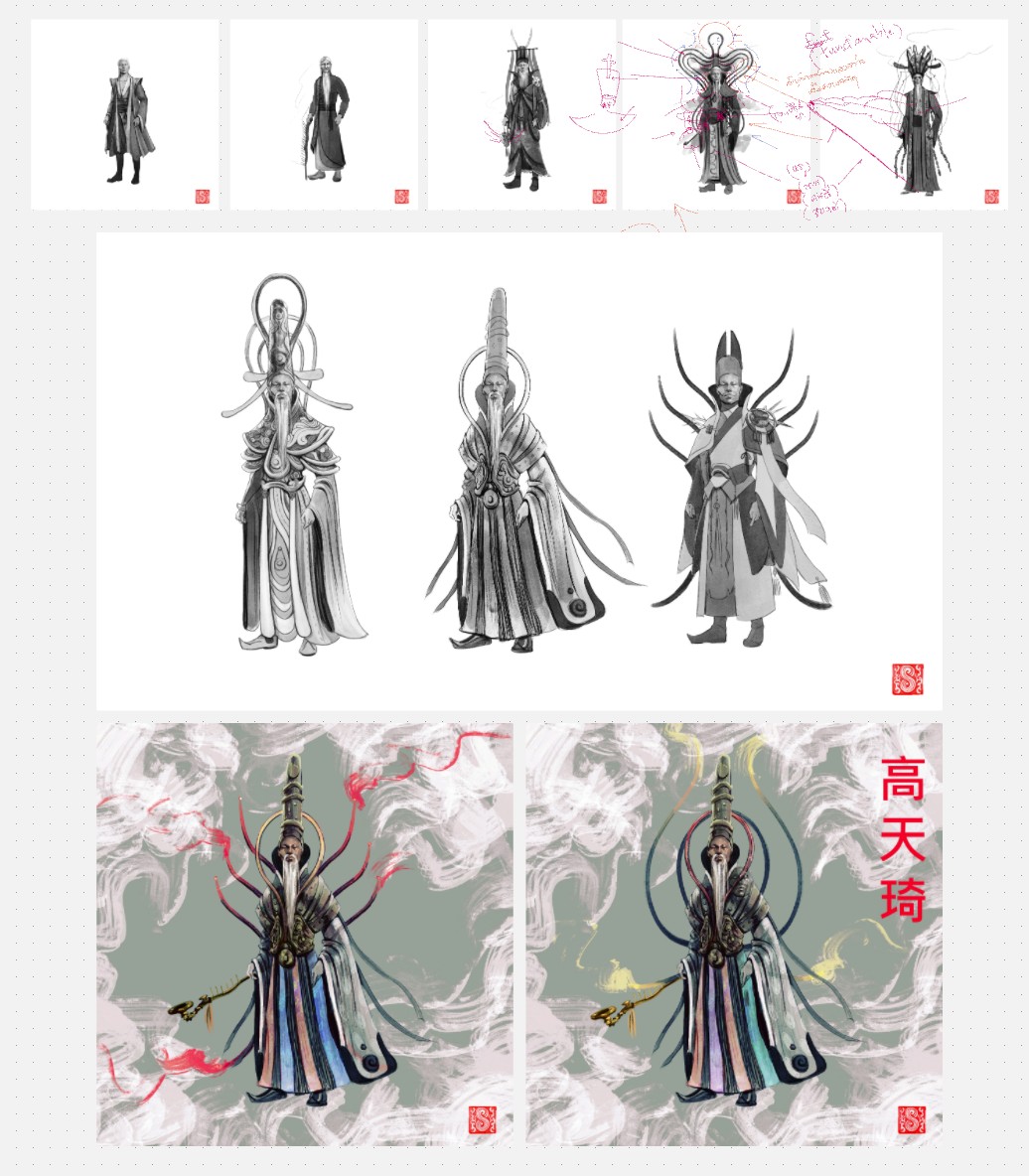
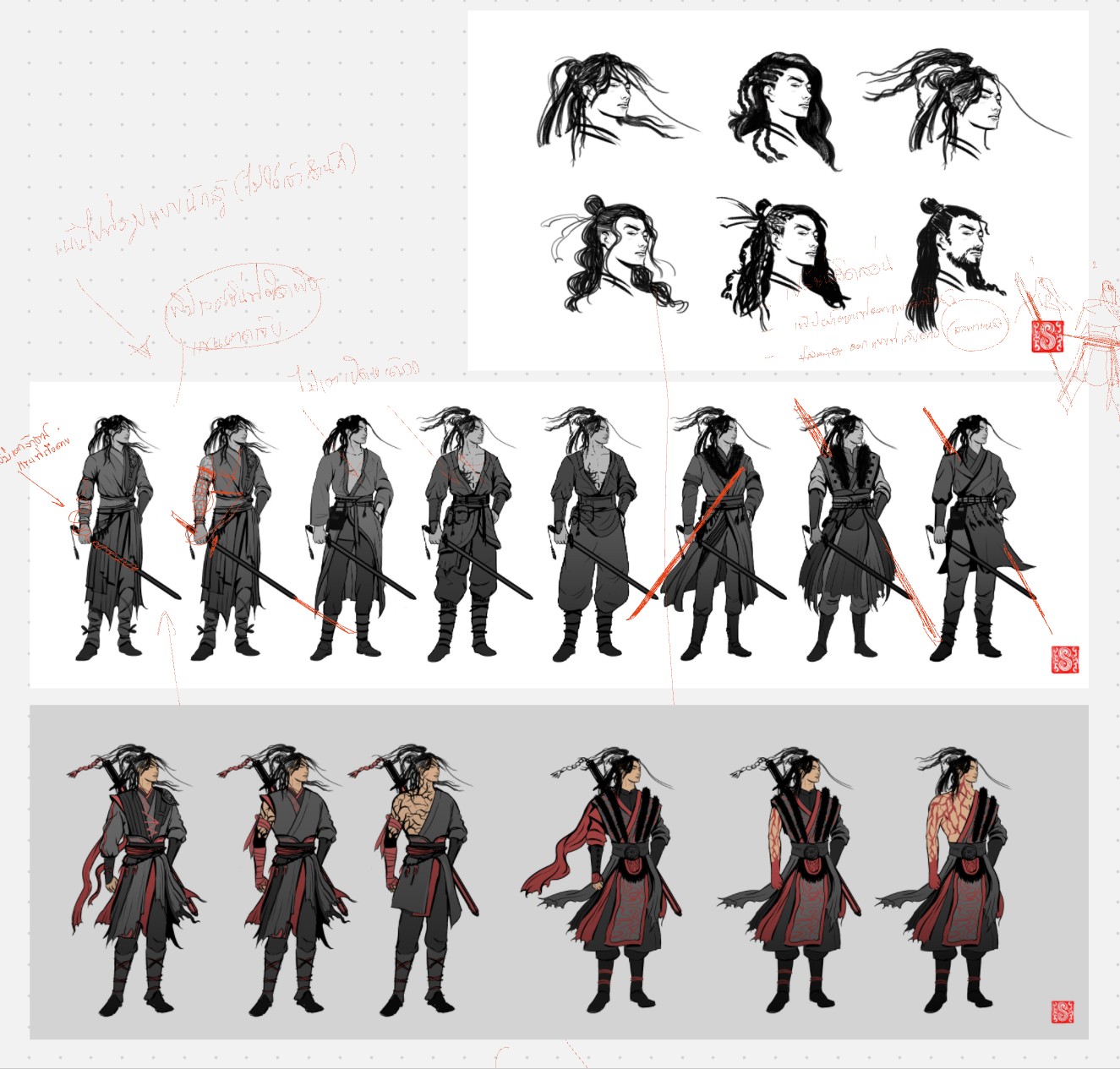
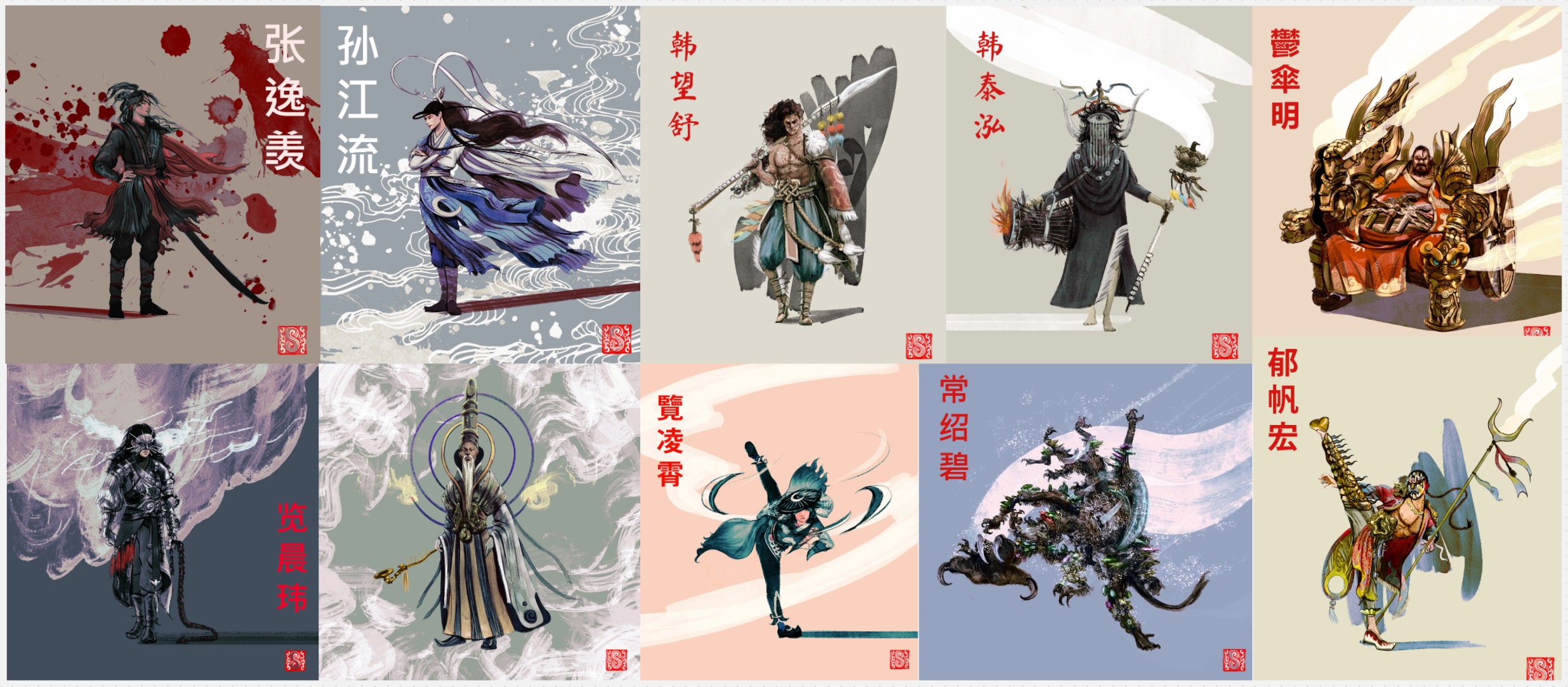
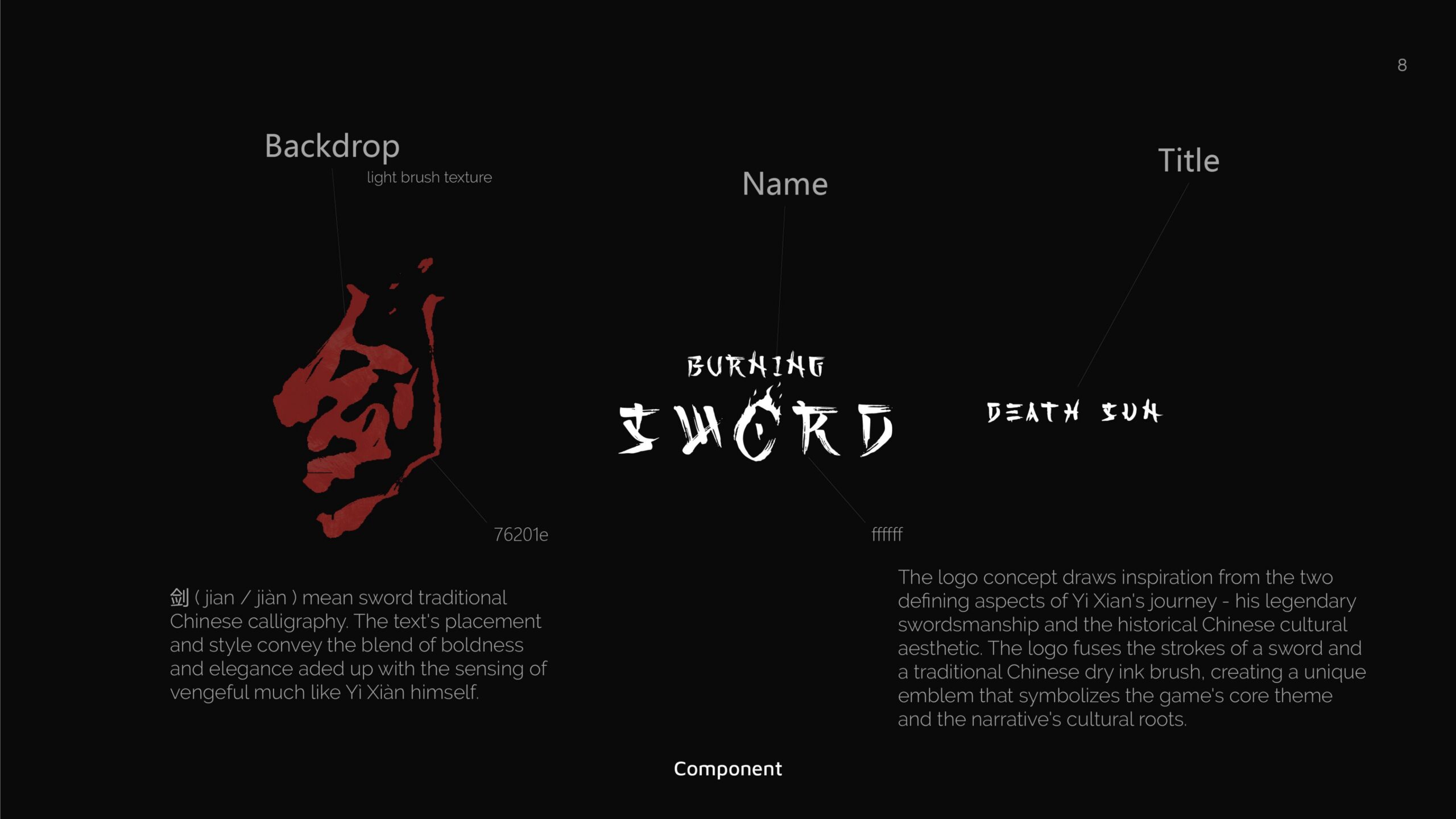
Our contribution includes pre-production research, direct artwork creation, and ongoing direction. We created the initial artwork series and the game logo. Additional artists joined during later development. Our pre-production research explored the Song period, including clothing, hairstyles, historical context, ideas, social life, values, and systems of governance. We used this research to inform the game’s visual and conceptual direction, connecting appearance with the social world in which our characters live. The visual approach combines this historical foundation with wuxia
references. These sources are adapted to the game’s fictional world. Character silhouettes, clothing, weapons, environments, and graphic symbols communicate narrative and establish a shared identity.
Visual development proceeds through discussions with the art, game design, and development teams. Character designs must account for modeling, rigging, animation, and readability. Environments connect atmosphere and architecture with player routes, encounters, and level layouts. Repeated review helps balance these goals with production time and available resources.
Objectives :
- Establish and maintain a clear creative direction and consistent visual identity for Burning Sword: Death Sun across character, environment, and graphic design.
- Connect the visual direction with the work of the art, game design, and development teams so that ideas can be developed into workable game assets.
- Use research into the Song period to inform the game world, including clothing, hairstyles, social life, beliefs, values, governance, and social status.
- Combine historical research with wuxia references to create an original world that supports the game’s story and visual identity.
- Communicate character and story through practical visual choices such as silhouette, clothing, materials, colour, and weapons.
- Develop designs that remain clear and recognisable when translated into 3D models, rigs, animation, and gameplay.
- Consider production limits such as modelling complexity, animation requirements, gameplay readability, development time, and team capacity during the design process.
- Connect character imagery with logo design through shared choices in typography, shape, composition, and visual weight.
- Review and revise the work through continuous discussion with the art, game design, and development teams.
- Guide the work of additional artists while allowing them to contribute their own execution and design development within the project’s overall direction.
- Adapt the initial artwork and logo into a visual foundation that can be tested, expanded, and refined throughout production.
- Treat technical and production limitations as part of the creative process, ensuring that the final designs are both visually meaningful and achievable for the team.
Conceptual Framework :
The project is developed through the relationship between historical research, cultural postmemory, wuxia traditions, and collaborative game production. In this context, postmemory refers to cultural images and ideas received through historical texts, artworks, stories, popular media, and inherited traditions rather than through direct personal experience.
Our research into the Song period provides a historical foundation for understanding clothing, hairstyles, social structures, values, beliefs, and systems of governance. These references are not reproduced as a complete historical reconstruction. Instead, they are interpreted and transformed through the visual language of wuxia and adapted to the fictional world of Burning Sword.
This process treats history as an evolving source of visual memory. Details such as costume, silhouette, materials, architecture, weapons, and graphic symbols carry traces of the past while also being redesigned for contemporary game storytelling. The project therefore explores how cultural memory can be transmitted, reinterpreted, and made playable through visual development.
The project’s Thai funding and development timeline provide the production context for this framework. A character must be suitable for 3D modeling, rigging, animation, and gameplay, while remaining achievable within the available time and team resources. Decisions about costume structure, materials, detail, and silhouette therefore balance visual intention with practical use.
The framework also considers the practical conditions of collaborative production. Historical and cultural references must be tested through modelling, rigging, animation, gameplay readability, time, and available resources. Creative direction is therefore understood as an ongoing process in which inherited images are continually reviewed, adjusted, and extended by the wider art, game design, and development teams.
Process / Methodology :
Development began in 2020, with a planned release window of 2025–2026. We began with pre-production research into the Song period, including clothing, hairstyles, social context, ideas, values, and governance. We treated these sources as mediated cultural memories received through historical texts, images, artworks, and wuxia traditions. We used them to guide the game world, characters, and visual direction.
We created the initial artwork series and game logo, establishing the project’s visual foundation. Additional artists joined during later development, while we continued to oversee the project’s creative and visual direction.
The process combines research, design exploration, discussion, and revision. We develop and compare sketches, silhouettes, costume variations, environments, colour studies, and graphic elements. These designs are reviewed with the art, game design, and development teams in relation to story, character roles, atmosphere, gameplay, and player readability.
Designs are also tested against modelling, rigging, animation, level design, technical limitations, time, and available resources. Feedback may lead us to simplify, restructure, or reinterpret an idea. Through this process, historical and cultural references are transformed into a fictional and playable world.
Process Summary
- Research Song-period history and cultural references.
- Translate historical memory and wuxia influences into characters, environments, and graphic design.
- Develop, review, and revise designs through collaboration with the art, game design, and development teams.
- Adapt visual ideas to modelling, rigging, animation, gameplay readability, time, and available resources.
- Maintain a consistent visual direction while allowing additional artists to contribute during production.
Techniques and Materials :
We use digital drawing, illustration, and image-editing techniques. Character development includes sketching, silhouette studies, costume exploration, colour studies, material exploration, and digital painting. Logo development focuses on typography, shape, composition, contrast, and graphic refinement.
Result / Conclusion :
- The project established a clearer and more consistent visual identity for Burning Sword : Death Sun across character, environment, and graphic design.
- Research into the Song period helped connect visual appearance with social position, cultural values, beliefs, and systems of power. Clothing, hairstyles, materials, architecture, and graphic symbols were considered as parts of the game world rather than as isolated decorative details.
- Historical references were combined with wuxia traditions and adapted into an original fictional setting. The project does not attempt to reproduce the Song period as a complete historical reconstruction. Instead, it reinterprets mediated cultural memories through contemporary game design.
- The initial artwork series and game logo created a visual foundation for the project. As development continued, additional artists contributed to the wider visual production. We maintained the overall creative and visual direction while allowing the art team to develop and execute the work.
- Collaborative reviews helped connect artistic ideas with story, character roles, atmosphere, gameplay readability, modelling, rigging, animation, level design, and technical requirements.
- Production limitations became part of the creative process. Decisions about silhouette, costume structure, detail, material, colour, and graphic form were adjusted according to development time, team capacity, software, and the requirements of a playable game.
- The project shows that creative direction in game development is an ongoing process rather than a single final decision. Visual ideas are tested, revised, and extended through teamwork.
- As a work in progress, Burning Sword : Death Sun demonstrates how postmemory can be transformed into a visual and playable world. Historical and cultural references continue to change as they move through research, interpretation, collaboration, and production. The result is a visual identity that connects inherited cultural imagery with the needs of contemporary game development.
References :
- Gascoigne, B. (2003). The dynasties of China: A history. Carroll & Graf.
- Hansen, V. (2000). The open empire: A history of China to 1600. W. W. Norton & Company.
- Bol, P. K. (2001). The rise of local history: History, geography, and culture in Southern Song and Yuan Wuzhou. Harvard Journal of Asiatic Studies, 61(1), 37–76.
- โจวจยาหรง. (2546). ประวัติศาสตร์จีน. นานมีบุ๊คส์พับลิเคชั่นส์.
- Lorge, P. (2005). War, politics and society in early modern China, 900–1795. Routledge.
- Zhejiang Radio and Television Group. (Producer). (2015). *南宋 [The Southern Song Dynasty]* [Documentary series]. Zhejiang Satellite TV. https://www.youtube.com/watch?v=L9Cdf-i0vfg
- The Great Courses. (2013). *The industrial revolution of the Song* [Documentary episode]. In *Foundations of Eastern Civilization*. The Teaching Company. https://tv.apple.com/au/episode/the-industrial-revolution-of-the-song/umc.cmc.ay3n9yu5zp3hloppwis3rrmv?showId=umc.5y104vcghm2spexh8mp18z01h
Share :
Facebook
Twitter
LinkedIn
WhatsApp
Email
Print