Koho's Little Rest
Faculty of Digital Art, Rangsit University, Thailand
Pasin Thanasin
Abstract :
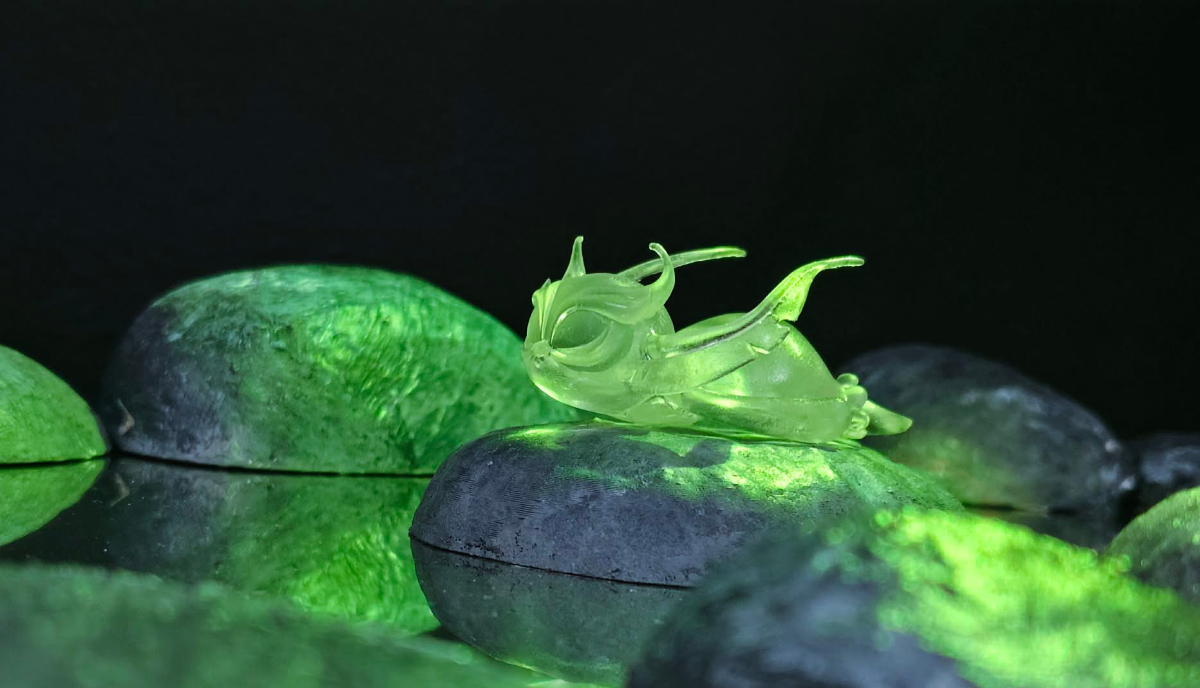
Koho’s Little Rest is a contemporary artwork that explores the relationship between physical sculpture, digital imagery, and the viewer’s perception of space. The work presents Koho, a small character taking a moment of rest on a stone in the middle of a quiet pond. The scene is constructed as a miniature diorama, creating an intimate environment that suggests a moment of stillness, solitude, and connection with nature.
The character of Koho is produced using transparent resin through 3D printing and subsequently hand-painted, while the surrounding diorama, including the rocks, vegetation, and other environmental elements, is fabricated using PLA 3D printing and hand-painted techniques. The combination of these materials creates a contrast between the translucent quality of the character and the more solid, tactile appearance of the surrounding landscape.
A central element of the work is the representation of water. Instead of using conventional physical materials to simulate the surface of the pond, a digital display is integrated beneath a sheet of glass treated with a two-way mirror film. The screen presents animated water ripples that continuously expand across the surface, creating the illusion of a living pond within the physical diorama. The digital movement interacts with the reflective surface, producing a visual boundary between the real and the virtual.
As viewers approach the artwork, they simultaneously observe the animated ripples and their own reflections in the two-way mirror. Their presence therefore becomes visually integrated into the pond, momentarily placing them within the same space as Koho. The reflection transforms the viewer from a passive observer into an active component of the artwork, creating a constantly changing relationship between the physical object, digital imagery, and human presence.
Through the combination of 3D printing, hand painting, digital animation, and reflective illusion, Koho’s Little Rest creates a small contemplative world in which stillness and movement coexist. The work invites viewers to pause, observe, and briefly share a quiet moment with Koho while becoming part of the environment themselves.
Objectives :
The primary objective of Koho’s Little Rest is to explore the integration of traditional physical sculpture with digital technology and optical illusion to create a contemporary artwork that encourages viewers to reconsider the boundaries between physical and virtual space. The work aims to construct a small, contemplative environment in which the character of Koho appears to rest peacefully within a pond, creating a sense of calmness, intimacy, and connection with nature.
A second objective is to investigate the creative possibilities of 3D printing as an artistic production process. The artwork utilizes transparent resin 3D printing for the Koho character and PLA 3D printing for the surrounding diorama. These digitally fabricated forms are subsequently hand-painted to combine the precision and flexibility of digital fabrication with the tactile qualities and individuality of traditional artistic processes. Through this combination, the project aims to demonstrate how 3D printing can function not only as a manufacturing technology but also as a medium for contemporary artistic expression.
Another objective is to experiment with the integration of digital animation and reflective materials to create an illusion of water within a physical diorama. An LCD display is positioned beneath glass treated with two-way mirror film, allowing animated circular water ripples to appear as though they are occurring within the pond. This approach aims to investigate how digital imagery, transparency, reflection, and physical objects can be combined to produce an immersive visual experience without using actual water.
Finally, the artwork aims to encourage viewer participation through reflection and perception. As viewers approach the work, they can see both the animated ripples and their own reflections on the surface of the pond. Their reflected image becomes temporarily incorporated into the artwork, creating an interaction between the viewer, Koho, and the constructed environment. In this way, Koho’s Little Rest seeks to transform the viewer from a passive observer into an active visual element, while inviting them to pause and experience a brief moment of contemplation within the artwork.
Conceptual Framework :
Koho’s Little Rest is developed from the concept of creating a small contemplative space where physical reality, digital imagery, and human presence intersect. The artwork uses the image of a quiet pond as a metaphor for rest, stillness, and temporary escape from the movement of everyday life. Koho, a small character resting on a stone at the center of the pond, represents a moment of pause and tranquility within a constantly changing environment.
The conceptual framework consists of three interconnected elements: Physicality, Digital Illusion, and Viewer Presence. The physical element is represented by the 3D-printed Koho character and diorama environment. Transparent resin is used for Koho to create a subtle relationship between solidity and translucency, while PLA is used for the surrounding landscape and hand-painted to establish a tangible miniature environment.
The second element, Digital Illusion, introduces animated water ripples beneath a two-way mirror surface. The digital animation creates continuous movement while the reflective material simultaneously obscures and reveals the display beneath it. This combination challenges the viewer’s perception of whether the water is a physical surface, a digital image, or an optical illusion.
The final element is Viewer Presence. When viewers approach the artwork, their reflections appear on the surface of the pond alongside the animated ripples. Their image consequently becomes part of the visual composition, creating a temporary connection between the viewer and Koho’s environment.
Through these three elements, the work establishes a relationship between stillness and movement, physical and virtual space, and observation and participation. The artwork therefore functions not only as a miniature sculptural scene but also as an interactive perceptual experience, encouraging viewers to pause, observe their own presence, and share a quiet moment within Koho’s world.
Process / Methodology :
The production of Koho’s Little Rest combines 3D modeling, 3D printing, hand painting, dynamic simulation, digital animation, and optical illusion techniques. The process begins with the digital modeling of Koho and the surrounding pond environment. The Koho character is fabricated using transparent resin 3D printing, while the environmental elements, including rocks and other components of the diorama, are produced using PLA 3D printing.
After printing, the components are cleaned, surface-finished, and hand-painted. Special attention is given to Koho’s transparent resin body to preserve its translucent quality while achieving the desired visual appearance. The PLA components are painted and assembled to construct the miniature pond environment.
The water ripple is developed using a dynamic simulation process to reproduce the movement and behavior of water. Circular ripples are generated through digital simulation, allowing the movement to expand naturally across the virtual water surface. The simulated result is rendered as a digital animation and displayed on an LCD screen positioned beneath a glass panel treated with two-way mirror film. This arrangement creates the illusion of a continuously moving pond while maintaining a reflective surface.
The physical and digital components are then integrated into a single diorama structure. The positions of Koho, the surrounding environment, the display, and the reflective glass are carefully adjusted to achieve the intended optical effect.
Finally, the completed artwork is tested from different viewing distances and under different lighting conditions. The brightness of the display, contrast of the animation, speed of the water ripple, and reflective properties of the glass are adjusted to create an appropriate balance between the physical sculpture, simulated water, and the viewer’s reflection. This process integrates digital fabrication, physical craftsmanship, dynamic simulation, and optical technology into a single contemporary artwork.
Techniques and Materials :
Techniques
- 3D Modeling — Digital modeling of the Koho character and diorama environment.
- 3D Printing — Fabrication of the character and environmental components using resin and PLA.
- Hand Painting — Manual painting and surface finishing of the 3D-printed components.
- Dynamic Water Simulation — Digital dynamic simulation used to generate realistic circular water ripples and their movement.
- Two-Way Mirror / Optical Illusion — A glass surface treated with two-way mirror film is used to combine the reflected image of the viewer with the digital water animation beneath it.
Materials
- Transparent Resin — Used for 3D printing the Koho character.
- PLA Filament — Used for 3D printing the rocks, landscape, and structural elements of the diorama.
- Acrylic / Model Paint — Used for hand-painting the 3D-printed components.
- Glass Panel — Used as the surface of the simulated pond.
- Two-Way Mirror Film — Applied to the glass to create the reflective optical effect.
- LCD Display / Computer Screen — Used to display the digitally simulated water ripple.
Result / Conclusion :
The completed artwork, Koho’s Little Rest, successfully integrates physical sculpture, digital fabrication, dynamic simulation, and optical illusion into a single contemporary art experience. The combination of a transparent resin 3D-printed character with a hand-painted PLA diorama creates a visual contrast between the translucent figure of Koho and the solid physical environment surrounding the pond.
The use of dynamic water simulation successfully produces continuously moving circular ripples that visually resemble the natural behavior of water. By displaying the simulated animation beneath glass treated with two-way mirror film, the work creates an illusion in which the digital water appears to exist within the physical pond. This technique allows the artwork to represent water without using actual liquid, while simultaneously providing a reflective surface.
An important outcome of the work is the interaction between the animated water and the viewer’s reflection. When viewers approach the artwork, they can observe the simulated ripples while simultaneously seeing their own reflections on the surface. As a result, the viewer’s presence becomes visually incorporated into the pond environment and changes according to their position and movement.
The project demonstrates that 3D printing, hand painting, dynamic simulation, digital display, and reflective materials can be combined to create an artwork that exists between physical and digital space. Rather than functioning solely as a miniature sculpture, the diorama becomes a perceptual environment in which the boundaries between object, image, and viewer are continuously shifting.
Ultimately, Koho’s Little Rest achieves its intention of creating a quiet and contemplative moment. Koho remains physically still at the center of the pond, while the simulated water and reflected presence of the viewer introduce subtle movement and interaction. The work therefore creates a visual relationship between stillness and movement, physicality and virtuality, and observation and participation, inviting viewers to pause and briefly become part of Koho’s small world.
References :
Umbral. (2025). A living field of digital flowers responding to the presence of physical matter [Digital artwork]. Instagram. https://www.instagram.com/reels/DbsbbYhuegA/
Share :
Facebook
Twitter
LinkedIn
WhatsApp
Email
Print