Bird Sounds: From Dawn to Dusk
Master of Fine Arts Program in Design, College of Design, Rangsit University, thailand
Minjade Paklapas
Abstract :
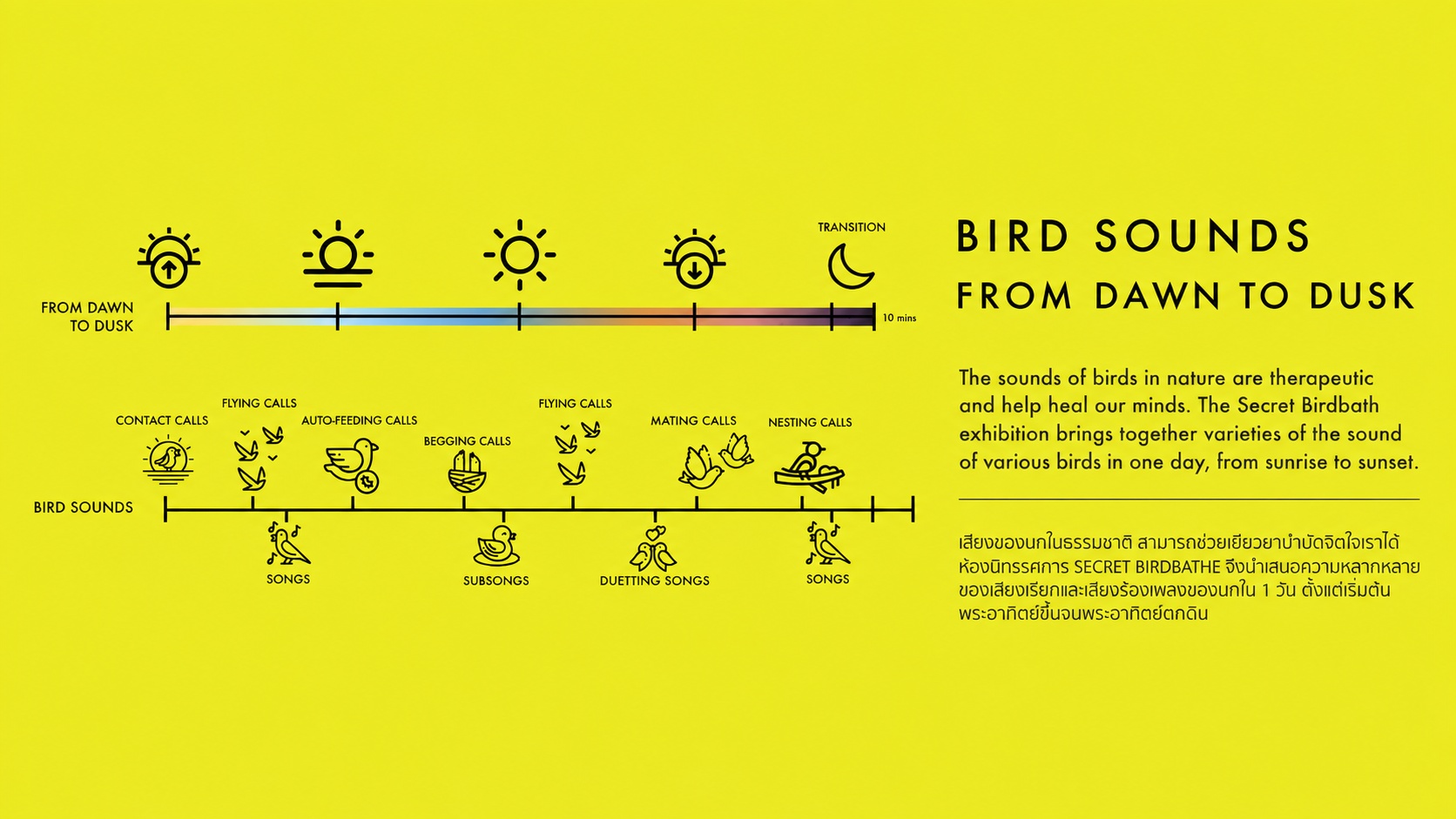
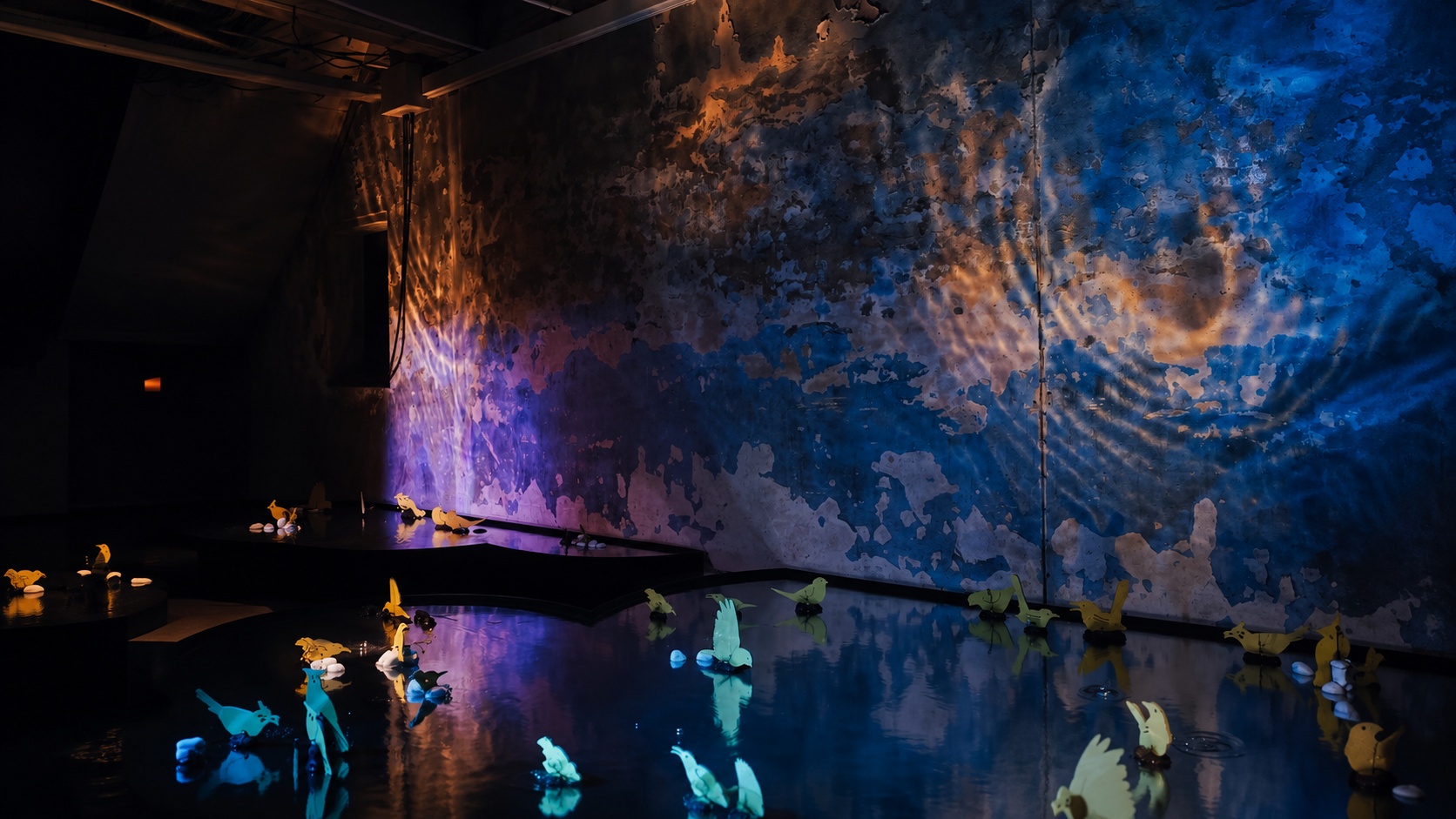
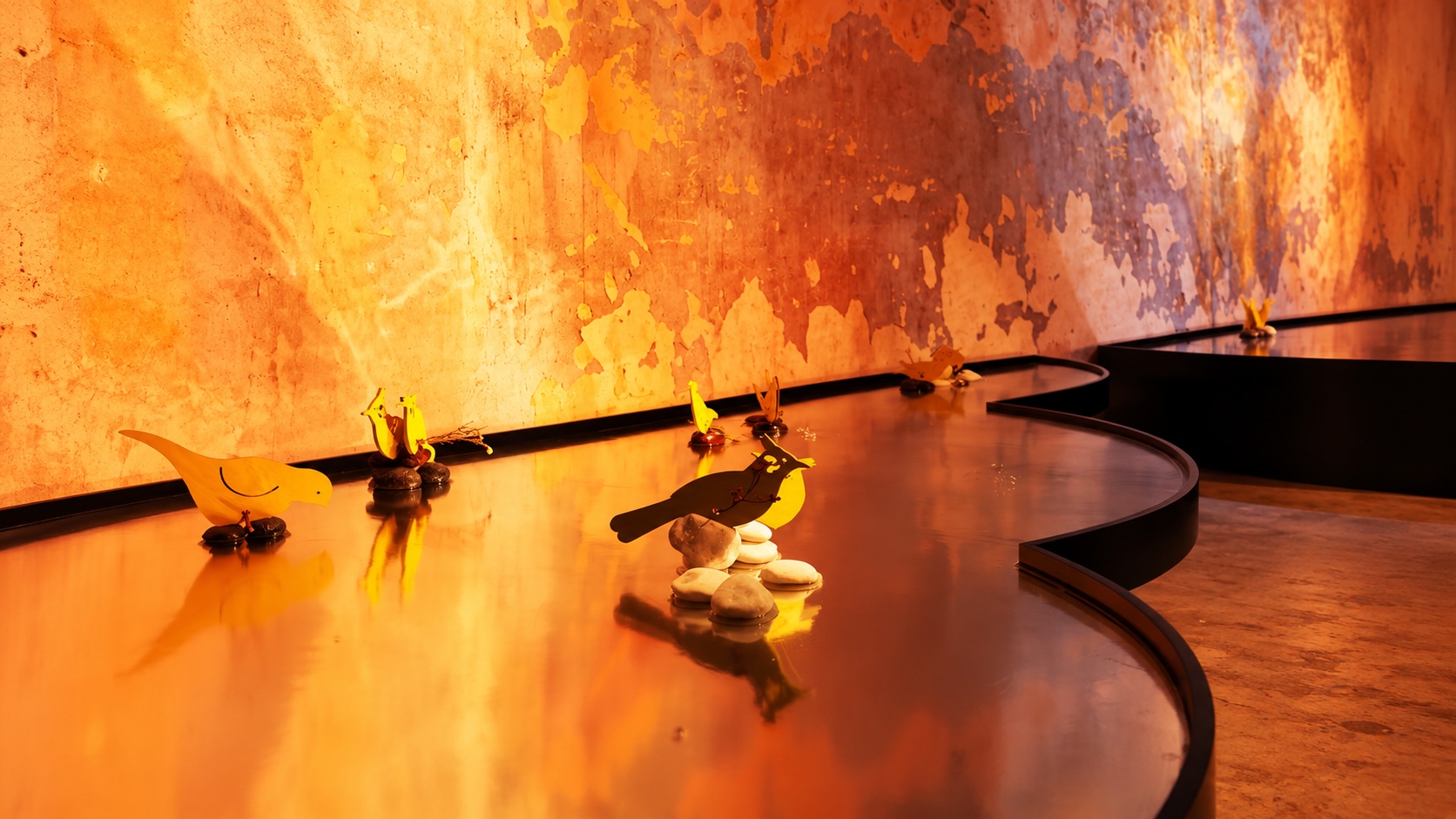
Bird Sounds: From Dawn to Dusk is a soundscape built entirely from original field recordings of birds, tracing a full day from sunrise to sunset. The sounds of birds in nature are therapeutic and help heal our minds, and this piece was made to offer exactly that: a listening experience organised by the real, researched rhythm of bird activity across a day, rather than arranged for musical effect. The work began with direct research into how bird calling behaviour actually changes hour by hour, identifying which call and song types are naturally associated with each part of the day before a single recording was made. Contact calls surface at first light, flying and auto-feeding calls move through the morning, subsongs appear at midday, duetting continues into the afternoon, and mating and nesting calls close toward evening, before a final transition into night marked by crickets. No stock sound was used at any stage; every call and song was recorded on-site and organised by its natural time-of-day occurrence, then composed into a ten-minute downtempo piece synchronised to a matching light-colour timeline, so the passage of a day is felt rather than narrated. The work was presented as the sound centrepiece of Secret Birdbath, an exhibition at Bangkok Design Week 2023 (4–12 February) that paired this soundscape with an accompanying visual reflection element evoking sunlight on water, offering the whole space as a place to rest attention rather than direct it. This submission documents the sound piece’s own conceptual grounding in restorative listening and bioacoustic research, its field-recording methodology, and its use of a time-of-day call taxonomy as a compositional structure in its own right, distinct from and prior to the exhibition’s accompanying visual element. The taxonomy of calls used to structure the piece — alert, exciting, contact, flying, auto-feeding, begging, mating, nesting, territorial, and duetting calls, alongside songs and subsongs — reflects genuine ornithological categories rather than an invented scheme, giving the composition a documentary integrity that a purely musical arrangement of generic bird sound would not carry.
Objectives :
This work set out to build a soundscape entirely from original field recordings of bird calls and songs, researched and organised by their natural time-of-day occurrence rather than arranged for musical or dramatic effect, so the piece would carry the specificity and integrity of real observation rather than generic ambience. A central objective was to offer the sounds of birds in nature as something genuinely therapeutic and restorative to listen to, drawing on the understanding that soft, involuntary attention to natural sound allows directed attention to rest and recover, rather than treating birdsong as decorative background. A further objective was to trace one full day, from sunrise to sunset, through the changing character of bird vocalisation itself — moving through contact calls, flying and auto-feeding calls, subsongs, duetting, and mating and nesting calls — so that the passage of time would be audible rather than explained to the listener. The project also aimed to demonstrate that genuine field research into bird behaviour could itself serve as compositional structure, with the taxonomy of calls providing the piece’s actual musical form rather than an external narrative device. Alongside this, the piece was built to work as the sound centrepiece of the wider Secret Birdbath exhibition, synchronised to an accompanying lighting timeline so that light and sound moved through the same day together, while remaining a complete and independent work in its own right. Finally, the project aimed to hold an audience’s attention for the full ten minutes through the depth and accuracy of its research alone, without needing spectacle or added narrative to sustain interest. Underlying all of this was a broader objective: to show that careful, patient field research — simply listening closely enough to notice how bird behaviour actually shifts hour by hour — could produce a richer and more honest piece of sound art than any invented or stock-sourced alternative.
Conceptual Framework :
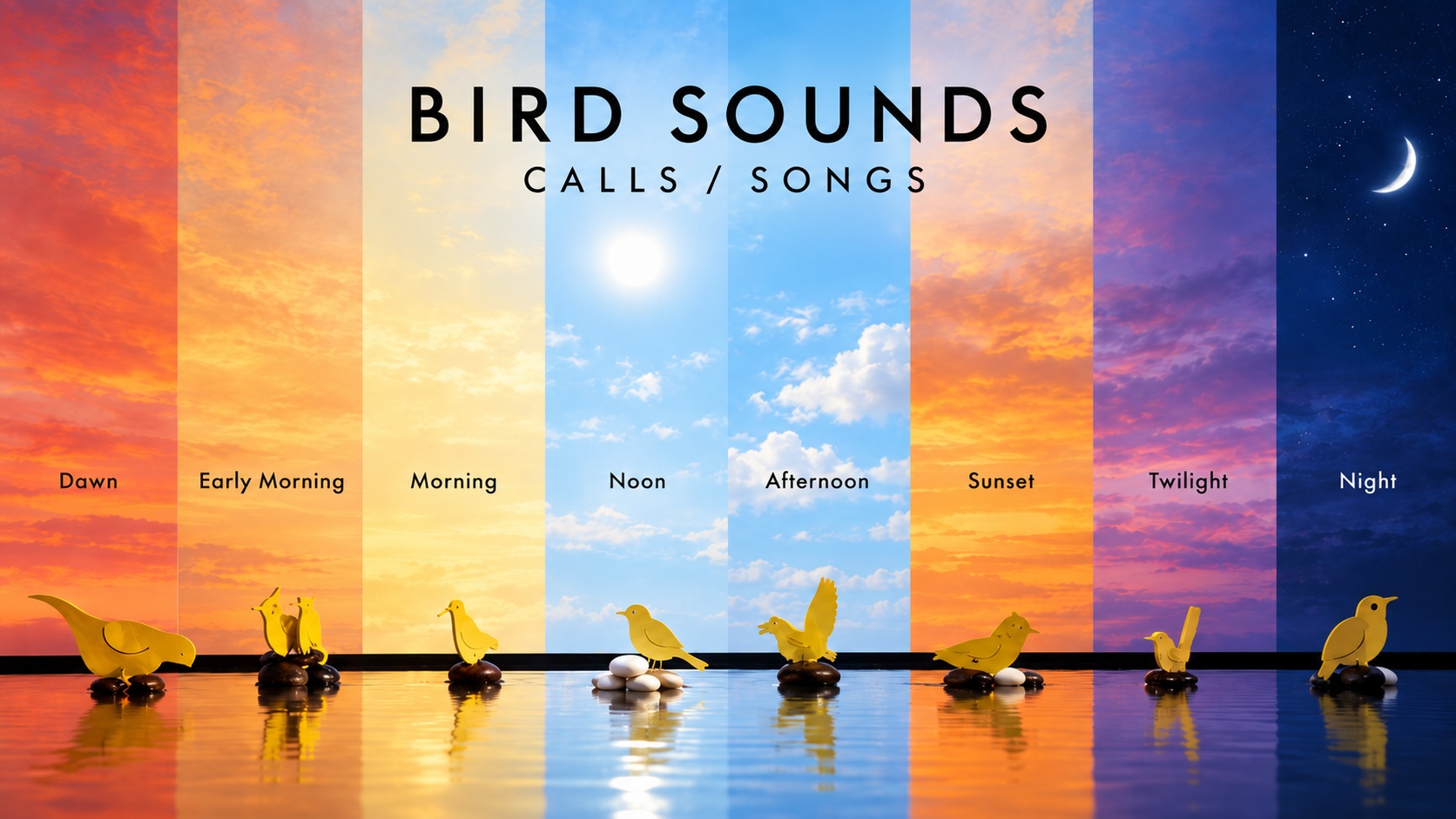
The starting point is the understanding that the sounds of birds in nature are therapeutic and help heal our minds — a restorative quality this piece set out to recreate directly through sound rather than merely reference. This aligns with restorative environment theory, where soft, involuntary attention to natural stimuli allows directed attention to rest and recover (Kaplan, 1995), and with findings that exposure to natural, ambient scenes measurably reduces stress (Ulrich, 1984). The piece treats bird vocalisation not as a single undifferentiated sound but as a structured repertoire shifting across the day — contact, flying, mating, and nesting calls, songs, subsongs, and duets each carry their own behavioural timing (Catchpole & Slater, 2008). This taxonomy became the piece’s compositional score, situating the work within soundscape studies’ attention to the sonic environment as something to be composed and listened to with intention (Schafer, 1977/1994) and acoustic ecology’s interest in how sound carries information about place, time, and relationship (Truax, 2001; Krause, 2012). The piece was presented within Secret Birdbath, an exhibition whose accompanying visual reflection element (light on water) extended the same restorative intent into a second sense, grounding the wider installation in embodied, perceptual engagement rather than representation (Merleau-Ponty, 1962/1945). The lighting timeline built for that exhibition followed the sound’s own structure in eight phases — Dawn, Early Morning, Morning, Noon, Afternoon, Sunset, Twilight, and Night — so light tracked the same passage of time as the birdsong.
Process / Methodology :
The process began with direct research into bird activity by time of day, identifying which call and song types are naturally associated with dawn, early morning, morning, noon, afternoon, sunset, twilight, and night. Field recording followed this research directly, capturing bird vocalisation on-site rather than sourcing from libraries, so the material stayed specific to real, observed behaviour rather than generic ambience. The recordings were edited and composed into a ten-minute downtempo piece structured entirely by this time-of-day call taxonomy, closing with a transition into cricket sound at nightfall. For its presentation within the Secret Birdbath exhibition, a parallel lighting timeline was built across the same ten minutes and synchronised to the sound, and a visual reflection element — foil and directed light recreating ripple and reflection on water — was installed alongside it, so the sound piece and its visual context were experienced together as one continuous environment.
Techniques and Materials :
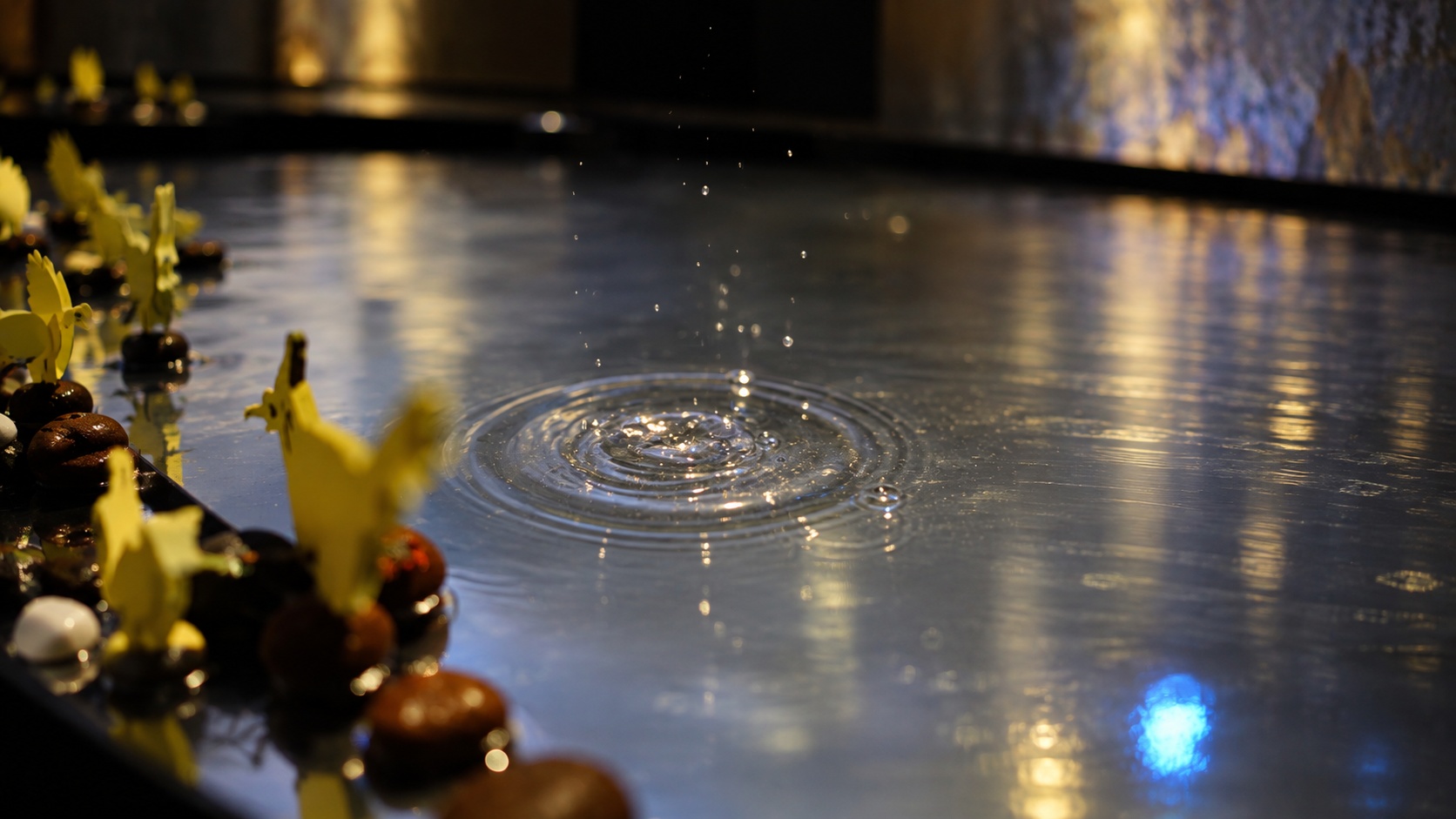
The core of the work is field recording: on-site capture of bird vocalisation, with no stock or library sound used at any stage. Recordings were organised by time-of-day call type — contact, flying, auto-feeding, begging, songs, subsongs, duetting, mating, and nesting calls — before being edited and composed into a ten-minute downtempo piece using Logic Pro X and Ableton Live. For its exhibition presentation, a lighting timeline was built across the same ten minutes, moving through eight phases of daylight — Dawn, Early Morning, Morning, Noon, Afternoon, Sunset, Twilight, and Night — synchronised to the sound. The accompanying Secret Birdbath installation used foil and directed light to recreate the shimmer and ripple of sunlight on water as a supporting visual context for the soundscape, with both elements installed together as one continuous environment.
Result / Conclusion :
Bird Sounds: From Dawn to Dusk renders a single day as a listening experience — ten minutes in which real, field-recorded birdsong moves from first light to nightfall. Because the piece is built from genuine field recordings organised by real behavioural research rather than musical convenience, it offers the therapeutic, restorative quality of birdsong directly, rather than simply referencing it. Presented as the sound centrepiece of the Secret Birdbath exhibition at Bangkok Design Week 2023, the work continues to ask its audience to slow down and listen to a day passing, closing on the sound of crickets as light gives way to night.
References :
Catchpole, C. K., & Slater, P. J. B. (2008). Bird song: Biological themes and variations (2nd ed.). Cambridge University Press.
Kaplan, S. (1995). The restorative benefits of nature: Toward an integrative framework. Journal of Environmental Psychology, 15(3), 169–182. https://doi.org/10.1016/0272-4944(95)90001-2
Krause, B. (2012). The great animal orchestra: Finding the origins of music in the world’s wild places. Little, Brown and Company.
Merleau-Ponty, M. (1962). Phenomenology of perception (C. Smith, Trans.). Routledge. (Original work published 1945)
Salt and Pepper Studio. (2023). Soundscape exhibition: Bangkok Design Week 2023. https://www.saltandpepper-studio.com/copy-of-bkkdw2022-1
Schafer, R. M. (1994). The soundscape: Our sonic environment and the tuning of the world. Destiny Books. (Original work published 1977 as The tuning of the world, Knopf)
Truax, B. (2001). Acoustic communication (2nd ed.). Ablex Publishing.
Ulrich, R. S. (1984). View through a window may influence recovery from surgery. Science, 224(4647), 420–421. https://doi.org/10.1126/science.6143402
Share :
Facebook
Twitter
LinkedIn
WhatsApp
Email
Print