KaraTalk - Sing the Forgotten
Universitas Multimedia Nusantara, Indonesia
Karin Filiana Kurniawan
Abstract :
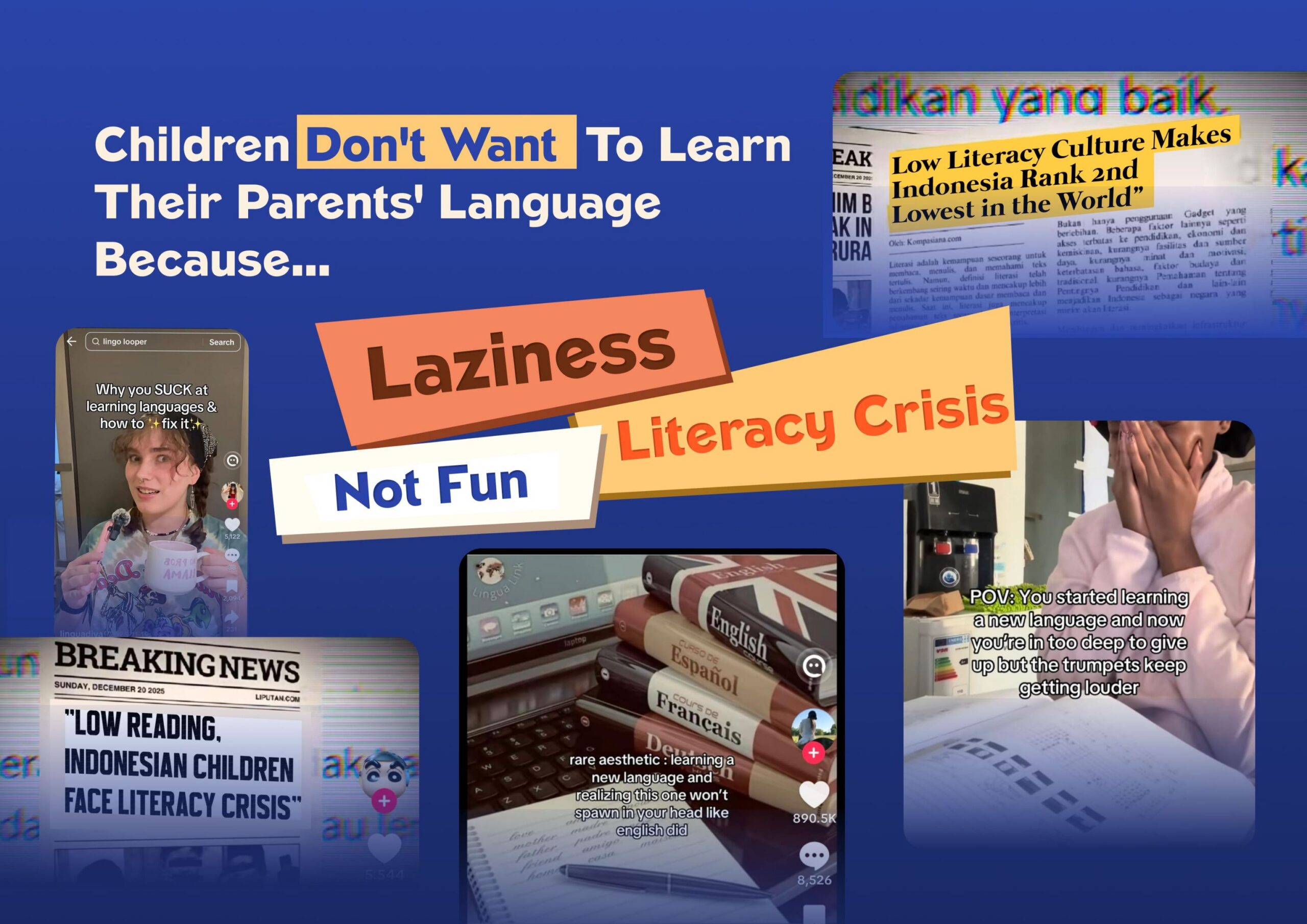
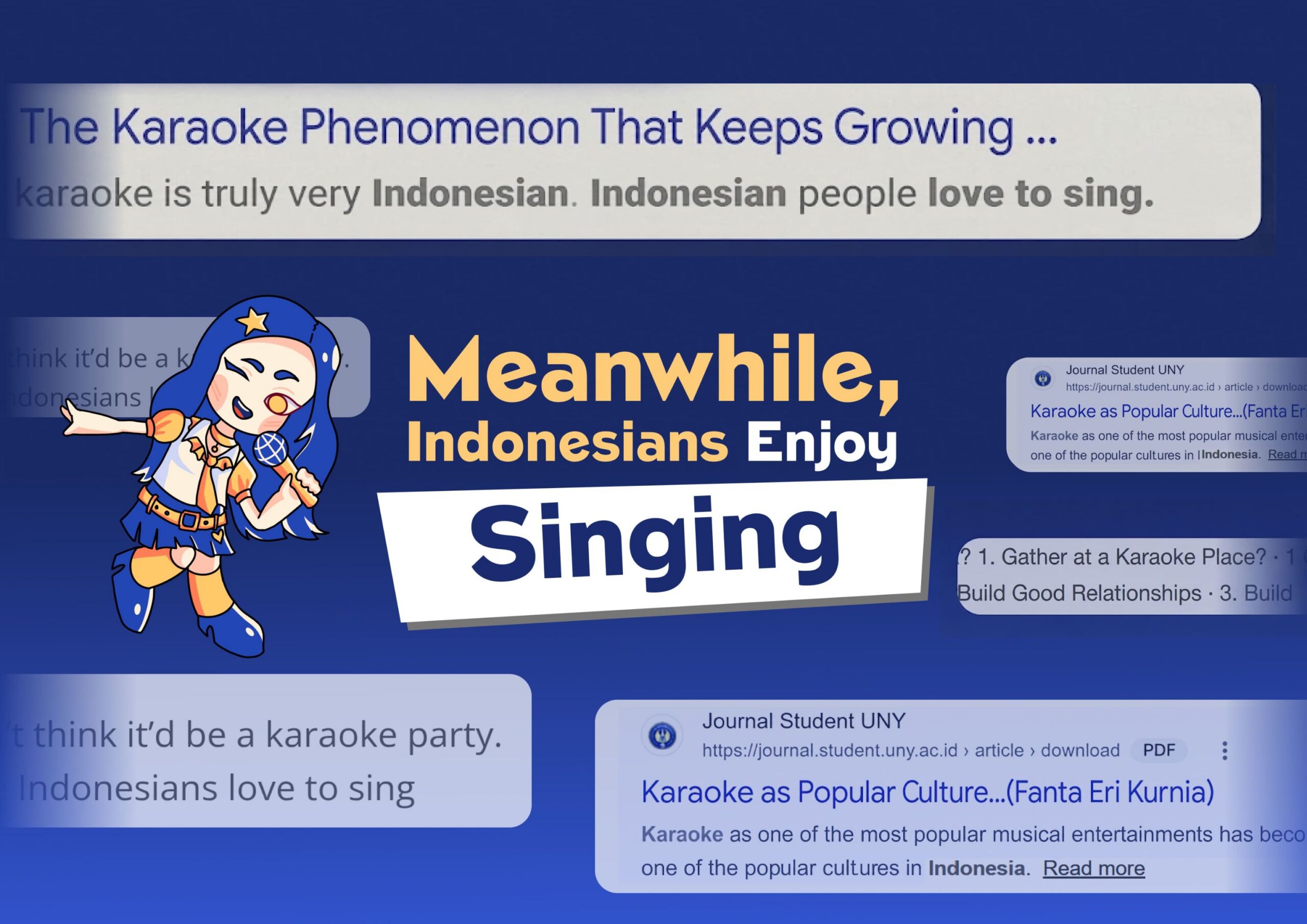
Children in Indonesia are facing a language problem. While parents encourage their children to learn their native local languages (for example: Javanese), children often find the process boring and “irrelevant in the current era.” This happened because children feel that they do not need to use those language in their everyday life to survive. This is encouraged by their environment, for example their friends who also cannot speak their parents’ language. If this trend continues, these languages—part of Indonesia’s rich cultural heritage—could face extinction. While language learning is facing a problem, it is found that children who typically are too lazy to learn by dictionary and books are using other methods, one of them is singing. Children who sing are more likely to remember the language in the song compared to those who use traditional methods. This is proven by Indonesians’ love for singing and having a strong “karaoke” culture. Not only does it bring people together, singing also allows them to memorize languages effortlessly. The younger generation are the type that can easily learn foreign languages through music.
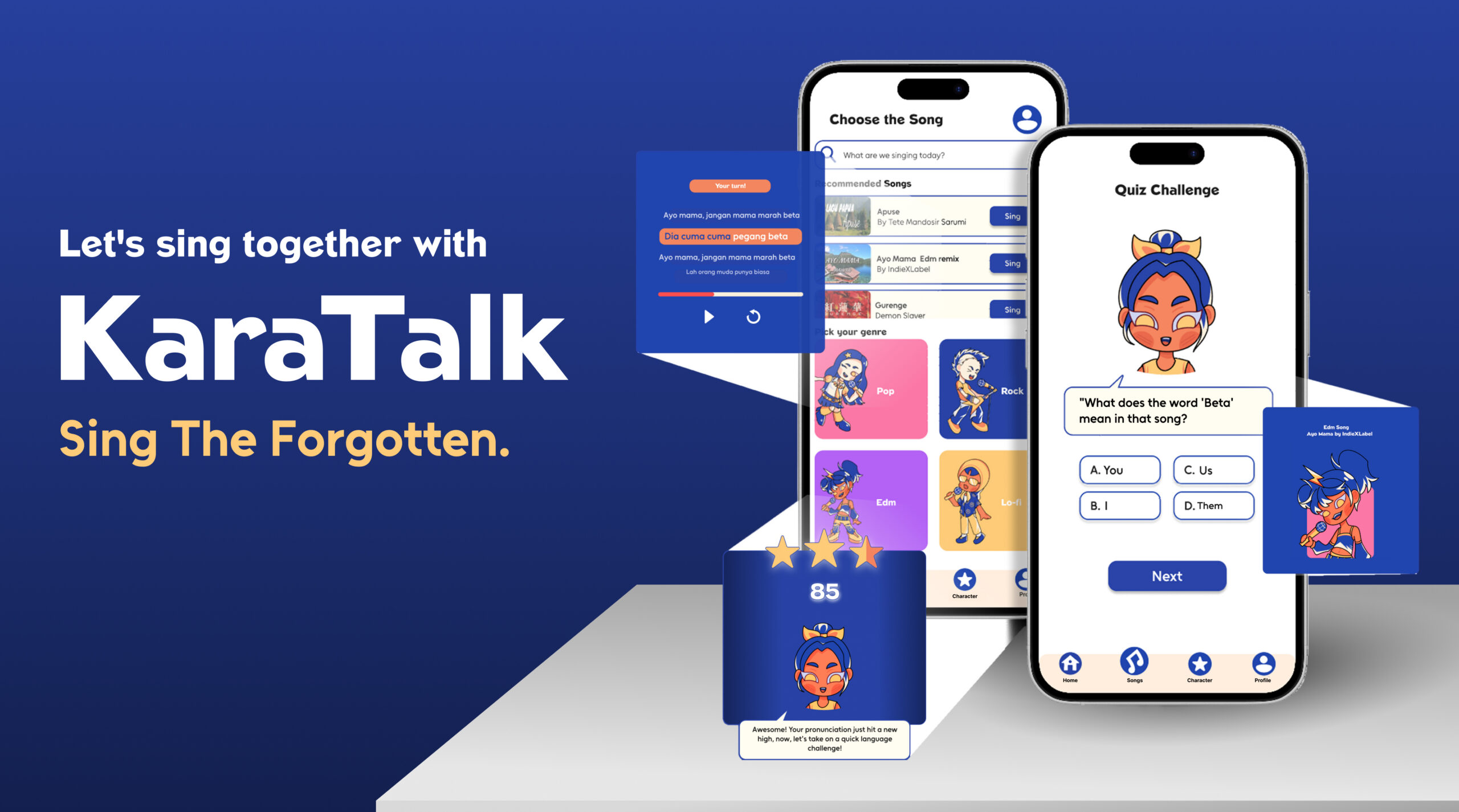
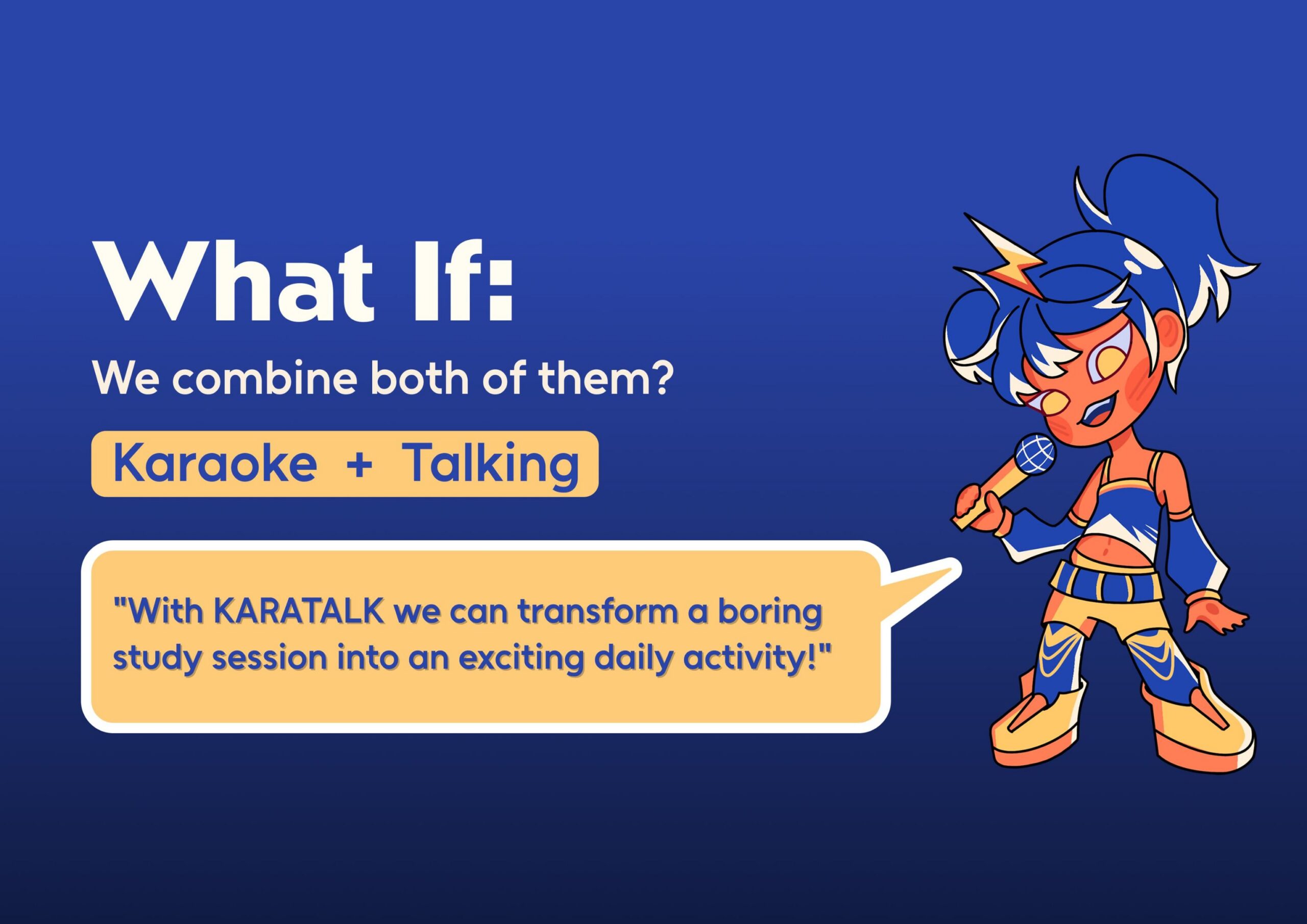
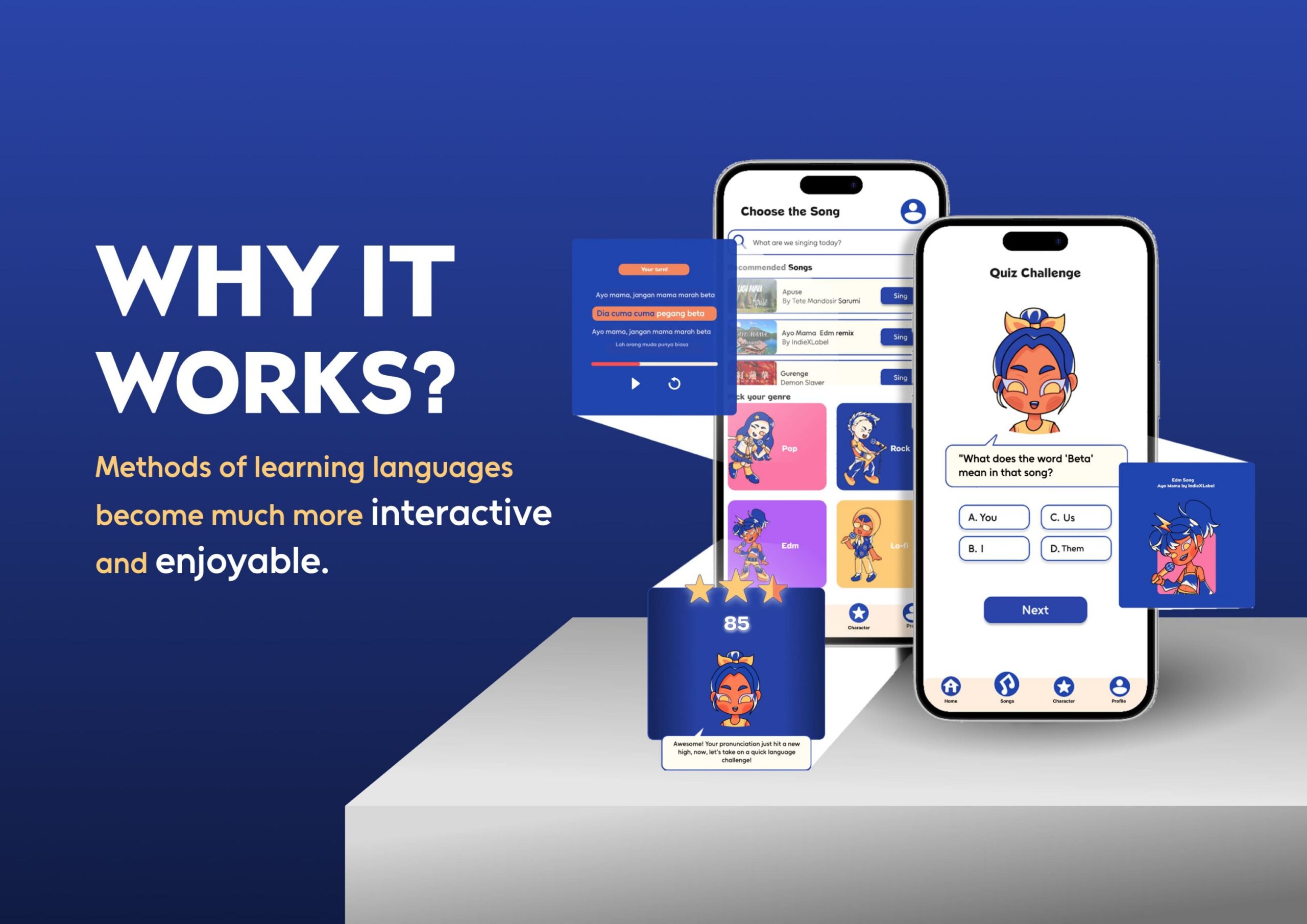
The “Chill Gang” team saw this phenomenon as an opportunity to address the issue. Using the five design thinking: empathize, define, ideate, prototype and test, the team decided to make a prototype in order to fix the current issue. Since this problem often occurs in children, the team wonders. What if: we combine singing with learning new languages? The team introduced KaraTalk. KaraTalk is a gamified app that blends language learning with singing. To appeal for the younger audience, pop colors like blue, yellow, and white are used. Illustrations are also made with consideration of the user. Designed for children aged 9 to 12, KaraTalk features karaoke for local languages, quizzes, and a character-collection system based on achievements. Children can learn languages while also feeling that it’s not a burden. Not only that, children’s love for singing local music can also increase in the future, therefore continuing Indonesian rich heritage. Through this app, Chill Gang hopes that children can learn their parents’ regional languages in a fun and stress-free way.
Objectives :
- To create an effective and fun language learning environment for children aged 9-12 years old.
- To develop children’s mindset that languages can be learned in an effortless way.
- To develop children’s love for singing local or native music. With how globalization often makes children forget that Indonesia’s music has its perks, the team wants to let them dive into local music while also gaining new knowledge.
- To continue one of Indonesia’s cultural heritage, which is singing regional local music. KaraTalk not only wants to create easier learning, but to make the user fall in love with singing. Therefore continuing Indonesian’s singing habit.
Conceptual Framework :
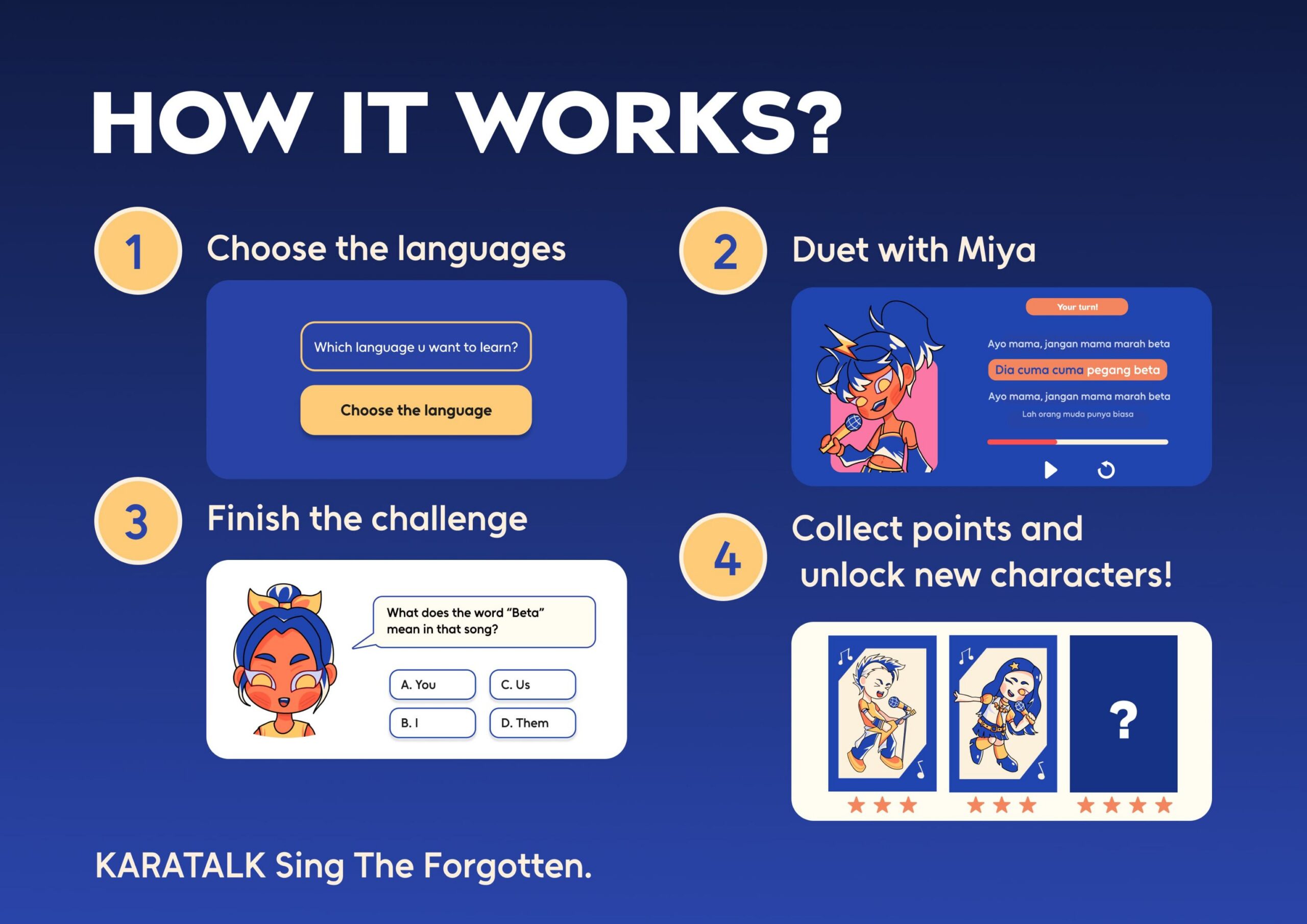
The concept of the Karatalk app comes from digital observation and literature studies, which show that the language-learning process is often boring and makes children lazy, combined with a literacy crisis among Gen Alpha children aged 9 to 12. Therefore, Karatalk was created to make learning fun and not boring through an educational solution built with gamified language-learning. Using gamified language-learning theory, the app combines interactive features such as choosing a language, genre, and song, singing or doing karaoke with Karatalk characters, taking a quiz, and receiving rewards at the end including educational feedback and new collectible characters to motivate learning through play.
The final expected result of this app concept is to improve children’s literacy, concentration, and memory, while helping them understand and speak their parents’ language through a fun and easy process.
Process / Methodology :
The process of making “KaraTalk” begins with knowing there is a problem and taking inspiration, which is Indonesian habits. We found one of them is “Indonesian love to sing”. Designers then define the target audience and conclude that this is a problem many children have in Indonesia. The process to make an application, ideation was done with a moodboard and references. Then the team moves into making a stylescape, wireframes, rough sketches, comprehensive sketches, and finishes with rendering. These assets and the prototype are made using Canva for putting together the moodboard and stylescape, Ibis Paint for sketching and rendering assets, and Figma for designing the prototype.
Techniques and Materials :
Moodboard and references were gathered from Pinterest and other sites. Then they are put together in Canva to create an easier collaboration environment. Illustration sketches made in Ibispaint using an A4 paper size then rendered with cartoon style. The color palette which are, blue (60%), white (30%), and yellow (10%) were used for hierarchy visual structure. The wireframes that were used for the prototype were made in Figma. In order to create it, the team used the information hierarchy, white spaces, and grid systems. Those wireframes were then edited into low fidelity, then high fidelity. To complete the final prototype, illustration assets and typography were then put together.
Result / Conclusion :
Karatalk is a gamified language-learning app designed to make learning their parents’ native language fun and exciting for Gen Alpha children aged 9 to 12. Karatalk using an interactive features with a process where children can choose the language they want to learn, pick a song genre, Sing a karaoke duet with the character Miya, take a quiz, and then finish with collectible character cards as rewards. It is also expected to help improve literacy, concentration, and memory skills. Karatalk hopes to help children understand and use their parents’ language to prevent the native language from going extinct. , while also growing to love local songs.
References :
Cela. (2023). Four benefits of singing with young children. https://www.cela.org.au/publications/amplify-blog/jan-2023/four-benefits-of-singing-in-early-childhood
Sutikno, P. Y., Jazuli, M., Utomo, U., & Sunarto. (2024). The Effects of Singing Activities on Children’s Memory, Learning Motivation, and Creativity in an Indonesian Kindergarten for Preschoolers. Journal of Law and Sustainable Development, 12 (1), e3123. https://doi.org/10.55908/sdgs.v12i1.3123
Play Matters. (2025). How Singing, Sound, and Rhythm Shape Young Minds. https://playmatters.org.au/blog/how-singing-sound-and-rhythm-shape-young-minds
Leonard, Aloysius Efraim. (2022). Indonesians find freedom and friendship at karaoke parties. https://asianews.network/indonesians-find-freedom-and-friendship-at-karaoke-parties/
Interkultur. (2021). Choirs from Indonesia: Sounds with a temperament. https://www.interkultur.com/pressroom/details/news/choirs-from-indonesia-sounds-with-a-temperament
Binus University. (2025). Mengenal Gamifikasi: Bagaimana Game Edukasi Mengubah Cara Belajar?. https://sis.binus.ac.id/2025/03/20/mengenal-gamifikasi-bagaimana-game-edukasi-mengubah-cara-belajar/
Kusumawati.E.P. (2024). Generasi Muda Menjaga Eksistensi Bahasa Daerah. https://badanbahasa.kemendikdasmen.go.id/artikel-detail/4304/generasi-muda-menjaga-eksistensi-bahasa-daerah
Perdana.P.P., & Maullana, I. (2025). Anak Muda Malu Berbahasa Daerah, Ini Dampak Nyatanya! https://bandung.kompas.com/read/2025/10/08/060911178/anak-muda-malu-berbahasa-daerah-ini-dampak-nyatanya
Faber.A. (2026). Gen Alpha Tahun Berapa? https://buku.kompas.com/read/5907/gen-alpha-tahun-berapa
Irfansyah, Anggie. (2022). 5 Tahap Design Thinking yang Perlu Kamu Pahami. EduparX. https://eduparx.id/blog/insight/5-tahap-design-thinking/amp/