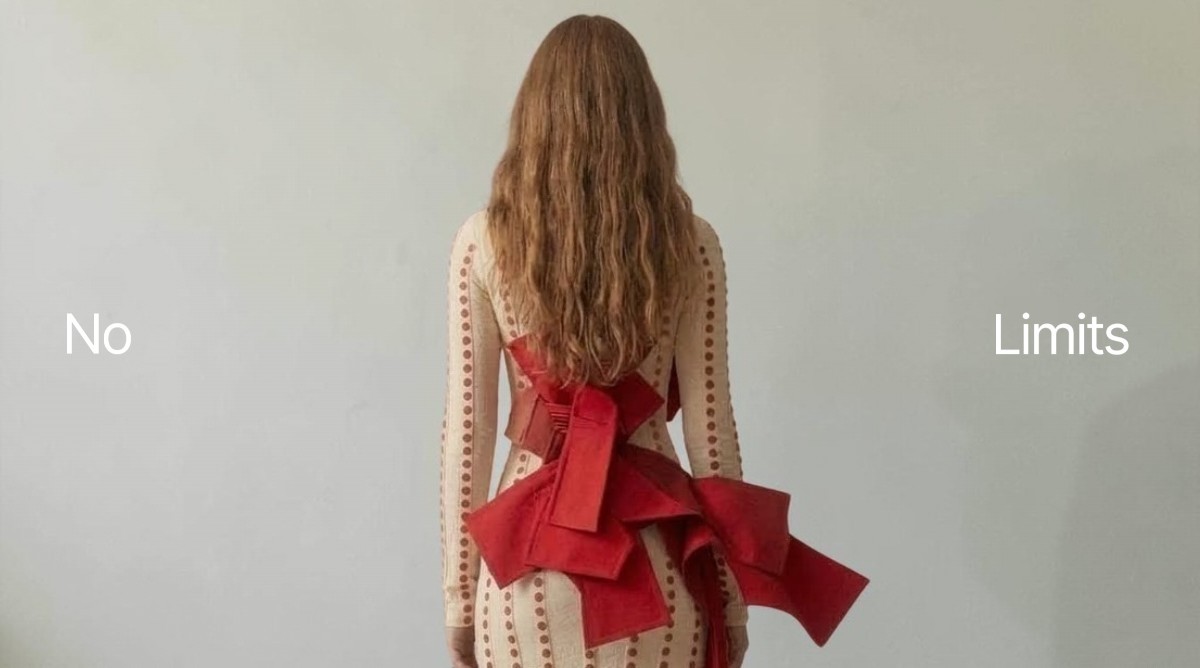
No Limits
College of Design, Rangsit University, Thailand
Graigote Saereedeelert
Abstract :
Today, the consumption of fashion through easily accessible and constantly updated social media platforms, combined with fast-changing trends and brands releasing multiple seasonal collections to boost sales, heavily contributes to the industry’s massive waste and severe environmental pollution. This rapid cycle of consumption drives the majority of consumers to excessively purchase trend-driven garments for specific, short-lived occasions. Consequently, global textile production continuously scales up to meet this artificial demand, ultimately resulting in mounting fashion waste at an unprecedented rate.
Recognizing the profound environmental impact of this trend-driven overconsumption, this research aims to address the issue by significantly increasing the functional utility of a single garment to extend its active lifespan. When clothing can be worn in multiple ways or structurally modified on demand, it creates dynamic new silhouettes that seamlessly adapt to the wearer’s daily lifestyle preferences. To achieve this high level of multi-functional adaptability, the researcher meticulously analyzed popular everyday clothing items to develop a versatile variety of modular patterns. These patterns were further refined using the conceptual framework of form alteration, directly simulating the traditional process of draping fabric on a mannequin—a technique where designers pin fabric pieces to carefully evaluate aesthetics, volume, and structural composition. By innovatively adapting this draping technique, the researcher developed a practical concept utilizing strategically placed buttons instead of traditional pins. This interactive mechanism allows wearers to seamlessly attach new pattern pieces directly onto a foundational base garment. The end result is endlessly customizable clothing, functionally limited only by the wearer’s imagination in mixing and attaching these supplementary pieces.
Because these modular garments can be comprehensively transformed by attaching new pattern components, they not only offer individual uniqueness but also generate fresh architectural structures and shapes. This participatory design approach successfully satisfies modern consumers’ persistent desires to update their personal silhouettes in line with current runway trends while flexibly adapting to various social occasions. Ultimately, by empowering the wearer and maximizing garment utility, this innovative method provides a sustainable alternative that effectively helps mitigate the pressing global problem of excessive fashion consumption.
Objectives :
- Reducing Trend-Driven Consumption: To minimize the need to purchase new clothes driven by fast fashion trends by extending the garment’s active lifespan, allowing its form and style to transform seamlessly according to the wearer’s imagination.
- Enhancing Versatility and Wearability: To increase the garment’s usage opportunities by structurally modifying its shape through the attachment of supplementary pattern pieces, making the attire highly adaptable for a diverse range of occasions, from daytime functions to evening events.
- Establishing an Industry Prototype: To serve as a conceptual and functional prototype that provides a foundational framework for other fashion designers, allowing them to further develop and implement this sustainable approach within the broader fashion industry.
- Expanding Design Boundaries: To challenge and develop the conventional limitations of garment wearability by introducing innovative design methodologies that offer infinite aesthetic transformations
Conceptual Framework :
The core design concept focuses on creating garments that can freely transform their shape through the attachment of modular pattern pieces, thereby expanding the occasions for wear and catering to consumers’ rapidly shifting preferences. This design draws inspiration from the dynamic environment of a sewing studio, which is typically filled with paper patterns and fabric scraps during the garment construction process.
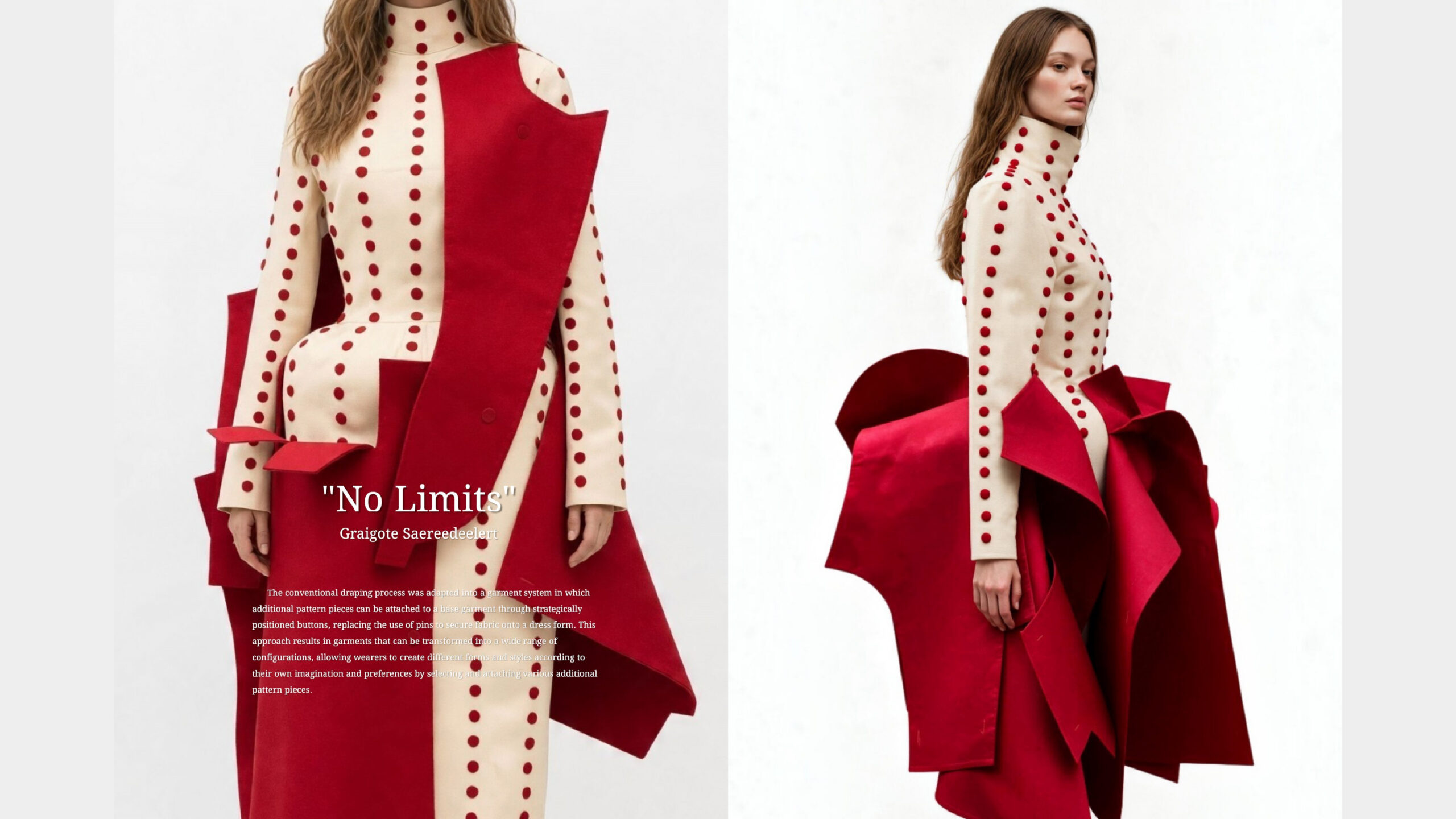
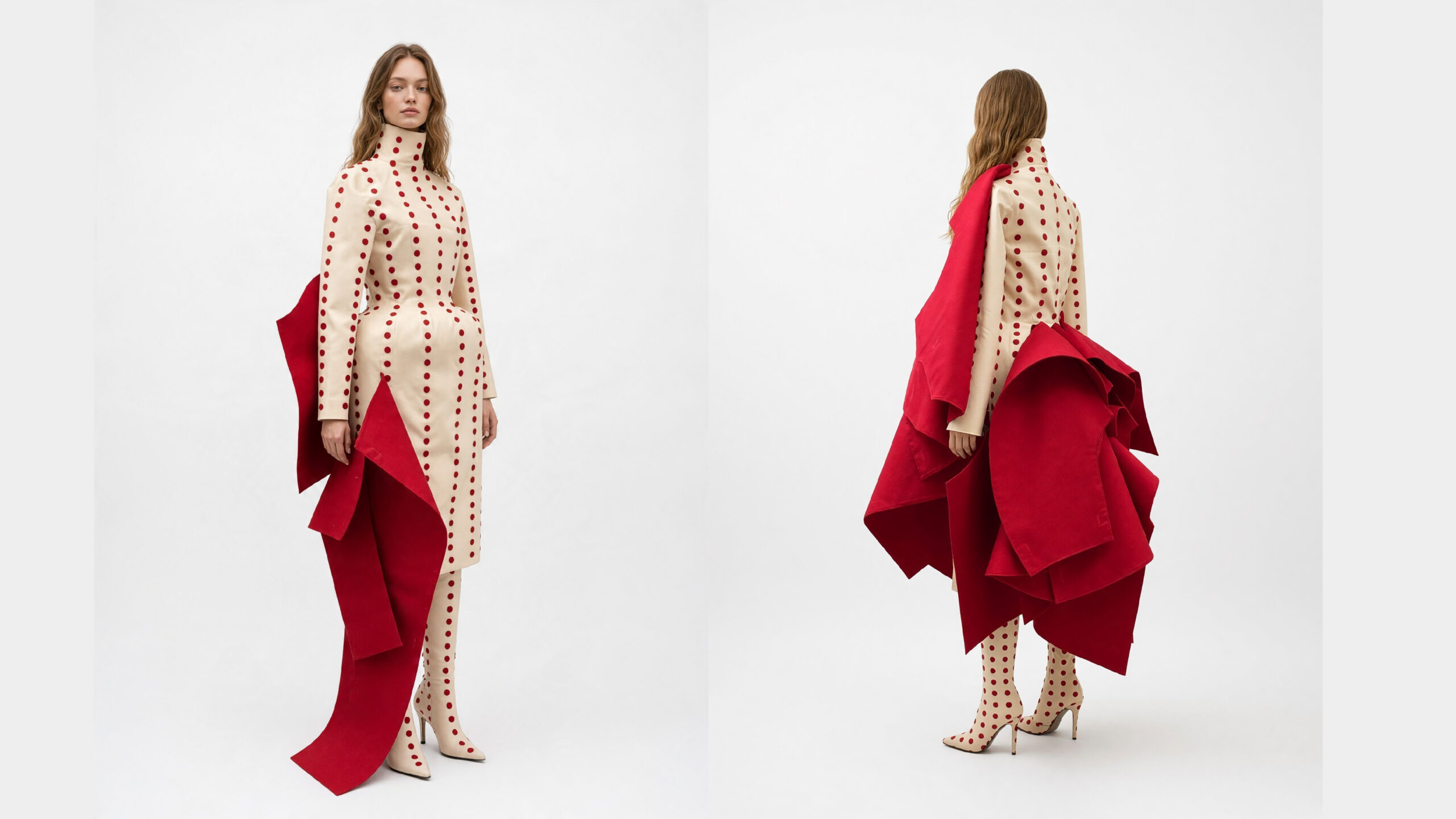
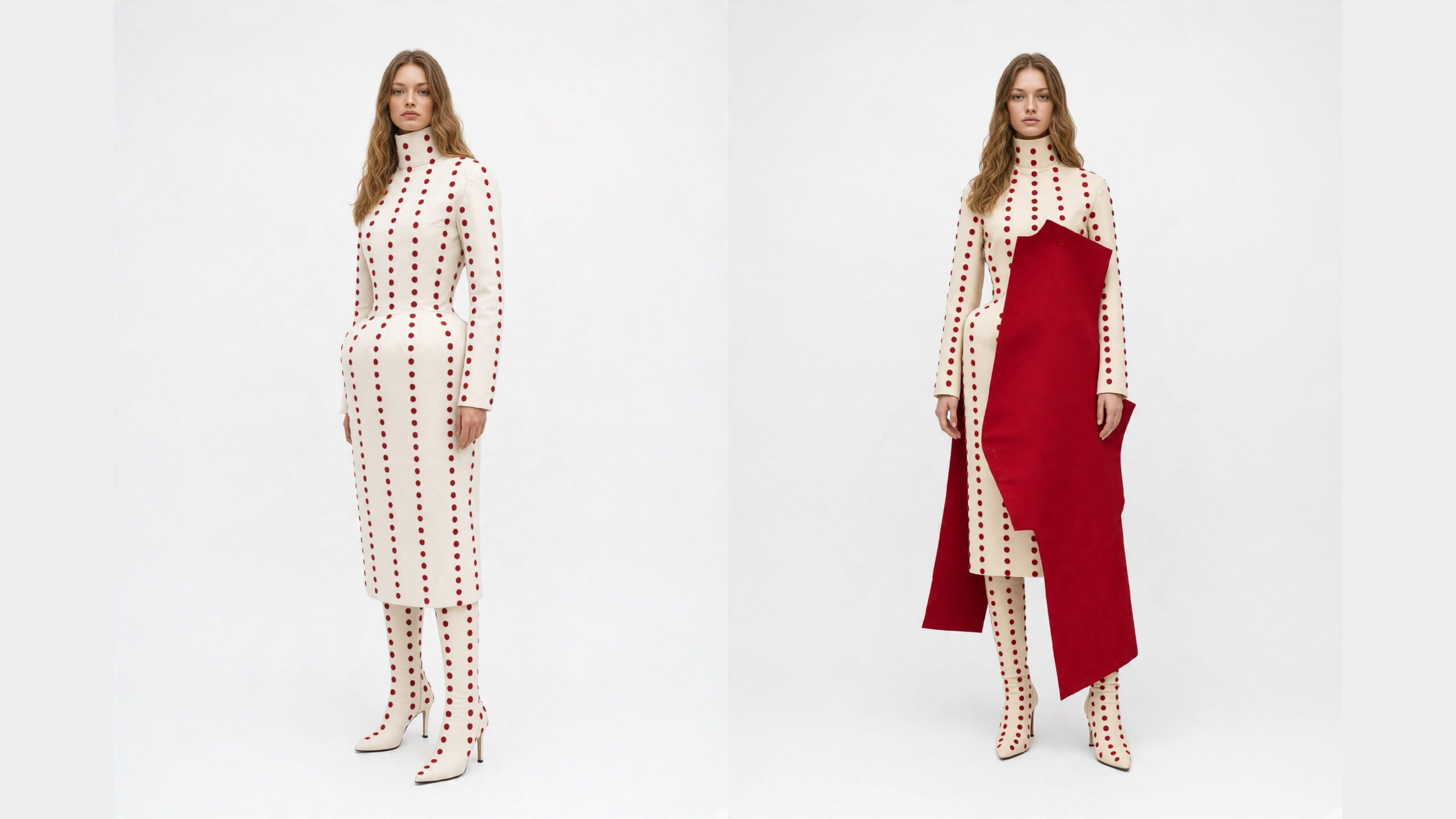
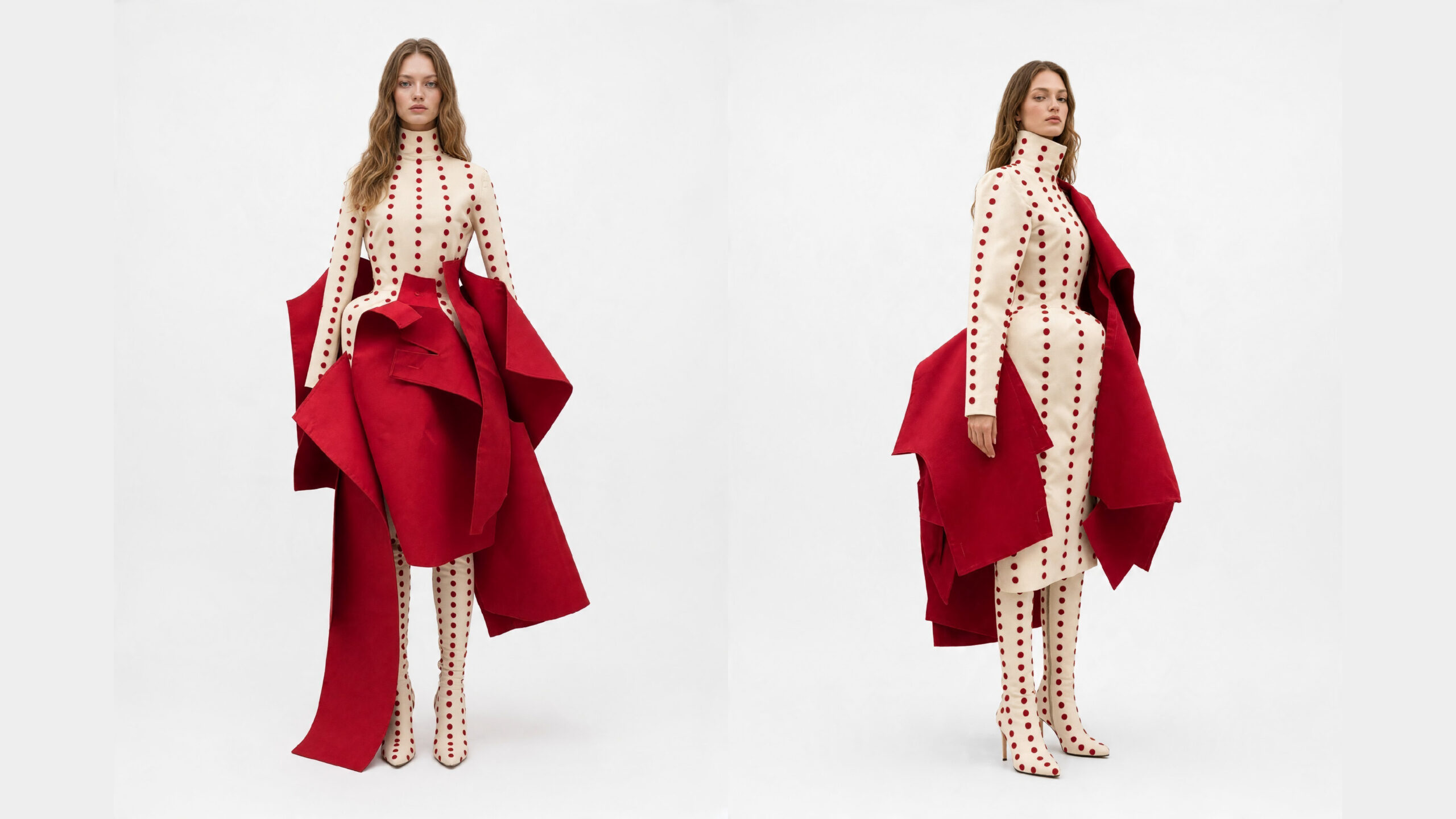
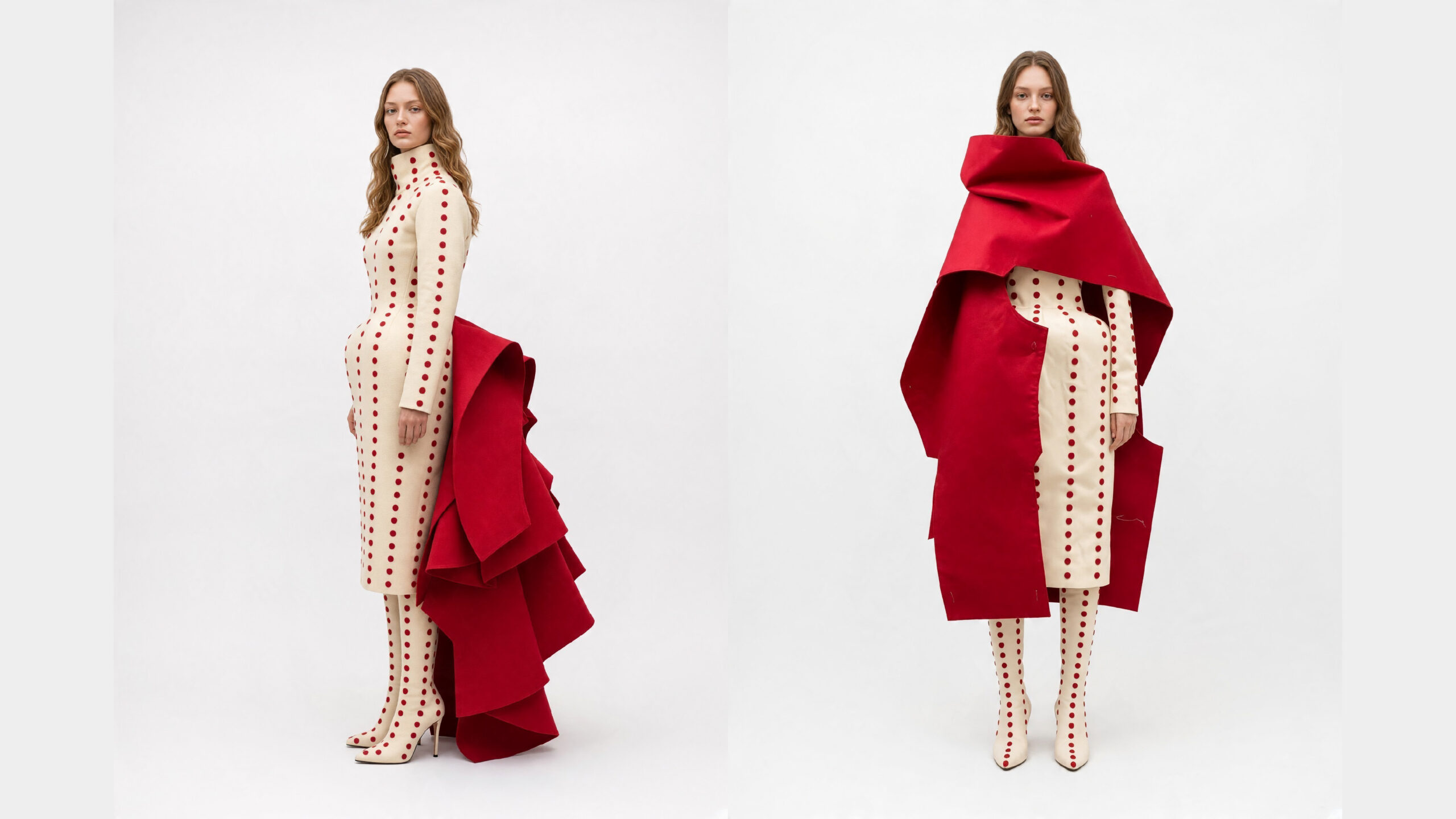
To manifest this concept, a cream-colored, long-sleeved, high-neck fitted dress was created to serve as a foundational “mannequin” base. Various structural components from the tailoring process were then developed into supplementary pattern pieces, encompassing shirts, jackets, coats, trousers, and skirts. These modular pieces can be freely attached to the base dress using more than 600 buttons strategically arranged across the garment. This interactive mechanism perfectly mirrors the unrestricted experimentation of draping fabric on a dress form. Ultimately, it results in a dynamic garment that empowers the wearer to independently and uniquely alter their silhouette every day, actively reducing the unnecessary consumption of trend-driven fashion.
Process / Methodology :
The process began with the study and design of the foundational garment, which directly mimics a traditional draping mannequin found in sewing studios. By meticulously analyzing the proportions, dimensions, and surface textures of a mannequin, the researcher designed a base dress that closely replicates its physical form. This dress features buttons strategically arranged along key anatomical landmarks—mirroring the bust, waist, and hip style lines of a standard dress form. To accurately simulate the mannequin, the design utilizes cream-colored fabric reminiscent of unbleached muslin. Furthermore, the garment is constructed using a complex 12-panel pattern (six front panels and six back panels) to precisely capture the natural contours of the female body.
Simultaneously, standard patterns for shirts, coats, jackets, skirts, and trousers were studied to determine the optimal size and shape for each garment type. These elements were then developed into modular supplementary pieces by incorporating carefully placed buttonholes. This adaptation allows the supplementary pieces to be freely draped and securely attached to the foundational dress using its pre-arranged structural grid of buttons.
Techniques and Materials :
To visually represent a draping mannequin, the chosen material needed to closely resemble unbleached muslin. The researcher selected a cotton spandex, which replicates the tactile surface of a traditional dress form while providing the essential stretch required to construct a deeply contoured, fitted silhouette.
Additionally, buttons serve as the primary functional mechanism for attaching the modular components. The researcher opted for fabric-covered buttons, upholstered in the exact same red natural fiber fabric used for the supplementary patterns. These buttons are arranged in continuous vertical lines from the neckline down to the hem, ensuring a seamless integration of color and texture when the extra pieces are draped onto the base dress.
To enhance structural integrity, the supplementary patterns were reinforced with fusible interfacing, providing a smooth, structured finish that holds its distinct shape when attached. The specific choice of red pays homage to the red style tape traditionally used by designers to mark the bust, waist, and hip lines on professional tailoring mannequins.
Result / Conclusion :
By studying how clothes are made, the researcher created a base dress that mimics a tailor’s mannequin, along with extra pattern pieces based on classic clothing styles. This creates a flexible design that can transform into entirely new shapes just by attaching or removing pieces—much like draping fabric on a dress form.
As a result, a single piece of clothing becomes much more versatile for different occasions. This approach not only extends the garment’s lifespan by adapting to the wearer’s daily lifestyle and style preferences, but it also increases the overall value of the design.
Furthermore, this experimental project serves as a practical model for other fashion designers. It offers a sustainable approach for those who want to move beyond traditional clothing design, introducing a new method to help solve the global problem of fashion waste and pollution.
References :
–