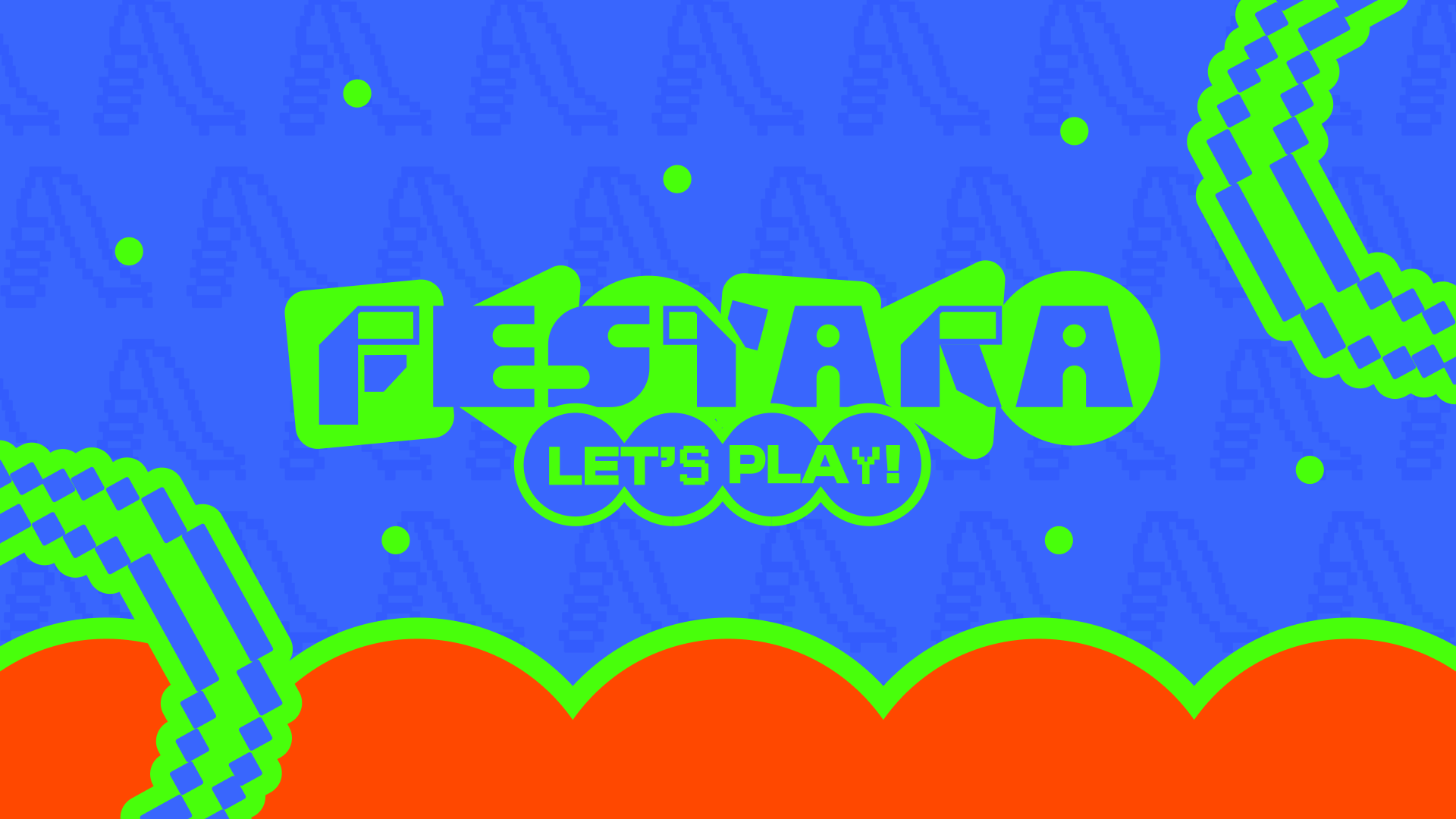
Festara: Let’s Play!
Faculty of Art and Design, Universitas Multimedia Nusantara, Indonesia
Audrey Nathalie, Nataniel Jevon Krishanjaya, and Rojer Winston
Abstract :
Festara: Let’s Play! is the visual identity created for Ultigraph 2026, an annual graphic design festival organized by Universitas Multimedia Nusantara. The festival consists of several creative programs, including competitions, exhibitions, art markets, and an awarding night. Since each program has a different purpose, audience, and atmosphere, the main challenge was to develop one visual identity that could connect all of them without making every program look too similar. The identity therefore needed to be flexible enough to adapt to different applications while still maintaining a clear and recognizable character.
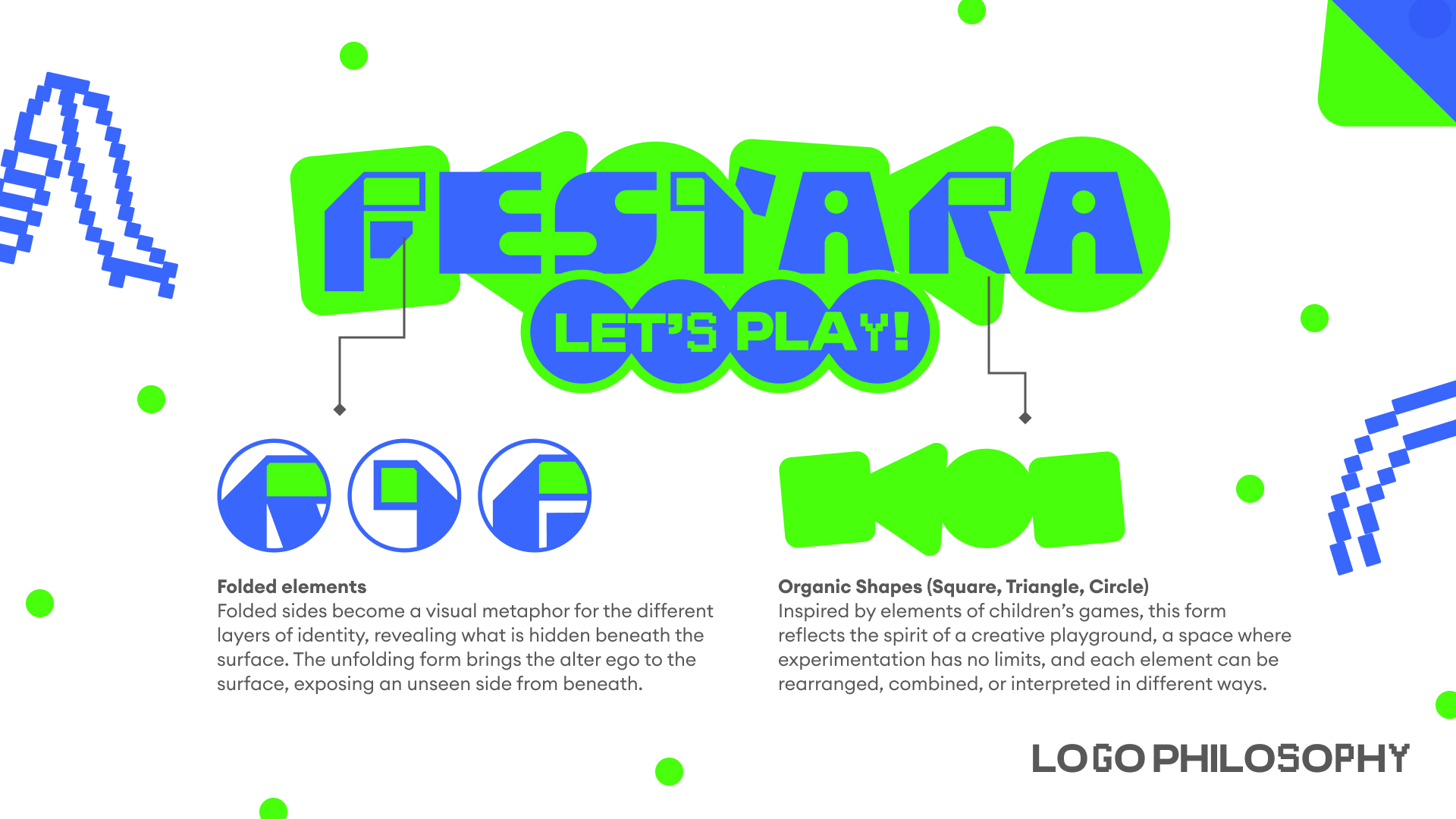
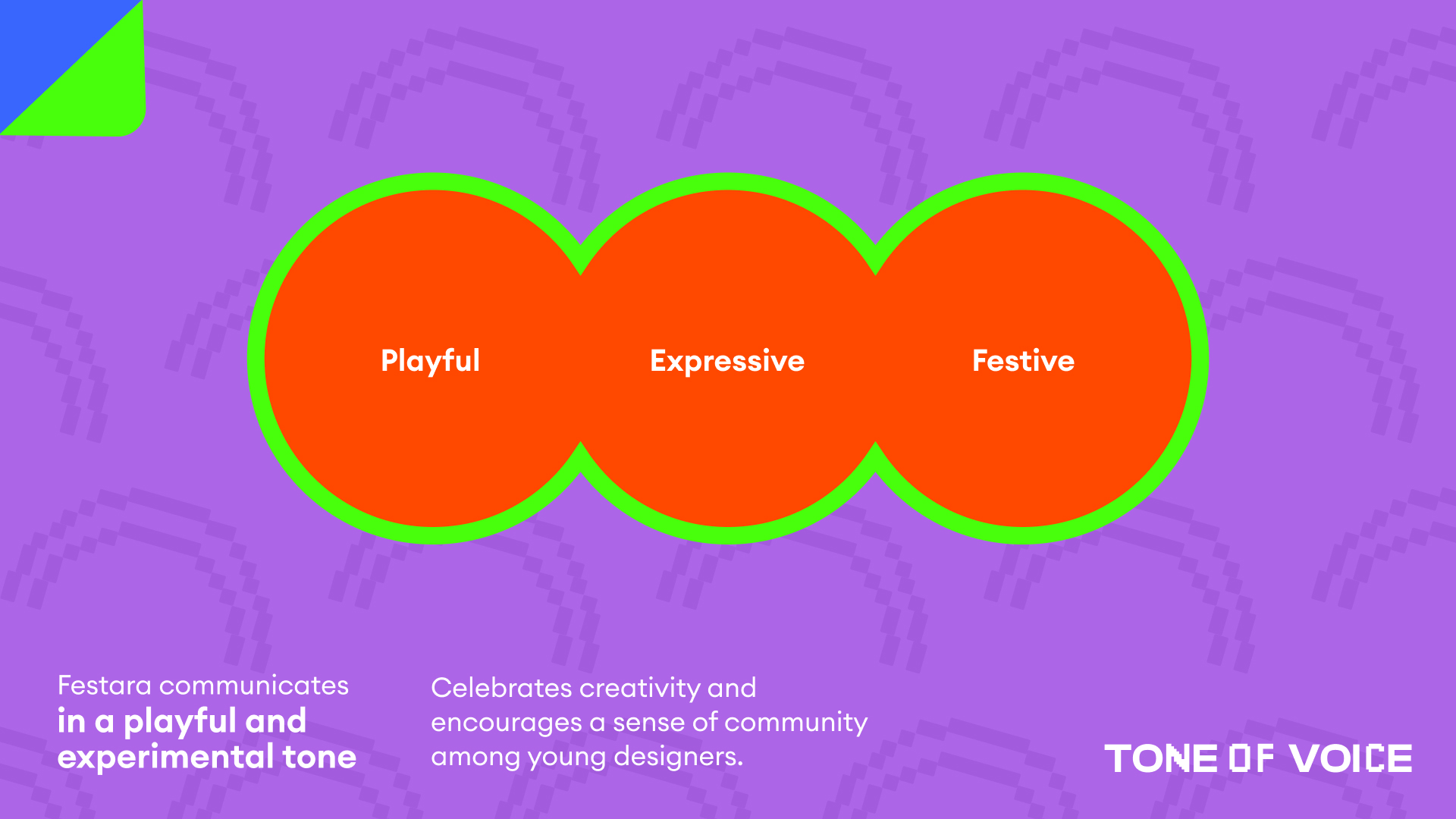
The visual direction was built around three main keywords: playful, expressive, and festive. These keywords became the foundation for the use of typography, color, illustration, and layout throughout the identity. The name Festara combines the ideas of “festival” and “vistara,” representing celebration, openness, and the freedom to explore creativity. The supporting phrase “Let’s Play!” strengthens this idea by presenting the festival as a space for experimentation, interaction, and creative discovery.
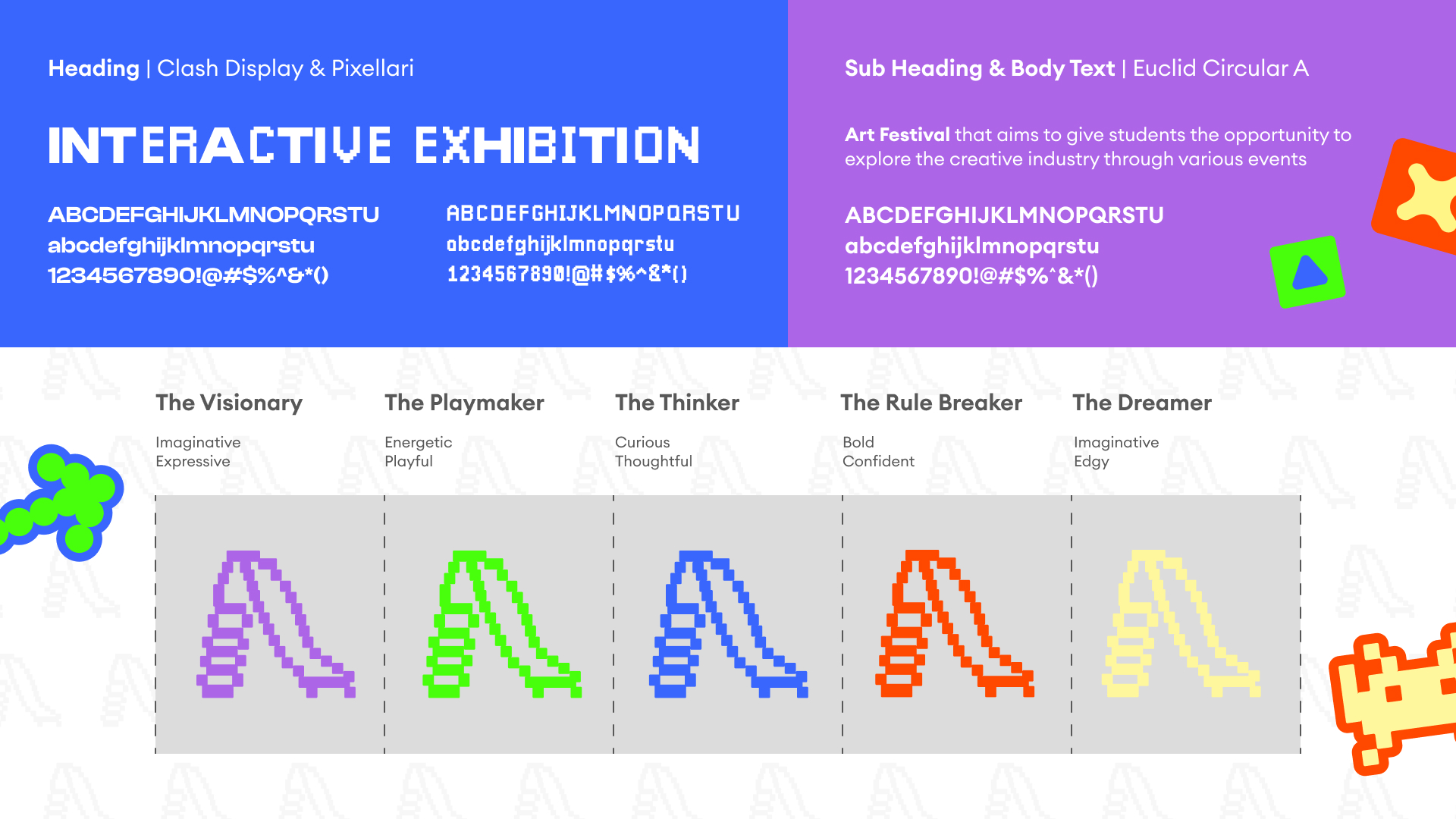
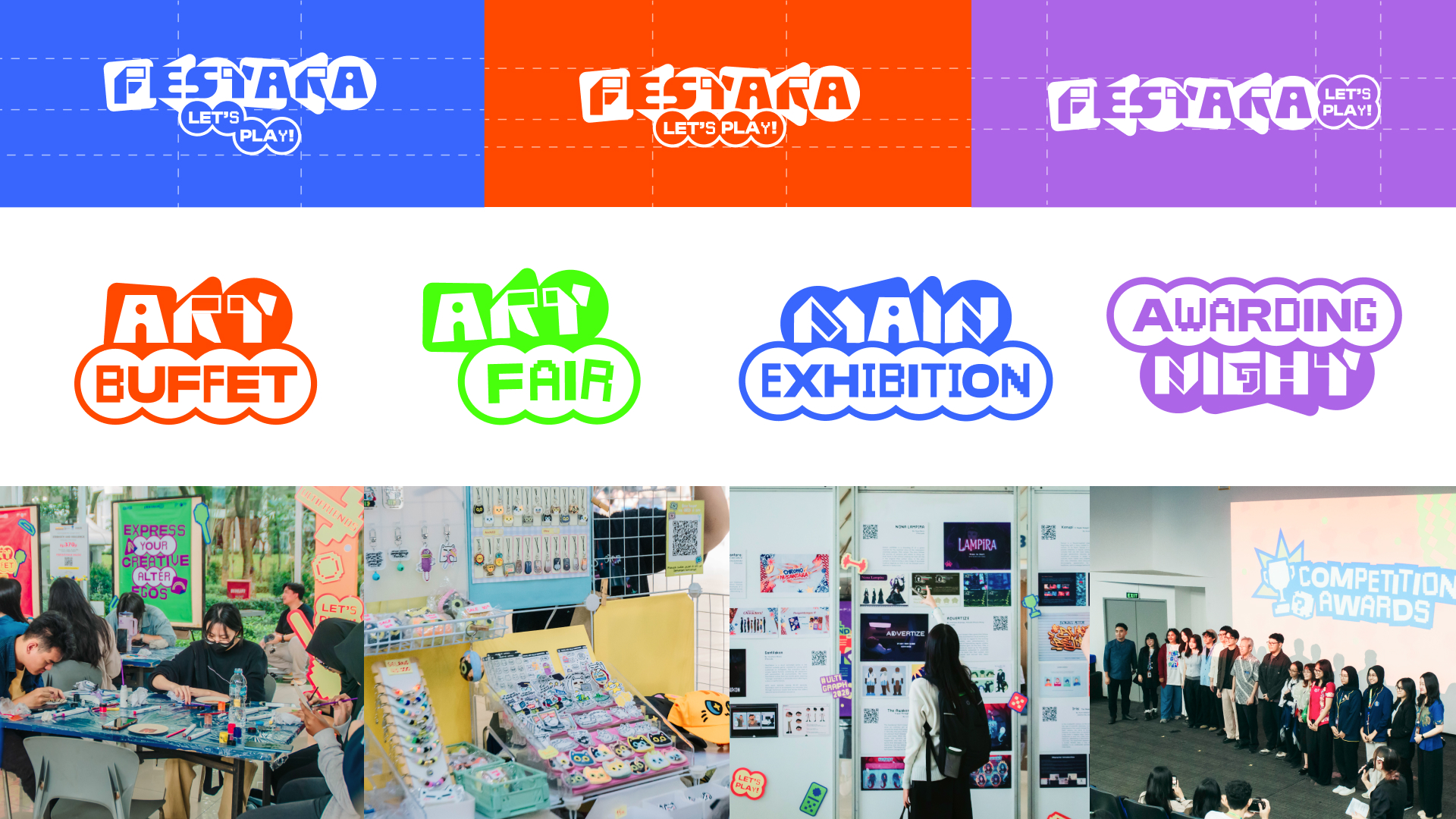
A pixel-inspired visual language was chosen as one of the main characteristics of the identity. Pixel forms were considered suitable because they can be arranged, repeated, expanded, and transformed into many different compositions. This flexibility reflects the idea of play, where visual elements can continuously change while still being part of the same system. Bright and contrasting colors, including electric blue, green, orange, purple, and yellow, were used to create an energetic and youthful atmosphere. Different color combinations also help distinguish each program while keeping them connected under the Festara identity.
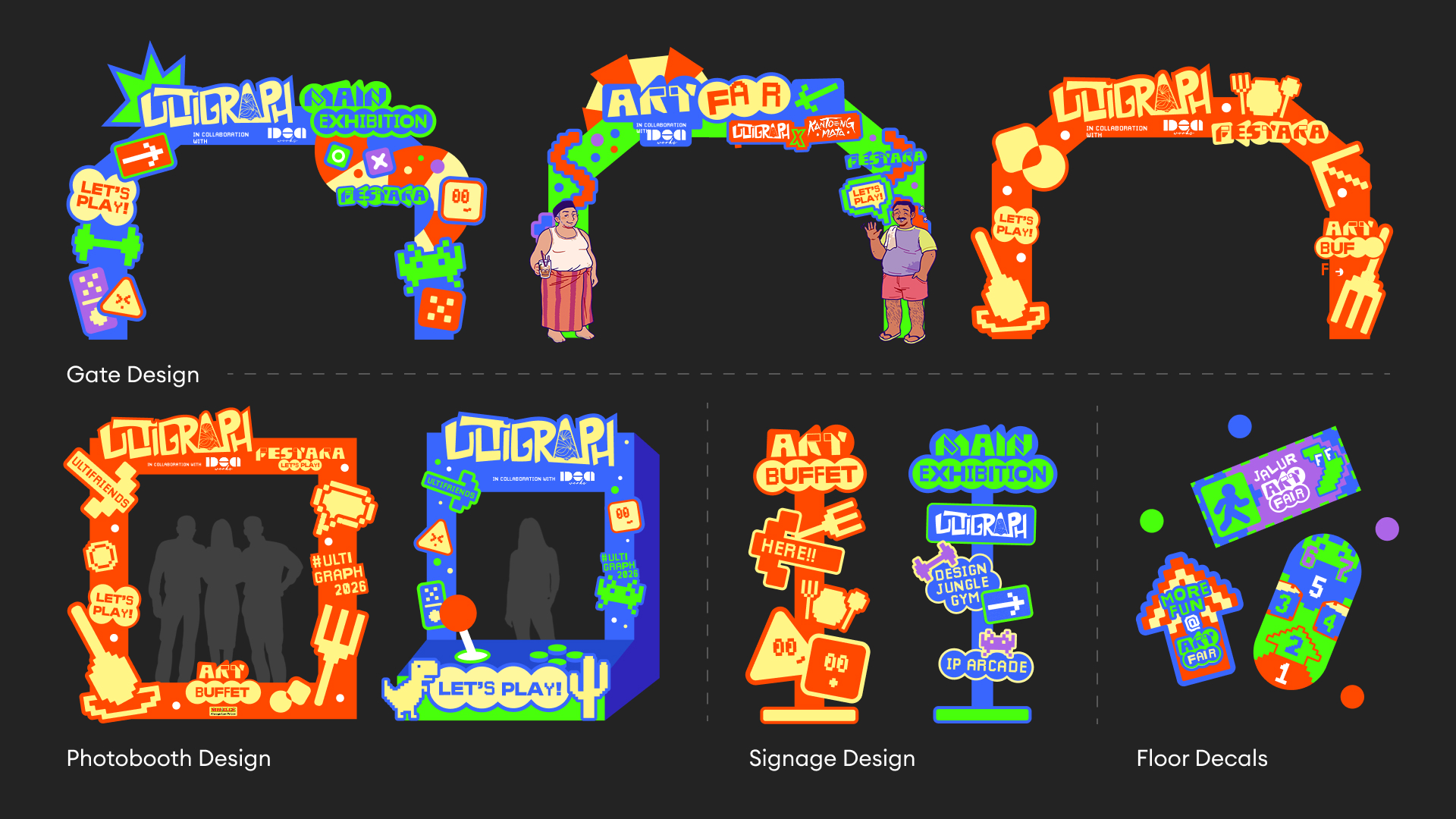
The visual system was then developed across various applications, including social media content, exhibition graphics, event signage, merchandise, and promotional materials. Instead of depending only on the logo, Festara uses a set of visual elements that can shift according to format, content, and program needs. Through this approach, the project aims to make Ultigraph 2026 feel like an open and lively creative space where people can explore ideas, interact with one another, and experience design in a more playful way.
Objectives :
1. To develop a visual identity system for Festara: Let’s Play! that reflects the playful, expressive, and festive character of Ultigraph 2026 while creating a strong and recognizable overall festival image.
2. To translate the idea of play and creative exploration into a visual language through pixel-inspired graphics, bold colours, typography, and modular compositions that can be developed into different visual expressions.
3. To create a cohesive identity that can connect the different events within Ultigraph 2026, while still allowing each event to have its own visual variation and atmosphere without losing the main Festara identity.
4. To build a flexible visual system that can be adapted across various media and formats, including social media, exhibition graphics, signage, merchandise, promotional materials, and other digital or physical applications.
5. To create a visual experience that encourages interaction, exploration, and participation, supporting Ultigraph 2026 as a creative festival where audiences can engage with design in a more playful and approachable way.
Conceptual Framework :
The conceptual framework of Festara: Let’s Play! is built around the idea of creativity as a form of play. In this project, “play” is not understood only as entertainment, but as a way of thinking and creating through experimentation, exploration, interaction, and discovery. Creative ideas often grow through the process of trying different possibilities, combining elements, making changes, and responding to unexpected results. This way of working became an important reference for how the Festara identity was developed.
Three main characteristics, playful, expressive, and festive, form the foundation of the visual identity. Playful represents curiosity, experimentation, and the willingness to try new things. Expressive reflects the freedom to communicate ideas and show different creative personalities, while festive represents the lively, celebratory, and communal atmosphere of Ultigraph as a design festival. These three characteristics work together to define not only how Festara looks, but also how the identity should feel when experienced by the audience.
The concept is translated into a visual language inspired by digital and pixel-based aesthetics. Pixel forms were chosen because they are simple, modular, and flexible. Individual units can be repeated, rearranged, extended, or rebuilt into different graphic compositions. This gives the identity a system that can continuously change without losing its main visual character. The use of modular elements also supports the idea of a visual playground, where different parts can be explored and combined depending on the needs of each program and media.
The name Festara further supports this concept by combining the idea of a festival with vistara, which represents openness and broader creative exploration. Together with the phrase “Let’s Play!”, the identity presents Ultigraph as a space that encourages people to participate, experiment, and interact with different forms of creativity. Through this framework, Festara is designed not only as a visual identity, but as a system that reflects the spirit of exploration and creative freedom throughout Ultigraph 2026.
Process / Methodology :
The design process of Festara: Let’s Play! uses a Human-Centered Design approach adapted from IDEO’s seven phases of design thinking (IDEO, n.d.).
1. Frame the Question
Identifying the need for a visual identity that could represent Ultigraph 2026 as one festival while still allowing each event to have its own visual character.
2. Gather Inspiration
Visual research was conducted by exploring festival branding, digital culture, pixel graphics, playful design systems, and references that were relevant to the target audience.
3. Synthesize for Action
The findings were summarized into three main characteristics: playful, expressive, and festive. These characteristics became the foundation for the overall visual direction.
4. Generate Ideas
The team explored different possibilities through logo sketches, typography, color combinations, graphic elements, and layout compositions. This process led to the use of pixel-inspired visuals as the main identity system.
5. Make Ideas Tangible
The selected concept was developed in Figma into a complete visual identity system consisting of the logo, typography, color palette, pixel-based graphic assets, and modular layouts, which were then applied to different Ultigraph 2026 event materials.
Techniques and Materials :
The visual identity of Festara: Let’s Play! was developed digitally using Figma as the main design tool. Figma was used to create and organize the logo, typography, color palette, graphic assets, and layout system.
The main technique used was a pixel-based modular approach. Simple geometric shapes were arranged, repeated, resized, and combined to create different visual elements and compositions. This made the identity flexible while keeping a consistent visual style.
Bright and contrasting colors such as blue, green, orange, purple, and yellow were used to create a playful and festive atmosphere. Typography was selected to support the bold and expressive character of the identity while maintaining readability.
The final visual system was then applied and tested in Figma across several media, including social media posts, exhibition graphics, event signage, merchandise, and promotional materials.
Result / Conclusion :
The final result of Festara: Let’s Play! is a flexible visual identity system that connects the different events of Ultigraph 2026 under one consistent visual language. The identity combines the logo, typography, bright color palette, pixel-based illustrations, and modular graphic elements.
Each event can use different color combinations and compositions while still being recognizable as part of Festara. This allows the identity to stay consistent without making every event look the same.
The system was applied across several media, including social media content, exhibition graphics, signage, merchandise, and promotional materials. The modular elements also make the identity easy to adapt and develop for different formats and event needs.
Overall, Festara: Let’s Play! creates a visual identity that reflects the playful, expressive, and festive character of Ultigraph 2026. The project shows how a flexible visual system can support different events while still maintaining one strong and recognizable identity.
References :
Wheeler, A., & Meyerson, R. (2024). Designing brand identity: A comprehensive guide to the world of brands and branding (6th ed.). John Wiley & Sons. Wiley-VCH
Salen Tekinbaş, K., & Zimmerman, E. (2003). Rules of play: Game design fundamentals. The MIT Press. MIT Press
IDEO.org. (2015). The field guide to human-centered design (1st ed.). IDEO.org. UN Office for South-South Cooperation
Share :
Facebook
Twitter
LinkedIn
WhatsApp
Email
Print