Project: Child Violence Awareness and Prevention Project
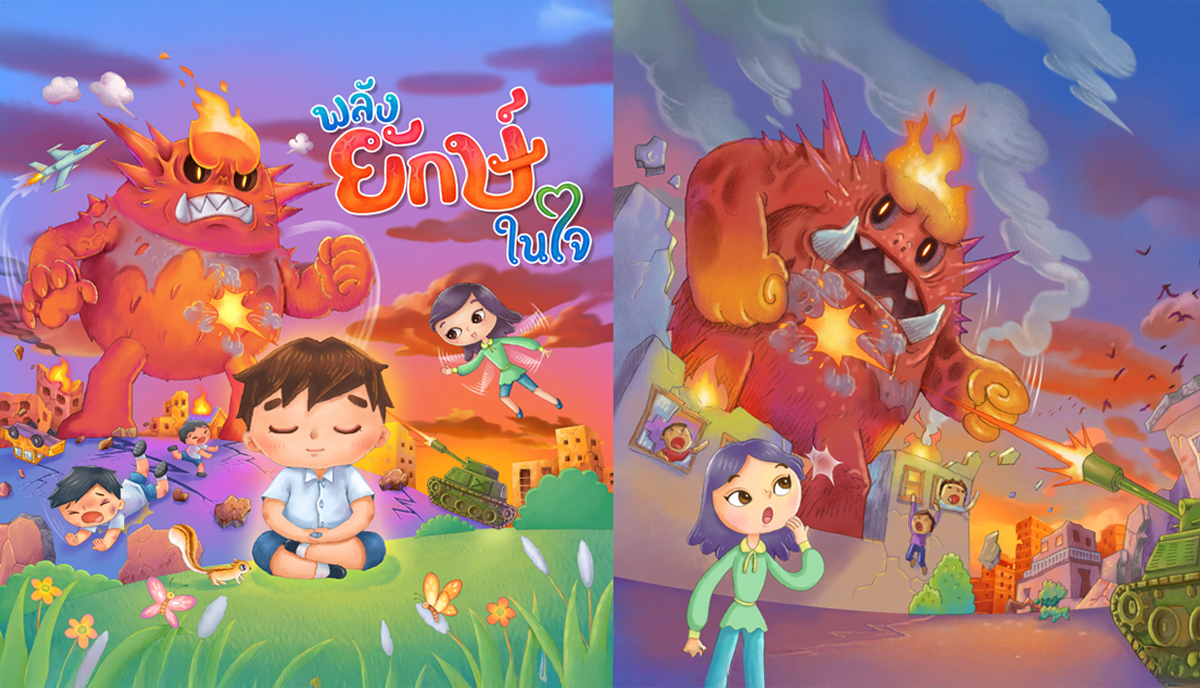
Illustration : The Giant Within
Faculty of Digital art, Rangsit University, Thailand
Asst. Prof. Sutat Palama


Abstract :
In contemporary society, children and adolescents are frequently exposed to images or events involving anger, conflict, and violence, both through media and their immediate environment. Repeated exposure may lead to desensitization, causing children to perceive violence as normal. However, anger is a temporary emotional state that can subside over time, and everyone can learn to regulate their emotions appropriately. A lack of skills in emotional regulation and constructive problem-solving is a key factor contributing to aggressive behavior, which, if unaddressed during childhood, may develop into habitual patterns, resulting in long-term consequences for schools, families, and society. The family context in 2025 continues to reflect economic challenges. Many children and families face high household debt, which hinders their dreams and future opportunities. Economic stress following the COVID-19 pandemic has further increased family tension and the risk of domestic violence. Reports from the United Nations indicate that Thailand ranks among the top ten countries with high levels of violence against children and women, underscoring the urgent need to build children’s emotional and behavioral resilience while strengthening the protective roles of families, schools, and communities.
The “Child Violence Prevention Project” aims to help children and adolescents understand violent situations, develop self-protection strategies, manage their emotions, and cultivate positive attitudes through storybooks. The project seeks to enable children to understand their own emotions, regulate anger, empathize with others, and respond to risky situations without resorting to violence.
Furthermore, the project aims to raise awareness among parents, teachers, and communities to collaboratively care for, protect, and support children’s safe development in all dimensions—physical, emotional, and mental—through collective efforts to create psychologically safe environments, reduce aggressive behaviors, promote positive communication, and develop non-violent problem-solving approaches.
The project expects that the creative media developed will serve as a catalyst for change at the individual, family, school, and societal levels, enabling children to grow in a society grounded in understanding, respect, and peaceful coexistence, thereby reducing violence and sustainably enhancing children’s quality of life.
Objectives :
The primary objectives of the Child Violence Prevention Project are twofold:
- To Empower Children and Adolescents with Emotional and Behavioral Resilience:
The project aims to foster comprehensive learning among young individuals regarding violence and conflict. Through engagement with specialized storybooks and animated media, children will develop a clear understanding of potential violence-inducing situations, master essential self-protection strategies, and learn constructive emotional regulation techniques—particularly in managing anger. Furthermore, the initiative seeks to cultivate positive mindsets, empathy, and non-violent problem-solving capabilities, enabling youth to navigate high-risk environments safely and peacefully without resorting to aggressive behaviors.
- To Raise Awareness and Build Protective Capacity Among Adult Stakeholders:
The project intends to heighten literacy and proactive awareness regarding child safety among parents, guardians, educators, and the broader community. By enhancing adult understanding of subtle indicators of violence and emotional distress, the initiative fosters active multi-stakeholder collaboration. This shared vigilance empowers adults to co-create psychologically safe, supportive, and nurturing environments in homes, schools, and communities, ensuring early intervention, positive communication, and holistic protection for children’s physical and mental well-being.
Target Groups and Operational Scope
- Primary Target Group: Children and adolescents aged 4 to 12 years old, who represent a critical developmental stage for emotional learning, social skill acquisition, and behavioral habit formation.
- Secondary Target Group: The general public and key adult caregivers, specifically including parents, legal guardians, schoolteachers, educational personnel, and community leaders who play pivotal roles in child protection, mentorship, and environment creation.
Operational Scope: Implementation will leverage multimedia channels—specifically illustrated storybooks and digital animation—distributed across educational institutions, community centers, and online platforms to ensure widespread access and engagement.
Conceptual Framework :
The conceptual framework of the Child Violence Awareness and Prevention Project is based on the understanding that children’s exposure to anger, conflict, and violence can influence how they perceive emotions and respond to difficult situations. Without emotional awareness and appropriate coping strategies, anger and frustration may develop into aggressive or violent behavior. Violence prevention therefore requires both awareness and the development of emotional and social skills that support non-violent responses.
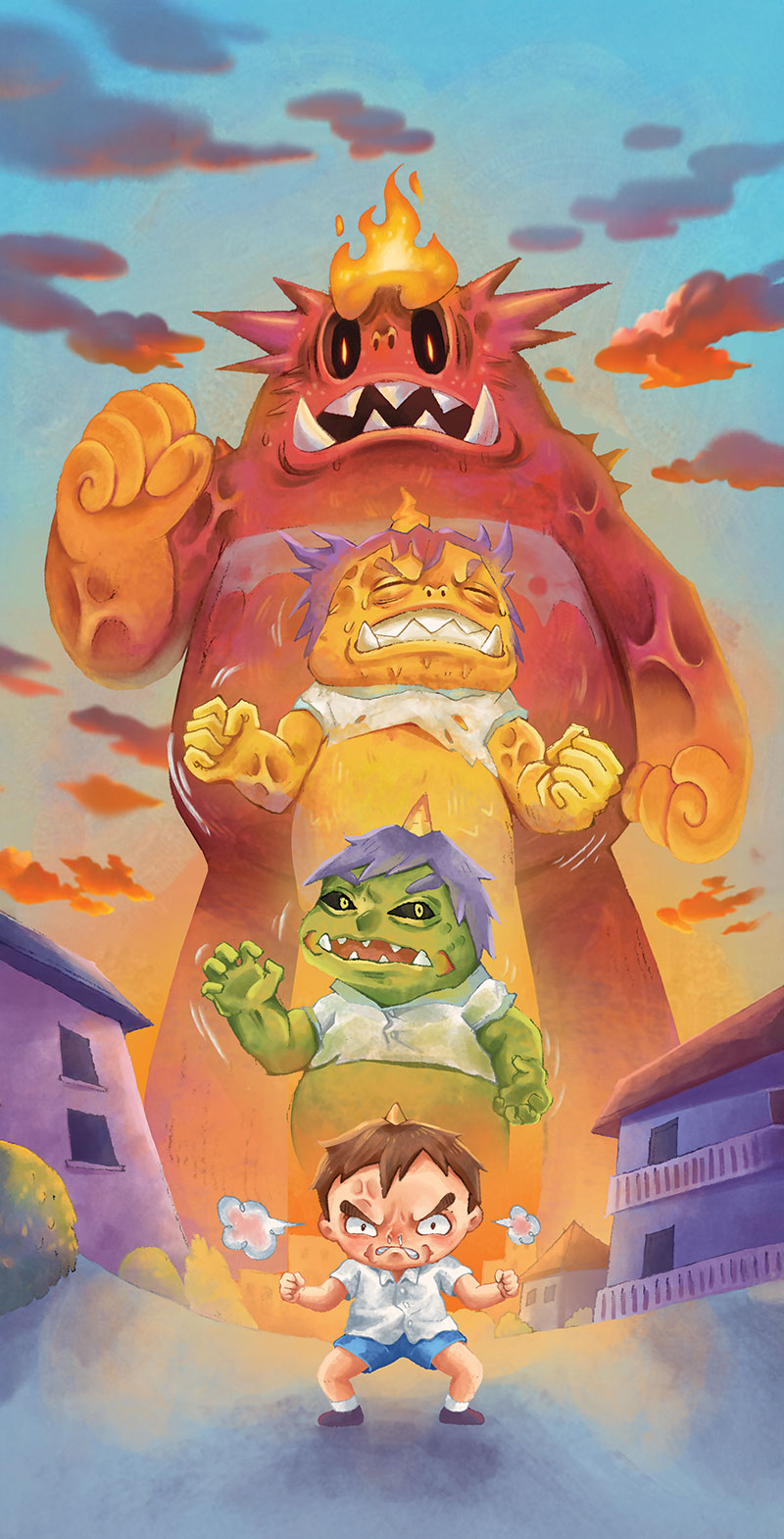
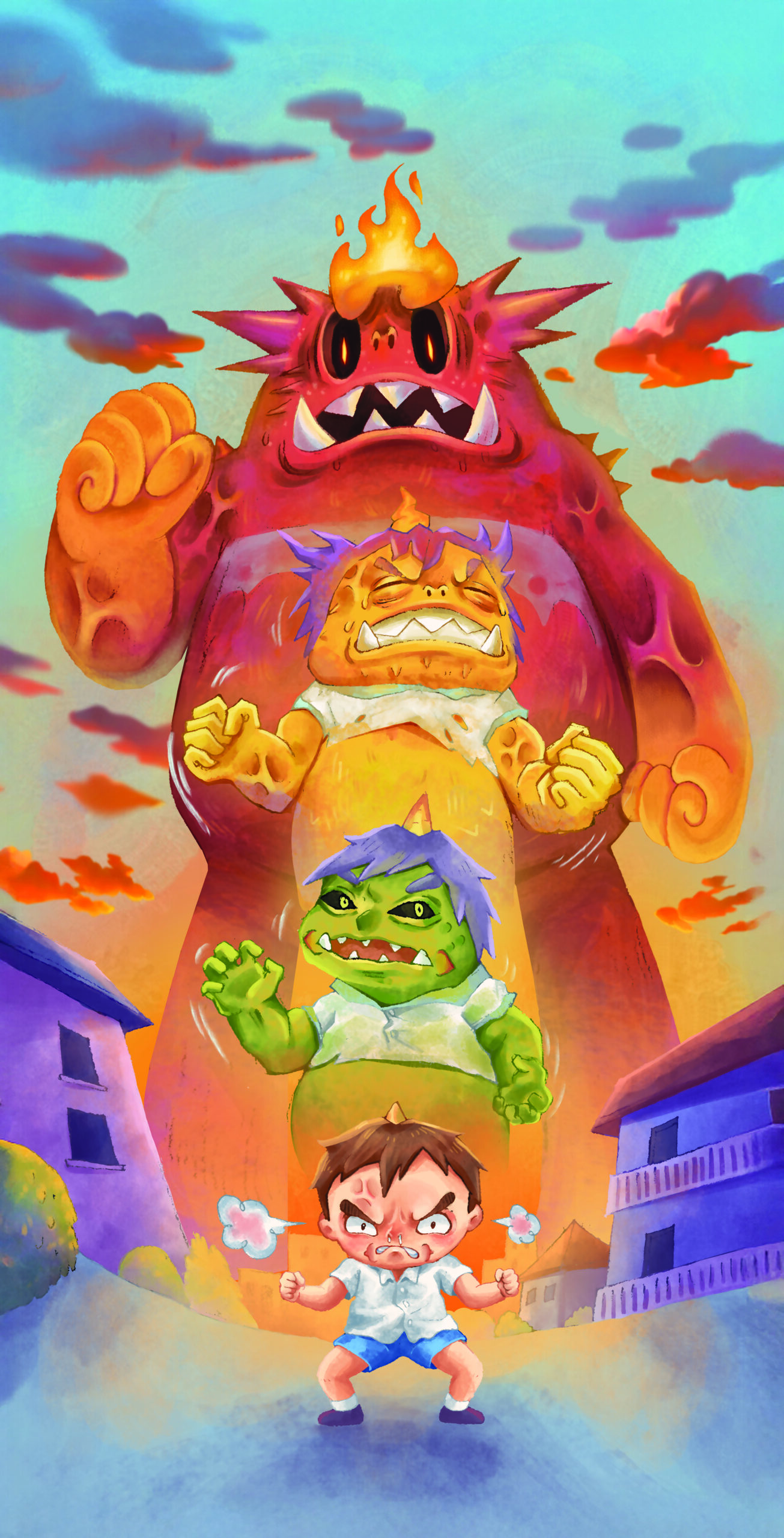
The framework connects awareness of violence → emotional understanding → self-regulation and empathy → non-violent communication and problem-solving → safer relationships and environments. Through this process, “The Giant Within” is intended to encourage children to understand their emotions, reflect on their responses, and explore constructive ways to deal with conflict and violence.
Process / Methodology :
Storybook Production
- Storyboarding & Pagination: Translating the narrative into a visual story structure
– Pagination & Content Distribution: Divide and allocate the approved narrative into individual pages, ensuring a storytelling rhythm suitable for children’s cognitive pacing.
– Emotional Pacing & Composition: Plan camera angles and visual compositions on each page to effectively communicate emotions, anger management, and self-protection strategies.
– Character Design & Style Guide: Define visual styles, facial expressions, postures, and color palettes for key characters to establish a recognizable identity and foster familiarity for children aged 4–12.
- Illustration & Visual Development: Creating impactful artwork to convey emotions and narrative
– Rough Sketching: Draft preliminary line art to determine the placement of characters, backgrounds, and designated text areas (text margins) on each page.
– Line Art & Digital Coloring: Render line art and apply digital coloring using accessible, vibrant, and warm techniques, incorporating color psychology to reduce aggression and stimulate positive emotions.
– Visual Review & Quality Assurance: Inspect symbolic details to ensure no images inadvertently trigger violence, focusing instead on visual cues that depict constructive solutions and emotional regulation.
- Graphic Design & Book Layout: Structuring typography and preparing print-ready files
– Typography & Readability: Select child-friendly, highly legible font families, adjusting font sizes and line spacing (leading) to accommodate the visual development stages of children.
– Page Layout & Assembly: Seamlessly integrate illustrations with narrative text using industry-standard design software (e.g., Adobe InDesign), completing the overall composition, including front and back covers.
– Pre-press Production: Configure standard print settings (CMYK color mode, bleed margins, and 300 DPI image resolution) and perform final proofreading to ensure seamless physical printing.
Techniques and Materials :
-
Techniques: Digital illustration techniques are utilized to create clear, highly legible visuals. Storyboarding and emotional pacing guide page composition, while color psychology employs warm, comforting tones to diminish aggression. Digital page-layout software ensures optimal typography, line spacing, and print-ready configurations (CMYK, Bleed, 300 DPI).
-
Materials: Printed editions use durable, non-toxic, eco-friendly FSC-certified paper with matte lamination to ensure child safety and reduce light glare. Digital formats are published as responsive, high-resolution interactive E-Books (PDF/EPUB) with scannable QR codes for seamless online access.
Result / Conclusion :
The project will produce an illustrated storybook titled “The Giant Within”, designed to translate complex emotional concepts into an engaging visual narrative. Through thoughtfully crafted artwork and age-appropriate storytelling, the storybook aims to enhance children’s awareness of violence, guide them in emotional regulation and empathy, and foster non-violent problem-solving skills through relatable characters and believable scenarios.
References :
Snowden, S. (2018). Anger management workbook for kids. Callisto Kids.
Denham, S. A. (1998). Emotional development in young children. Guilford Press.
World Health Organization. (2020). Global status report on preventing violence against children 2020. World Health Organization.
Share :
Facebook
Twitter
LinkedIn
WhatsApp
Email
Print