Memory Twin: Exploring AI-Mediated Memory Sharing to Address Loneliness in Later Life
Yuqing Zhang / China
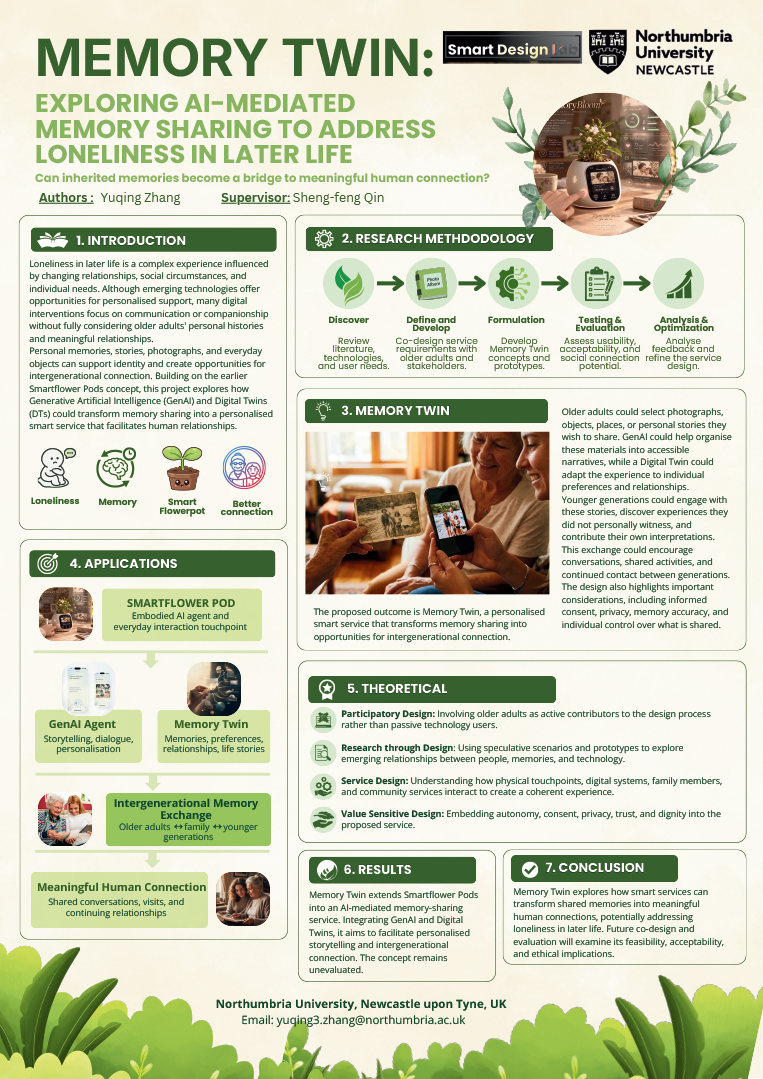
Loneliness in later life is a complex challenge shaped by changing social relationships, living circumstances, and opportunities for meaningful interaction. Although emerging technologies offer possibilities for personalised support, many digital interventions focus on communication or artificial companionship without sufficiently considering older adults’ personal histories and intergenerational relationships. This research proposes Memory Twin, a speculative smart service that explores how Generative Artificial Intelligence (GenAI), Digital Twins (DTs), and an embodied Smartflower Pod could facilitate memory sharing and meaningful human connection.
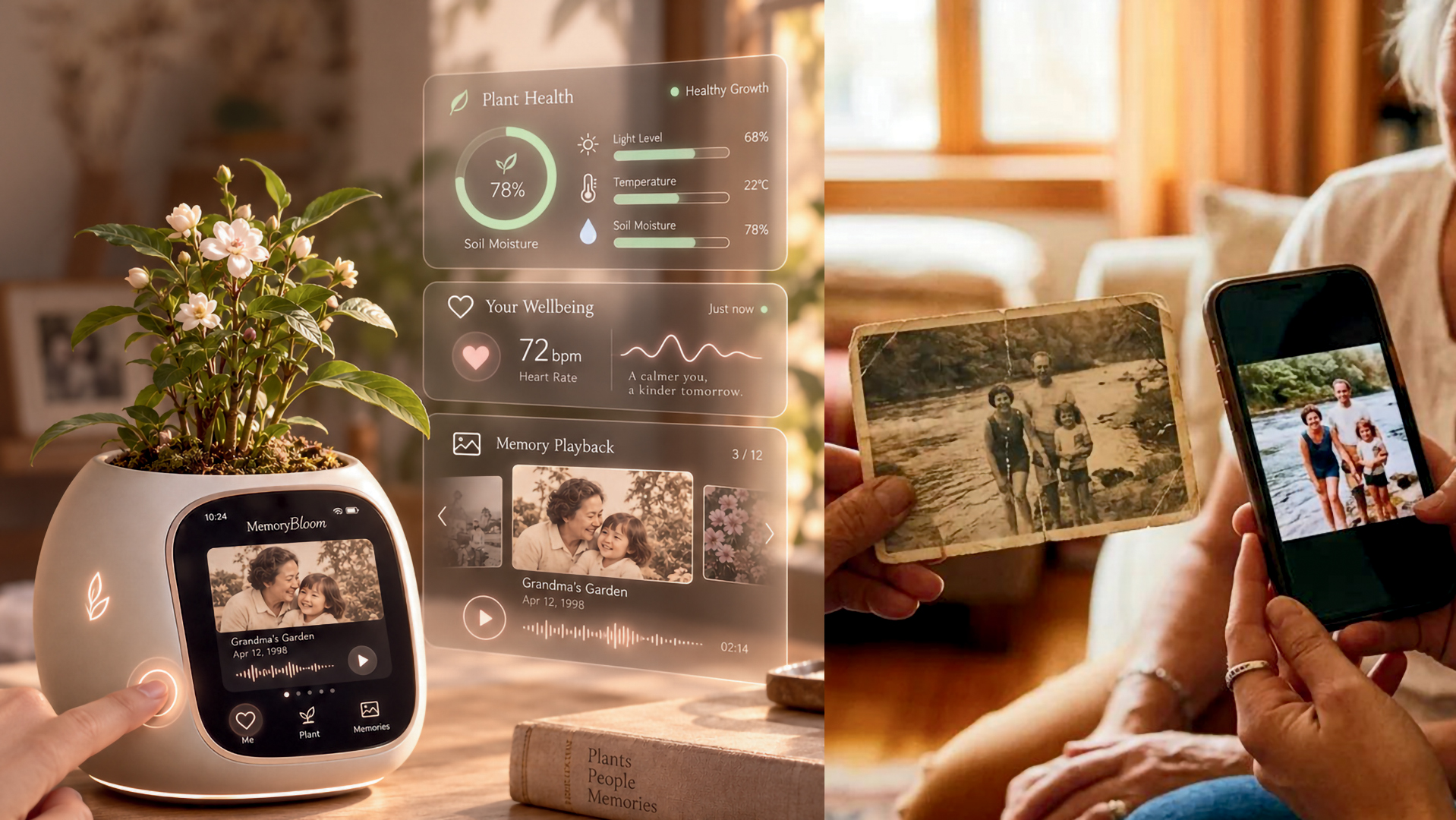
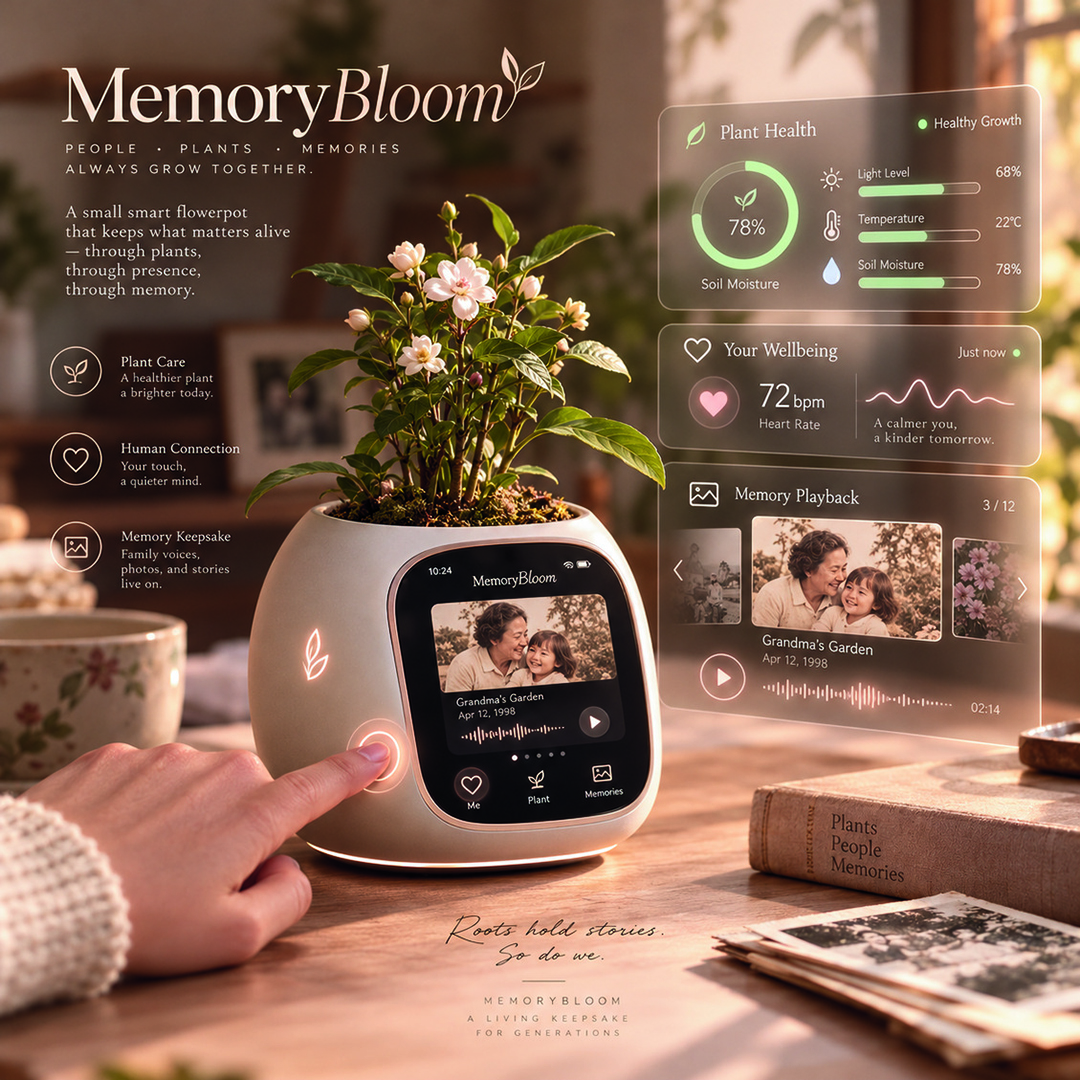
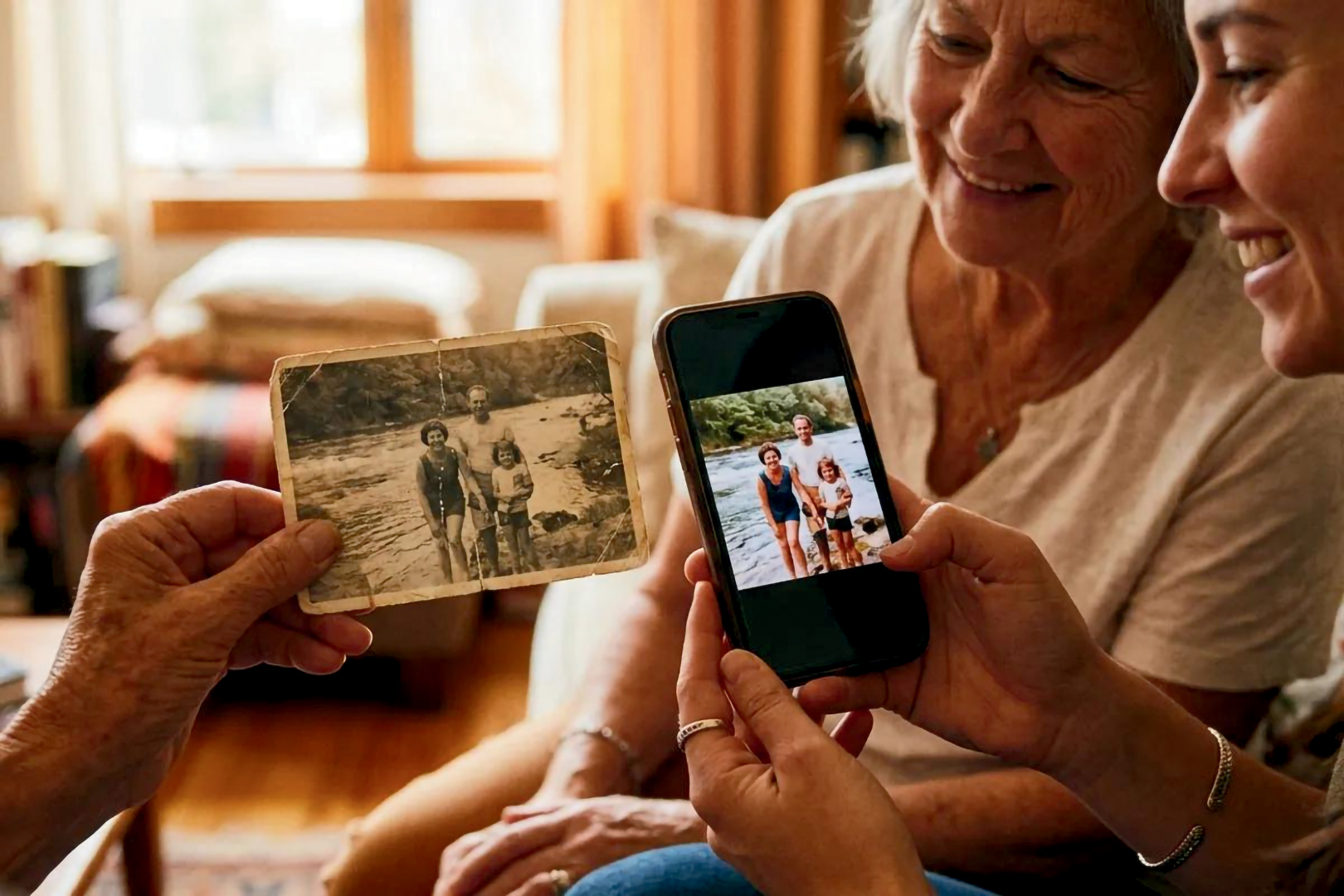
Building on the earlier Smartflower Pods concept, Memory Twin envisions a personalised digital representation of older adults’ memories, preferences, life experiences, and social relationships. The Smartflower Pod acts as an embodied AI agent and accessible everyday touchpoint, supporting interactions through which older adults could revisit, organise, and selectively share meaningful memories. GenAI could assist in transforming photographs, objects, and personal narratives into accessible stories, while the Digital Twin could personalise these interactions according to individual preferences and relationships. Younger generations could engage with experiences they have not personally witnessed, contribute their interpretations, and initiate conversations or shared activities. In dialogue with the theme of postmemory, the concept explores how technology-mediated storytelling might support the transmission and reinterpretation of memories across generations.
The research proposes a participatory Research through Design approach informed by Participatory Design, Service Design, and Value Sensitive Design. Its methodology comprises five interconnected phases: discovering relevant literature, technologies, and user needs; defining and developing requirements through co-design with older adults and stakeholders; formulating service concepts and prototypes; testing and evaluating usability, acceptability, and potential for social connection; and analysing feedback to optimise the service design. Ethical considerations, including informed consent, privacy, autonomy, memory authenticity, and individual control over personal information, are integrated throughout the proposed process.
As a work-in-progress design concept, Memory Twin has not yet been empirically evaluated. Its anticipated contribution is a human-centred smart service framework that positions AI as a mediator of intergenerational relationships rather than a replacement for human companionship. By transforming personal memories into opportunities for storytelling, dialogue, and shared experiences, the project aims to investigate how embodied AI services might support meaningful social connection and potentially contribute to addressing loneliness in later life.
Share :
Facebook
Twitter
LinkedIn
WhatsApp
Email
Print