Silenced, Not Forgotten: Chén Yuān Wèi Xuě
Lia Herna / Indonesia
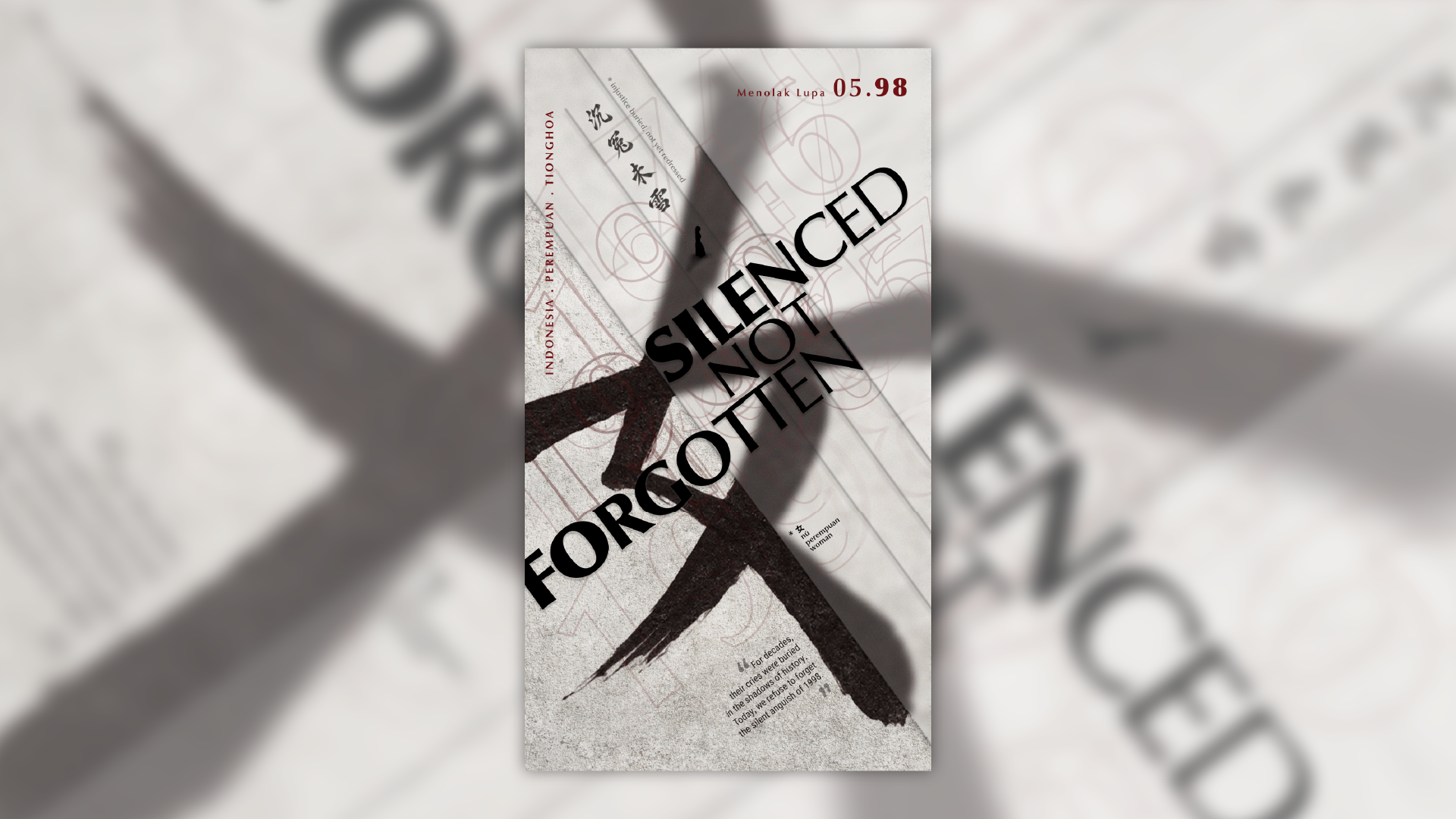
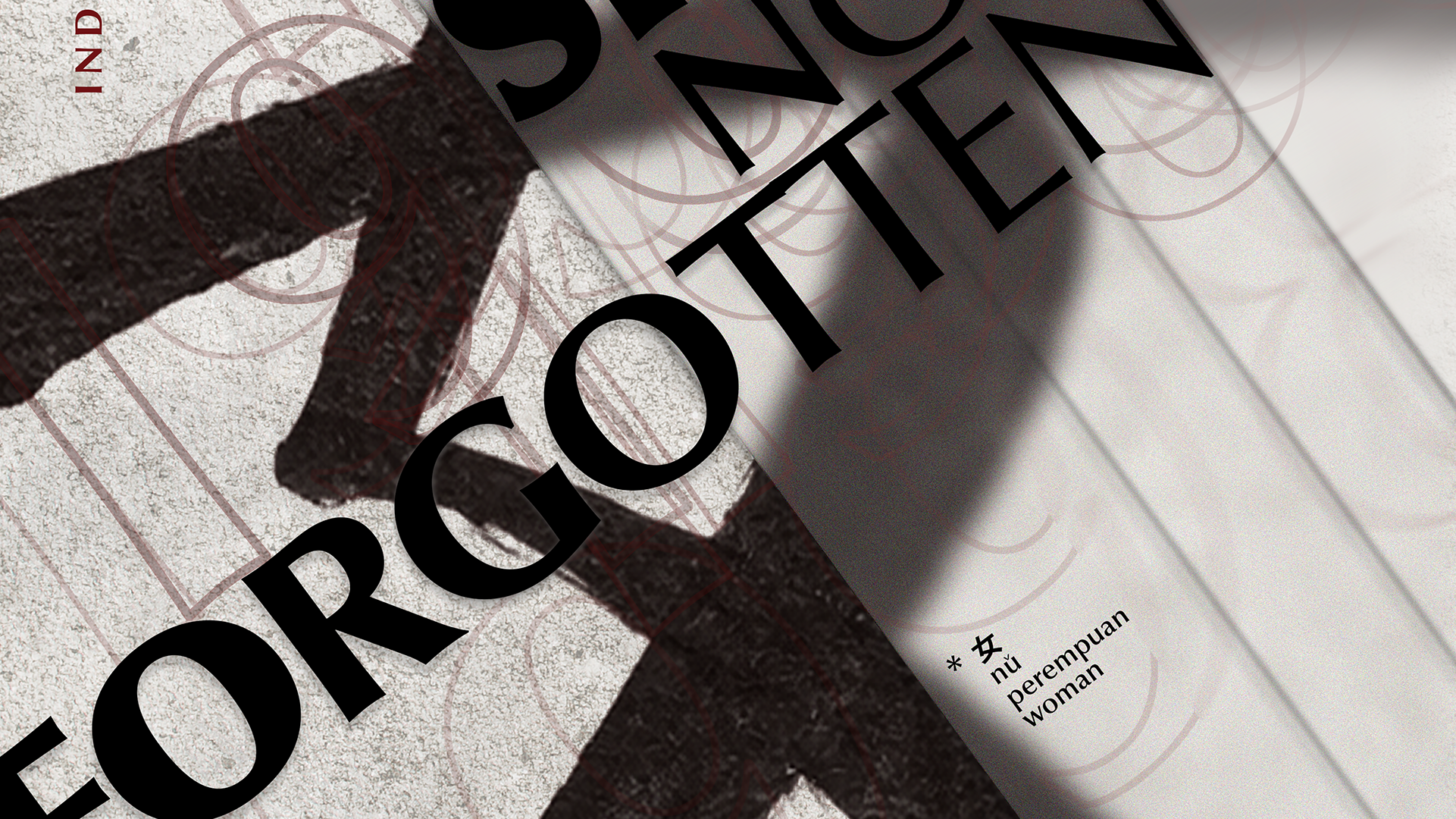
This contemporary visual art poster serves as an in-depth exploration that examines the collective memory and intergenerational trauma of Chinese-Indonesian women, a recurring cycle, with one prominent instance being the aftermath of the May 1998 Tragedy. Framed through the curatorial lens of postmemory, this work does not merely record past events, but rather narrates how cultural trauma, though not physically experienced firsthand by the current generation, is inherited emotionally and psychologically. The transmission of this trauma and memory is manifested through an experimental typography approach. Text no longer merely functions as a rigid element of textual information, but is instead transformed into an emotional and narrative visual element. The massive diagonal English text “SILENCED NOT FORGOTTEN” is positioned to sharply cut across the image plane to voice the institutional repression and silencing that have oppressed the victims for decades.
The typographic experimentation within this poster also shatters the boundaries of conventional lettering by presenting a layered interaction between the diagonal English text, the vertical Indonesian script, and a visual deconstruction of the Chinese Hanzi character Nǚ (女 / Woman), which materializes as a giant black ink brushstroke at the center of the composition. Within the colossal shadow of the Nǚ character, the poster features a small female figure as a symbol of a survivor bearing immense trauma, positioned amid fields of light that remain withheld. This intermeshing, rough-textured, and fractured structure of the letterforms functions as a visual metaphor for historical wounds and systematic silencing that oppress the solitary female figure at its center. The vertical text “INDONESIA . PEREMPUAN . TIONGHOA” provides clear sociological and geographical boundaries regarding the identity of the victims within national history. Furthermore, the integration of the classical Mandarin phrase “Chén yuān wèi xuě” (沉冤未雪) expands the narrative by giving voice to the state’s unfulfilled historical debt regarding the rights of the victims. Through a high-contrast monochromatic composition punctuated by a blood-red accent, this poster operates as an active visual archive to resist historical amnesia while bridging past memories into the critical consciousness of today’s generation.
Share :
Facebook
Twitter
LinkedIn
WhatsApp
Email
Print