Flusso
Anastasiia Petkova / Russian

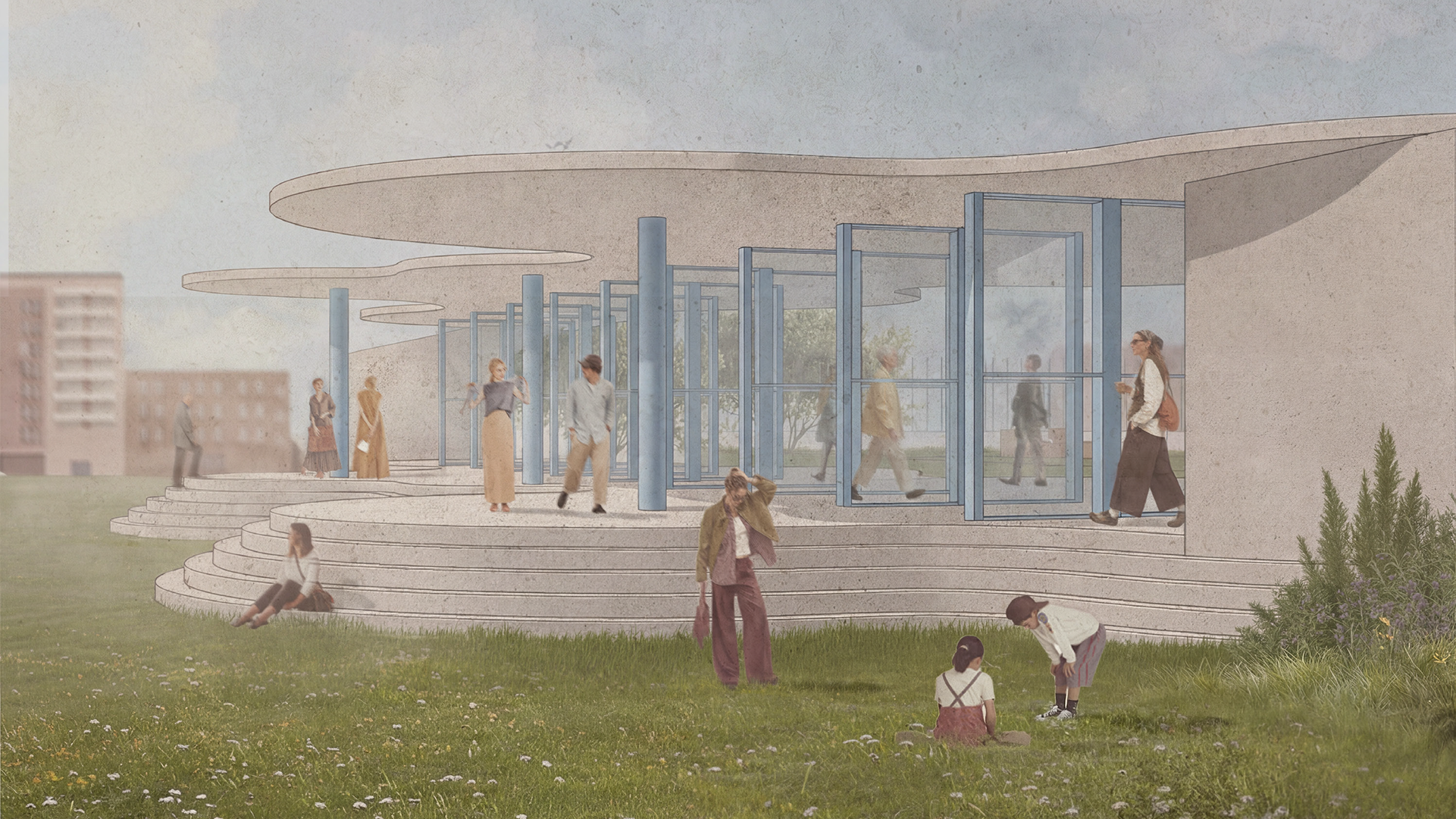
Flusso explores the possibility of bringing the sea back into the city. Through water, landscape, and architecture, Piscina Argelati is transformed from a seasonal swimming facility into a living environment that evolves throughout the year.
Located in Milan, Piscina Argelati was originally conceived as a public swimming facility and recreational space. The project reinterprets its existing circular architecture as a framework for a new urban landscape, where water becomes not only a space for sport but also a medium for social interaction, movement, and collective life. Following the organic movements of water and the circular language of the existing architecture, Flusso introduces floating platforms, new landscapes, and shared spaces that encourage gathering, relaxation, and exchange.
The floating platforms create a flexible environment that can accommodate different activities and changing patterns of use. Their forms and positions generate spaces for sitting, resting, meeting, and informal events, while maintaining a continuous relationship with the water. Around them, new planted areas extend the landscape and strengthen the connection between the existing architecture and its surroundings.
Flusso creates a place where sport, leisure, work, and community are no longer separated, but connected through a continuous spatial flow. The pool becomes more than a seasonal destination: it becomes an adaptable public environment capable of supporting different rhythms of life throughout the year.
The project also explores the relationship between memory and transformation. Rather than replacing the existing character of Piscina Argelati, Flusso works with its architectural language and infrastructure, allowing traces of its past to remain present within a new collective landscape. Water becomes a link between what the place was, what it is, and what it could become.
Ultimately, Flusso proposes the swimming pool as a contemporary urban commons: a place where architecture, landscape, and water overlap to create opportunities for encounter, recreation, and community. By transforming an existing recreational facility into a year-round living environment, the project investigates how water can reconnect the city with a sense of openness, movement, and collective experience traditionally associated with the sea.
Share :
Facebook
Twitter
LinkedIn
WhatsApp
Email
Print