Eeva
Lucija Mrzljak / Croatia

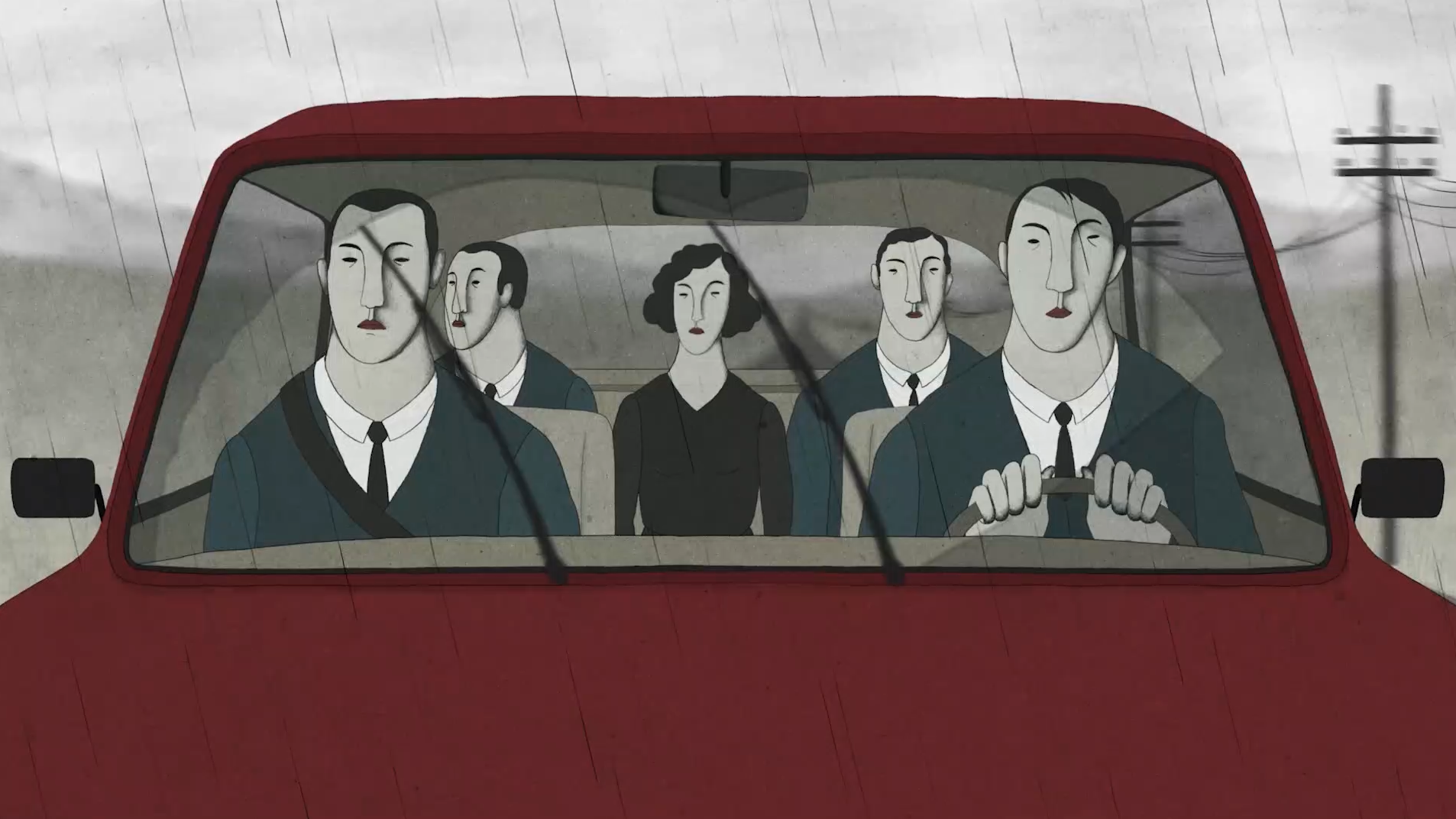
Eeva (2022) is an animated short film that explores grief, loss, and the complexity of human emotions through a surreal and visually expressive narrative. Set around the funeral of Eeva’s husband, the film follows its protagonist as she encounters a series of strange and unsettling situations while struggling to process her bereavement. With a runtime of approximately 16 minutes and no spoken dialogue, Eeva communicates primarily through animation, sound, movement, and visual symbolism. Rather than presenting mourning as a linear or predictable emotional experience, the film transforms grief into a surreal journey in which reality and imagination become intertwined. Eeva’s reactions to her husband’s death are expressed through unusual behaviour, dark humour, distorted imagery, and unexpected encounters. Elements such as rain, animals, fire, food, and the surrounding environment contribute to an atmosphere that shifts between the familiar and the absurd, reflecting the protagonist’s unstable emotional state. The film’s artistic significance lies particularly in its use of animation as a language for expressing internal experiences. Mrzljak combines expressive character animation, unconventional movement, visual distortion, and symbolic imagery to communicate emotions that cannot easily be expressed through words. The absence of dialogue encourages the audience to interpret the narrative through visual and auditory cues, demonstrating how animation can communicate psychological states in ways that differ from conventional live-action storytelling. Through its distinctive visual approach, Eeva examines grief, loneliness, memory, guilt, and the difficulty of accepting irreversible loss. The film demonstrates how animated cinema can move beyond entertainment and function as a powerful medium for exploring complex emotional and psychological experiences. In this context, Eeva offers an insightful example of contemporary animation that uses surrealism and visual storytelling to transform a deeply personal experience of mourning into an imaginative and universally recognizable reflection on loss.
Share :
Facebook
Twitter
LinkedIn
WhatsApp
Email
Print