Remnants in Flux: Postmemory through Waste Glass and Ceramic
College of Design, Rangsit University, Thailand
Asst. Prof. Siripen Thananantakit
Abstract :
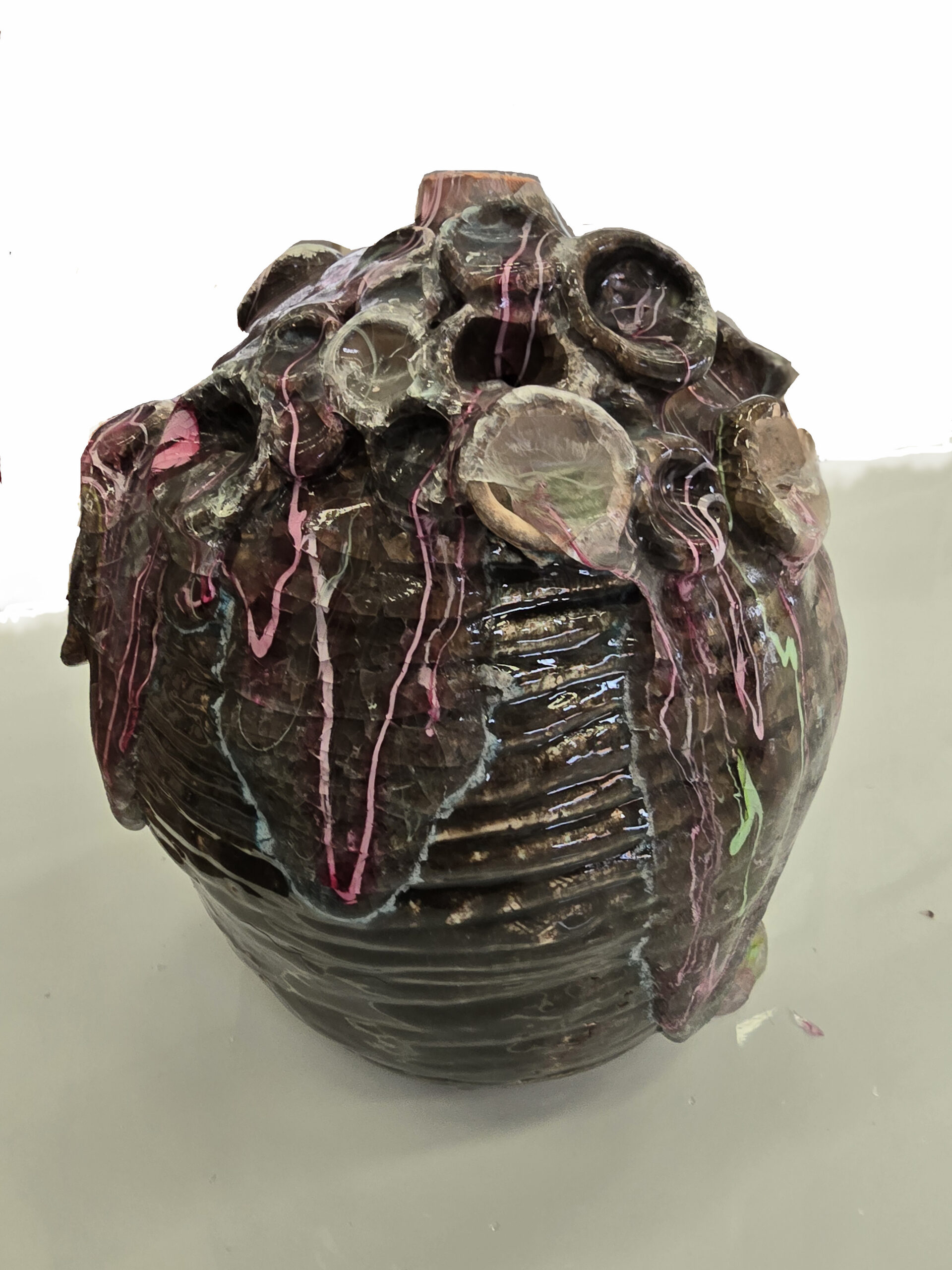
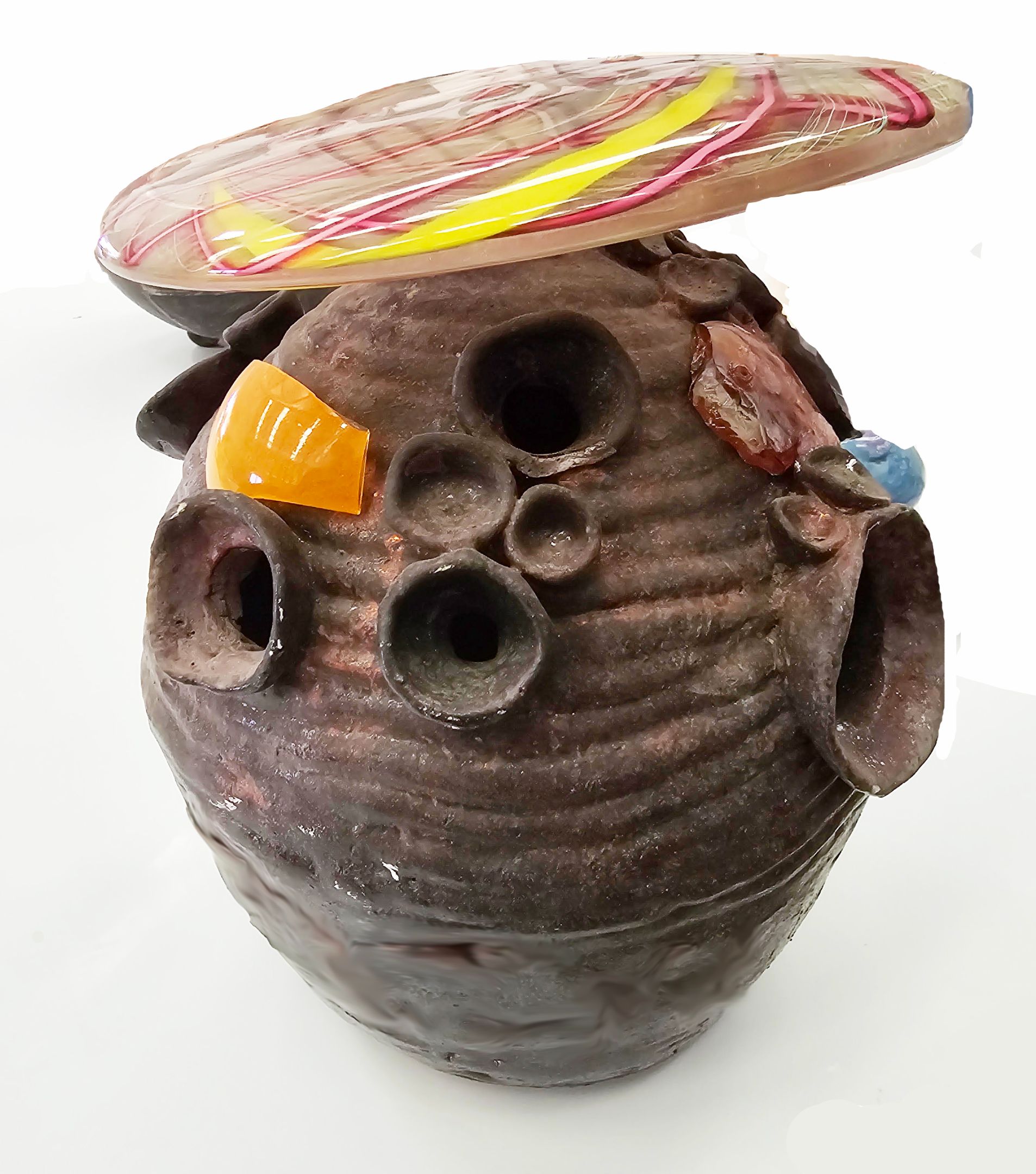
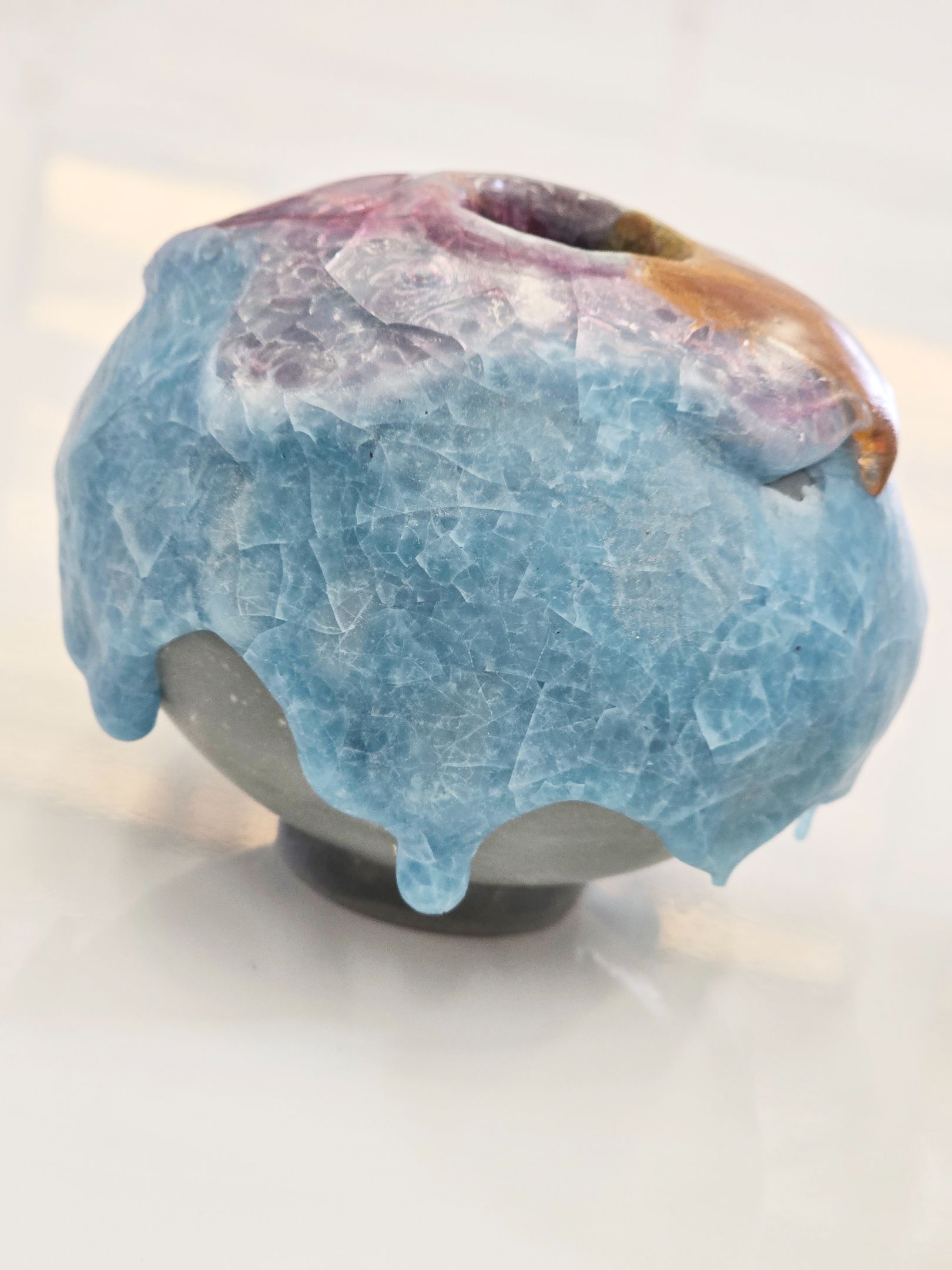
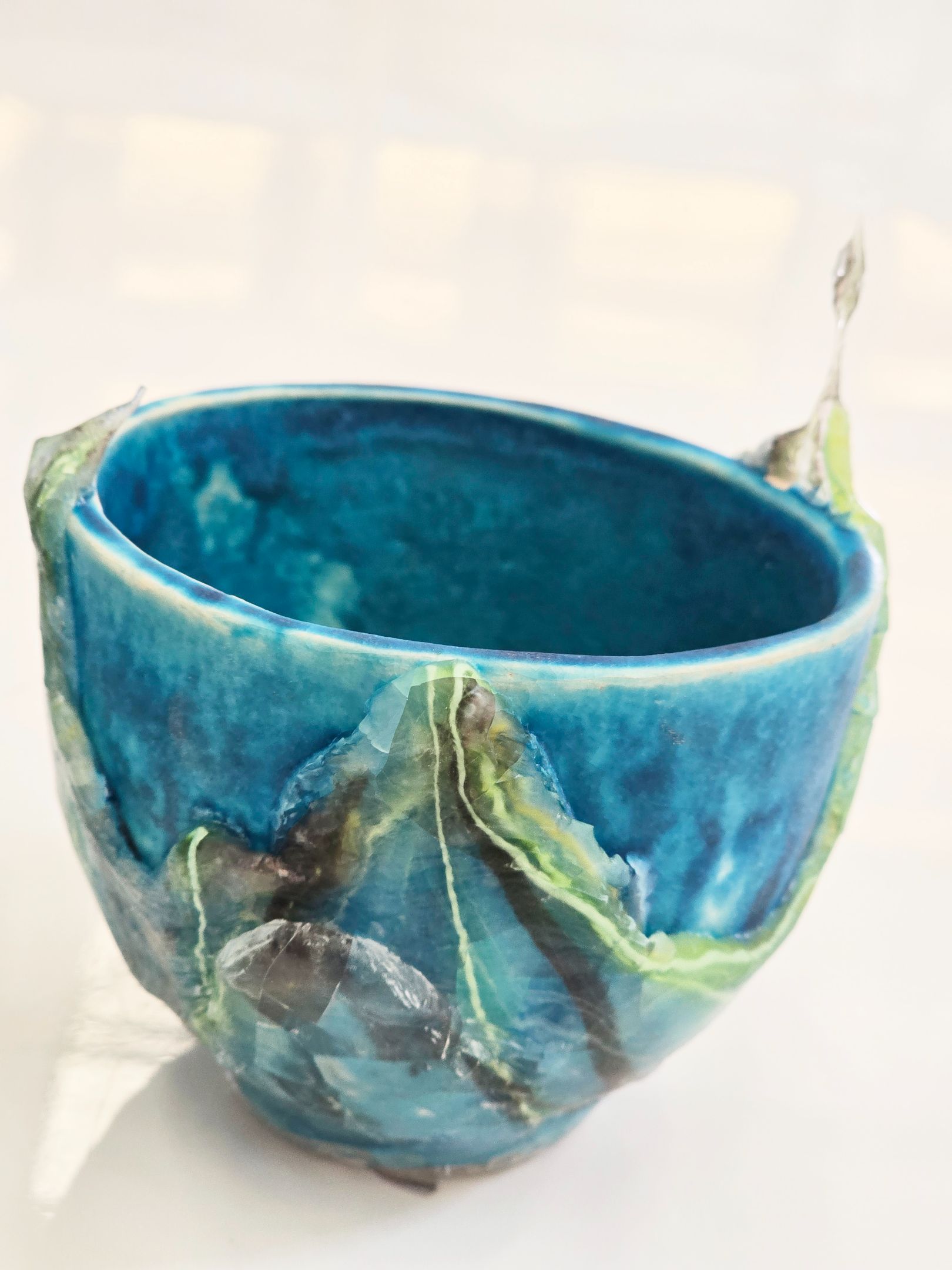
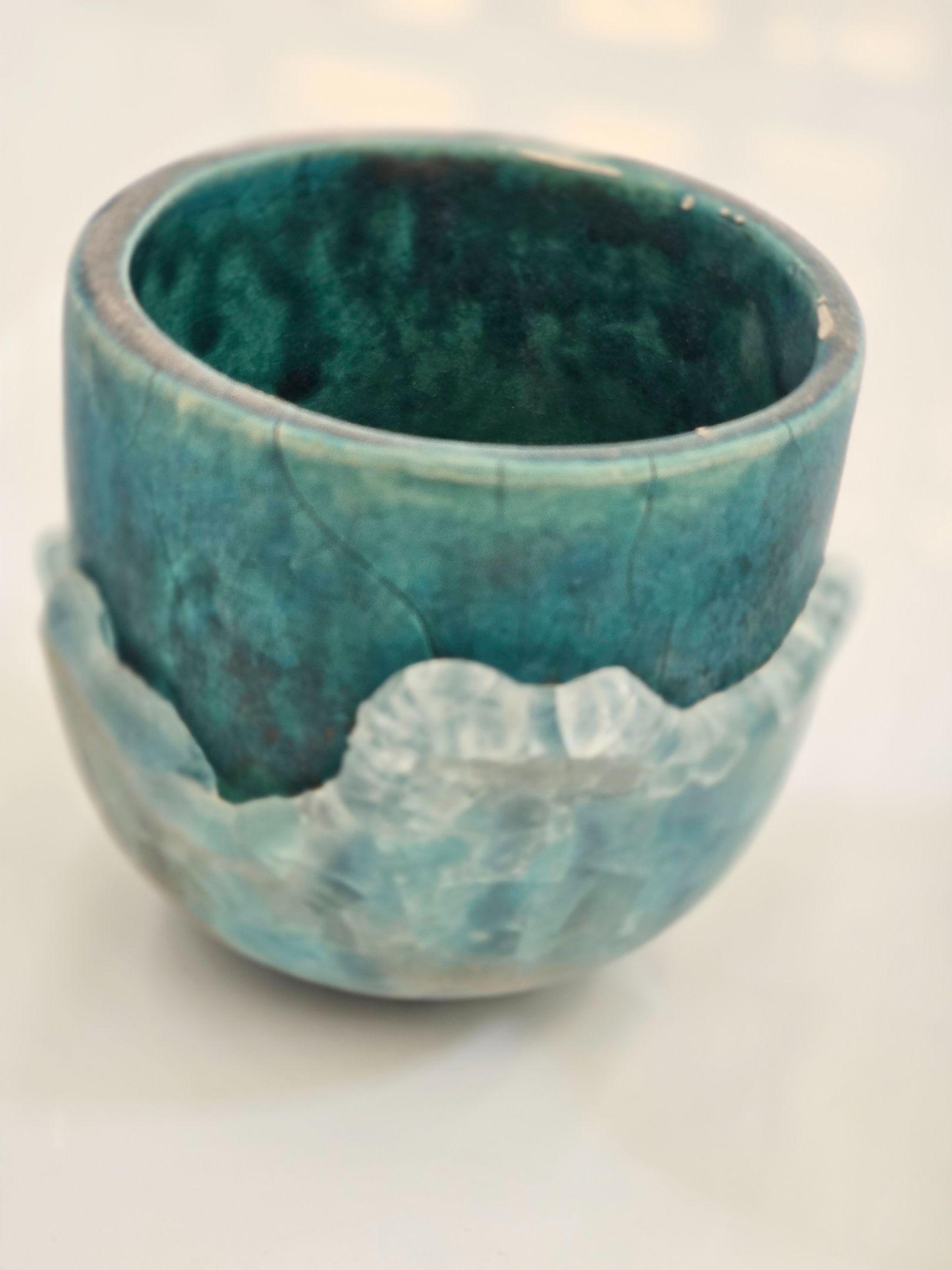
The creative work “Remnants in Flux: Postmemory through Waste Glass and Ceramic” explores the experimental reuse of colored glass waste generated from glassmaking processes as a material combined with ceramics. The study investigates the behavior of glass when exposed to heat and the transformation of its flow patterns across ceramic surfaces. Colored glass waste in various forms and sizes was fired at temperatures ranging from approximately 780–850°C to examine its softening, flowing, adhesion, melting, and dispersion at different temperatures. Particular attention was given to the stages at which the glass melted, formed droplets, flowed, stretched, and settled on the ceramic surface.
The experiments revealed that different characteristics of glass waste produced distinct patterns of flow and transformation depending on the quantity, shape, placement, and firing temperature. These variables resulted in unique traces of flowing, dripping, adhesion, and color dispersion in each piece. The process allowed the behavior of the materials to actively participate in determining the visual characteristics and forms of the resulting works.
The conceptual framework of the work connects material remnants, traces of previous works, transformation, and the creation of new meanings. Rather than being regarded merely as discarded material, waste glass is understood as a material that retains both potential and traces of its previous existence. Through the processes of melting and integration with ceramic, these traces are transformed, generating new meanings within the context of the creative work. This approach reflects the concept of Synthesis through the integration of glass, ceramic, and heat, while also connecting with the concept of Postmemory, in which traces from materials and previous works are reinterpreted to create new experiences and meanings.
Objectives :
- To investigate the properties and transformation behaviors of colored glass waste when exposed to heat at temperatures ranging from 780–850°C
- To experiment with integrating colored glass waste into Raku ceramic works through the processes of glass melting and flowing.
- To examine the relationship between glass, heat, and ceramic surfaces, and to apply the resulting effects as part of the creative process.
- To develop approaches for reusing discarded glass materials from the creative process by adding value and creating new meanings.
- To create artworks that reflect the concept of “Synthesis: Postmemory” by transforming traces of existing materials through a process of change and reinterpreting them into new creative works.
Conceptual Framework :
The concept of this work is based on the transformation of existing traces into new meanings. The colored glass waste used in this project is not new material, but remnants from previous creative processes. Each fragment contains its own shape, color, and surface characteristics resulting from its earlier formation. When these remnants are reintroduced to heat, the glass softens and flows across the ceramic surface, transforming the original traces and generating new ones.
The glass therefore functions as a form of “memory that remains,” while the processes of melting and flowing act as mechanisms of transformation and transition. The interaction between glass and ceramic is not intended to achieve a predetermined or perfect form. Instead, it allows the material, heat, and process to participate in determining the final outcome of each work. As a result, each piece develops distinct traces, patterns, and material characteristics that cannot be completely replicated.
The work also explores the relationship between material transformation and memory. The original identity of the glass fragments is not completely erased through the process of melting. Rather, traces of their previous existence remain embedded within the new work, while their forms and meanings are continuously altered through heat and interaction with the ceramic surface. This transformation creates a dialogue between what the material was and what it becomes.
Within the context of “Work in Progress: Synthesis: Postmemory,” the work presents a synthesis between two material forms—glass and ceramic—as well as between past and present. Fragments from previous works are brought back into a new creative process, allowing their existing traces to interact with new materials and conditions. The resulting works therefore represent an ongoing process of transformation in which remnants of the past are not discarded, but reinterpreted and given new meaning through contemporary creative practice.
Ultimately, the work emphasizes that materials can carry traces of their previous experiences while remaining open to transformation. Through the interaction of glass, ceramic, heat, and process, these remnants become part of a continuing cycle of creation, change, and reinterpretation.
Process / Methodology :
Creative Process
Step 1: Material Collection: Colored glass waste and glass fragments remaining from previous glassmaking processes were collected and selected based on their characteristics, including color, shape, and size. The colored glass waste was sourced from **BGC Art Glass Studio**, along with glass products obtained from Japanese second-hand markets.
Step 2: Ceramic Preparation: Ceramic vessels were created through hand-building and surface decoration techniques. The forms and surfaces were developed to provide suitable conditions for experimenting with the placement and behavior of glass at different temperatures.
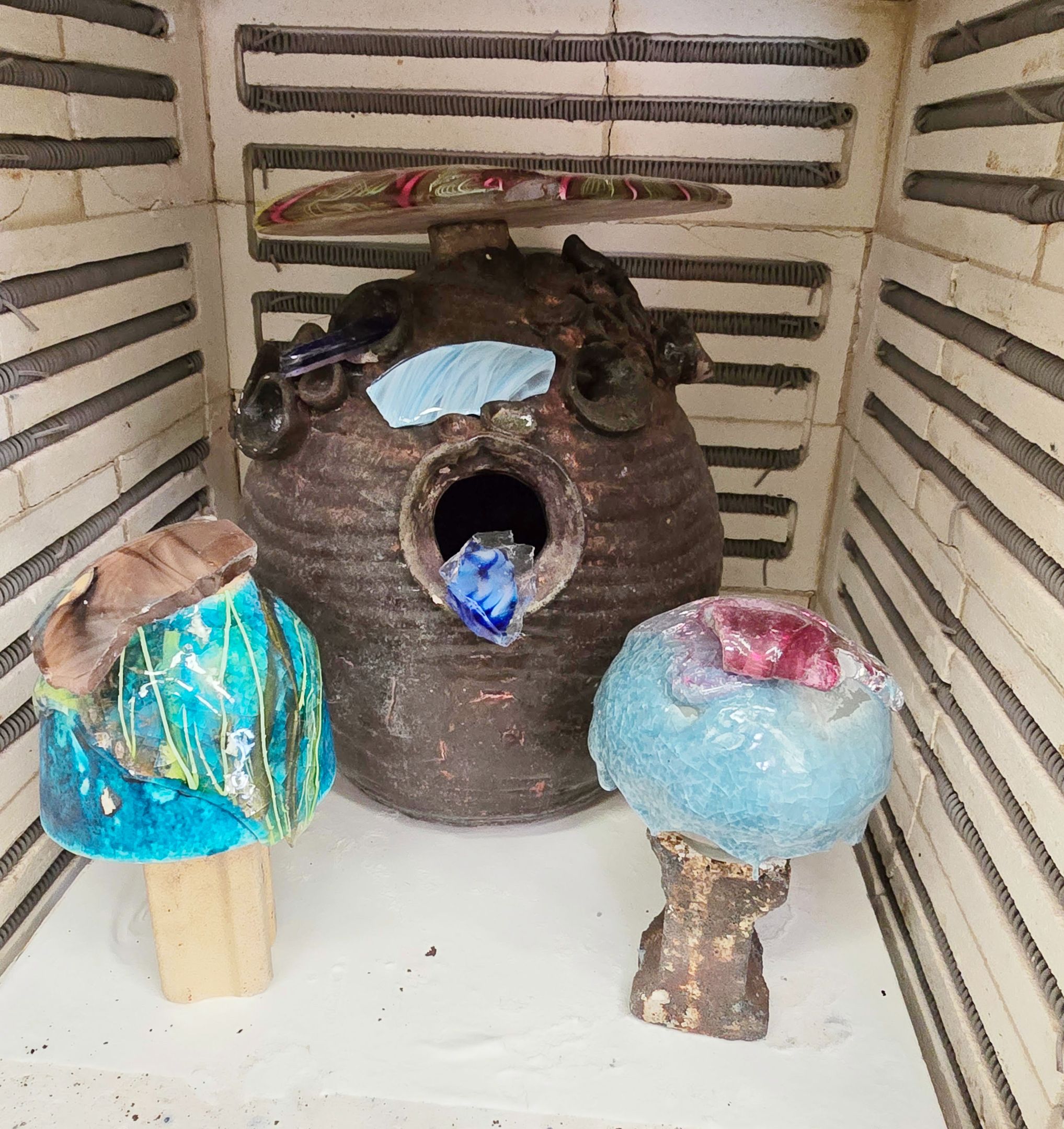
Step 3: Glass Placement: Colored glass fragments were arranged on the ceramic surfaces in different positions and quantities to explore variations in glass flow. Different orientations were tested, including placing the glass upside down, on the upper surface, and underneath the ceramic form.
Step 4: Temperature Experimentation: The works were subjected to heat treatment at temperatures ranging from **780–850°C** to investigate the softening, melting, and flowing behavior of the glass under different thermal conditions.
Step 5: Observation and Documentation: The resulting works were observed and documented by examining the patterns of glass flow, dripping, adhesion, spreading, and changes in color and surface characteristics after firing.
Techniques and Materials :
Glass Fusing / Ceramic Raku
Result / Conclusion :
The creative project “Remnants in Flux: Postmemory through Waste Glass and Ceramic” explores the reuse of colored glass waste from previous creative processes by combining it with ceramic through heat, melting, and flowing techniques. The study investigates the behavior of glass at temperatures ranging from 780–850°C, focusing on its softening, melting, flowing, adhesion, and interaction with ceramic surfaces.
The experimental process revealed that the behavior and appearance of the glass varied according to its quantity, shape, placement, and firing temperature. The resulting flow created unique lines, traces, droplets, textures, and color patterns across the ceramic surface. These unpredictable material behaviors became an important part of the artistic language, allowing each work to develop its own characteristics and making complete replication impossible.
Conceptually, the project is based on the transformation of existing traces into new meanings. The waste glass is understood not simply as discarded material, but as a material that retains traces of previous creative experiences. Through heat and interaction with ceramic, these traces are transformed while remaining partially embedded within the new work. The process therefore represents a dialogue between past and present, memory and transformation, and control and material behavior.
The project reflects the concept of “Synthesis: Postmemory” through the integration of glass, ceramic, and heat, as well as the reintroduction of remnants from previous works into a new creative context. It demonstrates how material remnants can be reinterpreted and given new artistic meaning through transformation.
In terms of social outcomes, the project presents an approach to reusing waste materials from artistic and design processes, promoting resource efficiency and reducing material waste. The experimental process may also contribute to learning in material studies, creative practice, and sustainable design. Furthermore, the combination of glass and ceramics demonstrates the potential for interdisciplinary collaboration and knowledge exchange among artists, designers, and students.
References :
Bullseye Glass Co. (2021, March 15). About kiln-glass: Fusing basics. Bullseye Glass. bullseyeglass.com
Matthews, K. (2018). Warm glass: A complete guide to kiln-forming techniques: Fusing, slumping, casting. Lark Books.
Wilmad-LabGlass. (2019). Borosilicate glass properties. SP Wilmad-LabGlass. https://sp-wilmadlabglass.com/wp-content/uploads/2019/12/borosilicate_glass_props.pdf
บริษัท ไมครอนแวร์ จำกัด. (2567, 24 ธันวาคม). ความต่างของ แก้วโบโรซิลิเกต และแก้วโซดาไลม์. Micronware. https://www.micronware.co.th/บล็อกน่ารู้/ความต่างของ-แก้วโบโรซิลิเกต.
เบญจมาศ ชะโคตร, ศรชัย มุ่งไธสง, และ ศิริรัตน์ พลศิริ. (2562). การพัฒนาผลิตภัณฑ์ของที่ระลึกจากเศษแก้วเหลือทิ้งด้วยเทคนิคการหลอมแก้วฟิวซิ่ง. วารสารศิลปศาสตร์และวิทยาการ มหาวิทยาลัยราชภัฏอุดรธานี, 7(2), 45-58.
ยศกิต เรืองทวีป, และ จักรพงษ์ แก้วขาว. (2559). การศึกษาสมบัติทางแสงของแก้วบอโรซิลิเกตที่เติม Nd2O3. วารสารวิจัยมหาวิทยาลัยราชภัฏนครปฐม, 8(1), 15-22. npru.ac.th
สมศักดิ์ ชินชนะชัย. (2565). ศิลปะการหลอมและสร้างสรรค์งานแก้วเบื้องต้น. สำนักพิมพ์มหาวิทยาลัยศิลปะ.
Share :
Facebook
Twitter
LinkedIn
WhatsApp
Email
Print