Traces of Becoming
College of Design, Rangsit University, Thailand
Dr. Chamaiporn Mitinunwong
Abstract :
This research proposes an apparel design framework for Conscious Creators and Craftivists aged 23–28 in Bangkok by applying the philosophical concept of Wabi-Sabi, which emphasizes the intrinsic aesthetic values of impermanence and imperfection. Central to this study is the design narrative “Traces of Becoming,” which reflects the human journey wherein individual experiences—both triumphs and trials—shape mindset, emotional maturity, and mutual empathy. This perspective posits that true human growth stems not merely from achieving pursued goals, but from navigating and embracing the rugged pathways of life. Integrating this philosophical foundation with Wabi-Sabi, the study focuses on two primary objectives: 1) developing multi-functional garments adaptable to diverse wearing occasions to align with modern dynamic lifestyles, and 2) innovating craft techniques to establish a distinctive aesthetic identity that resonates with the ethical and self-expressive values of the target group.
Employing a mixed-methods research design, the study was conducted across five sequential phases: Phase 1 involved a theoretical literature review on consumer behavior among Conscious Creators and Craftivists, Wabi-Sabi philosophy, and relevant industry influencers. Phase 2 encompassed field data collection, consisting of a quantitative survey administered to 50 target respondents and qualitative in-depth interviews with three fashion design experts to examine lifestyles, functional needs, and aesthetic preferences. Phase 3 focused on data synthesis and analysis. Phase 4 comprised technical experimentation and prototype development, followed by Phase 5, which addressed the research conclusion and discussion. The anticipated outcome of this study is a collection of prototype garments that not only fulfills the functional and identity-driven needs of Craftivists, but also provides a tangible model for elevating sustainable fashion value through the synthesis of spiritual Wabi-Sabi principles and contemporary craft innovations.
Objectives :
- To establish a garment design framework for Conscious Creators and Craftivists based on the principles of Wabi-Sabi philosophy.
- To develop craft techniques and multi-functional garments adaptable to diverse occasions that reflect the identity of Conscious Creators and Craftivists.
Conceptual Framework :
This study is structured upon a conceptual framework that systematically integrates theoretical factors and consumer context (Inputs) with a creative research and design process (Process) to generate concrete design outcomes (Outputs). The research begins with a comprehensive literature review that encompasses the application of Wabi-Sabi philosophy—which emphasizes the aesthetic values of impermanence and imperfection—and the investigation of the behaviors, lifestyles, and functional and aesthetic requirements of Conscious Creators and Craftivists aged 23–28 in Bangkok. This foundational phase is further augmented by in-depth qualitative insights from fashion design experts and case studies of apparel incorporating Wabi-Sabi concepts.
These inputs are subsequently channeled into a mixed-methods research design, incorporating quantitative data collection through target-consumer surveys and qualitative analysis from in-depth expert interviews. The synthesized findings establish the strategic parameters for creative execution, guiding technical experimentation with craft technique innovation and the development of patterns for multi-functional garments adaptable to diverse wearing occasions, ultimately culminating in prototype execution and evaluation.
Ultimately, the study yields two primary outcomes: 1) A sustainable apparel design framework that effectively integrates the aesthetic wisdom of Wabi-Sabi philosophy with contemporary craft applications, and 2) A prototype garment collection that authentically reflects the unique identity, accommodates the functional lifestyle, and conveys spiritual value to the target consumers.
Process / Methodology :
The research methodology and creative execution are structured into two primary components: the overall research phases and the specific technical design process.
Research Methodology (Phases of Study)
Phase 1: Literature Review & Data Collection. Comprehensive review, compilation, and analysis of relevant theoretical literature and secondary data.
Phase 2: Primary Data Collection. Quantitative survey administration with the target audience (Conscious Creators and Craftivists) alongside qualitative in-depth interviews with fashion design experts.
Phase 3: Data Synthesis & Analysis. Systematic integration and analysis of both quantitative and qualitative data to establish key design parameters.
Phase 4: Technical Experimentation & Prototyping. Execution of material testing, experimentation with craft techniques, and development of garment prototypes.
Phase 5: Conclusion & Research Discussion. Synthesis of findings, evaluation of research, and discussion of design outcomes.
Techniques and Materials :
Techniques and Creative Design Process
1. Design Sketching & Development:
Preparation and refinement of creative fashion design sketches for the prototype collection.
2. Material, Color, and Technical Experimentation:
1) Fabric Testing: Evaluation of various fabric properties to determine suitability for batik and resist-dyeing processes.
2) Starch-Resist Crackle Technique & Color Testing: Formulation and testing of collection-specific colorways alongside the execution of crackle patterns. The crackle effect was developed using an all-purpose flour starch-resist paste—a sustainable alternative to traditional wax batik that significantly reduces water consumption, energy use, and the burden of chemical cleaning.
3. Embroidery Pattern Design:
Conception of motif patterns and preliminary execution of 3D embroidery samples.
Garment Sample Execution & Assembly
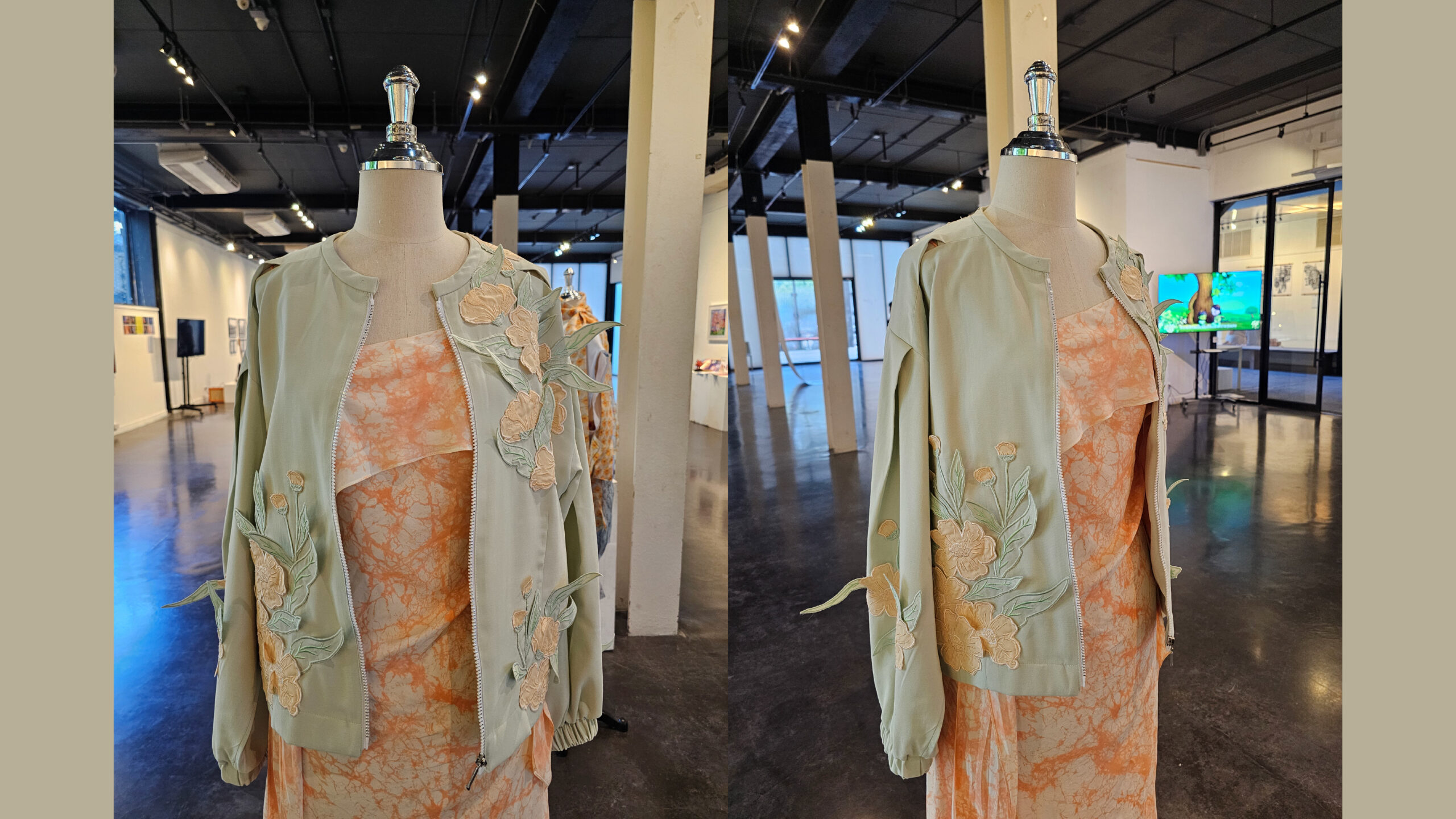
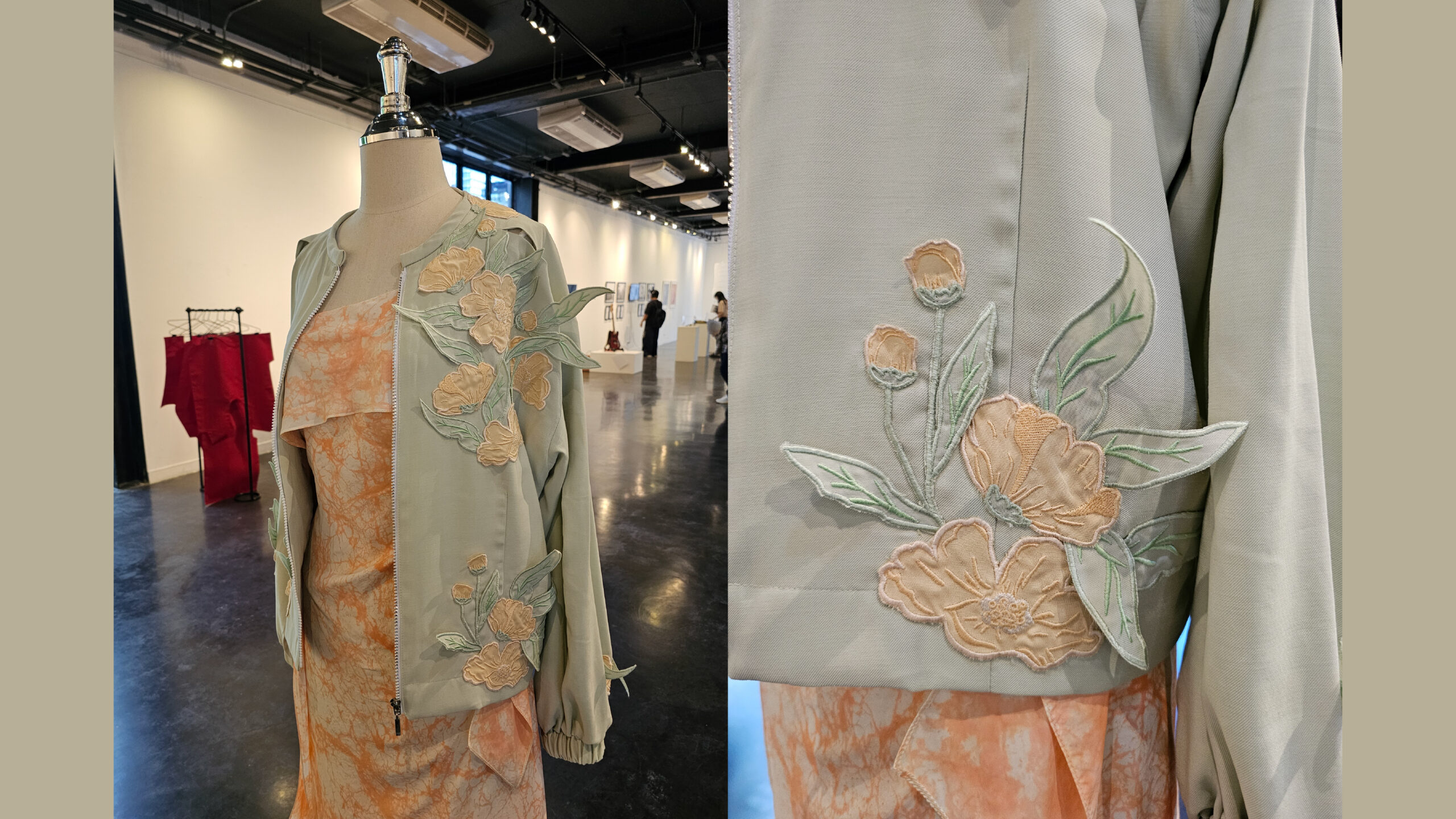
1. Execution of White Base Dress & Starch-Resist Crackle Process:
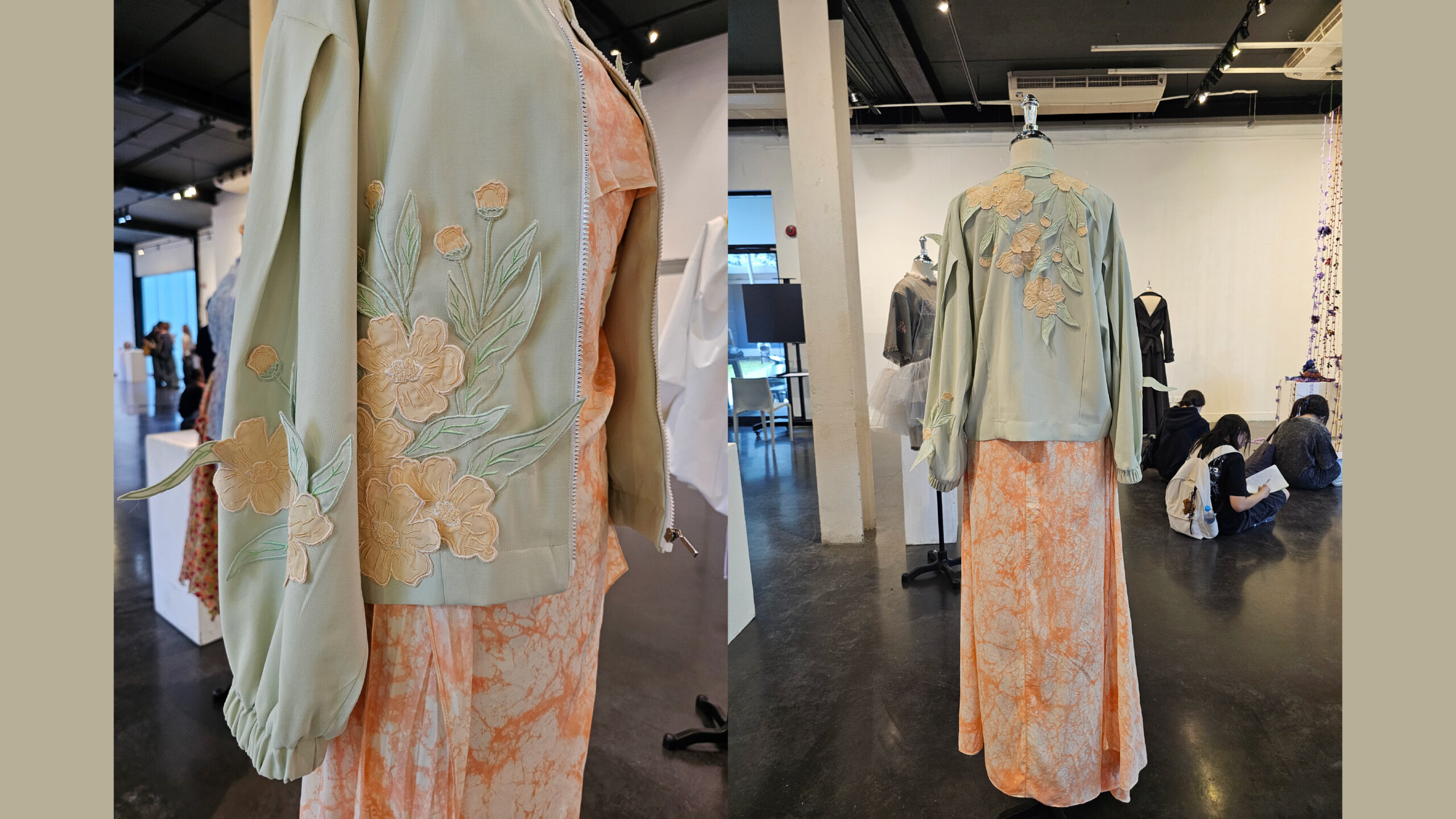
1) Application & Dyeing: Apply the all-purpose flour starch paste across the garment structure to create surface cracks, then blow-dry and air-dry. Light orange dye was directly painted onto the crackle texture, followed by a second drying phase.
2) Color Fixation & Washing: Fix the dye with sodium silicate, evenly applied to coat both sides of the fabric. The garment was sealed away from air exposure for 12 hours. Subsequently, the silicate and starch were rinsed thoroughly with clean water, and the garment was air-dried in a well-ventilated area.
2. Execution of Light Green Jacket & Embroidery Decoration:
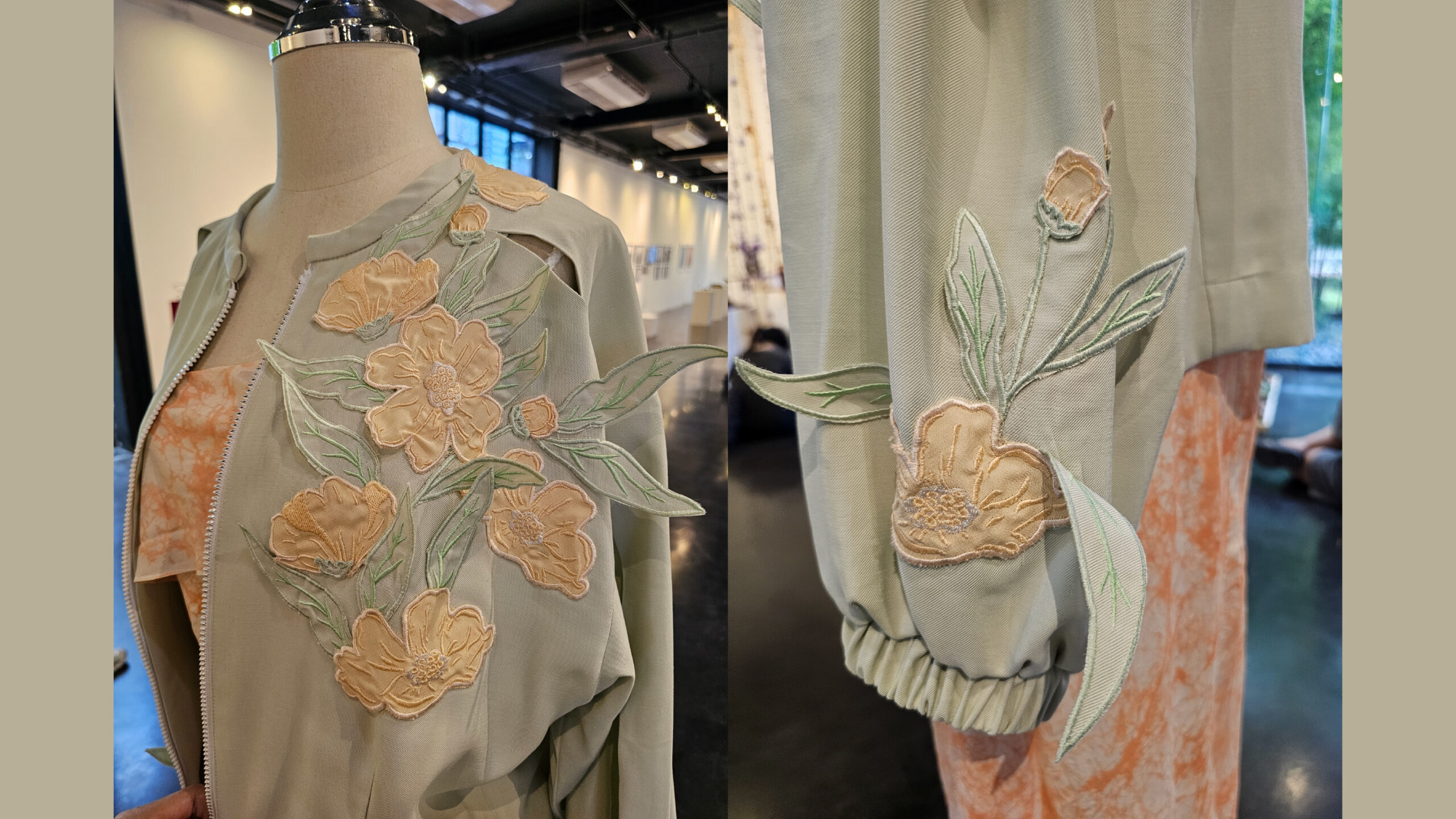
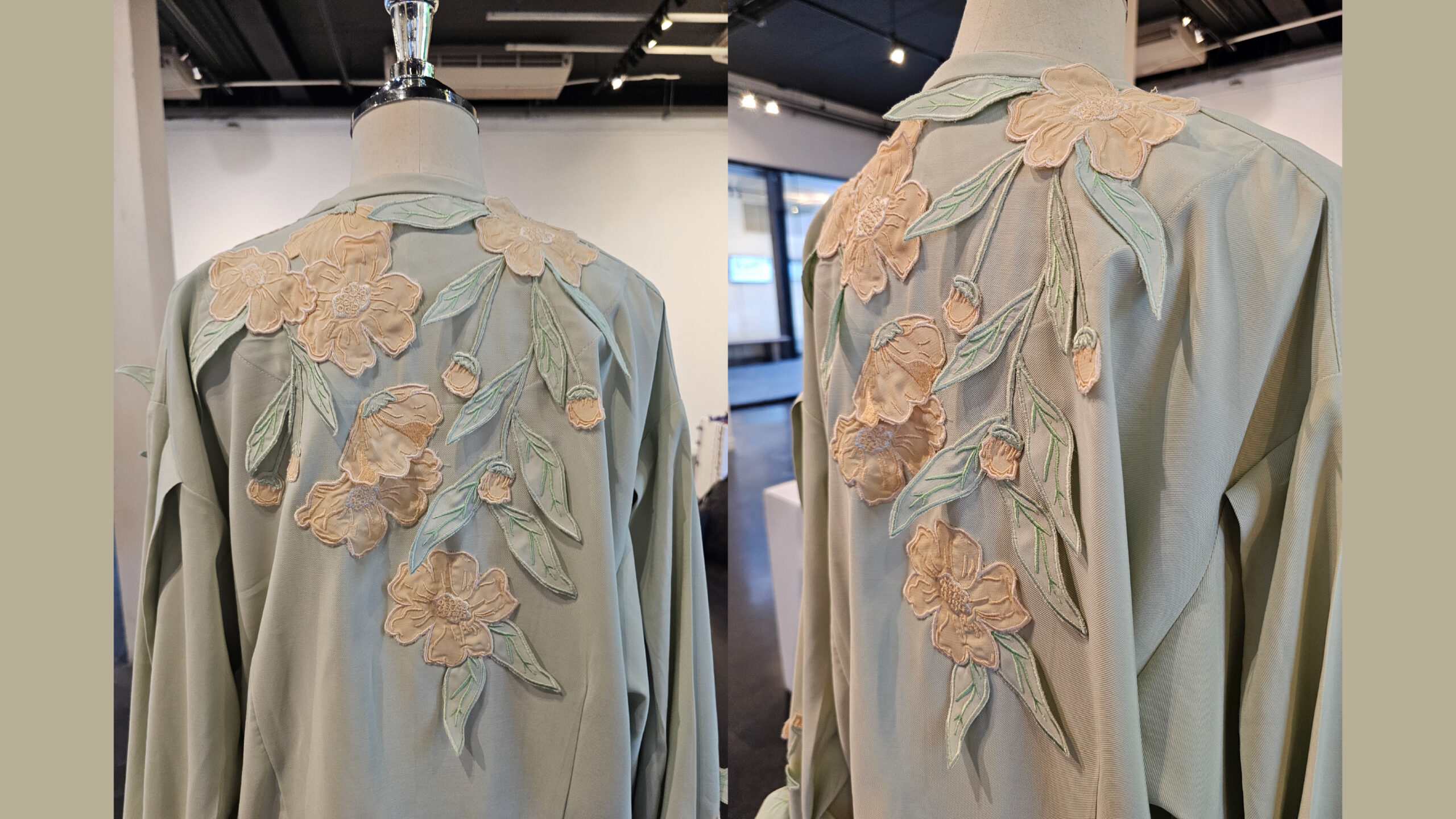
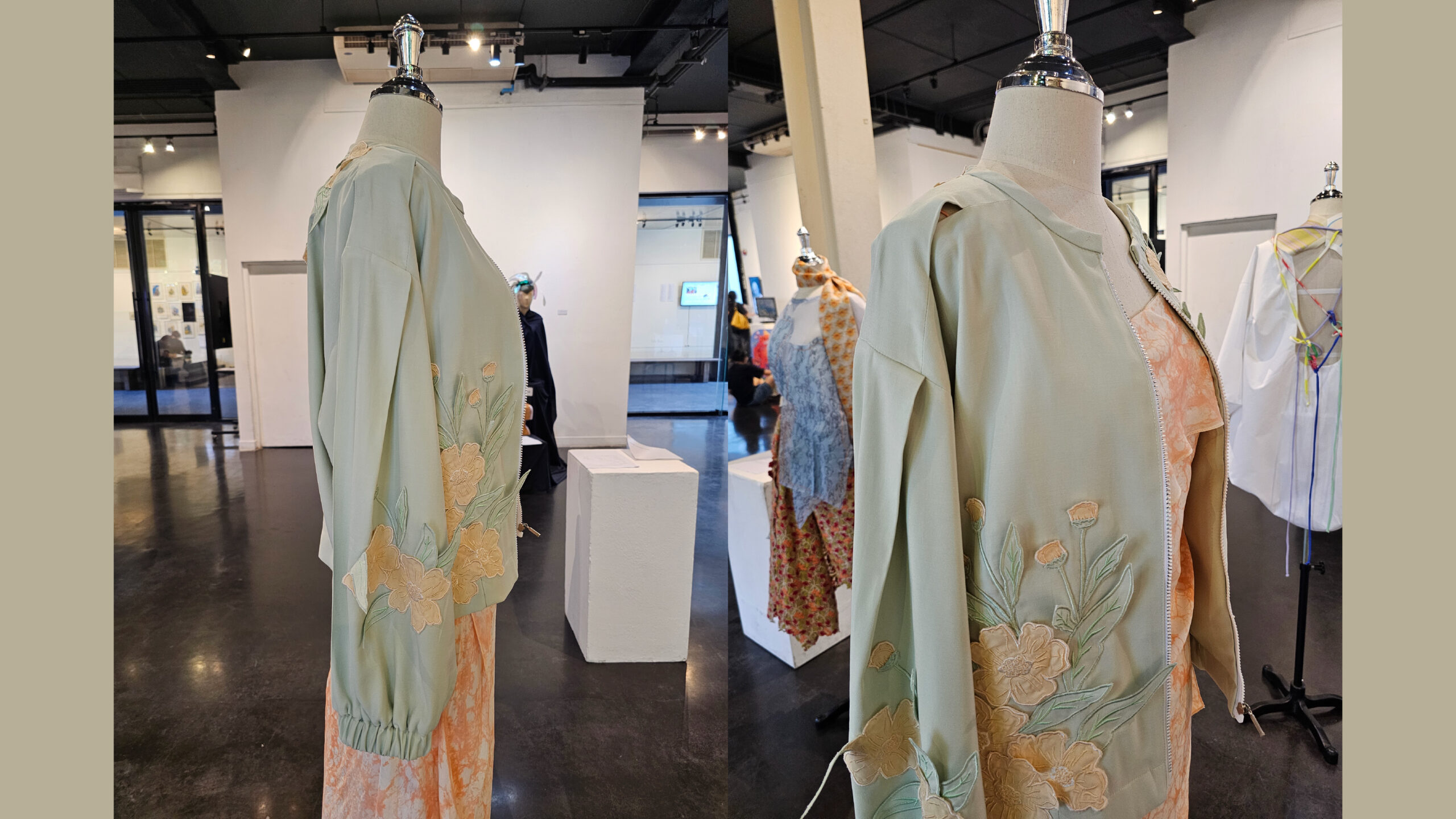
Construction of the light green structured jacket, followed by the application and placement of custom 3D line embroidery embellishments on the finished garment.
Result / Conclusion :
The findings on apparel design for Conscious Creators and Craftivists, informed by Wabi-Sabi philosophy, reveal that the target audience requires versatile, multifunctional garments adaptable to various occasions, with seamless mix-and-match configurations that transition between work and leisure. The garment styling emphasizes a contemporary feel, enriched by craftwork that reflects natural elements—such as floral, leaf, vine, and crack patterns—evoking lightness and relaxation. Design development focuses on Casual-Business Wear, Casual-Party Wear, and Casual Wear within a vibrant pastel color palette (pink, cream, light yellow, light orange, grey-blue, white, and black), integrating two core craft techniques, 3D embroidery and batik, to reflect the unique lifestyle of the target segment.
Furthermore, prototype development and technical experimentation yielded significant innovations in sustainable craft processing. Utilizing a starch-resist method rather than traditional batik wax to generate crack patterns produced refined, clear, and organic orange crack lines resembling tree bark roots; this process also markedly reduced processing time, thermal energy consumption, and water usage during the washing phase. Additionally, applying light orange dye using direct-stroke techniques minimized chemical consumption while allowing precise aesthetic control. For the 3D floral and leaf embroidery on the jacket, executing airy line stitches on light green fabric maintained a soft, flexible hand-feel. When layered onto the jacket structure, this technique added intriguing visual dimension and lightness, ultimately enhancing the spiritual and artistic value of the final prototype collection.
References :
Chowdhury, A. M., & Hossain, M. M. (2020). Exploration of cold-resist paste formulations in sustainable textile batik printing. International Journal of Fashion Design, Technology and Education, 13(2), 184–192. https://doi.org/10.1080/17543266.2020.1762741
Corbett, S. (2017). How to be a craftivist: The art of gentle protest. Unbound Publishing.
Gong, X. (2021). Sustainable fashion design: Transformable garments for versatility. Journal of Fashion Design and Technology, 9(2), 115–124.
Jalil, M. H., & Shaharuddin, S. S. (2020). Fashion designer behavior toward eco-fashion design. Journal of Visual Art and Design, 12(1), 1–24. https://doi.org/10.5614/j.vad.2020.12.1.1
Koren, L. (1994). Wabi-sabi for artists, designers, poets & philosophers. Stone Bridge Press.
Moreshead, C., & Salter, M. (2023). Sustainable alternatives in resist printing: Starch-based mediums versus traditional wax mediums. Textile Research & Sustainability, 15(3), 201–215.
Share :
Facebook
Twitter
LinkedIn
WhatsApp
Email
Print