Bits of Sunshine: Positive Psychology in Environmental Graphics for Youth Counseling Safe-Spaces
Faculty of Art and Design, Universitas Multimedia Nusantara, Indonesia
Asst. Prof. Luisa Erica
Abstract :
Environmental Graphic Design (EGD) recognizes that built environments can influence people’s thoughts, emotions, and behaviors. Various researches within healthcare and therapeutic settings found that the design of physical spaces has been shown to affect clients’ perceptions, comfort, and engagement. Previous studies have highlighted the importance of creating a sense of safety and warmth in counseling room environments. Qualitative interviews with mental-health service clients found that aesthetically pleasing, welcoming, and non-clinical spaces can promote psychological safety, encourage self-disclosure, improve mood, and facilitate openness between client and therapist. Decorative elements such as artwork have been identified as important contributors to creating warm and supportive counseling experiences, while sterile or overly clinical environments may hinder engagement with the therapeutic process.
For youth specifically, the quality of therapeutic environments is particularly important. Researches found that adolescents and emerging adults are highly responsive to their surroundings due to ongoing cognitive, emotional, and social development. Counseling rooms have been identified as potential safe spaces that could support mental well-being, belonging, and emotional expression. Research on youth-focused safe spaces suggests that supportive environments can contribute to reduced anxiety, lower psychological distress, and improved interpersonal well-being.
Despite growing awareness of mental health issues, creating counseling environments that feel approachable, welcoming, and psychologically safe remains a challenge, particularly in contexts where seeking psychological support continues to be associated with social stigma. Therefore, this project focuses on counseling spaces serving youth and young adult clients in Bali, Indonesia, where increasing mental health awareness coincides with a growing population of expatriates, tourists, and English-speaking residents seeking psychological services. Insights gathered through preliminary in-depth interview with a licensed psychologist indicate a need to improve counseling environments to better support feelings of comfort, safety, and acceptance among younger clients. In response, this project explores the role of environmental graphics as an active component of therapeutic environments. Through a series of affirmation-based environmental graphics, the project investigates how positive psychology principles may be translated into visual communication interventions that contribute to more welcoming, youth-friendly, and psychologically supportive safe-spaces for counseling rooms.
Objectives :
The primary objective of this artwork is to develop an evidence-informed environmental graphic design system that supports the creation of welcoming, psychologically supportive counselling spaces for youth. The project applies aspects from positive psychology to the environmental graphics by applying affirming messages that can be seen within the counselling environment. The goal of the artwork is to present these messages as environmental cues that can reinforce psychological themes such as hope, self-compassion, emotional validation, resilience, kindness, and personal growth.
This project also investigates how environmental graphics can contribute to the creation of psychologically safe and emotionally supportive counseling spaces. This project specifically aims to: (1) translate positive psychology aspects into warm affirmation messages for youth; (2) create a cohesive series of environmental graphics that can be integrated into counselling and waiting room interiors, giving a sense of safe-space and warmth to clients; and (3) establish a visual language that communicates encouragement that is appropriate to diverse youth experiences.
The intended outcome is a series of environmental graphics that communicate supportive messages and transform counselling rooms into safe-spaces for youth. These designs seek to improve the perceived friendliness and emotional safety of the room, without shifting the focus of the counselling process. In this sense, the designs are intended to support comfort and openness of the clients during counselling sessions. Ultimately, the project aims to explore environmental graphics as an active component of counseling rooms by encouraging youth to feel safe, welcomed, and more comfortable being themselves. Rather than functioning solely as decorative elements, the designs are positioned as an environmental graphic component that supports counselling environments and promotes a safer and youth-friendly mental health service experience.
Conceptual Framework :
The counseling environment plays an important role in shaping young people’s experiences when accessing mental health services. Within this context, environmental graphics can function as an active contributor to the development of a safe and warm counseling environment. Through an analysis of the characteristics of ideal counselling environments identified in previous studies, it can be observed that these findings align closely with key principles of positive psychology, particularly self-compassion, emotional validation, hope, growth, and resilience. These constructs served as the primary conceptual foundations for the development of the visual content. Therefore, rather than serving solely as decoration, visual elements placed within counseling and waiting rooms can communicate messages that support emotional comfort and positive self-affirmations.
In visual communication design perspective, these environmental graphics integrates positive psychology-based messages with approachable lettering, warm and high saturated colors, and organic visual compositions. These visual elements are designed to communicate affirmations, encourage self-kindness, validate emotional experiences, and support constructive perspectives toward personal growth and well-being.
Process / Methodology :
The artwork was developed through a design method by Calori, C., & Vanden-Eynden, D. (2015), consisting of pre-design, design, and post-design phases.
1. Pre-design Phase
The pre-design phase consisted of two data-collection activities. First, a literature review was conducted to identify relevant principles from positive psychology, self-affirmation, and research concerning safe, warm, and youth-friendly counseling environments. Particular attention was given to the psychological aspects of self-compassion, emotional validation, hope, growth, and resilience, as well as environmental characteristics associated with warmth, comfort, and a non-clinical atmosphere. Second, an in-depth interview was conducted with a clinical psychologist responsible for the particular counseling clinic in Bali, Indonesia. The interview was used to identify the practical needs and contextual considerations of the counseling and waiting rooms, including the appropriateness of visual messages, placement, atmosphere, and the characteristics of the intended clients.
2. Design Phase
The design phase consisted of schematic design, design development, and documentation. The schematic design stage involved developing initial sketches, determining the dimensions and format of the artwork, arranging the positive affirmation series, and determining the placement within the counseling and waiting rooms. The design development stage translated all the conceptual findings into visual communication design solutions. Visual communication principles, color theory, composition, and lettering techniques were applied to establish a warm, approachable, readable, and legible artwork. Particular attention was given to the readability of the affirmation texts and their visibility within the physical environment. The documentation stage involved finalizing the artwork, confirming the production specifications and materials, and preparing the final designs for production and installation.
3. Post-design Phase
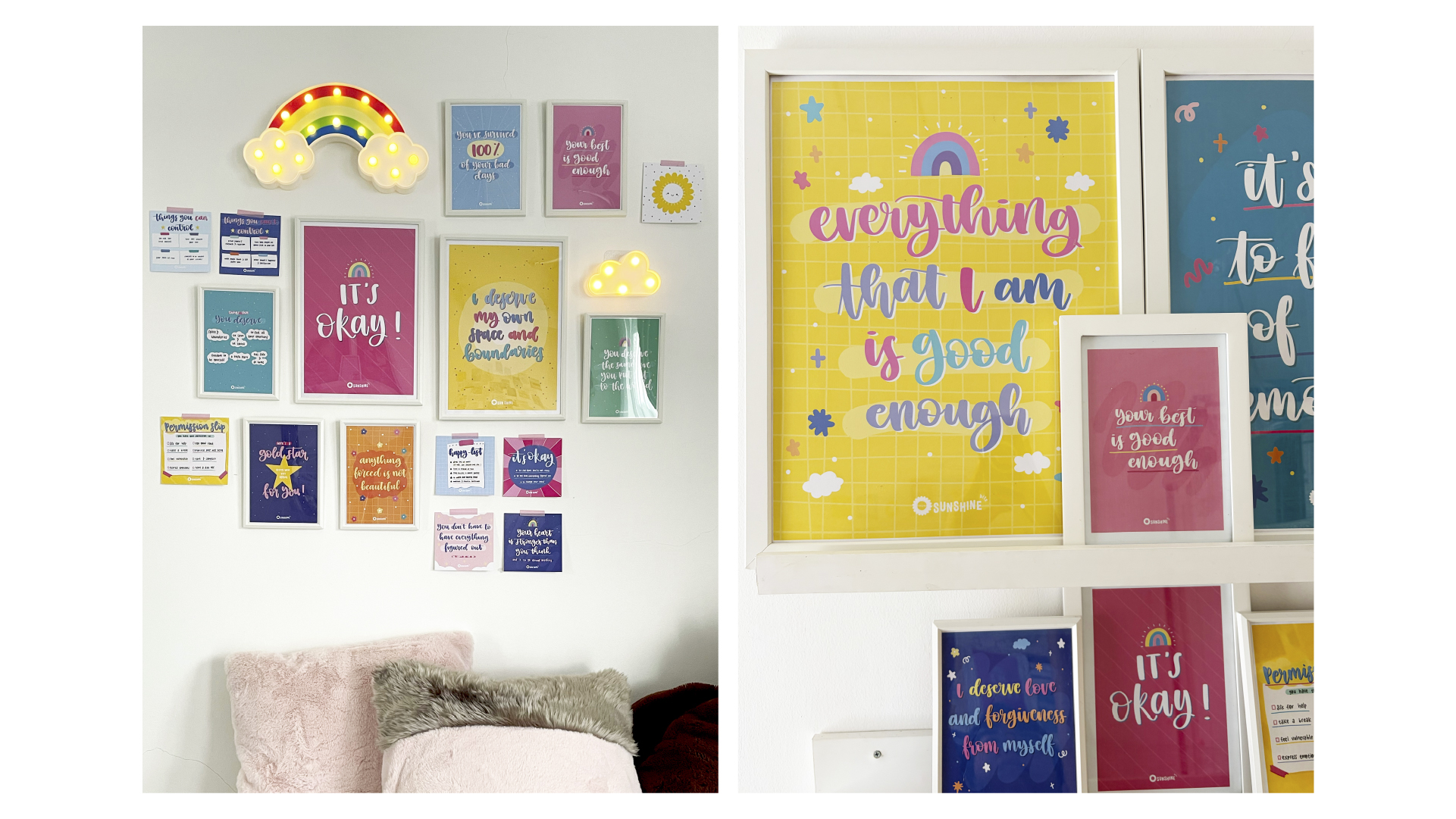
Following the completion of the design process, the environmental graphics were produced and installed in the designated counseling and waiting rooms of a psychology clinic in Bali, Indonesia. At the time of this artwork documentation, the post-implementation evaluation of the clients’ perceived safety, comfort, and responses to the environmental graphics has not yet been concluded. Therefore, the present result focuses on the completed artwork, its implementation, and the translation of the research findings into the physical counseling environment.
Techniques and Materials :
The artworks were created using a combination of digital drawing and digital lettering techniques. The artwork was developed digitally using Procreate 5.4 on an iPad Pro. The visual treatment employs saturated colors and high-contrast text and micro elements to establish a warm visual atmosphere while maintaining sufficient legibility and readability of the positive affirmations.
The final artworks were printed on a Superfine Eggshell Digital Paper (270gsm), and displayed in a matte white border frame.
Result / Conclusion :
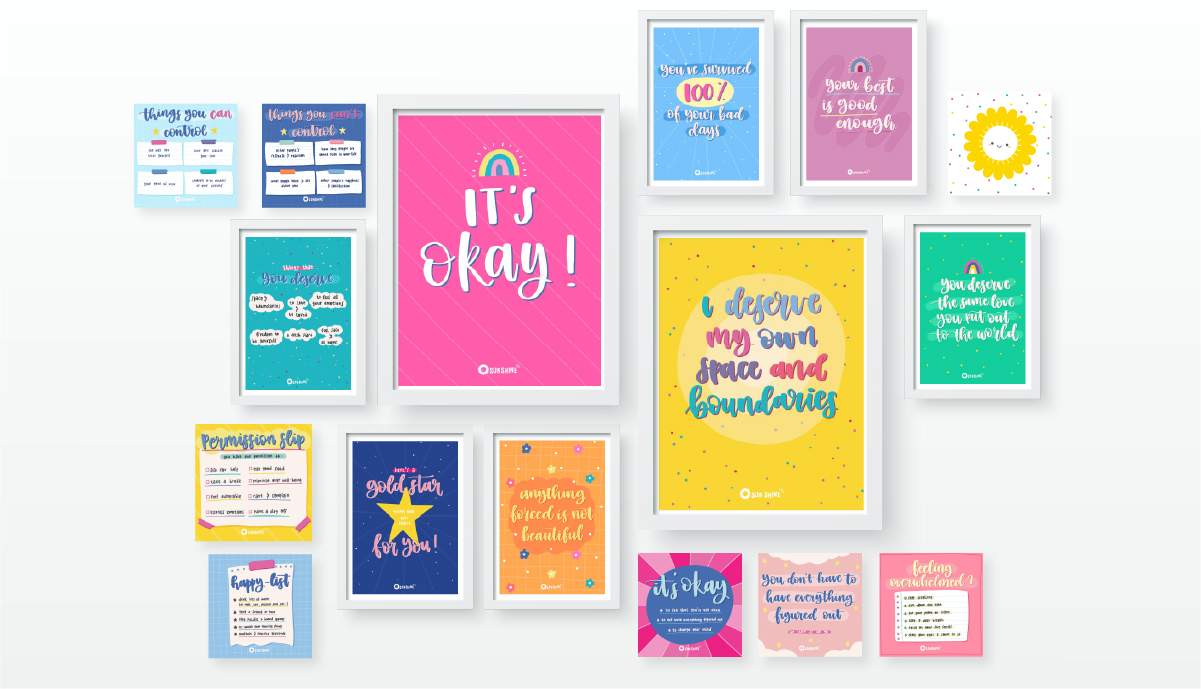
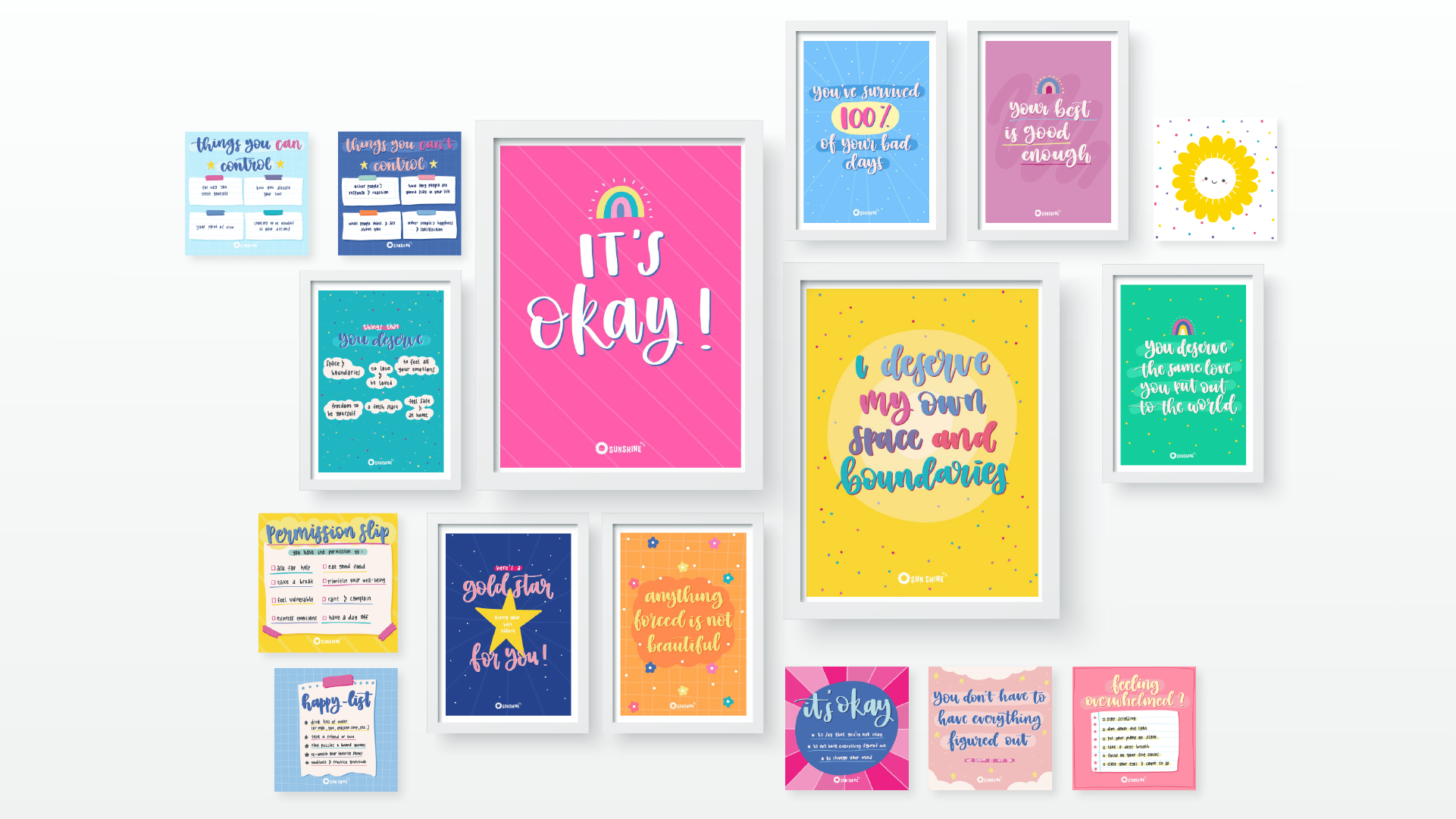
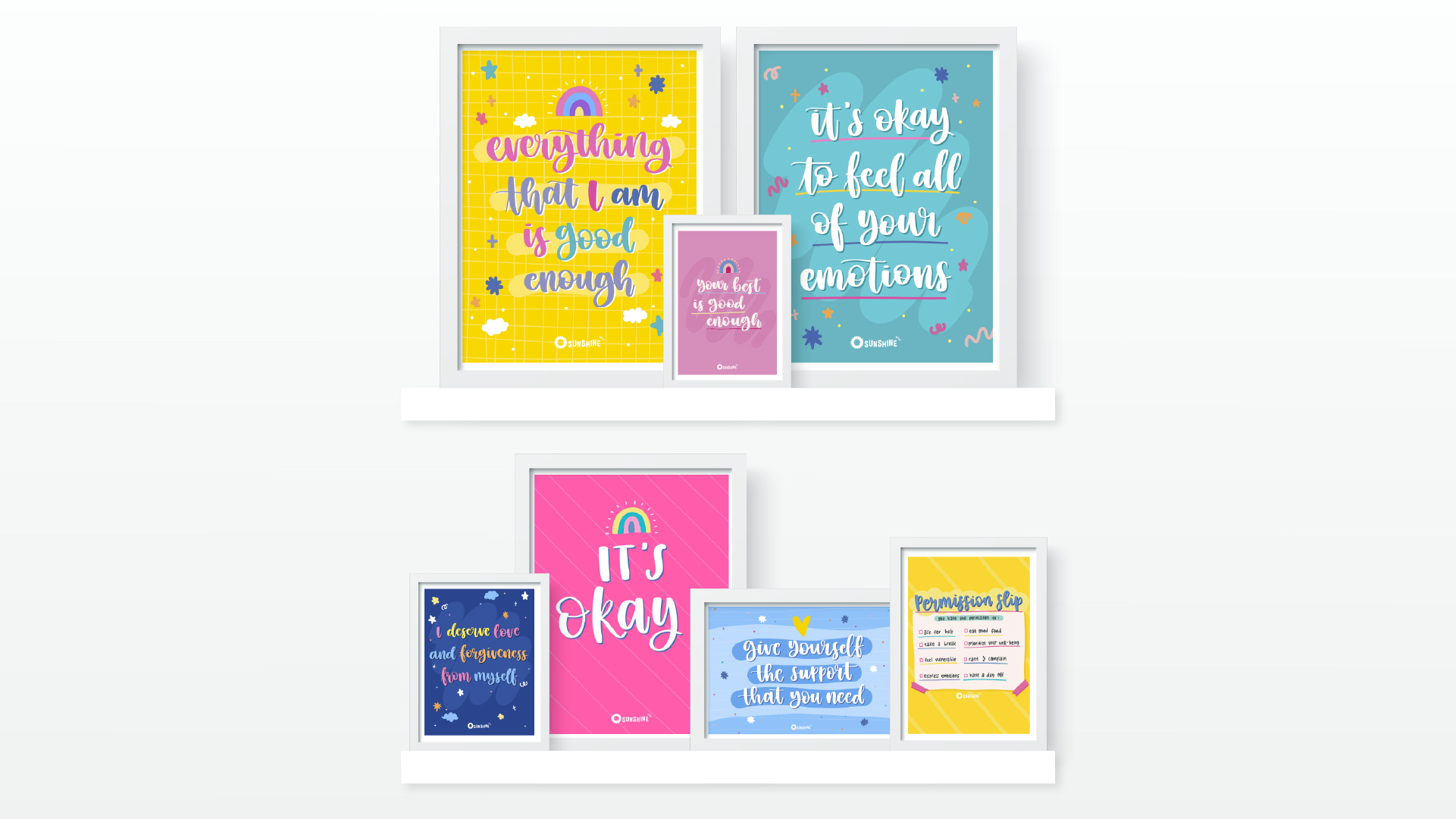
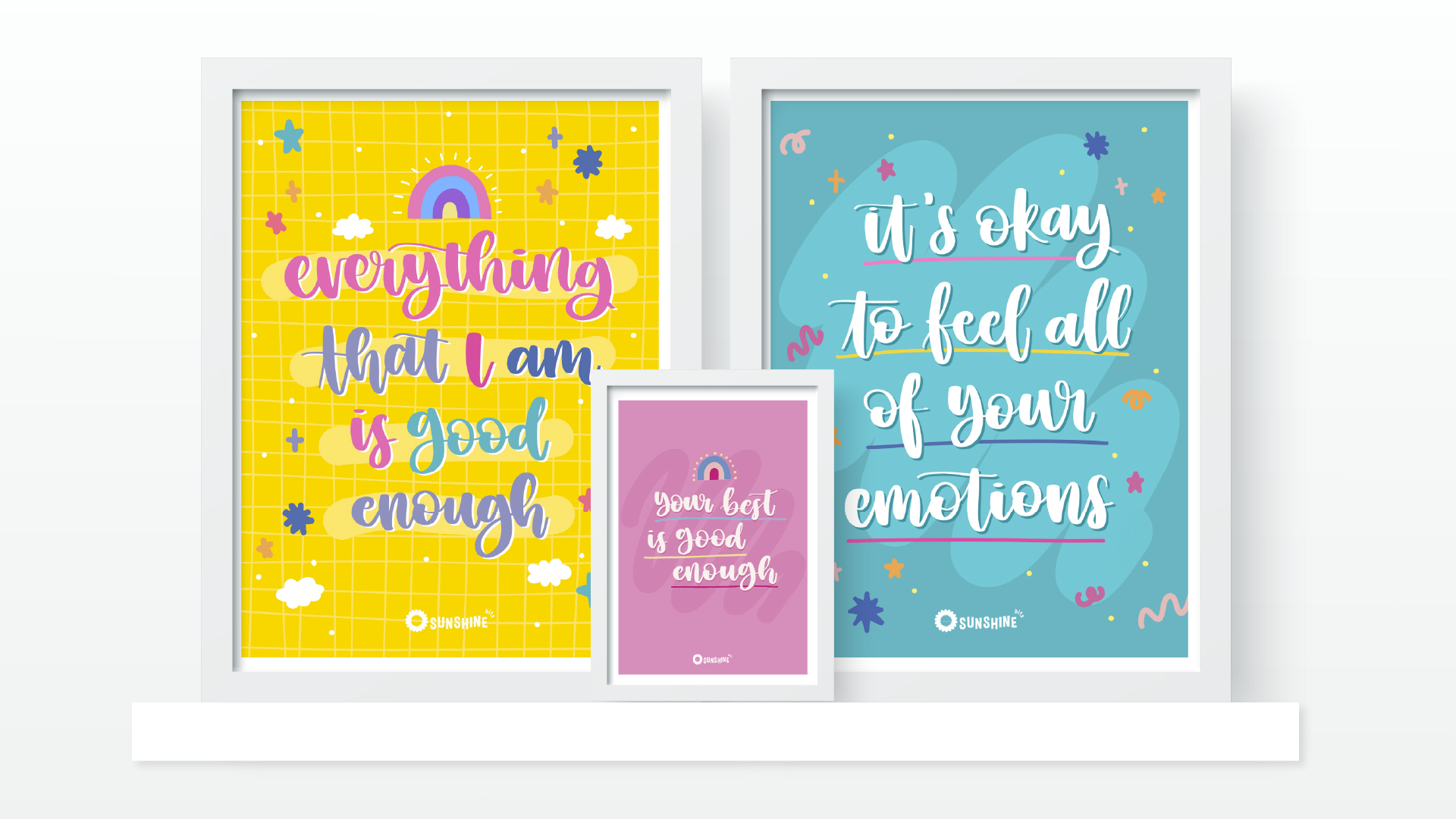
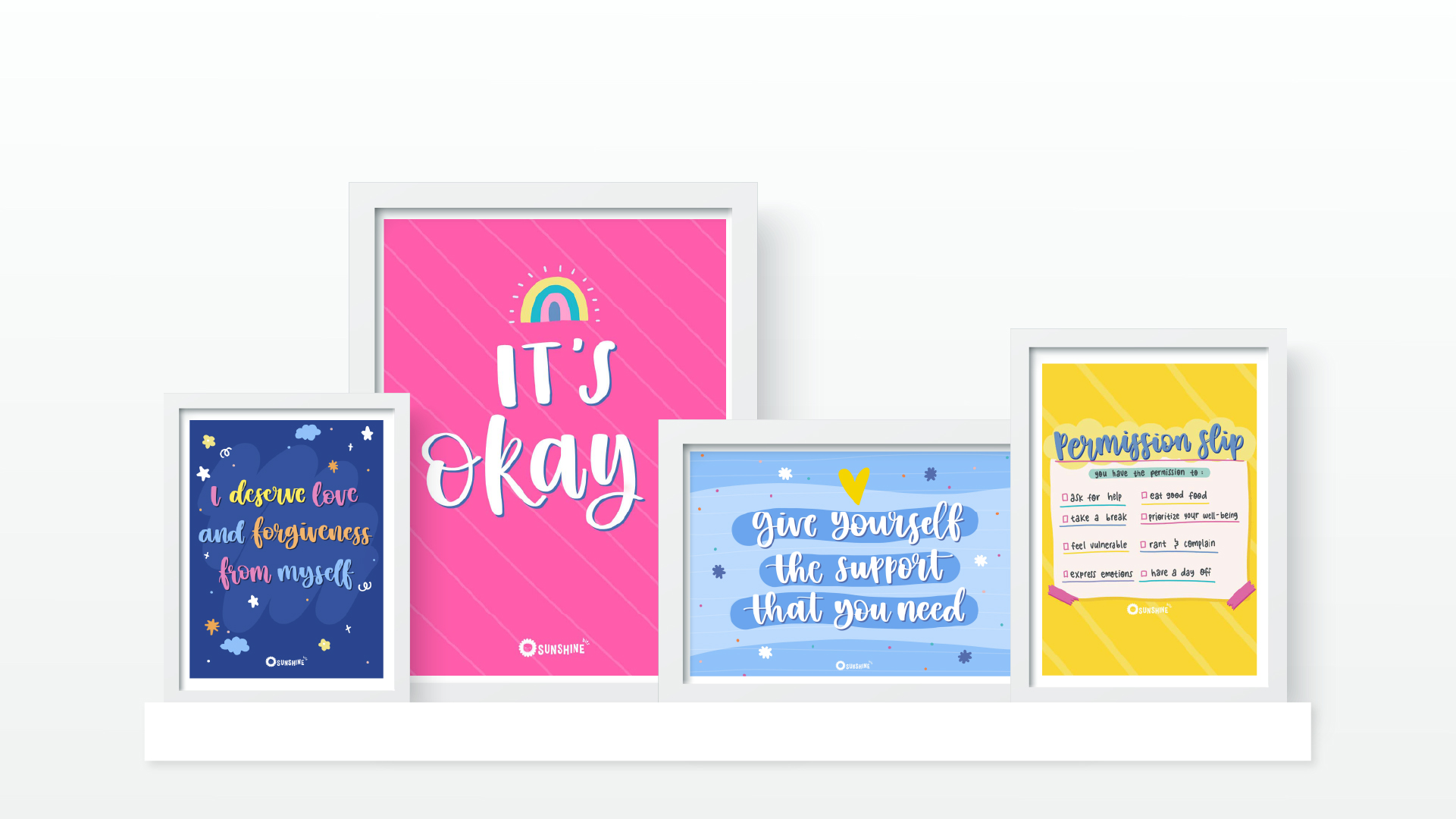
The research resulted in a series of positive-affirmation environmental graphics designed and implemented for the counseling and waiting rooms of a psychology clinic in Bali, Indonesia. The final artwork consists of seven affirmation graphics for the counseling rooms and fifteen affirmation graphics for the waiting rooms.
The visual composition adopts a collage-based approach, allowing individual artworks to coexist in an organic and informal arrangement. Rather than following a highly systematic or clinical visual organization, the collage composition was intended to create a warmer and more approachable atmosphere. Saturated colors and micro elements were employed to introduce visual warmth and joy, while high-contrast combinations between text and background were applied to support the legibility and readability of the affirmations.
The verbal content of the graphics was developed by translating selected positive psychology concepts into accessible and supportive statements for youth. Self-compassion and emotional validation were represented through copywriting from a first-person point of view. These statements communicate acceptance of one’s emotions and encourage self-kindness, self-forgiveness, and recognition of one’s own worth. Hope, growth, and resilience were translated through affirmations that encourage moving forward and recognizing one’s right to engage in concrete self-care behaviors, including taking time for oneself, resting, setting personal boundaries, and attending to one’s well-being.
All affirmation texts and visual applications were reviewed and validated by the clinical psychologist responsible for the clinic, providing contextual and professional validation of the artwork’s appropriateness for its intended setting. The completed environmental graphics were subsequently produced and installed throughout the designated counseling and waiting rooms.
As a research-based artwork, the project demonstrates how findings from positive psychology and research on youth-friendly environments can be translated into a tangible environmental graphic intervention. The resulting artwork connects psychological concepts with visual communication through affirmative language, color, composition, and lettering. While the post-implementation evaluation of users’ perceived safety and comfort remains to be conducted, the completed installation establishes a research-informed environmental graphics that intend to support a safer, warmer, more welcoming counseling experience for youth.
References :
Calori, C., & Vanden-Eynden, D. (2015). Signage and wayfinding design: a complete guide to creating environmental graphic design systems. John Wiley & Sons.
Meherali S, Nisa S, Aynalem YA, Ishola AG, Lassi Z (2025) Safe spaces for youth mental health: A scoping review. PLoS ONE, 20(4): e0321074. https://doi.org/10.1371/ journal.pone.0321074
Sanders, R., & Lehmann, J. (2019). An exploratory study of clients’ experiences and preferences for counselling room space and design. Counselling and Psychotherapy Research, 19(1), 57–65. https://doi.org/https://doi.org/10.1002/capr.12202
Sinclair, T. (2021). What’s in a therapy room?—A mixed-methods study exploring clients’ and therapists’ views and experiences of the physical environment of the therapy room. Counselling and Psychotherapy Research, 21(1), 118–129. https://doi.org/https://doi.org/10.1002/capr.12376
Pearson, M., & Wilson, H. (2012). Soothing spaces and healing places: Is there an ideal counselling room design? Psychotherapy in Australia, 18(3), 46–53. https://search.informit.org/doi/10.3316/informit.317122780048316
Zhang, Y., Chen, B., Hu, X., & Wang, M. (2025). The impact of self-affirmation interventions on well-being: A meta-analysis. American Psychologist. Advance online publication. https://doi.org/10.1037/amp0001591
Share :
Facebook
Twitter
LinkedIn
WhatsApp
Email
Print