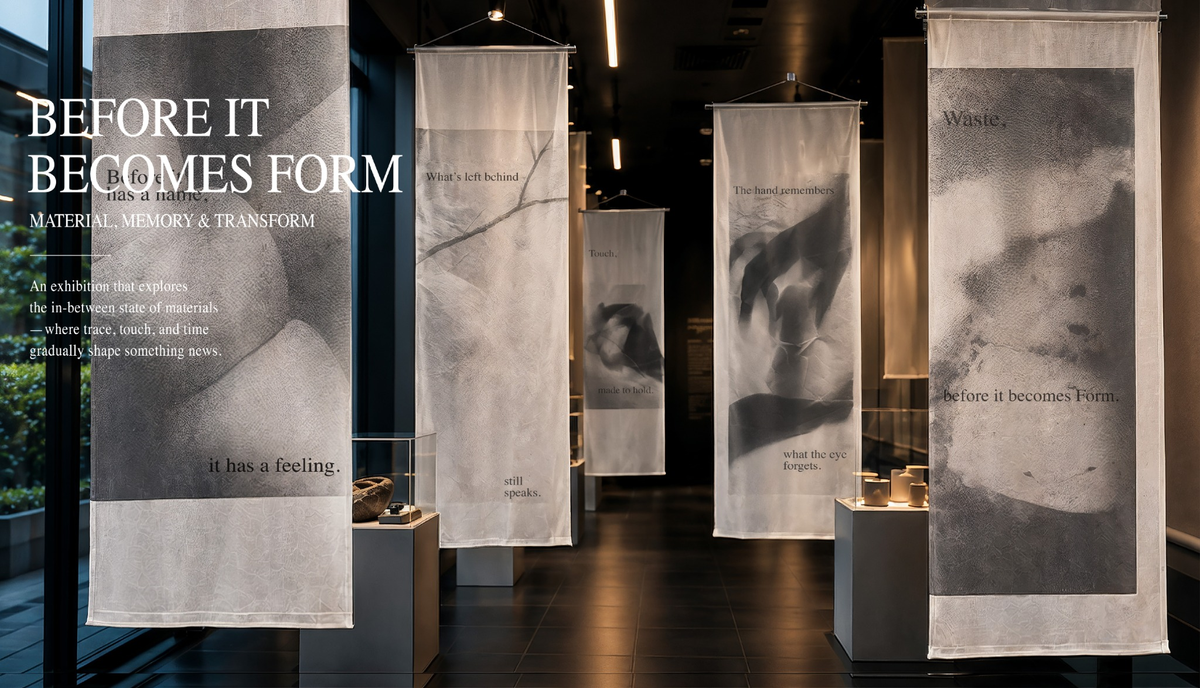
Before It Becomes Form: Material, Memory & Transformation
Master of Fine Arts Program in Design, College of Design, Rangsit University, Thailand
Lung-Chi Lin
Abstract :
Before It Becomes Form: Material, Memory & Transformation is a practice-based exhibition project exploring how tactile perception, material transformation, and spatial presentation shape the experience of designed objects, with packaging as the primary medium. Developed from ongoing research into tactile experience and sustainable and bio-based materials (Lin et al., 2024), the project brings together experimental packaging objects, material samples, prototypes, process photographs, and an exhibition graphic system. The project will be presented as a public exhibition at TCDC Bangkok, Creative Space, 5th Floor, from 27 October to 22 November 2026.
Rather than focusing only on the finished object, the project draws attention to the stages that come before completion. Fragments, surface irregularities, experimental trials, repeated handling, and intermediate forms are retained as evidence of material change. The exhibition focuses on this transitional condition: the point at which materials are tested, altered, combined, and gradually given form. Research on haptic and multisensory perception supports the importance of touch in product and packaging experience (Peck & Childers, 2003; Spence & Gallace, 2011).
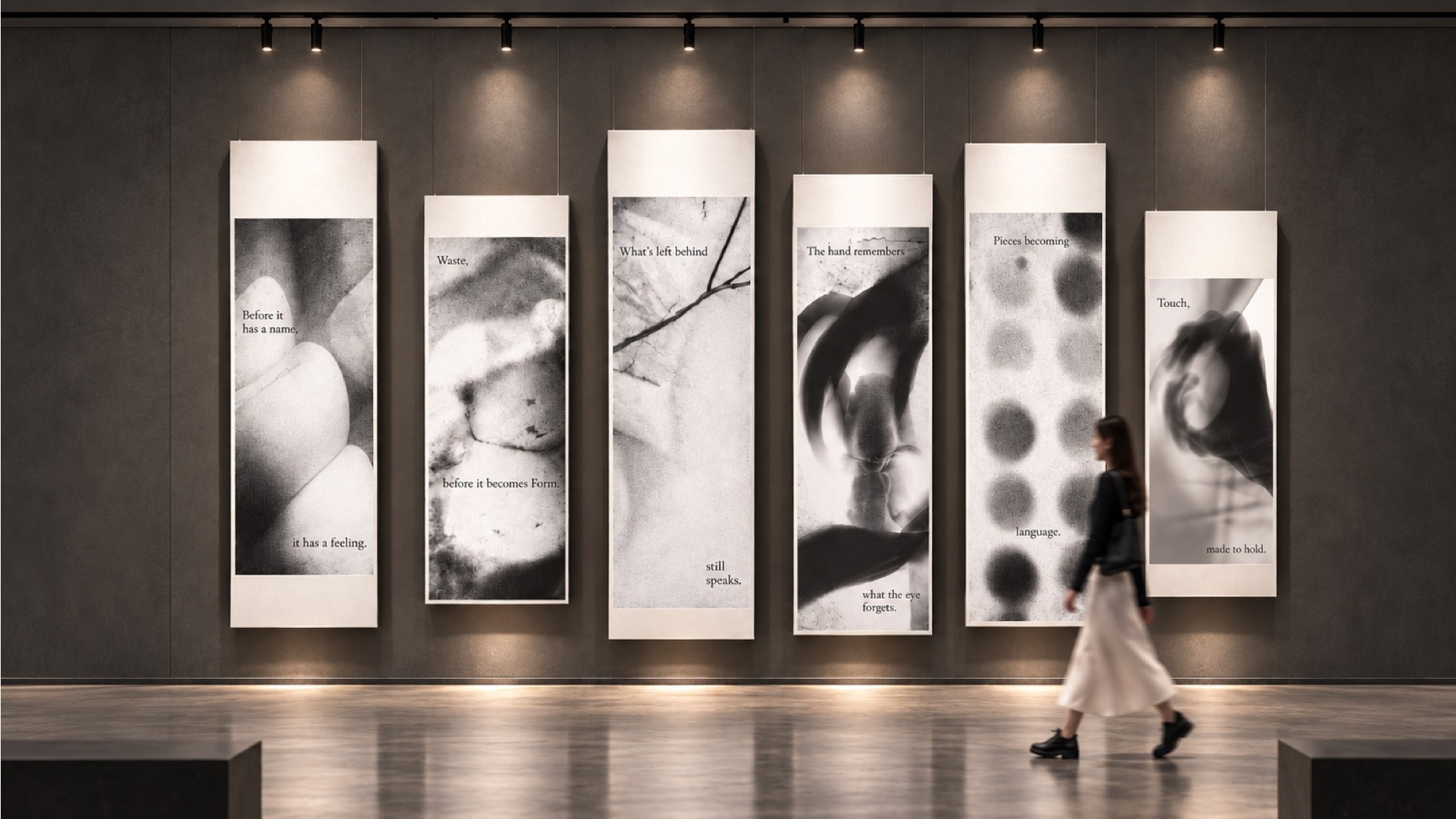
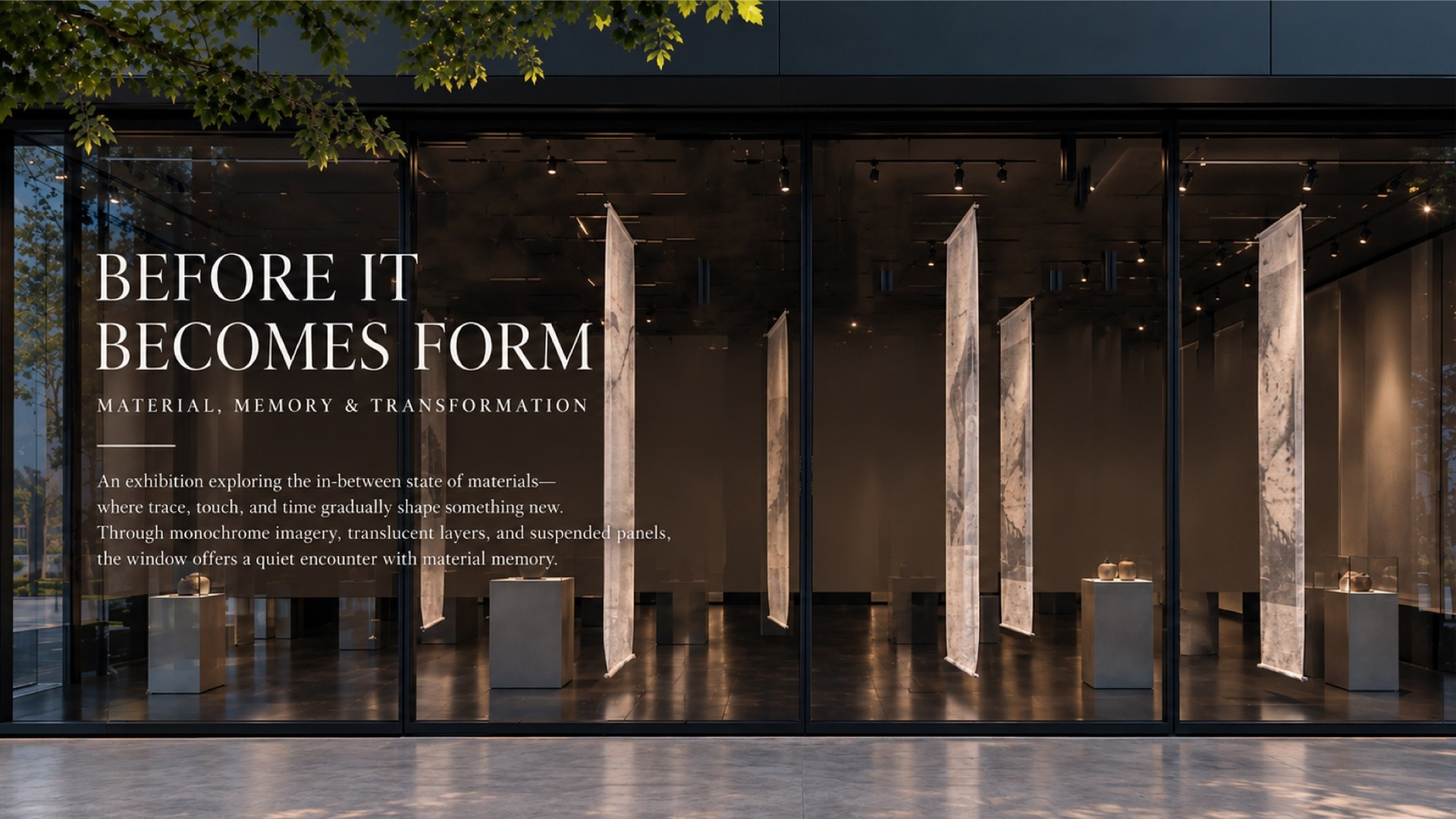
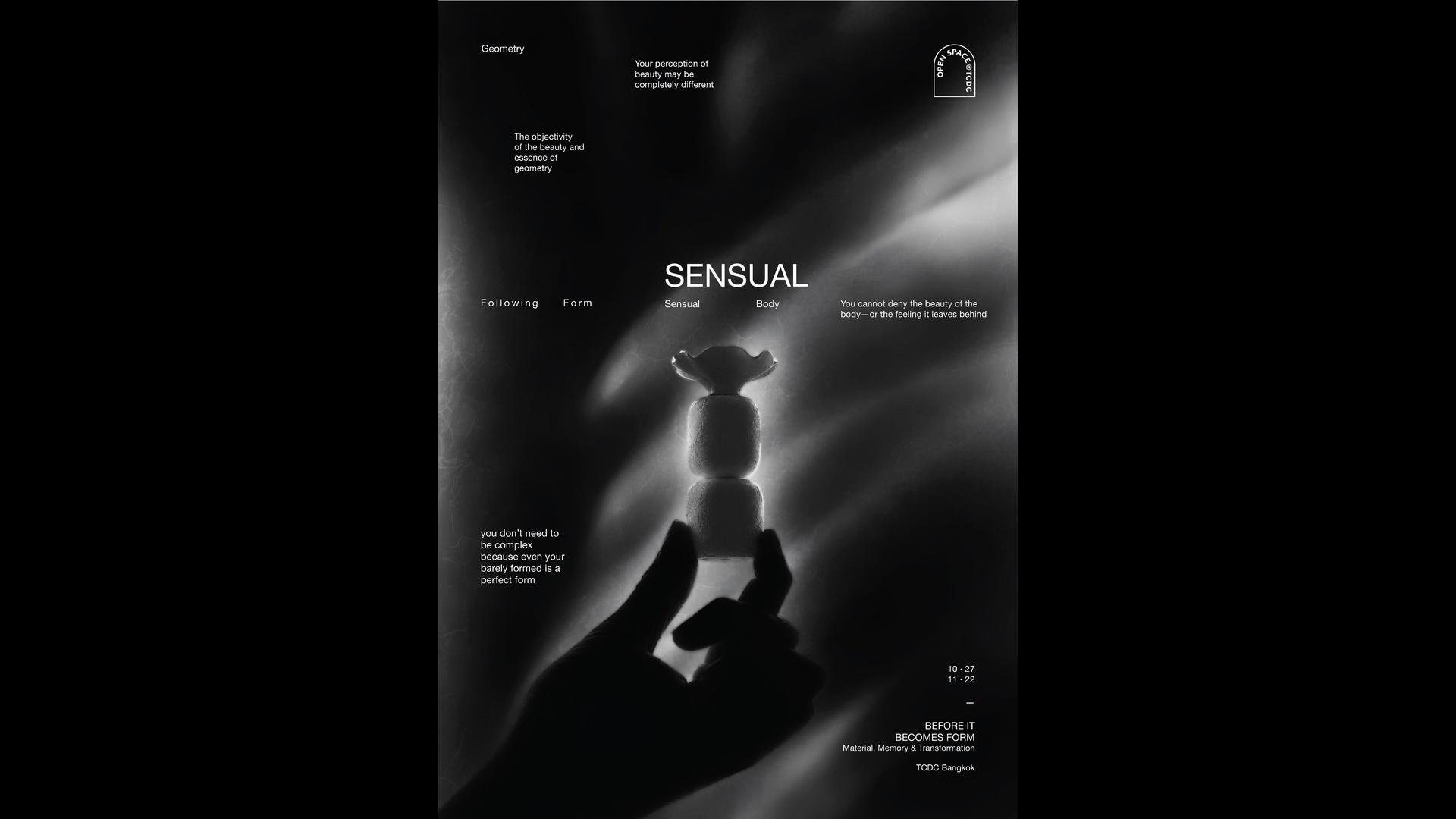
The spatial design uses six translucent fabric panels, monochromatic imagery, short texts, physical samples, finished packaging objects, display plinths, and clear acrylic covers. The panels create a sequence that moves from first sensation and discarded material to traces of making, hand memory, material language, and finished form. The installation is designed to encourage slower observation and movement between images, surfaces, samples, and objects. In this way, the exhibition presents form as something that emerges through material decisions, touch, and transformation, while bringing research, making, and spatial communication together within one design experience. The exhibition itself functions as a means of communicating design research through material and spatial encounter.
Objectives :
The project has five objectives. First, it investigates how tactile qualities such as texture, weight, surface, temperature, and form contribute to the perception of packaging and material objects. Research on haptic information processing shows that people differ in how strongly they seek information through touch, and that direct experience can influence confidence in product judgment (Peck & Childers, 2003). Tactile engagement is therefore treated as a source of design information rather than as a decorative addition.
Second, the project extends earlier research on tactile experience with sustainable and bio-based materials into a public exhibition context. Previous research by the designer examined the role of material texture and hands-on engagement in art and design education (Lin et al., 2024). This project develops that inquiry through physical packaging objects, material samples, prototypes, process photographs, and exhibition graphics presented together in one spatial experience.
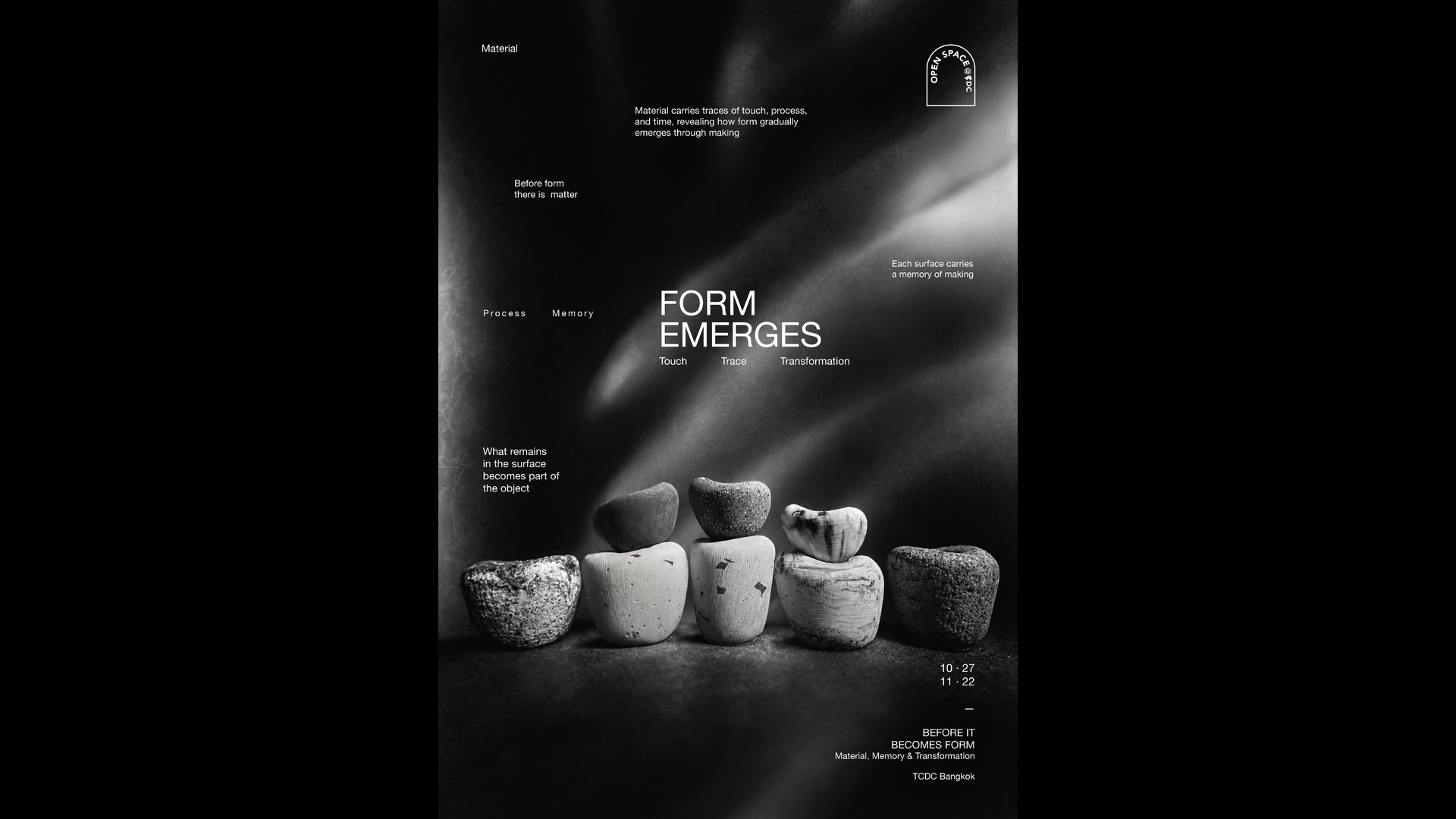
Third, the project examines material transformation as part of the visual and tactile identity of the work. Reclaimed and experimental materials may retain marks, fragments, uneven surfaces, and other evidence of earlier states after they are reworked. Rather than concealing these qualities, the exhibition uses them to show how materials change through testing and making.
Fourth, the project explores how the making process can be communicated to visitors who were not present during its development. Photographs, samples, prototypes, short texts, and finished objects are arranged so that relationships between earlier experiments and later outcomes can be recognized without lengthy explanation.
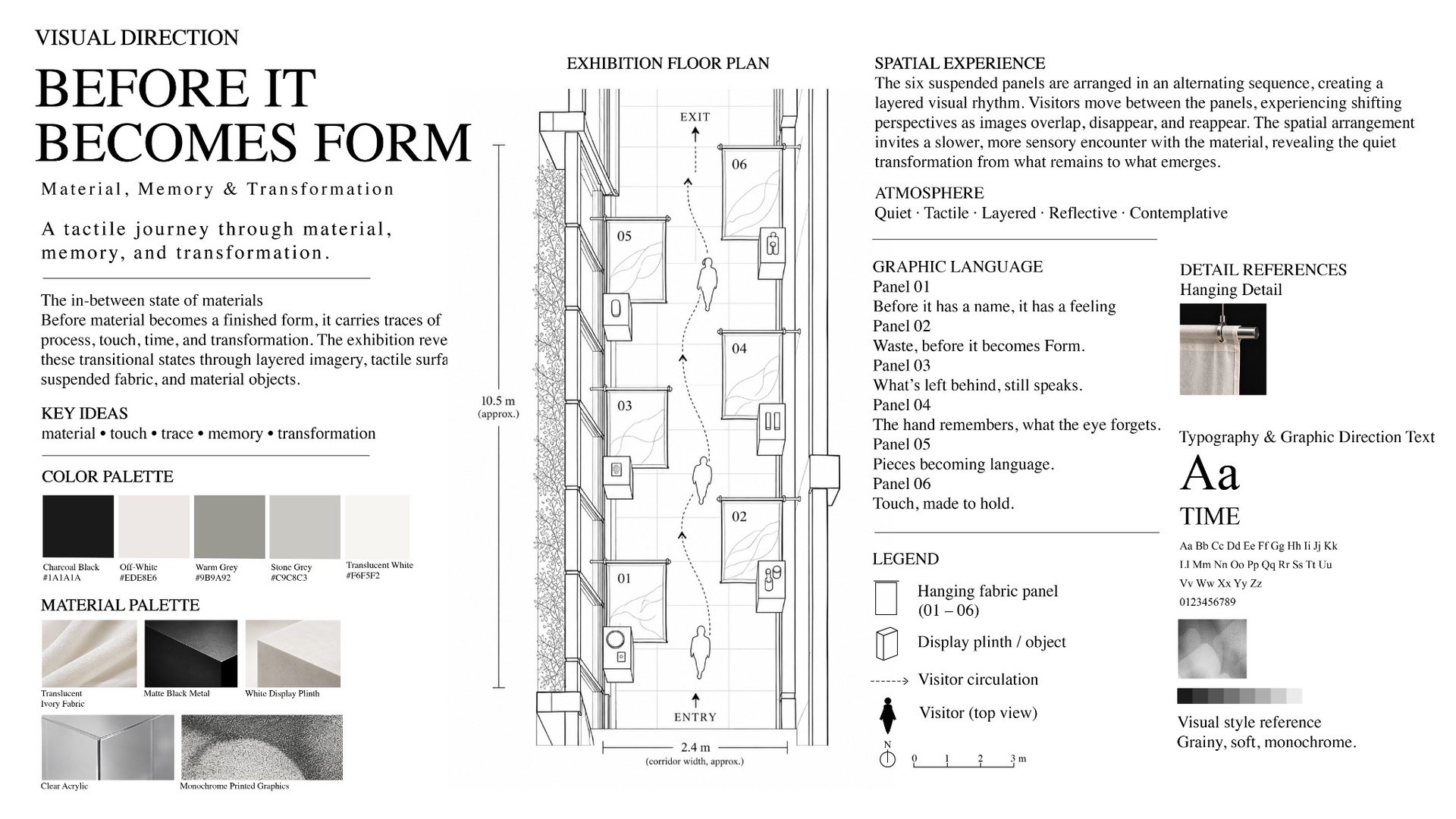
Finally, the project integrates packaging design, graphic communication, and spatial design into a coherent exhibition experience. Six translucent fabric panels, monochromatic graphics, display elements, and a sequential circulation plan create a quiet rhythm of viewing, reading, comparison, and tactile attention. Together, these elements support the central idea that form emerges gradually through material decisions, handling, and transformation rather than appearing only at the final stage.
Conceptual Framework :
The conceptual framework is informed by embodied perception, haptic information processing, and multisensory design. Merleau-Ponty (1962) places the lived body at the center of perception, while Pallasmaa (2005) argues that spatial experience extends beyond vision and involves the wider sensory body. In product and packaging contexts, touch also provides information that can influence evaluation and judgment (Peck & Childers, 2003; Spence & Gallace, 2011). Earlier research by the designer further connects tactile engagement with sustainable and bio-based material exploration (Lin et al., 2024).
These perspectives support a practice-based question: how can material change and tactile experience be made perceptible through designed objects and exhibition space? Texture, fragments, surface irregularities, prototypes, and process photographs are therefore treated as design content rather than background documentation. The idea of Before It Becomes Form focuses attention on the transitional stage between material experimentation and the finished object. Through physical objects, images, text, and spatial sequence, the exhibition makes relationships between touch, material choice, making, and final form more visible while allowing visitors to compare different stages of development through direct visual and tactile encounter.
Process / Methodology :
The project follows a practice-based design process integrating material experimentation, packaging development, visual communication, and exhibition design. The first phase drew on ongoing tactile packaging research and hands-on experiments with sustainable, bio-based, reclaimed, and composite materials. Material samples, experimental trials, prototypes, surface tests, and finished objects were reviewed not only as steps toward a final design, but also as evidence of how material qualities changed through making.
The second phase focused on documentation and selection. Close-up photographs of textures, fragments, hands, material tests, and intermediate forms were selected to communicate transformation without relying on lengthy explanation. These images were developed into a restrained, grainy, monochromatic visual language so that they could work alongside the physical objects without dominating them.
The third phase translated this material narrative into an exhibition system for TCDC Bangkok. Six translucent fabric panels were developed as a sequential arrangement within the narrow gallery setting, moving from sensation and discarded material to traces, touch, transformation, and final form.
In the final phase, typography, image scale, panel rhythm, hanging details, object placement, visitor movement, and the relationship between graphics and physical works were refined through layout studies and exhibition visualizations. Installation is scheduled for 25–26 October 2026, followed by public presentation from 27 October to 22 November 2026.
Techniques and Materials :
The project combines material experimentation, packaging prototyping, process photography, graphic communication, and spatial exhibition design. Sustainable, bio-based, reclaimed, and composite materials are explored through material samples, experimental trials, prototypes, surface tests, and finished packaging objects. Fragments, irregular surfaces, marks, and intermediate forms are retained where relevant so that evidence of material transformation remains visible in the work.
Process photography records textures, fragments, hands, material tests, and intermediate stages. Selected images are developed through a restrained, grainy, monochromatic visual treatment and combined with typography and short texts as part of the exhibition’s graphic system.
The spatial presentation uses six translucent fabric panels, each approximately 800 × 2600 mm, together with physical material samples, finished packaging objects, display plinths, and clear acrylic covers. The panels create visual layering as visitors move through the exhibition, while the plinths and acrylic covers provide focused display points for samples and finished objects. Together, these techniques and materials connect tactile experimentation, visual communication, and spatial presentation within a single exhibition experience.
Result / Conclusion :
The design outcome is an integrated exhibition system that brings together tactile packaging objects, material experiments, process documentation, translucent graphic panels, display elements, and a planned visitor sequence. A central decision is to make the stages before completion visible rather than presenting only polished final objects. Experimental trials, fragments, surface irregularities, intermediate prototypes, and evidence of handling become part of the exhibition content, allowing the relationship between material experimentation and finished form to be read more directly.
The concept Before It Becomes Form: Material, Memory & Transformation gives this process a clear visual and spatial structure. Across the six panels, the sequence moves from an initial sensory response to discarded material, remaining traces, hand memory, material language, and a form made to be held. Translucent fabric, monochromatic imagery, physical samples, and short texts reveal information gradually and create moments of overlap between process and outcome.
The resulting design presents form not as an isolated endpoint, but as the visible result of material decisions, handling, and transformation. Marks, textures, fragments, prototypes, and process images retain evidence of earlier stages and make those stages perceptible within the exhibition. By bringing these traces into the same space as finished objects, the project is designed to create opportunities for closer observation, comparison, and tactile attention. The exhibition therefore connects material experimentation with spatial experience and is intended to allow visitors to construct their own understanding of how materials move from testing and transformation toward finished form.
References :
Lin, L.-C., Vongphantuset, J., & Sirivesmas, V. (2024). Exploring tactile experiences with sustainable and bio-based materials: Sustainable textures in art and design education. ArtsEduca, 40, 121–132. https://doi.org/10.58262/ArtsEduca.4010
Merleau-Ponty, M. (1962). Phenomenology of perception (C. Smith, Trans.). Routledge & Kegan Paul. (Original work published 1945)
Pallasmaa, J. (2005). The eyes of the skin: Architecture and the senses (2nd ed.). John Wiley & Sons.
Peck, J., & Childers, T. L. (2003). Individual differences in haptic information processing: The “Need for Touch” scale. Journal of Consumer Research, 30(3), 430–442. https://doi.org/10.1086/378619
Spence, C., & Gallace, A. (2011). Multisensory design: Reaching out to touch the consumer. Psychology & Marketing, 28(3), 267–308. https://doi.org/10.1002/mar.20392
Share :
Facebook
Twitter
LinkedIn
WhatsApp
Email
Print