Super Normal Deconstructing the Ordinary: Contemporary Fashion Design Inspired by Super Normal
College of Design, Rangsit University, Thailand
Anawat Nawarsettawon
Abstract :
This project “SUPER NORMAL: Deconstructing the Ordinary — Contemporary Fashion Design Inspired by Super Normal” explores how the idea of Super Normal can be applied to contemporary fashion design through deconstruction. Developed by Naoto Fukasawa and Jasper Morrison, Super Normal focuses on the value of ordinary objects and familiar forms that are often ignored because they are part of everyday life. Instead of creating something extremely new or visually complicated, this project studies how familiar clothing can be changed in a subtle but meaningful way.
The research begins with the study of the Super Normal concept and the observation of basic garments commonly found in daily life, such as shirts, blazers, coats, and trousers. The project also studies important garment details, including collars, cuffs, seams, plackets, pockets, waistbands, and front and back constructions. These familiar elements are then explored through deconstruction methods such as shifting, opening, separating, extending, layering, and rebuilding. The aim is not to destroy the original garment, but to change the way it is seen while keeping its basic identity understandable.
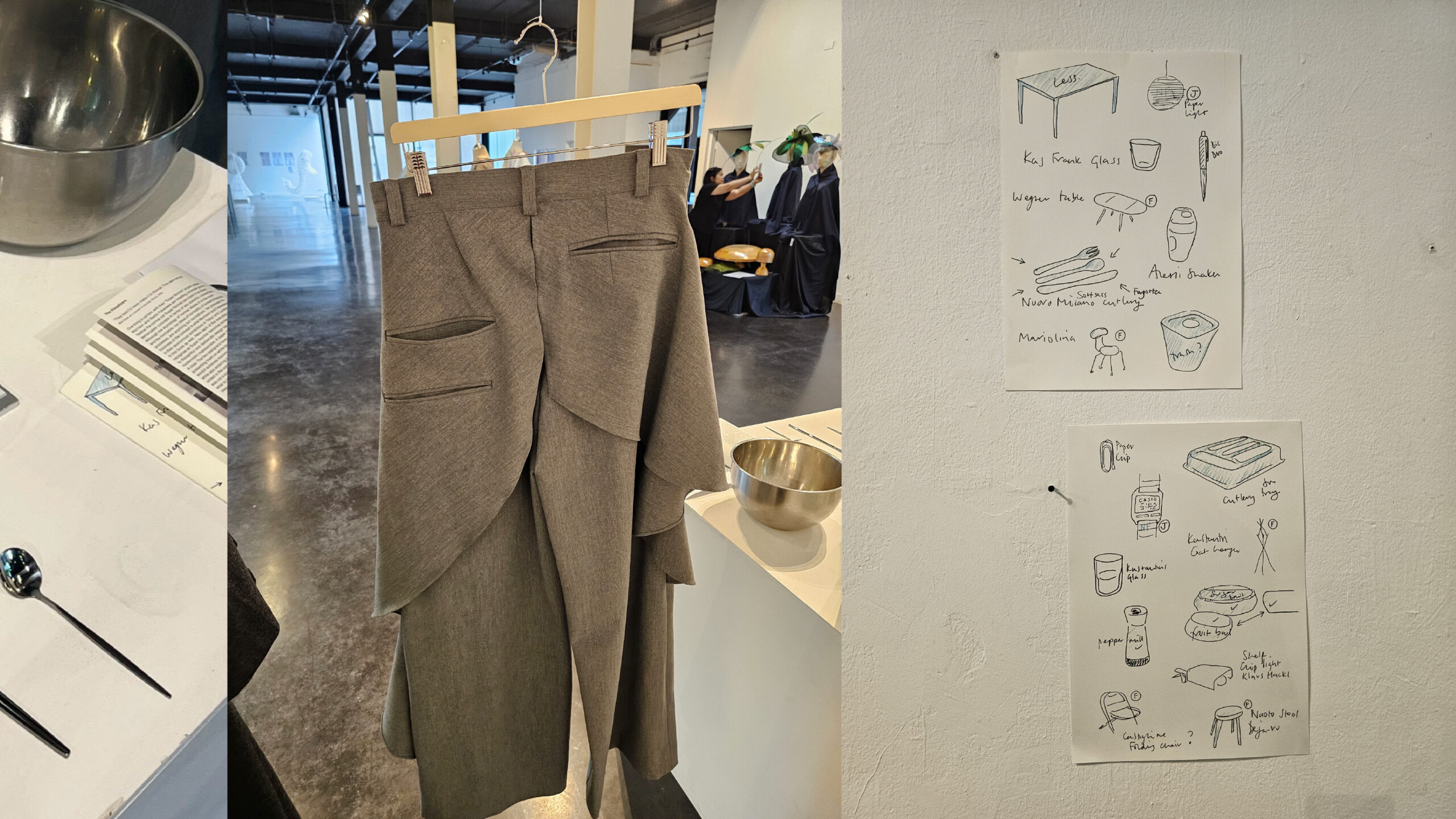
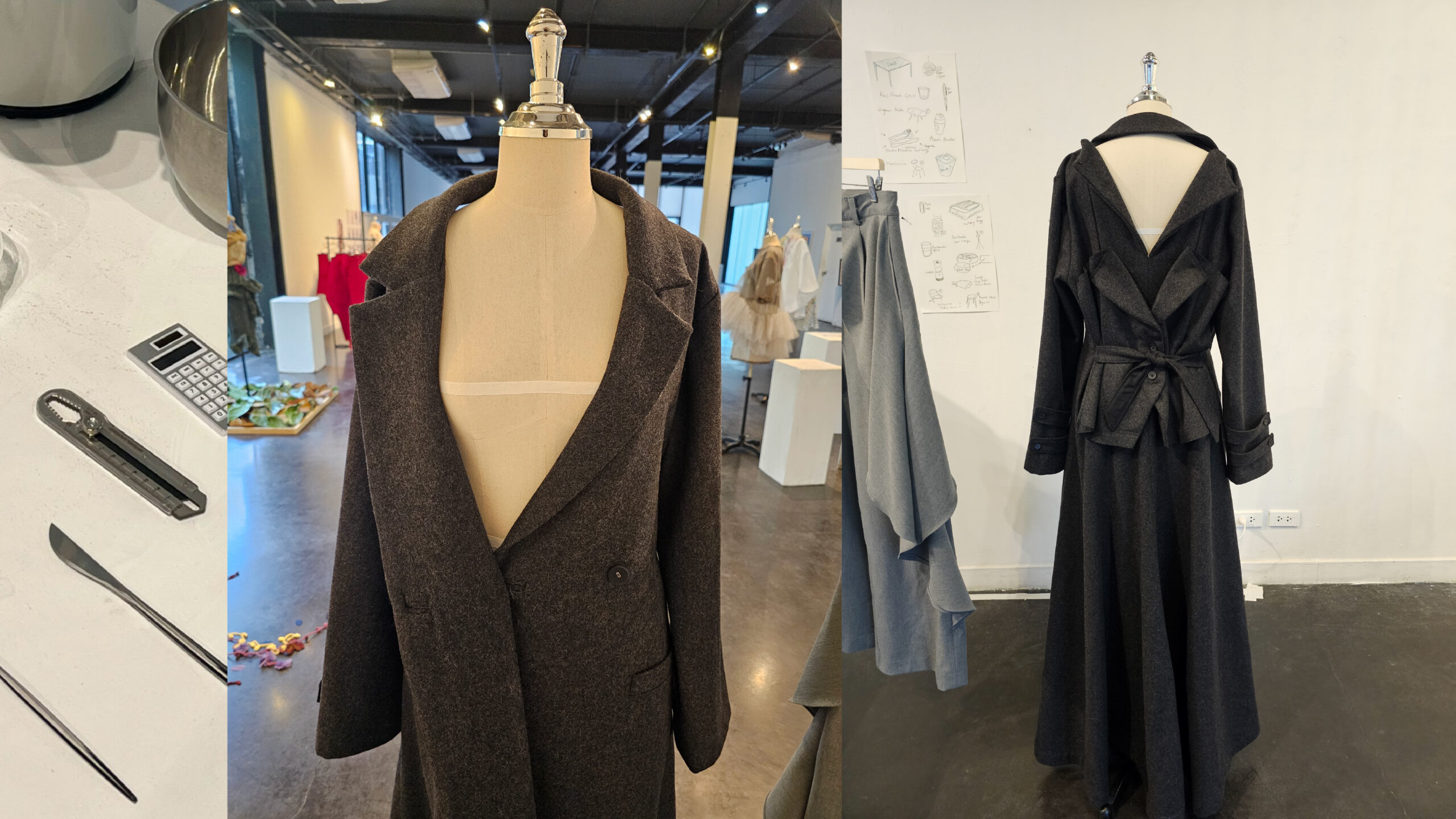
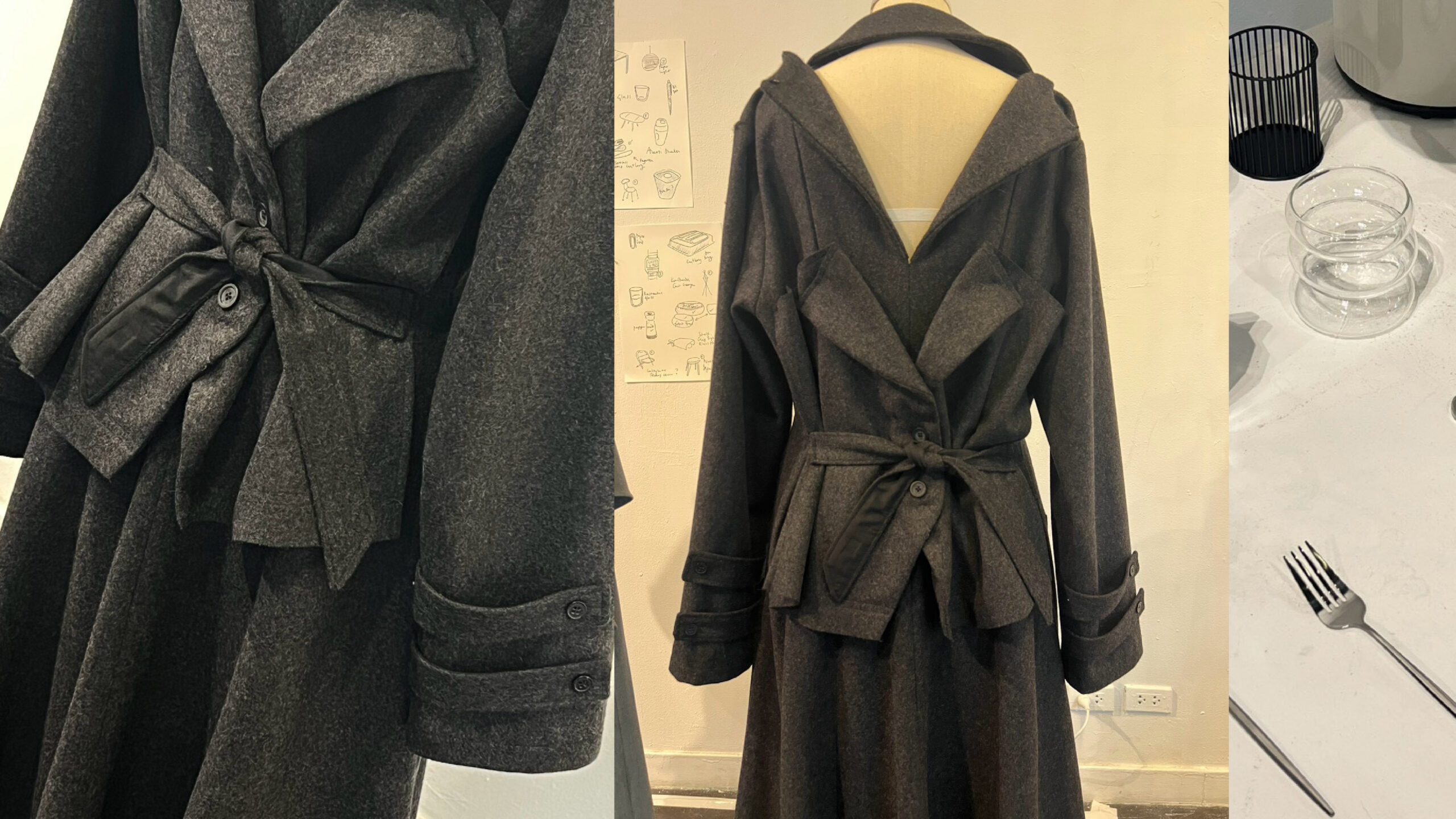
The design process focuses on clean silhouettes, controlled proportions, and limited details. Each look uses only a small number of deconstructed elements so that the garments remain visually clear. The project also gives importance to the contrast between normal and unexpected views. For example, a garment may look simple from the front but reveal a different structure from the back. Neutral colors and familiar materials are used to support the idea of everyday clothing and to make the construction details more visible.
The final outcome is a contemporary fashion collection based on the idea “The Ordinary, Reseen.” The collection shows how ordinary garments can become new through careful changes in structure and construction. This project suggests that innovation in fashion does not always need to come from dramatic forms. It can also come from observing familiar things more closely and giving new meaning to what already exists.
Objectives :
The project “SUPER NORMAL: Deconstructing the Ordinary — Contemporary Fashion Design Inspired by Super Normal” aims to explore how the concept of Super Normal can be developed into contemporary fashion design through deconstruction. The project focuses on familiar garments and everyday clothing forms, using them as a starting point to create new design possibilities through changes in structure, proportion, and construction.
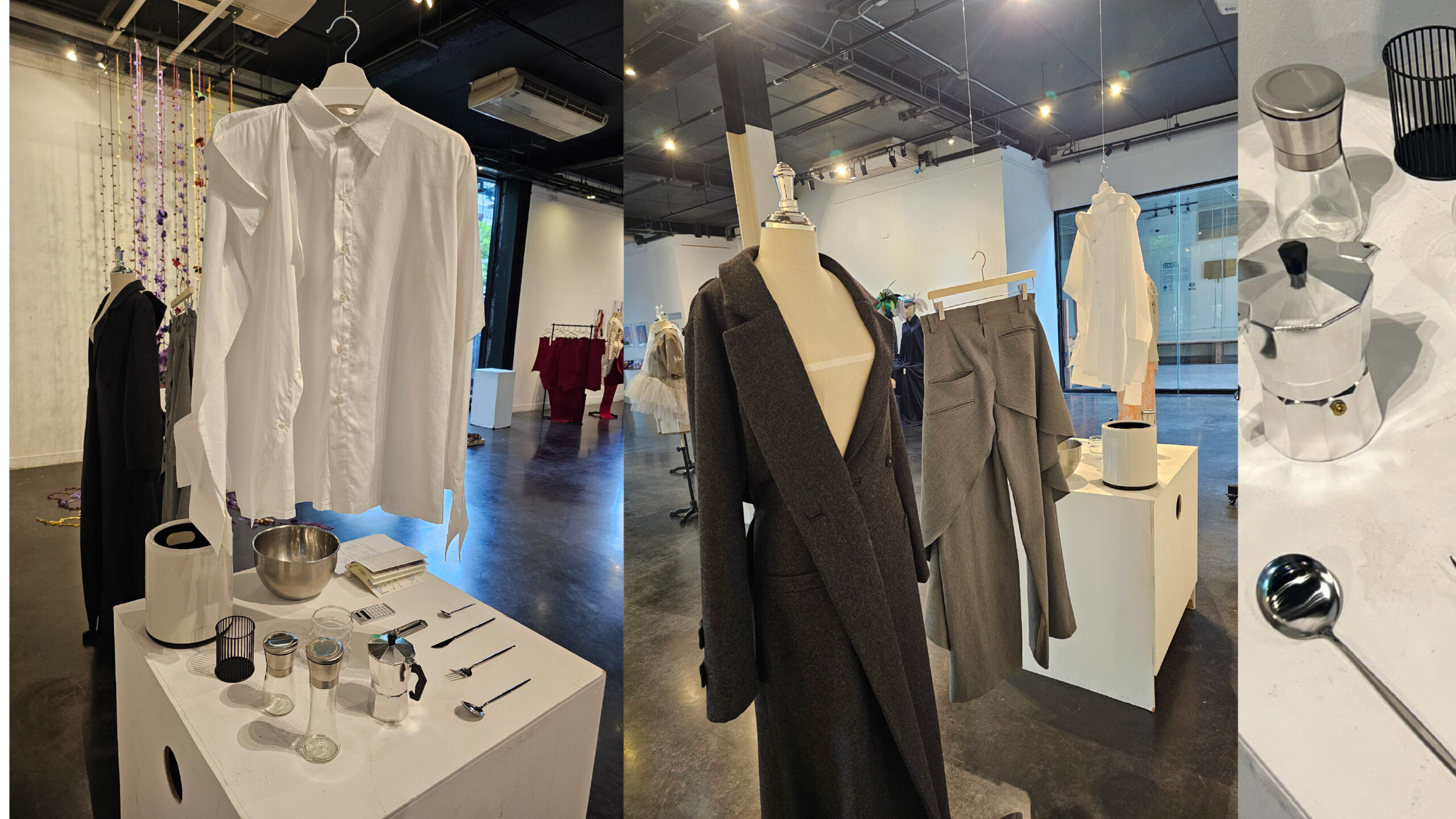
The first objective is to study and apply the concept of Super Normal to contemporary fashion design. Basic garments such as shirts, blazers, coats, and trousers are used as key references because they are familiar and easy to recognize. Instead of creating completely new forms, the project changes selected parts of these garments so that they still look familiar at first, but reveal unexpected details when viewed more closely.
The second objective is to explore deconstruction in a subtle and wearable way. The design process includes techniques such as shifting collars and seams, exposing construction, layering garment parts, changing the relationship between the front and back, and adjusting the proportion of selected details. The aim is to create a new visual experience without making the garments look too complicated or difficult to wear.
The third objective is to develop a semi-show fashion collection that can connect conceptual fashion with the commercial fashion market. The collection includes statement pieces that communicate the main concept, as well as more wearable pieces that could be developed into commercial products, such as shirts, tailored trousers, jackets, and coats. This allows the collection to keep a strong design identity while still having potential for the real fashion market.
From a fashion marketing perspective, the project is designed for the Contemporary Designer. The main target customers are urban consumers aged 25–35 years old, especially people working in creative industries such as design, art, media, fashion, and other contemporary fields. These customers are interested in design quality, materials, construction, individuality, and the story behind a product rather than following short-term fashion trends.
The final objective is to create a clear design identity that can support future branding and marketing communication. The concept of Super Normal can be developed through the collection, visual identity, campaign, lookbook, fashion presentation, and retail experience. In this way, the value of the collection comes not only from the garments themselves, but also from the idea of The Ordinary, Re-seen.
Conceptual Framework :
The conceptual framework of “SUPER NORMAL: Deconstructing the Ordinary” is based on the relationship between familiar everyday objects, basic garments, deconstruction, and contemporary fashion design. The project begins with the idea of Super Normal, which focuses on simplicity, familiarity, and the hidden value of ordinary things. Instead of creating forms that are completely new, the project studies how familiar garments can be changed in a subtle and meaningful way.
Basic garments such as shirts, blazers, coats, and trousers are used as the main starting points because they are easy to recognize and are part of everyday life. These garments are then explored through deconstruction, using methods such as shifting seams, moving collars, separating garment parts,
exposing construction, layering, and changing the relationship between the front and back.
However, deconstruction in this project is controlled and does not aim to make the garments look too complicated. The main design principle is to keep a balance between familiarity and unexpectedness. The garment should still be clearly understood as a shirt, coat, blazer, or trousers, but selected details are changed so that the viewer sees the garment differently. The framework also includes wearability and market relevance. As the project is developed as a semi-show collection, it connects conceptual fashion with the Contemporary Designer and Premium Contemporary Fashion market. The target customers are urban consumers aged 25– 35 years old who are interested in quality, construction, individuality, and the story behind a product.
The conceptual process can be summarized as:
Super Normal –> Ordinary Garments –>Deconstruction –> Reconstruction –>Contemporary Fashion Outcome
The main design principles are:
Familiar Form + Subtle Disturbance + Clean Silhouette + Controlled Proportion + Wearability. The final concept can be expressed through the phrase:
ORDINARY –> OBSERVE –> DECONSTRUCT –> RECONSTRUCT –> RE-SEE
This framework supports the main idea of the collection, “The Ordinary, Re-seen,” where familiar garments are carefully transformed to create a new way of seeing everyday fashion.
Process / Methodology :
The methodology of “SUPER NORMAL: Deconstructing the Ordinary” is based on creative fashion research, combining theoretical study, visual analysis, design experimentation, and garment development. The process begins with research on the concept of Super Normal and the use of deconstruction in fashion. The study focuses on simplicity, familiarity, everyday objects, and the way ordinary forms can be changed through construction and design.
Next, basic garments such as shirts, blazers, coats, and trousers are analyzed. Key elements including silhouette, collar, cuff, lapel, pocket, waistband, seams, and front and back construction are studied to identify which parts can be developed or reconstructed while keeping the original garment recognizable.
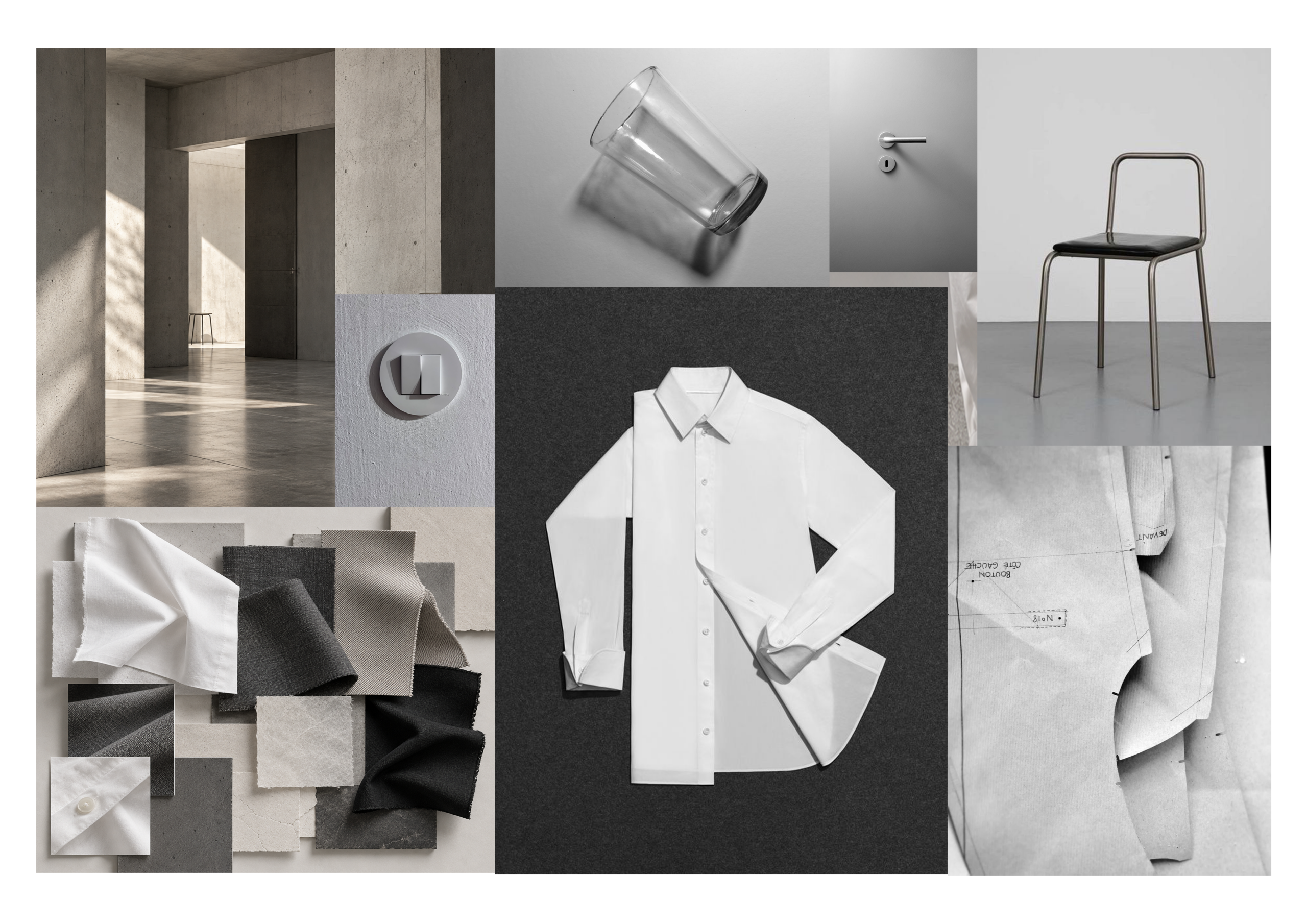
A visual and market research stage is then developed through mood boards, material references, garment details, pattern cutting, and structural studies. The target market focuses on consumers aged 25–35 years old within the Contemporary Designer and Premium Contemporary Fashion market.
The design development process includes sketching and experimenting with techniques such as shifting, separating, layering, exposing, and reconstructing garment parts. The number of design de-tails is controlled in order to keep the silhouettes clean and easy to understand. After the design stage, selected ideas are developed through pattern making, draping, and prototype development. Different fabrics, proportions, structures, and construction methods are tested to understand how the designs
work in three-dimensional form.
Finally, the prototypes are evaluated through fitting and visual analysis. The evaluation focuses on the relationship with the Super Normal concept, the clarity of the deconstruction, proportion, construction, and wearability. Designs are adjusted when necessary to create a stronger balance between familiar forms and unexpected details.
Methodology Process:
Research –> Garment Analysis –> Visual & Market Research –> Design Experimentation –> Design Development –> Pattern / Draping / Prototype–> Fitting & Evaluation
Techniques and Materials :
The project “SUPER NORMAL: Deconstructing the Ordinary” uses design and garment construction techniques that focus on changing the structure of basic clothing while keeping the original form recognizable. The techniques do not mainly add decoration. Instead, they change the position, structure, and relationship of garment parts to create designs that feel familiar but different when viewed more closely.
The main techniques include:
- Deconstruction and Reconstruction — Separating garment elements such as collars, sleeves, plackets, pockets, and seams, then rearranging or rebuilding them in a new way.
Pattern Manipulation — Changing basic patterns by shifting, cutting, extending, or joining pattern pieces to create new proportions and structures. - Displacement — Moving details such as collars, seams, cuffs, or closures away from their usual positions in a controlled way.
- Asymmetric Construction — Creating asymmetry in selected areas to add visual tension while keeping the overall silhouette clean.
- Layering and Overlapping — Layering garment parts to create the feeling of another garment appearing inside or growing from the original structure.
- Draping and Controlled Volume — Creating volume through folds, pleats, and fabric movement while keeping a clear relationship with tailoring.
- Exposed Construction — Showing parts of the garment structure, such as seams, facings, linings, or pattern pieces, as part of the design.
- Front–Back Contrast — Creating a different experience between the front and back of the garment, for example, a simple and familiar front with a more unexpected structure at the back.
For materials, the project focuses on fabrics that are familiar in everyday clothing and tailoring. This supports the Super Normal concept by avoiding materials that are too decorative or unusual. Main materials include cotton poplin for shirts, wool suiting and wool blends for suits, coats, and trousers, gabardine and twill for garments that need more structure, and crepe or softer fabrics for areas that require movement or volume.
The materials are selected according to their weight, drape, stiffness, and ability to hold shape. Structured fabrics are used for tailored pieces, while softer fabrics are used in areas that need folds, movement, or controlled volume.
The color palette focuses on off-white, grey, charcoal, and black. These colors help keep the collection visually simple and allow more attention to be placed on construction, proportion, and garment details.
Overall, the techniques and materials are selected to create a balance between familiarity, structure, experimentation, and wearability, allowing basic garments to remain recognizable while being reinterpreted through new construction and details.
Result / Conclusion :
The development of “SUPER NORMAL: Deconstructing the Ordinary” resulted in a contemporary fashion design approach that combines familiar everyday garments with deconstruction while keeping the silhouettes clear and wearable.
The design process began with basic garments such as shirts, blazers, coats, and trousers. Their structures were then changed through techniques such as shifting, separating, layering, exposing internal construction, and creating contrast between the front and back. These methods allowed the garments to remain recognizable while offering new visual experiences through unexpected details.
The experiments also showed that deconstruction does not need to create highly complex forms or use too many details. Controlling the number of design elements, keeping the silhouette clean, and changing only selected parts of the garment can create a stronger and more balanced result. This approach also supports the Super Normal concept, which focuses on simplicity and the value of familiar forms.
For materials, the collection mainly uses cotton poplin and wool blend. These fabrics are commonly found in everyday clothing and tailoring, which helps support the idea of familiarity. The color palette focuses on off-white, grey, charcoal, and black, allowing more attention to be placed on garment structure, pro-portion, and construction details.
Conclusion
This project shows that the concept of Super Normal can be applied to contemporary fashion design in a way that goes beyond minimalism. When combined with deconstruction, it creates a new way of looking at familiar garments and everyday clothing structures.
The main idea of the collection is to create a balance between familiarity and unexpectedness. The garments remain recognizable as shirts, coats, blazers, or trousers, while selected parts are changed to create a different visual experience.
The project also shows the possibility of connecting conceptual fashion with the Contemporary Designer and Premium Contemporary Fashion market. The collection creates value through construction, proportion, and design details rather than depending on short-term trends or heavy decoration.
This approach is suitable for consumers aged 25–35 years old who are interested in quality, individuality, construction, and the story behind a product.
Overall, “SUPER NORMAL: Deconstructing the Ordinary” presents a design process based on observing, deconstructing, and rebuilding familiar garments. The final direction reflects the main idea of the project:
The Ordinary, Re-seen.
References :
Evans, C. (2003). Fashion at the edge: Spectacle, modernity and deathliness. Yale University Press.
Fukasawa, N., & Morrison, J. (2007). Super normal: Sensations of the ordinary. Lars Müller Publishers.
Gill, A. (1998). Deconstruction fashion: The making of unfinished, decomposing and re-assembled clothes. Fashion Theory, 2(1), 25–49. https://doi.org/10.2752/136270498779754489
Posner, H. (2015). Marketing fashion: Strategy, branding and promotion (2nd ed.). Laurence King Publishing