Blue Adam and Red Eve
Faculty of Digital Art, Rangsit University, Thailand
Assoc. Prof. Pakorn Prohmvitak
Abstract :
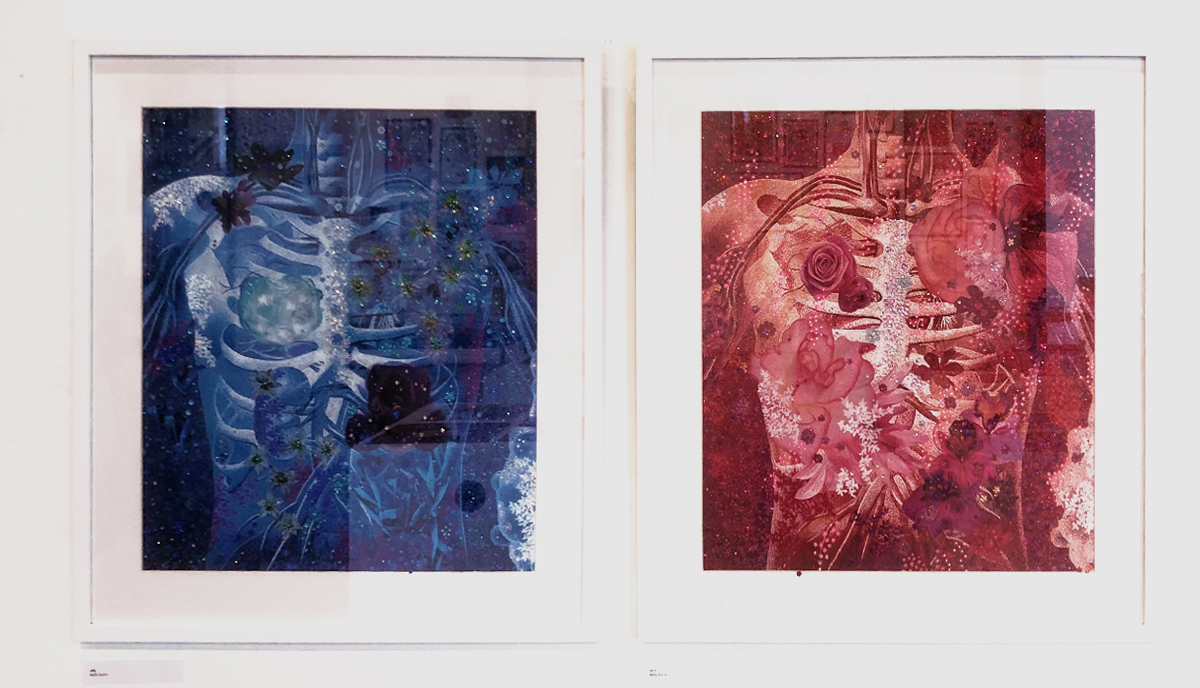
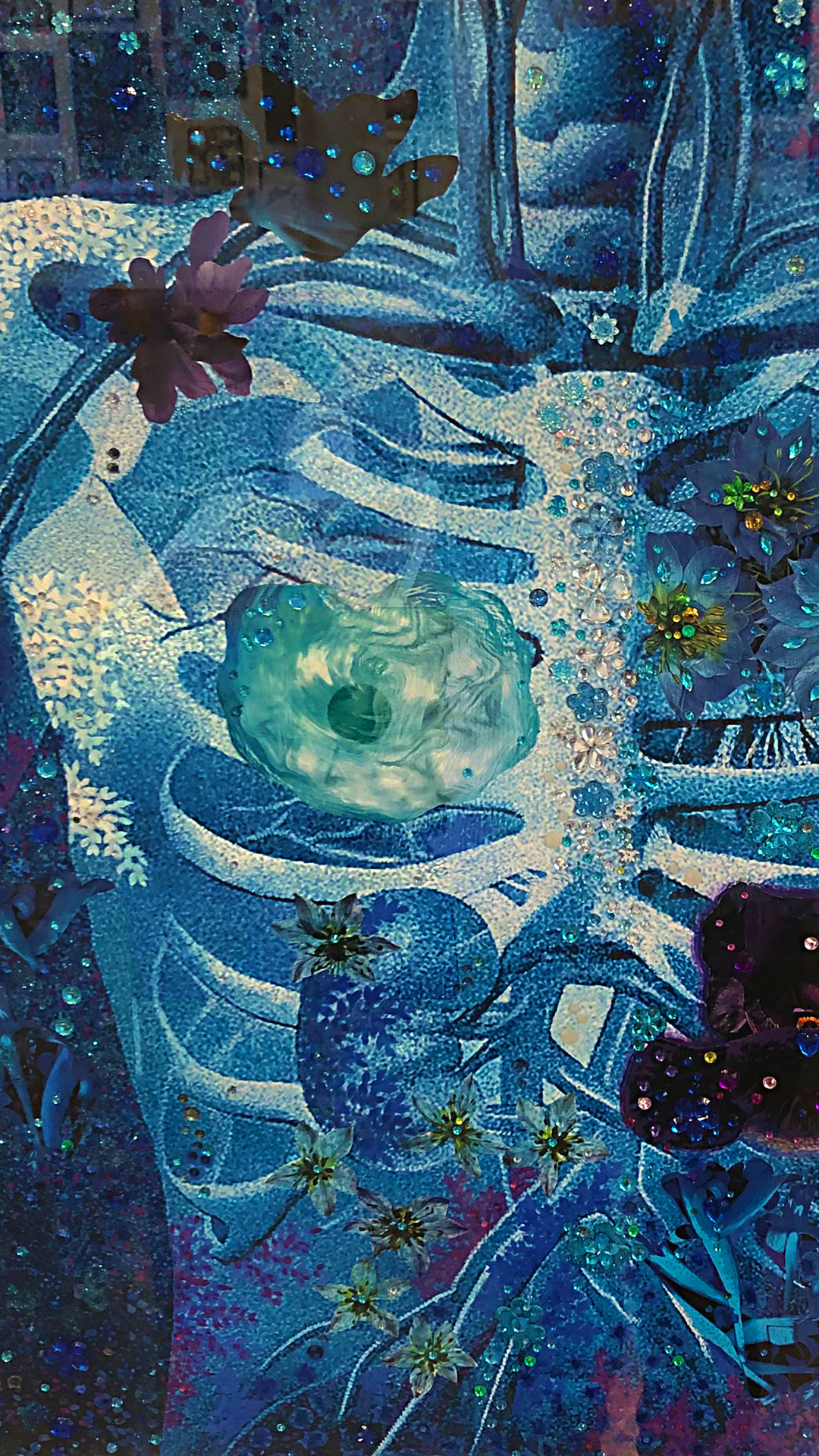
Post Memory from Blue Adam and Red Eve explores the intertwined forces of living, mortality, memory, and time. Across all walks of life, both men and women move forward through an inevitable countdown. We grow from children to maturity, aging and ultimately death. A universal truth tells us the body is temporary. The skeleton becomes a symbol of this passage. It represents the physical reality of mortality and the fragile structure upon which memories are built. Flowers, leaves, stars, dew, rain, and shimmering light evoke the beauty of existence, while darkness, sickness, loneliness, suffering, stress, disappointment, and hopelessness acknowledge its opposing realities. Two contrary emotions are compressed into this work. At a distance, the composition reveals a tension between sadness and happiness, life and death, strength and vulnerability. These contradictions coexist as inseparable aspects of being human.
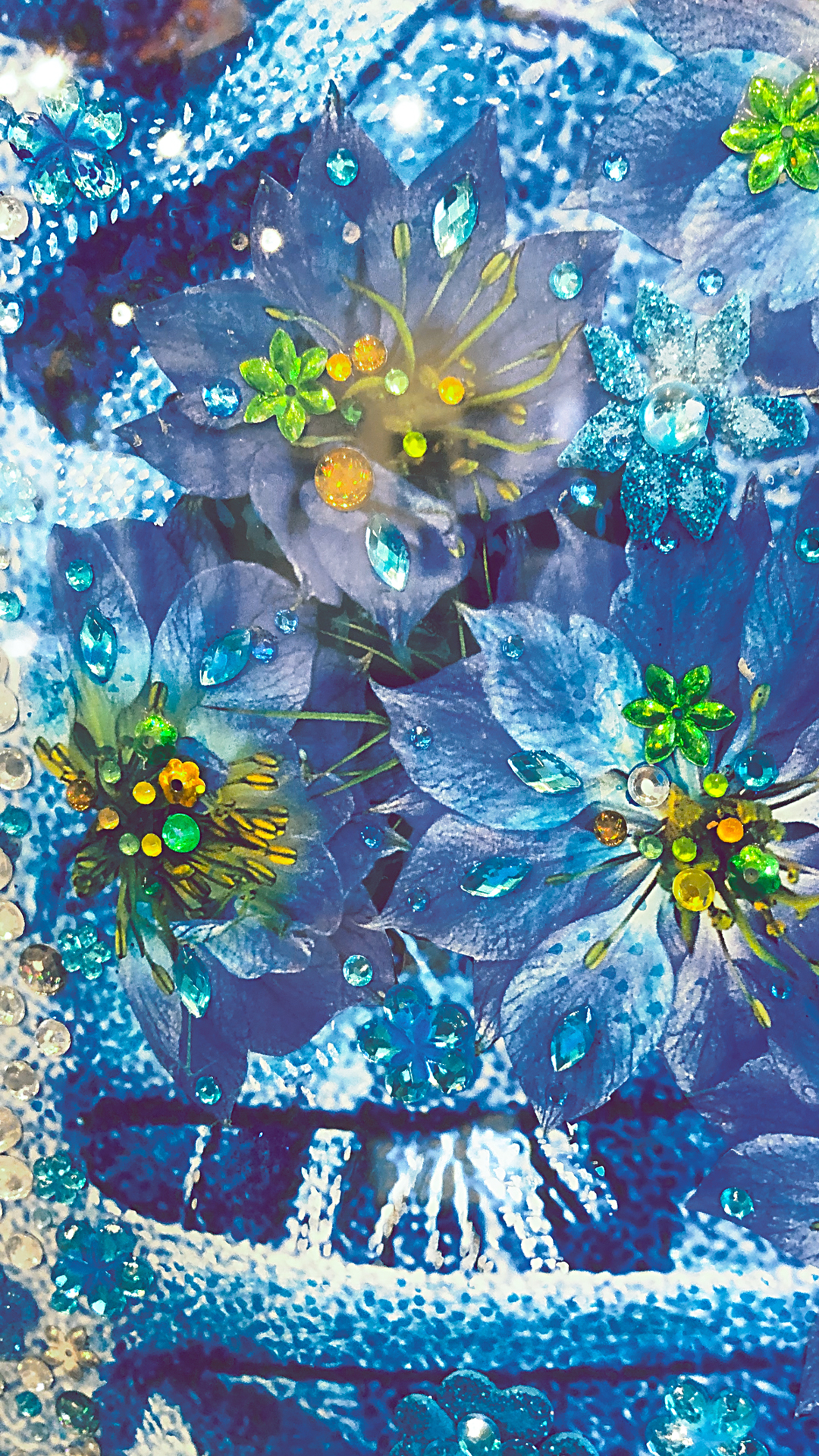
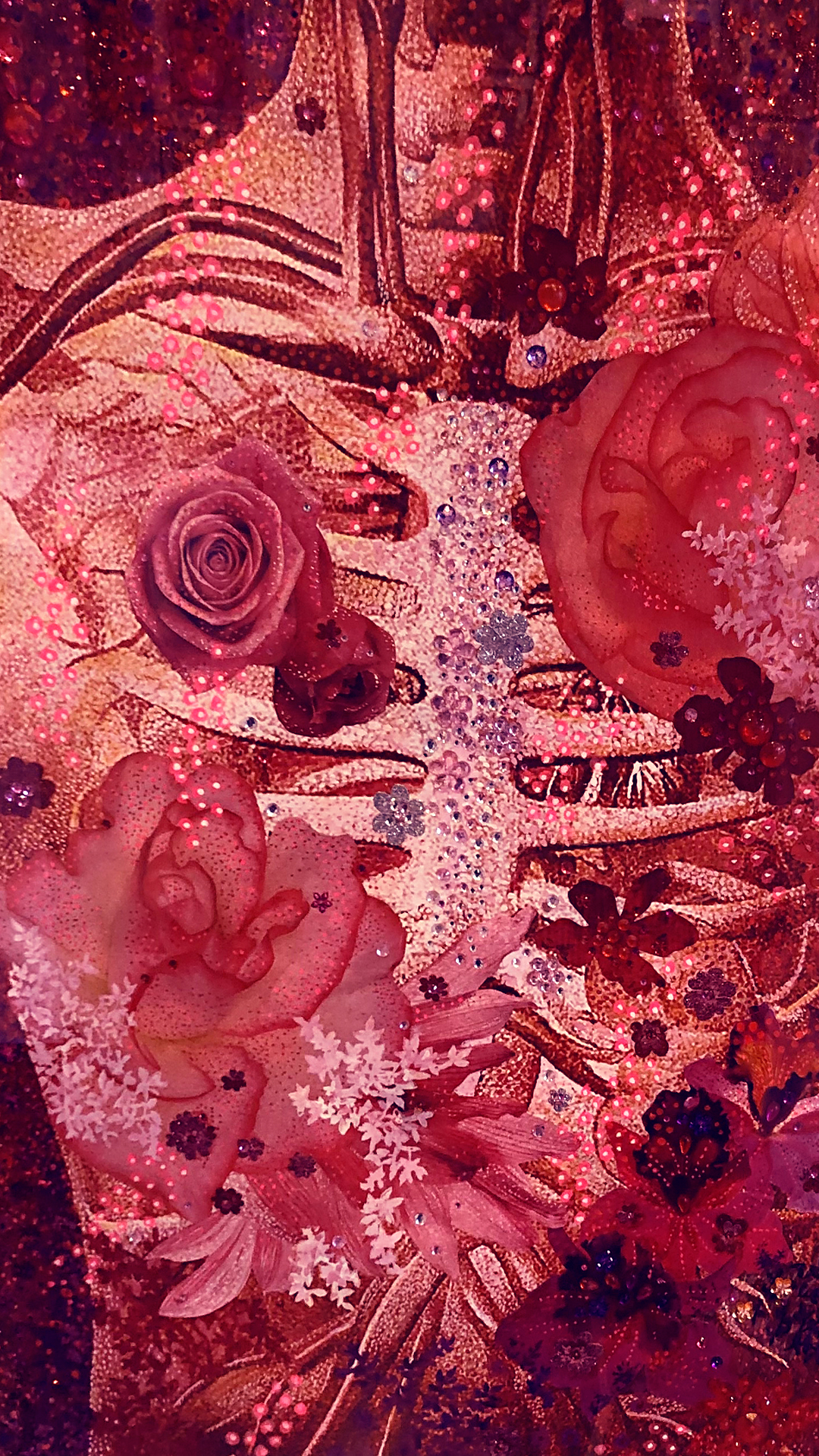
The deep blue of Adam evokes masculinity, strength, and depth. The reddish-pink of Eve suggests femininity, tenderness, and gentleness. The two colors are juxtaposed upon one another as they are placed side-by-side, a diptych. Their contrast generates tension and contrasts two opposing yet complementary forces. Flowers and leaves appear to grow from the skeleton, suggesting that even within death there remains the possibility of beauty, transformation, and remembrance.
Objectives :
This study aims to investigate the visual relationships among aging, mortality, memory, beauty, decay, and death through artistic practice. It seeks to examine how visual art can communicate universal human experiences associated with the inevitability of aging while encouraging viewers to reflect on the temporary and fragile nature of human existence. The study focuses on the use of symbolic imagery and material contrasts to explore the complex relationship between life and mortality.
A primary objective is to investigate the psychological tension between beauty and death through the juxtaposition of luminous and organic imagery with a skeletal form. The study further aims to explore the use of sparkling and floral materials as unconventional artistic elements and to examine how their decorative and organic qualities transform the perception of forms associated with death.
The study also aims to examine the visual and emotional interaction between deep blue and reddish-pink. These contrasting colors are investigated for their different emotional qualities such as sadness, contemplation, warmth, vitality, and affection, to contribute to the overall emotional impact of the composition.
Furthermore, the study seeks to investigate how contradictory emotional and conceptual states can coexist within a single artwork. The representation of happiness and sadness, beauty and decay, strength and vulnerability, and life and death. Ultimately, this study aims to explore how artistic representation can encourage viewers to reconsider death not solely as an endpoint or negative experience, but as an inherent and meaningful component of the broader human experience.
- To provoke reflection on the universal realities of aging, mortality, memory, and the passage of time.
- To explore the psychological tension between beauty and death by placing luminous and organic imagery upon skeletal forms.
- To experiment with sparkling and floral materials as unexpected elements.
- To investigate the visual interaction between deep blue and reddish-pink.
- To create a composition in which opposing emotional states can exist simultaneously: happiness and sadness, beauty and decay, strength and vulnerability.
- To encourage viewers to reconsider death as part of a larger human experience
Conceptual Framework :
Blue Adam and Red Eve represent the duality inherent in human existence. We begin life with the innocence and naiveté of childhood. We grow, experience love and loss, develop identities, encounter suffering and joy, and gradually move toward aging and death. From the moment of birth, time is moving in one direction. Yet life is not simply a countdown to death. It is a collection of experiences that accumulate within us—moments of tenderness, pain, beauty, fear, desire, loneliness, hope, and connection. These memories become the invisible architecture of a life. The skeleton serves as a reminder that beneath the differences of gender, personality, culture, and circumstance, all human beings share the same fundamental destiny. Blue and Red are therefore not merely representations of man and woman. They are two sides of humanity, two emotional forces, and two perspectives within the same universal journey. What remains when the body is gone? Perhaps it is memory—the traces of beauty, suffering, love, and experience that continue beyond the physical self.
Process / Methodology :
The conceptual development began with the contradiction between two opposing sources: the beauty of sparkling light and the dark, solemn mood of death.
- The work draws inspiration from Christmas lights, stars, sparkling rivers, foaming seas, rain, and dew. For the dark side, funeral music and ceremony.
- The concept examines the universal “walk of life” experienced by both men and women.
- Images of human skeletons were selected as the primary visual foundation and symbol of mortality.
- Images and forms associated with beauty and renewal, such as flowers, leaves, dew drops, and natural elements, were selected and layered over the skeletal imagery.
- These opposing elements were brought together to create a visual tension between the living and the deceased, the beautiful and the disturbing.
Techniques and Materials :
The physical and digital construction of the painting combines photography, collage, painting, drawing, and surface embellishment.
- A photograph of a human skeleton is captured and used as the foundational image.
- The photograph is then transferred to a computer for digital manipulation.
- Distinct color palettes are established, ultimately deep blue for Adam and reddish-pink for Eve.
- Floral imagery is gathered from magazines and incorporated by collage.
- Leaves, flowers, and organic forms are painted directly over the skeletal image.
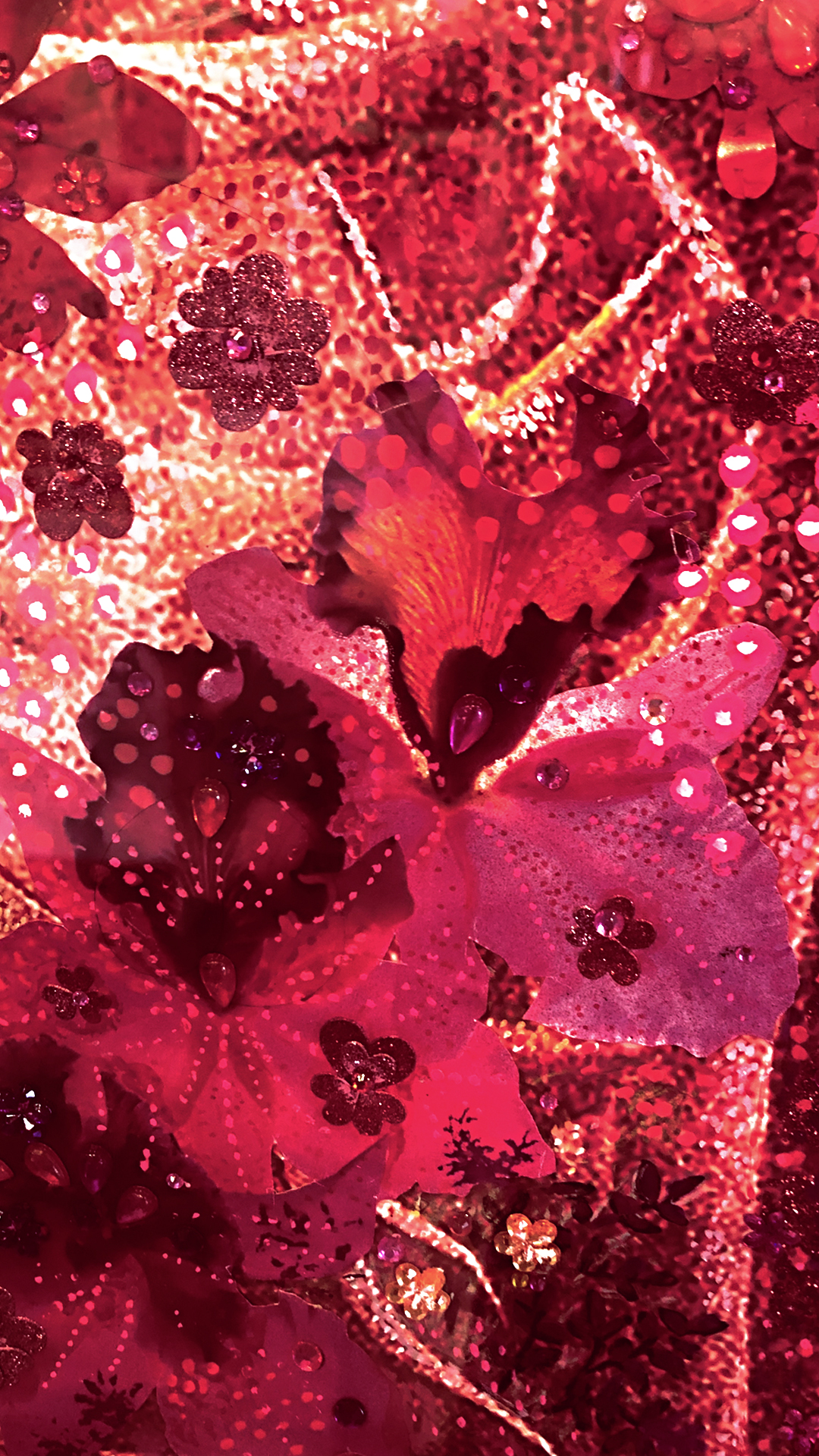
- Sparkling stickers and reflective elements are added to create points of light and a sense of mystery.
- Colored pencils are used to develop volume.
- Stenciling is introduced in selected areas to create additional layers.
Result / Conclusion :
The final composition is structured around the relationship between the two paintings blue and red. When the two color worlds collide, emotion emerges. Blue suggests strength and resilience traditionally associated with the masculine, while reddish-pink hints towards passion, intimacy, and vulnerability. These distinctions are intentionally unstable. The color schemes influence each other, suggesting that strength contains vulnerability and tenderness can contain power.
The sparkling elements transform the surface into something else, perhaps the mystery of a universe seen through darkness. Flowers and leaves emerge from a skeleton, and these forms create a paradoxical atmosphere in which growth appears among decay and beauty appears within death.
The skeleton becomes a vessel for memory. It is the structure upon which experience is layered. The work suggests that life is never entirely joyful or entirely sorrowful. Happiness exists alongside grief, love exists alongside loneliness, and hope among despair.
Post Memory from Blue Adam and Red Eve invites the viewer to recognize these contradictions not as failures of life, but as its essential condition.
References :
Dalí, S. (1931). The persistence of memory [Painting]. Museum of Modern Art, New York, NY, United States.
Magritte, R. (1929). The treachery of images (This is not a pipe) [Painting]. Los Angeles County Museum of Art, Los Angeles, CA, United States.
Seurat, G. (1884–1886). A Sunday on La Grande Jatte—1884 [Painting]. Art Institute of Chicago, Chicago, IL, United States.
Van Gogh, V. (1889). The Starry Night [Painting]. Museum of Modern Art, New York, NY, United States.
Pixel art. (n.d.). In Wikipedia. Retrieved September 9, 2026, from https://en.wikipedia.org/wiki/Pixel_art